
Navigating Crypto News

CoinFeather
Navigating Crypto News

Quick market read from this story
The White House has publicly disputed a news report alleging an imminent Iranian drone threat to California, characterizing the information as based on a single, unverified tip and not a credible threat.
This dispute highlights the challenges in disseminating and verifying intelligence, particularly concerning geopolitical events that could influence market sentiment or trigger speculative trading.
While the article discusses the broader use of drones in warfare and their funding through cryptocurrency, the core development is a factual dispute over a specific news report, with no direct impact on crypto assets or market infrastructure.
Deep Dive
The White House has publicly demanded that ABC News retract a report alleging Iran sought to launch drone attacks on California. White House Press Secretary Karoline Leavitt stated the report was based on a single, unverified tip and significantly overstated any potential threat, asserting that no such threat to the U.S. homeland existed.
The dispute stems from a leaked FBI bulletin circulated in February. This bulletin described a hypothetical scenario where Iran might retaliate against U.S. strikes by launching unmanned aerial vehicles from a vessel off the West Coast. Leavitt emphasized that the bulletin itself noted the intelligence was unverified, a critical detail she claims ABC News omitted.
Following the report's surfacing, California officials, including Governor Gavin Newsom, moved to reassure the public. They stated there was no awareness of any imminent threats but affirmed readiness for any emergency. The LA County Sheriffs also indicated an elevated level of readiness and vigilance in coordination with federal and local partners.
This controversy occurs as drones play an increasingly significant role in conflicts involving Iran, the U.S., and Israel. Following joint U.S.-Israeli strikes in February, Iran launched numerous drones and missiles across the Middle East. While many projectiles have been intercepted, some attacks have damaged infrastructure, including ports, ships, and energy facilities, impacting global energy markets.
The drones most commonly associated with Iran's attacks are the one-way, explosive-impact Shahed-131 and Shahed-136 models. These are designed to detonate upon reaching their target. Russia has utilized similar designs in Ukraine under the names Geran-1 and Geran-2. The low production cost of these drones allows them to overwhelm sophisticated air defense systems through sheer volume. The global military drone market is projected to reach $66 billion by 2035.
Cryptocurrency has also emerged as a funding source within the drone supply chain. Ukraine reported spending over $54 million in crypto on military expenses, including drones, in 2022. Pro-Russian groups also received over $2 million in cryptocurrency donations that same year. In September, U.S. prosecutors sought to seize over $500,000 in USDT from an Iranian national accused of supplying navigation technology for Iranian military drones. Shortly after, Israeli officials called for the seizure of $1.5 million in Tether allegedly linked to Iran, tied to a company supplying navigation equipment for Shahed drones.
ABC News has since updated its report to include new details about the alert. The incident highlights how rapidly evolving technologies like drones can generate public concern as they become more prevalent in modern warfare.
Source, catalyst, and sector overlap from the latest feed.
Bitcoin's resilience above $71,500 despite Middle East tensions and oil price surges suggests a decoupling from traditional risk assets, potentially driven by crypto-specific demand. Significant inflows into yield products like Strategy's STRC, offering 11.5% yield tied to Bitcoin, are directly translating into BTC purchases, indicating strong on-chain demand independent of macro factors. While current strength appears crypto-specific, analysts caution that a prolonged oil crisis leading to global liquidity tightening could still undermine Bitcoin's price, echoing past market dynamics.
A trader's $50 million USDT to AAVE swap resulted in a near-total loss due to extreme slippage, highlighting the risks of large trades on DeFi platforms with insufficient liquidity. Aave founder's offer to refund $600K in fees and acknowledgment of the need for better safeguards suggests a potential protocol-level response to mitigate future user errors, though the core issue of liquidity remains. The incident underscores the operational risks inherent in DeFi, where user confirmation of high-risk warnings can lead to catastrophic financial outcomes, emphasizing the need for advanced execution strategies for large capital.
Google's innovative use of Gemini AI to mine news reports for flash flood data establishes a novel approach to disaster prediction, potentially influencing how AI is leveraged for real-world data acquisition. The Groundsource system's ability to predict urban flash floods up to 24 hours in advance, by overcoming historical data gaps, represents a significant advancement in AI-driven forecasting and crisis management. This development highlights the growing intersection of AI and practical applications, demonstrating how advanced AI models can transform unstructured data into actionable insights for public safety and potentially other sectors.
The announcement of an exclusive event hosted by President Trump for top TRUMP meme coin holders has triggered a short-term price increase, indicating speculative interest tied to celebrity endorsement. While the event aims to reward token holders, the token's price remains significantly below its all-time high, suggesting limited sustained fundamental value beyond hype. Past events of this nature have drawn significant criticism and regulatory scrutiny, posing a potential risk for future developments and market perception.
The Ark Invest report clarifies that while quantum computing poses a long-term risk to Bitcoin's cryptography, it is not an immediate threat, suggesting a gradual progression rather than a sudden 'Q-day' event. Approximately 35% of Bitcoin's supply, held in vulnerable or reused addresses, could be exposed to quantum attacks if elliptic curve cryptography is compromised, highlighting a significant but distant risk. The potential need for post-quantum cryptography upgrades to Bitcoin necessitates a consensus-driven process, which could take years to implement across the ecosystem, indicating a slow but deliberate adaptation strategy. While current quantum systems are far from capable of breaking Bitcoin's security, the ongoing research and development in this field warrant a 'watchlist' approach for the network's long-term security posture.
Live Feed
Loading the broader stream in the same flow as the homepage feed.

A significant MEV bot profit of nearly $10 million highlights the ongoing risks and sophisticated exploits within DeFi, particularly during large, illiquid trades. The incident underscores critical UX deficiencies in DeFi, where users can proceed with trades despite explicit warnings of catastrophic slippage, leading to substantial losses. While Aave and CoW DAO are refunding fees, the event serves as a stark reminder for traders to exercise extreme caution with large transactions on DEXs and aggregators due to potential MEV interference and slippage. The substantial loss on a $50 million swap, exacerbated by MEV, points to the inherent volatility and risk management challenges in decentralized finance for large capital deployments.

US Treasury sanctions targeting North Korean IT worker fraud rings highlight the ongoing risk of illicit fund flows, including through cryptocurrency, impacting entities that may unknowingly facilitate these activities. The sanctions, which include specific Ethereum and Tron addresses, underscore the increasing sophistication of North Korean illicit finance operations and the need for enhanced due diligence within the blockchain ecosystem. While the sanctions are a regulatory action, their direct impact on specific crypto assets is limited, suggesting a 'watch and see' approach for traders rather than immediate repricing events.

The TRUMP memecoin experienced a short-term price increase following the announcement of an exclusive event for top holders with Donald Trump, indicating speculative trading driven by celebrity association. Despite the recent bump, the TRUMP token remains significantly down from its all-time high, suggesting limited fundamental value and a reliance on event-driven hype for price action. The event's eligibility criteria and the potential for a private reception with Trump create a speculative catalyst for holders, though the actual impact on sustained price is questionable given the token's history. Concerns over ethical implications and potential personal financial gain associated with political figures endorsing memecoins continue to surround the TRUMP token, posing a reputational risk.

Hyperliquid's HYPE token experienced a significant price surge driven by a substantial increase in RWA trading volume, indicating growing market interest in tokenized real-world assets on the platform. The platform's unique model, where 97% of protocol revenue is used for HYPE token buybacks, combined with a permissionless listing system, positions it for potential future growth and price appreciation, as suggested by Arthur Hayes' $150 price target. Industry figures like Bitwise CIO Matt Hougan have highlighted Hyperliquid's operational advantage of 24/7 trading, especially during periods of global market uncertainty, underscoring its utility and potential to capture trading flow. The combination of increased trading volume, positive analyst sentiment, and a unique tokenomics model suggests a strong near-term bullish outlook for HYPE, supported by its growing role in the RWA derivatives space.

BlackRock's new staked Ethereum ETF (ETHB) debuted with $15.5 million in volume, indicating solid initial institutional interest despite falling short of comparable Solana products. The ETHB ETF's performance suggests a growing appetite for yield-generating crypto products within traditional finance, potentially driving further inflows into staked ETH. While the debut volume is positive, its comparison to Solana staking ETFs highlights the competitive landscape and the need for sustained performance to capture significant market share.

Bitcoin experienced a notable price surge to near $72,000, coinciding with U.S. Treasury Secretary Bessent's announcement of temporary authorization for purchasing Russian oil in transit. The market's reaction suggests that Bitcoin may be acting as a hedge against perceived economic instability or inflation fears, as evidenced by its upward movement following news of potential oil supply stabilization efforts. The Treasury's intervention to calm oil fears and potentially lower energy prices could reduce the immediate inflationary pressure, which might influence Bitcoin's short-term trading dynamics as a risk-on asset.

Shiba Inu's unexpected breakout from a consolidation pattern, accompanied by increased trading volume, suggests a potential short-term relief rally, but its ability to overcome key moving averages will determine sustainability. Cardano is showing persistent bearish momentum, grinding near yearly lows without significant buying interest, indicating a risk of further downside if support levels weaken under prolonged consolidation. Bitcoin is approaching a critical $70,000 resistance level, with early signs of higher lows suggesting a potential retest of $71,000 if this psychological barrier is decisively broken.

Geopolitical uncertainty stemming from the US-Iran conflict is creating broad market pressure, impacting crypto assets like Bitcoin and Ethereum despite minor short-term gains. Rising oil prices, directly linked to the escalating US-Iran tensions, are a significant driver of volatility across traditional and digital asset markets. While major cryptocurrencies show mixed short-term price action, the underlying sentiment remains cautious due to the unpredictable geopolitical landscape. Traders should monitor the evolving US-Iran situation as it presents a clear macro risk factor influencing crypto market direction and risk appetite.

The EU's MiCA regulations are creating a more stringent operating environment, potentially leading to consolidation within the crypto industry as less resilient players may exit or reassess their European presence. SwissBorg's successful MiCA license acquisition and planned relocation to France positions it to capitalize on market consolidation and increased regulatory clarity, suggesting a strategic advantage for compliant entities. The evolving regulatory landscape for stablecoins and yield products under MiCA is expected to drive greater transparency and standardization, potentially paving the way for increased institutional participation in the long term.

Bitcoin is demonstrating unusual resilience to rising oil prices, diverging from historical macro correlations that would typically pressure crypto due to inflation fears. Reduced leverage ratios and stabilizing spot Bitcoin ETF flows indicate a cleaner market structure, positioning BTC to absorb demand and potentially rally despite geopolitical tensions. Technical indicators suggest potential for an upward move towards $80,000, driven by concentrated options gamma around the $75,000 strike, which could accelerate price action if breached.
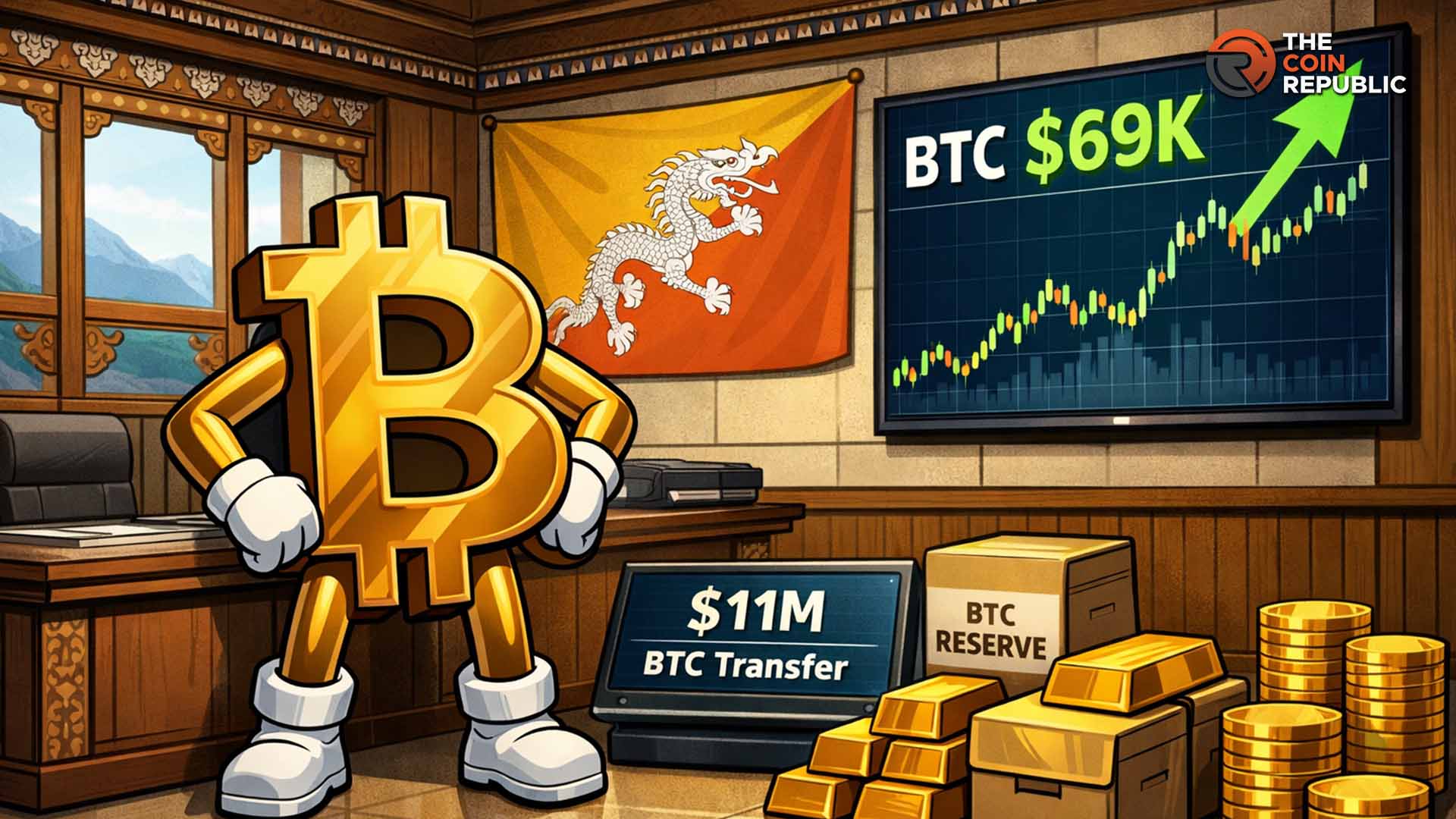
Bhutan's government has moved approximately $11.85 million in Bitcoin, sparking concerns of a potential sell-off, a pattern observed since last year. Despite the transfer, Bitcoin's price has shown resilience, reclaiming the $71,000 level, indicating strong market momentum that is currently outweighing the perceived selling pressure. The Bhutanese government's strategy of offloading Bitcoin in smaller, periodic tranches suggests portfolio management rather than an emergency liquidation, potentially mitigating significant market impact. Analysts note that large-scale buying initiatives, such as Michael Strategy's recent accumulation, can counteract selling pressure from institutional or governmental entities.

A significant $50 million loss due to extreme slippage on a large token swap highlights the inherent risks of executing substantial trades on DeFi platforms with thin liquidity pools. The incident underscores the critical importance of user diligence in acknowledging and understanding risk warnings, especially when interacting with complex DeFi interfaces on mobile devices. While the CoW Protocol functioned as intended, Aave's proactive approach to refunding transaction fees to the affected user demonstrates a commitment to mitigating user impact and maintaining platform reputation.

Senator John Thune reportedly said that the chamber would prioritize the SAVE America Act before addressing a vote on bipartisan bills like crypto market structure.
Solana's Bollinger Bands are contracting, indicating a period of low volatility that historically precedes a significant price move, suggesting traders should monitor for a breakout or breakdown. The $95 price level is identified as a critical resistance point; a sustained break above this level would signal a shift from a downtrend to a potential new upward phase for SOL. While technical indicators suggest an impending volatility expansion, the direction remains unconfirmed, positioning SOL in a watchlist scenario until a clear directional signal emerges.

The SEC's Investor Advisory Committee has recommended narrow exemptions for tokenized securities, signaling a potential regulatory pathway for blockchain-based stock trading that could streamline settlement and reduce intermediaries. This recommendation, backed by SEC Chairman Paul Atkins, suggests the agency is moving towards formal regulations for tokenization, which could unlock new market structures and efficiencies if implemented with appropriate safeguards. While the move aims to enhance settlement efficiency and reduce risk, the committee also highlighted potential risks such as new investor confusion and increased costs, indicating a cautious approach to implementation.

Derivative market data indicates professional traders assign less than a 17% probability for Bitcoin to breach $78,000 by March 27, suggesting a lack of conviction for a near-term breakout. Despite recent spot Bitcoin ETF inflows, net outflows from previous days have not been fully offset, indicating that institutional demand has not yet shifted overall market sentiment decisively upwards. Broader economic concerns, including geopolitical tensions and weaker-than-expected US jobs data, are contributing to cautious market sentiment, tempering bullish expectations for Bitcoin. While professional traders are hesitant about an immediate $78K surge, the continued institutional interest and potential for further ETF inflows suggest underlying support, implying a longer-term outlook for significant price appreciation.
Signal context only. Validate with price action, liquidity, and risk limits before taking a position.
