
Navigating Crypto News

CoinFeather
Navigating Crypto News
Quick market read from this story
Ethereum is facing dual narratives of quantum computing security risks and positive institutional interest via ETH staking and ETF flows, creating a complex outlook for traders.
Solana's ecosystem is under scrutiny following a significant exploit impacting Drift Protocol and ongoing network stability issues, suggesting potential short-term headwinds for SOL.
Chainlink's recent large LINK token unlock and transfer to exchanges introduces potential short-term selling pressure, contrasting with ongoing integration developments.
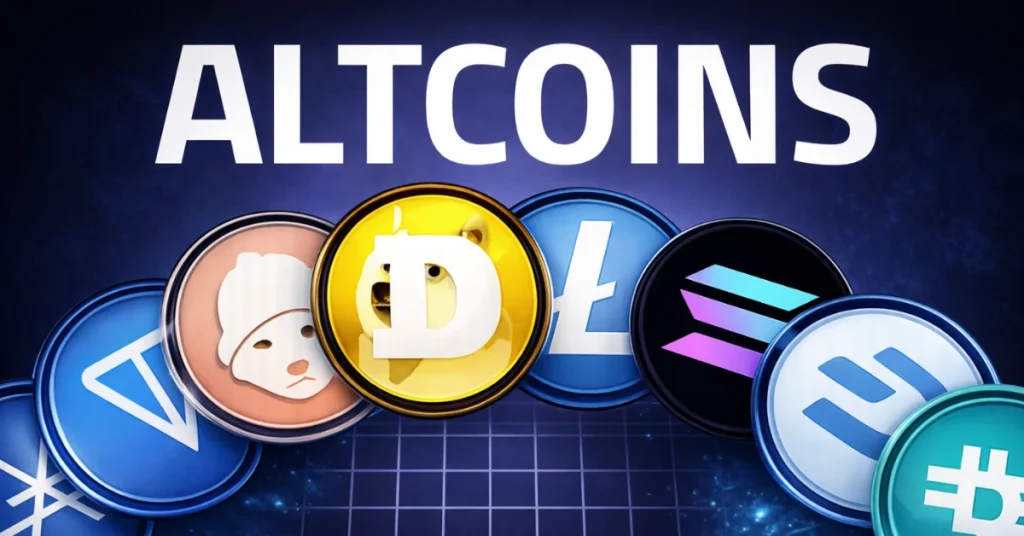
The article highlights a shift in trader interest towards large-cap altcoins with strong fundamentals, while also noting speculative interest in meme coins driven by social buzz.
Source, catalyst, and sector overlap from the latest feed.
The FDIC's upcoming board meeting on April 7 to finalize stablecoin rules under the GENIUS Act signals significant regulatory progress, potentially clarifying the operational framework for U.S. banks in the stablecoin market. The concurrent advancement of the CLARITY Act, with a Senate Banking Committee markup targeted for late April, indicates a broader push for comprehensive crypto market structure legislation, increasing the likelihood of near-term regulatory developments. The convergence of GENIUS Act implementation and CLARITY Act progress suggests a coordinated effort to establish clearer regulatory pathways for stablecoins and digital assets, which could reduce uncertainty and encourage institutional participation.
Live Feed
Loading the broader stream in the same flow as the homepage feed.

Tether's aggressive push for a $500 billion valuation in its latest fundraising round faces investor skepticism, potentially leading to a delay and signaling current market appetite for such high valuations. The outcome of Tether's fundraising efforts, particularly concerning investor demand at its target valuation, could impact market sentiment towards stablecoins and the broader crypto financial infrastructure. Tether's pursuit of a $500 billion valuation, significantly higher than its current stablecoin market cap, highlights its ambition to expand beyond stablecoins into diverse sectors like AI and commodities, though execution remains a key question. The simultaneous news of Tether hiring KPMG for its first full USDt audit suggests a move towards greater transparency, which could bolster confidence if the fundraising faces challenges.

Bitcoin's on-chain supply metrics, with 8.2 million BTC in loss, are approaching historic bear market levels, suggesting potential undervaluation according to some analysts. Contrasting views suggest current conditions reflect early-to-mid bear market stress rather than a capitulation bottom, with potential for further downside or sideways trading. External macroeconomic factors, specifically a strong US dollar and tight global liquidity, are identified as significant headwinds for Bitcoin's price performance. Despite current market pressures, the observed supply-in-loss figures are still below the peak levels seen in the 2022 bear market, indicating resilience in some holder segments.

Bitcoin's prolonged consolidation below $70,000, characterized by a lack of clear directional momentum, suggests that a significant breakout could be imminent, potentially leading to a substantial price move. While some analysts like Michael van de Poppe anticipate a bullish breakout from Bitcoin's current range, others, including Willy Woo, express caution, citing potential macro headwinds and the possibility of a deeper bear market, indicating divergent market sentiment. The prevailing 'Extreme Fear' sentiment in the crypto market, as measured by the Fear & Greed Index, coupled with analyst predictions of potential further downside, suggests that current market conditions may not yet fully price in a bullish reversal.
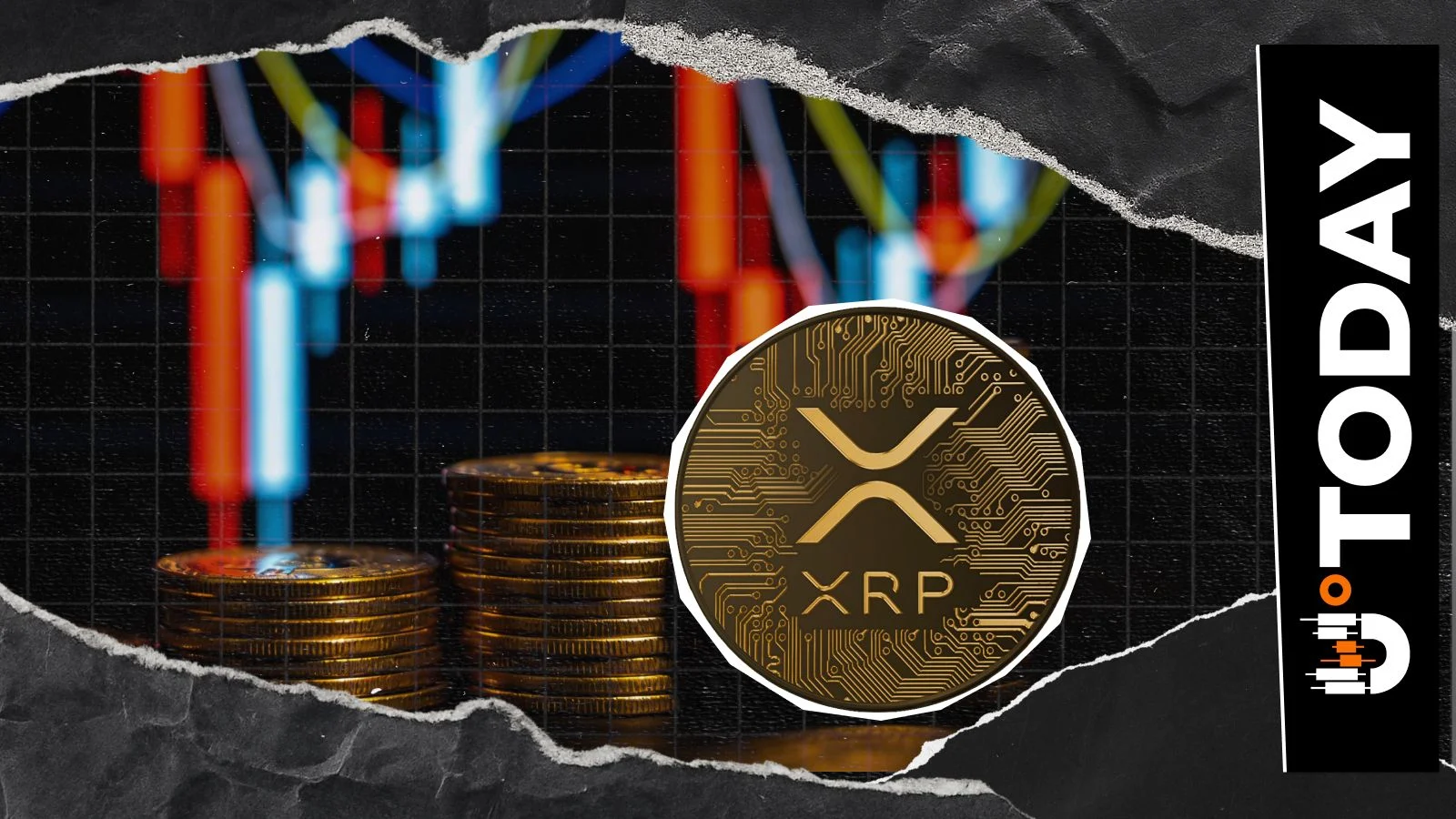
XRP's monthly chart indicates a bearish trend with the lower Bollinger Band at $0.6161, suggesting a potential 50% downside risk if the $1.30 support fails. The prolonged six-month bearish streak and price trading significantly below the long-term trend reference (middle Bollinger Band) confirm a dominant bearish cycle for XRP. Despite narratives around the Clarity Act, current chart dynamics suggest investors are not anticipating immediate gains and are preparing for a potential drift towards historical accumulation zones around $0.61. Failure to reclaim the $1.50 level in the coming weeks would solidify the $0.61 retest scenario, implying a substantial downside repricing event for XRP.
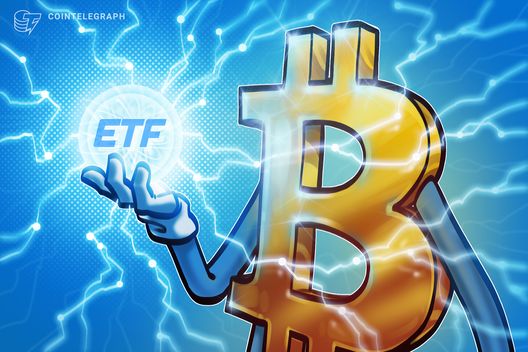
An ETF analyst predicts Bitcoin ETFs will surpass gold ETFs in AUM, citing Bitcoin's broader utility as a store of value, diversifier, and growth asset compared to gold's singular use case. The divergence in ETF flows, with Bitcoin ETFs attracting inflows while gold ETFs see outflows, suggests a potential capital rotation favoring digital assets over traditional safe havens. Despite recent price declines for both assets, the narrative of Bitcoin ETFs offering superior portfolio integration and growth potential could drive future investor demand and asset appreciation.

Increased exchange inflows of 160 billion SHIB signal significant sell pressure, potentially disrupting any nascent bullish momentum. Structural weakness in SHIB's price action, characterized by lower highs and lack of volume confirmation, suggests a bearish trend remains dominant. With exchange reserves growing and momentum indicators weak, the market appears to be in a distribution phase, favoring further declines or consolidation near lows.

Google's research highlights a theoretical quantum computing threat to Bitcoin's private key security, estimating a nine-minute window to derive a key from a public key once it appears in the mempool. The primary risk identified is to the 6.9 million BTC in wallets with permanently exposed public keys, which are vulnerable to future quantum attacks without the time constraint of mempool transactions. While a functional quantum computer capable of this attack does not yet exist, the development underscores the long-term need for post-quantum cryptography in Bitcoin, a transition that has not yet begun. The Taproot upgrade, intended to enhance privacy, inadvertently increased the attack surface by making public keys visible on-chain by default, exacerbating the quantum threat for future transactions.
Signal context only. Validate with price action, liquidity, and risk limits before taking a position.
Pi Network's successful decentralized KYC validation of 18 million users, involving over 526 million checks by 1 million validators, demonstrates a novel approach to identity verification at scale. The distribution of over 16.5 million Pi tokens as rewards to validators highlights a community-centric incentive model, potentially fostering greater network participation. Despite significant progress in user verification and validator rewards, Pi's current market price remains subdued, indicating a disconnect between on-chain development and immediate token valuation.
