
Navigating Crypto News

CoinFeather
Navigating Crypto News

Quick market read from this story
The FDIC's upcoming board meeting on April 7 to finalize stablecoin rules under the GENIUS Act signals significant regulatory progress, potentially clarifying the operational framework for U.S. banks in the stablecoin market.
The concurrent advancement of the CLARITY Act, with a Senate Banking Committee markup targeted for late April, indicates a broader push for comprehensive crypto market structure legislation, increasing the likelihood of near-term regulatory developments.
The convergence of GENIUS Act implementation and CLARITY Act progress suggests a coordinated effort to establish clearer regulatory pathways for stablecoins and digital assets, which could reduce uncertainty and encourage institutional participation.
Source, catalyst, and sector overlap from the latest feed.
BNB's price prediction is bolstered by Crypto.com's 'underappreciated' label and ongoing legal resolutions, suggesting potential upside towards $1,000 based on DeFi growth and burn mechanics. The emergence of Pepeto, a new crypto project with a senior Binance developer and Pepe cofounder, is drawing parallels to BNB's early exchange utility model, indicating a potential shift of smart capital seeking similar presale opportunities. Pepeto's unique combination of zero-fee cross-chain swaps, instant bridging, AI-powered scam detection, and meme coin virality positions it as a potentially disruptive force, mirroring BNB's foundational demand drivers. While BNB price targets range up to $3,058, the article emphasizes that early presale participation, as seen with BNB's ICO, is where significant wealth creation occurred, highlighting Pepeto's current presale as a comparable opportunity.
Live Feed
Loading the broader stream in the same flow as the homepage feed.

A Cardano DRep is defending the Midnight (NIGHT) project, framing it as a complementary 'partner chain' rather than a competitor to Cardano (ADA). The defense highlights Midnight's focus on privacy and scalability as key differentiators, aiming to attract institutional users like banks and governments who require data confidentiality. Midnight's mainnet launch is positioned as a significant development, potentially enhancing the Cardano ecosystem by addressing functional gaps and aligning with growing demand for privacy solutions. The narrative suggests that Midnight's development is intended to bolster the overall Cardano ecosystem by providing specialized capabilities, countering concerns about Charles Hoskinson diverting attention from ADA.
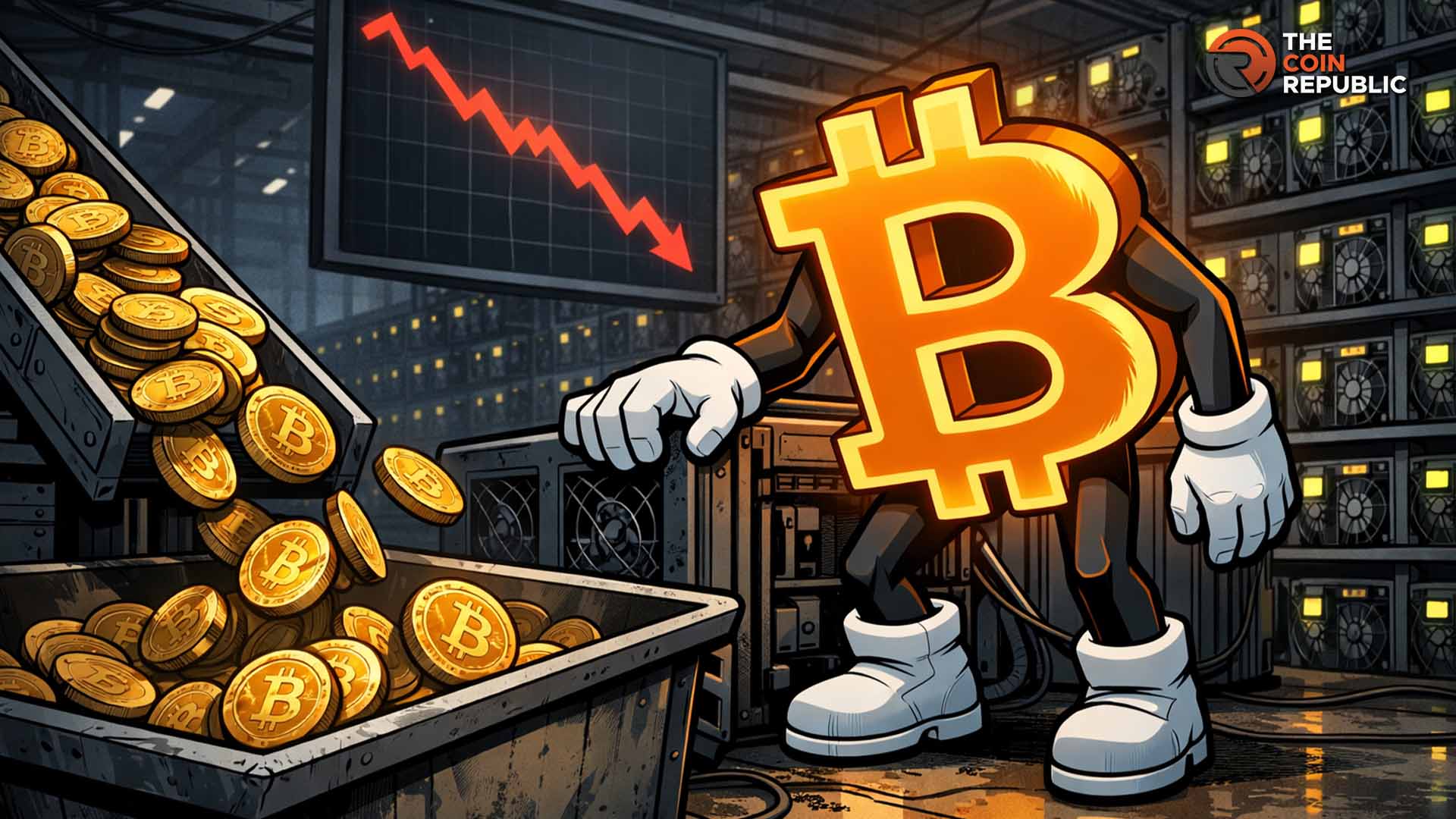
Major Bitcoin miners like Riot Platforms and MARA Holdings have liquidated significant BTC holdings in Q1, driven by increased operational costs and post-halving margin compression. The substantial sell-off by miners, occurring at prices above current market levels, indicates financial pressure and a potential overhang on near-term BTC price action. Rising energy costs, exacerbated by geopolitical factors, are forcing less efficient miners offline, leading to a decrease in hash rate and mining difficulty, which could rebalance profitability for remaining participants. Diversification strategies, including pivots to AI hosting and energy infrastructure, signal a broader corporate strategy shift among mining firms to stabilize revenue streams beyond direct Bitcoin production.
Bitcoin is currently range-bound due to significant whale order clusters at key resistance and support levels, indicating a lack of clear directional conviction from major market participants. A log regression model suggests Bitcoin has cooled from previous overheated conditions and returned to its long-term fair value zone, implying a normalization phase rather than an immediate breakout or breakdown. The market is in a consolidation phase, with price action dictated by the defense of whale-defined levels, suggesting potential for continued sideways movement until these order blocks are decisively breached.

Polymarket's removal of a controversial market tied to a missing US pilot highlights the platform's sensitivity to public and political backlash, potentially signaling increased caution in future market listings. The incident raises questions about Polymarket's content moderation policies and "integrity standards," as users and regulators scrutinize the application of its rules, impacting user trust and platform governance. Concerns over insider trading on prediction markets, amplified by this event and previous instances, could lead to further regulatory scrutiny and calls for stricter oversight from bodies like the CFTC. While Polymarket has seen revenue growth, this controversy could affect user engagement and the platform's reputation within the broader prediction market ecosystem.

While Solana's ecosystem shows strong development activity led by Chainlink, Ethereum's recent surge in failed transactions raises concerns about network reliability and user experience. The high volume of failed Ethereum transactions, despite lower usage, suggests potential underlying issues with smart contracts or the blockchain itself, warranting close observation. Active development on Solana, highlighted by Chainlink, Jupiter, and Swarms, positions these projects for future growth, but the immediate market focus remains on broader macroeconomic factors and network stability.

A significant quarterly unlock of 14.9 million LINK tokens, valued at approximately $126 million, has been transferred to exchanges, with a substantial portion landing on Binance. The timing of the transfer to Binance on a weekend with lower liquidity raises concerns about potential selling pressure, as large holders may use this window to distribute tokens with less immediate price impact. While part of the unlocked tokens are designated for staking rewards, the large inflow to Binance introduces uncertainty, making the 50-day SMA at $8.64 a critical level to monitor for potential downside price action. The market's interpretation of this large inflow hinges on whether the tokens are for operational purposes or immediate sale, with the 50 SMA acting as a key technical indicator for near-term price direction.

Bitcoin whales and sharks have realized over $30 billion in losses in Q1 2026, a level of capitulation not seen since the 2022 bear market, suggesting potential for further downside risk. The significant realized losses from both large holders (whales/sharks) and long-term holders indicate widespread selling pressure and a potential shift towards a prolonged bear market, mirroring 2022 conditions. Mounting macroeconomic pressures, including inflation fears and broader market stress, are contributing to the current sell-off and reinforcing the bearish sentiment among major Bitcoin holders.

Tether's aggressive push for a $500 billion valuation in its latest fundraising round faces investor skepticism, potentially leading to a delay and signaling current market appetite for such high valuations. The outcome of Tether's fundraising efforts, particularly concerning investor demand at its target valuation, could impact market sentiment towards stablecoins and the broader crypto financial infrastructure. Tether's pursuit of a $500 billion valuation, significantly higher than its current stablecoin market cap, highlights its ambition to expand beyond stablecoins into diverse sectors like AI and commodities, though execution remains a key question. The simultaneous news of Tether hiring KPMG for its first full USDt audit suggests a move towards greater transparency, which could bolster confidence if the fundraising faces challenges.

Tether's aggressive push for a $500 billion valuation, with a strict 14-day investor deadline, signals a significant strategic pivot beyond stablecoin issuance, aiming for a valuation exceeding major traditional banks. The outcome of this funding round is critical for Tether's future growth trajectory and its ability to compete with emerging stablecoin players and traditional finance giants, with a full audit underway to bolster transparency. Despite its market leadership in stablecoins, the proposed valuation is substantially higher than its current market cap, indicating a strong focus on future expansion and potential diversification strategies.

Bitcoin's on-chain supply metrics, with 8.2 million BTC in loss, are approaching historic bear market levels, suggesting potential undervaluation according to some analysts. Contrasting views suggest current conditions reflect early-to-mid bear market stress rather than a capitulation bottom, with potential for further downside or sideways trading. External macroeconomic factors, specifically a strong US dollar and tight global liquidity, are identified as significant headwinds for Bitcoin's price performance. Despite current market pressures, the observed supply-in-loss figures are still below the peak levels seen in the 2022 bear market, indicating resilience in some holder segments.
Signal context only. Validate with price action, liquidity, and risk limits before taking a position.
Spot BTC ETFs have recorded their first net monthly inflows since October, indicating renewed institutional conviction despite recent price declines and high fear indicators. Analysts maintain bullish Bitcoin price predictions, with targets of $150,000-$200,000, viewing the current market dip as a strategic buying opportunity rather than a warning. The article highlights the potential for new meme coins like Pepeto to generate significant returns, drawing parallels to Dogecoin's past performance and emphasizing Pepeto's unique combination of community appeal and exchange infrastructure. The upcoming Binance listing for Pepeto, coupled with its presale success and audits, positions it as a potential high-growth opportunity, contrasting with Dogecoin's limited upside potential due to its large market cap.
