
Navigating Crypto News

CoinFeather
Navigating Crypto News
Quick market read from this story
The introduction of the ShibClaw AI skill on Shibarium signals a move towards integrating AI for automating blockchain workflows, potentially enhancing developer efficiency and user interaction within the Shiba Inu ecosystem.
Despite the technological advancements, the concurrent security warning highlights the persistent risks of scams and phishing in the crypto space, emphasizing the need for user vigilance and contract address verification.
While the AI skill is an early infrastructure development, its integration with Shibarium's mainnet and Puppynet suggests a strategic effort to build more sophisticated automation capabilities for the Layer 2 network.
Deep Dive
The Shiba Inu ecosystem is advancing its technical capabilities with the testing of new tools on Shibarium, including the recently introduced ShibClaw skill. This development explores the potential of AI agents within the network, highlighting a growing interest in automation for blockchain workflows. Concurrently, ecosystem participants have issued crucial security warnings to safeguard users against potential scams.
Woofswap brought attention to the new ShibClaw skill, part of the broader OpenClaw skills collection designed for the Shiba Inu ecosystem, with a focus on Shibarium. The OpenClaw framework enables AI agents to perform tasks within blockchain environments, aiming to support practical development workflows for Shibarium builders.
The ShibClaw skill, as described, equips an AI agent with the knowledge and persona of Lucie, a known Shiba Inu ecosystem figure. This tool offers core interaction features for the Shibarium network, allowing AI agents to query blockchain data, check balances, and perform RPC endpoint interactions on both Shibarium mainnet and Puppynet. Developers see these capabilities as foundational infrastructure for future automation as blockchain networks scale.
While AI agents are still an emerging technology in crypto, developers believe they could eventually automate technical tasks that currently require manual intervention.
Alongside the ShibClaw release, a significant warning was posted in the project’s GitHub repository, advising Shiba Inu holders to exercise caution when interacting with contracts or links associated with the ecosystem. Users are urged to double-check all contract addresses and official links via the official shib.io website before any transaction to prevent losses from malicious actors.
The guidance also emphasizes that users should never share seed phrases, private keys, or wallet passwords, as official Shiba Inu teams will not request such sensitive information. The community is further cautioned to be vigilant against phishing attempts, suspicious links, and unofficial websites, noting that overly attractive offers may signal potential scams.
In related news, Shibizens addressed recent inquiries regarding Shibarium RPC updates. They clarified the distinction between the old and new RPC systems, explaining that the previous RPC referred to endpoints used by wallets and dApps to connect to Shibarium. The group also provided the network’s new official RPC details to assist developers and users following the update.
As of the latest reporting, Shiba Inu was trading at $0.000006538, reflecting a 1.42% decrease over the preceding 24 hours.
Source, catalyst, and sector overlap from the latest feed.
The article provides a guide to crypto airdrops, detailing their purpose as a marketing strategy for new projects to gain awareness and users. Airdrops can offer users opportunities to earn free tokens, but also carry risks of scams and low-value distributions, necessitating careful verification. The guide highlights ten specific websites that track and list airdrop opportunities, serving as a resource for users interested in participating.
The surge in Brent crude prices past $110, driven by escalating Iran tensions and potential Strait of Hormuz disruptions, signals a significant macro event impacting inflation, central bank policy, and global markets. Increased geopolitical risk and a fragile supply setup with limited spare capacity are creating a setup for aggressive oil price spikes, acting as a global stress test for the economy and potentially leading to recession fears if prices remain elevated. The market is pricing in a real probability of constrained oil supply, which will pressure equities, airlines, and heavy industry due to rising fuel costs, while potentially benefiting oil exporters and safe-haven assets.
Ethereum has broken below the critical $2,000 support level, with the next significant support identified at $1,850 to $1,900, indicating potential for further downside before any rebound. A substantial imbalance in derivatives data shows $3.95 billion in short liquidations above the market compared to $1.66 billion in long liquidations, suggesting that a price surge could trigger significant short covering and amplify volatility. While the immediate price action is bearish due to the support break, the heavy short exposure presents a potential catalyst for a sharp upward move if buyers step in at the $1,850-$1,900 zone, creating a volatile trading environment.
Bitcoin is retesting a key descending trendline that previously acted as resistance, with its ability to hold this level determining the validity of its recent breakout. Liquidity heatmaps indicate a strong gravitational pull towards the $64K-$65K zone, suggesting that a failure to hold the current trendline could lead to a significant downside move. The market is currently range-bound, with price action suggesting a battle between buyers defending the trendline and sellers pushing towards lower liquidity pockets. Traders should monitor the $67,000-$68,000 range closely as a critical inflection point for short-term directional bias.
A US federal court dismissed all anti-terrorism claims against Binance, removing a significant legal overhang that could be interpreted as a positive development for the exchange and its native token. Despite the legal win, BNB's price remains under technical pressure and in a short-term downtrend, indicating that market sentiment is not yet fully convinced of a sustained recovery. Traders will be closely watching the $650 to $700 zone for a potential recovery attempt, while downside risk remains if key support at $588 fails.
Fantium CEO Jonathan Ludwig emphasizes that successful sports tokenization hinges on utility and real financial alignment, not just speculation, suggesting a shift towards more grounded applications in the sector. The introduction of the $BANK token for on-chain poker bankroll management signifies Fantium's expansion into formalizing private financial markets within niche sports verticals, aiming to create buyback and utility flywheels. Fantium's strategic choice to build on Solana is driven by its existing liquidity and infrastructure, indicating a preference for established ecosystems that can support practical, non-speculative tokenization models.
The potential incompatibility of current hierarchical deterministic wallet designs with post-quantum cryptography poses a significant operational risk for crypto exchanges, potentially impacting their ability to securely generate deposit addresses. New research and prototype wallets from Project Eleven aim to bridge this gap by restoring non-hardened key derivation under quantum-resistant schemes, suggesting a path for exchanges to maintain security and functionality. While Ethereum may leverage account abstraction for easier integration, Bitcoin would likely require a protocol upgrade to support new quantum-resistant signature schemes like ML-DSA, highlighting a potential divergence in upgrade paths for major Layer 1s.
The announcement of Starcloud mining Bitcoin from space highlights a potential paradigm shift in mining economics, suggesting that off-world operations could become significantly more cost-effective than terrestrial mining due to lower energy costs. This development, if successful, could position space-based data centers as a major future infrastructure for computationally intensive tasks like Bitcoin mining, potentially impacting energy consumption and the geographical distribution of mining operations. While the immediate impact on Bitcoin's price is likely minimal, the long-term implications of space mining could influence the sustainability and scalability of the Bitcoin network, making it a key development to monitor for infrastructure and energy sector investors.
The launch of Vera Report, an anonymous whistleblower app integrated with Telegram, leverages zero-knowledge proofs and confidential computing to protect user data, signaling a potential increase in fraud reporting and recovery. Vera Report's integration with Telegram and its focus on privacy-enhancing technologies like zero-knowledge proofs could drive adoption for secure data submission to agencies and law firms. The app's design, stemming from AlphaTON CEO Brittany Kaiser's personal experience, aims to facilitate secure evidence submission and potential payouts for whistleblowers, highlighting a niche but important use case for blockchain technology.
Stripe and Circle are developing infrastructure for AI agents to transact autonomously using stablecoins, potentially disrupting traditional credit card networks. The nascent AI agent market, projected to reach $47.1B by 2030, presents a significant growth opportunity for stablecoin adoption and related financial infrastructure. While the technology shows promise, risks such as logic errors leading to substantial financial loss and underdeveloped regulatory frameworks pose challenges to widespread adoption. The structural shift towards AI-driven commerce could lead to significant repricing for incumbent payment networks like Visa and Mastercard, as evidenced by recent market reactions.
Suspected North Korean hackers exploited the React2Shell flaw to breach crypto cloud systems, stealing sensitive data including private keys and source code. The coordinated attacks targeted staking platforms and exchange providers, indicating a sophisticated effort to compromise core infrastructure and potentially impact user funds. While attribution is moderate, the exploitation of cloud credentials and specific vulnerabilities highlights ongoing systemic risks to crypto service providers.
The article highlights Bitwise CIO Matt Hougan's view that only utility-focused altcoins will rally, positioning Pepeto as a prime example due to its exchange infrastructure and $7.5M raised during a market downturn. Pepeto's presale success, with $7.5M raised and functional exchange infrastructure across three blockchains, is presented as a direct response to the shift away from hype-driven altcoins towards projects with tangible solutions. The contrasting performance of BlockDAG, which raised $440M but faces delays and leadership questions, serves to underscore Pepeto's focus on verifiable development and timely delivery as a key differentiator for presale investors.
Chainlink is exhibiting a tightening consolidation pattern near a key descending trendline, suggesting a potential breakout is imminent as capital inflows persist despite broader market weakness. Sustained inflows into LINK investment products, totaling nearly $90.66 million, indicate strategic accumulation by investors who are positioning for a potential upward move. A decisive break above the $9.20-$9.40 resistance trendline could propel Chainlink towards the $10 psychological level and potentially the $11-$12 region, while support at $8.40-$8.60 remains critical.
The study highlights that while AI can reduce burnout by automating repetitive tasks, excessive use and oversight can lead to significant cognitive fatigue, termed 'AI brain fry,' potentially impacting employee performance and retention. 'AI brain fry' is associated with increased decision fatigue (33% more) and a higher likelihood of major errors (40% more), suggesting a tangible cost to businesses that could translate to financial losses and operational risks. The findings indicate that companies need to strategically implement AI, focusing on clear purpose definition and measurable outcomes rather than incentivizing sheer usage, to mitigate negative employee impacts and maximize AI's benefits. For the crypto industry, which is rapidly integrating AI, this research serves as a cautionary note on managing AI adoption to prevent detrimental effects on developer productivity and overall operational efficiency.
Live Feed
Loading the broader stream in the same flow as the homepage feed.

The Digital Asset Market Clarity Act is viewed by former CFTC Chair Christopher Giancarlo as more critical for traditional banks than crypto firms, as banks require regulatory certainty to invest in new digital infrastructure. The stalled legislation highlights a conflict between banks seeking regulatory clarity and crypto firms' existing innovation, with potential for crypto development to move offshore if U.S. banks continue to resist. The debate around stablecoin rewards within the Clarity Act indicates a significant point of contention, potentially impacting the future of blockchain-based payment systems and the competitive landscape for financial institutions.

Hyperliquid's HIP-3 protocol achieved a record $720 million in single-day trading volume, indicating increased trader activity during periods of heightened market volatility. The surge in trading volume on HIP-3, driven by geopolitical tensions and rising crude oil prices, suggests that decentralized derivatives platforms can benefit from increased market uncertainty. This record volume highlights growing user engagement with platforms that offer opportunities to capitalize on short-term price swings, potentially signaling a trend in derivatives trading.

The CLARITY Act's potential failure poses a significant disadvantage to U.S. banks by creating regulatory uncertainty, potentially causing them to fall behind international competitors in digital payments. The core conflict over stablecoin yield payments between crypto firms and banks is stalling the CLARITY Act, with former CFTC Chair Giancarlo highlighting this as the primary legislative hurdle. Analysts suggest that the passage of the CLARITY Act by mid-2026 could act as a substantial catalyst for a crypto market rally, signaling a maturing institutional era for digital assets. President Trump's reported support for the crypto industry's stance on stablecoin yields indicates a political dimension to the regulatory debate, potentially influencing legislative outcomes.

Japanese crypto exchange Bitflyer experienced a significant 200% surge in trading volume, outperforming global giants like Binance and Coinbase during a period of sharp Asian equity market declines. The surge in Bitflyer's volume correlates with a broader regional selloff in equities driven by a sharp increase in oil prices and geopolitical tensions, suggesting a potential flight to digital assets as a safe haven or alternative investment during market stress. Bitcoin's performance against the Japanese Yen showed relative strength compared to USD and KRW, indicating that Japanese traders may have been more actively reallocating capital into BTC amidst regional economic uncertainty. The heightened trading activity on Bitflyer highlights the exchange's role as a key venue for Japanese traders seeking alternative assets during periods of traditional market volatility, warranting close observation for sustained trends.

Market research projects a significant expansion of the global cryptocurrency market from $2.3 billion in 2023 to $5.5 billion by 2033, indicating sustained long-term growth potential. The projected 7.5% annual growth rate is underpinned by increasing demand for transparent payment systems and a rise in cross-border remittances, suggesting fundamental drivers for adoption beyond speculation. The Asia-Pacific region is identified as a key growth engine, driven by increasing crypto adoption and expanding blockchain payment solutions, highlighting regional market dynamics.
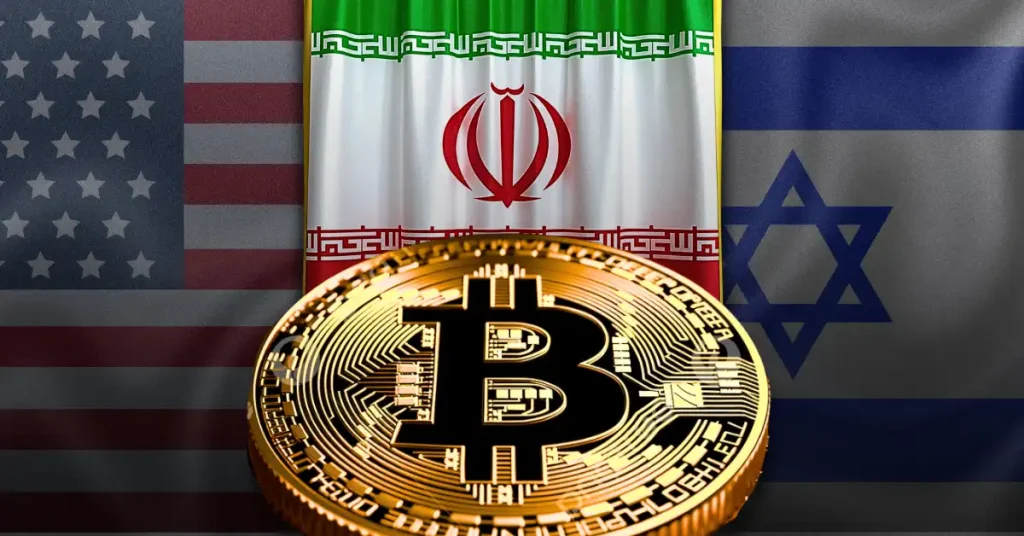
Geopolitical tensions in the Middle East are driving oil prices to $110, increasing the probability of a US stock market crash to 35% according to veteran strategist Ed Yardeni. Despite broader market turmoil and a 35% chance of a US stock market crash, Bitcoin is demonstrating resilience, holding near $67K, suggesting a potential decoupling from traditional risk assets in this specific scenario. The article highlights a divergence where traditional markets face increased downside risk due to oil price spikes and geopolitical instability, while Bitcoin shows surprising stability, implying a potential flight to perceived digital safe havens or a market that is less sensitive to this particular commodity shock.
Institutional investors are accumulating Solana (SOL) via ETFs despite a 57% price drop, signaling a belief in long-term recovery and a potential accumulation phase. The article promotes Pepeto as a potential 'next crypto to explode,' highlighting its $7.5M presale, cross-chain bridge, and upcoming exchange listing as key drivers for significant returns. While Solana ETFs demonstrate institutional confidence in a recovering asset, the narrative shifts to presale opportunities like Pepeto, suggesting that early entry in new projects can yield higher returns than established assets during downturns. The comparison between Solana's ETF inflows and Pepeto's presale success frames a market dynamic where institutional capital supports established assets during dips, while retail and speculative capital seeks out high-risk, high-reward early-stage projects.

Aster DEX is delisting the OWLUSDT perpetual contract, signaling reduced liquidity and potential market pressure for Owlto Finance's token. The delisting, preceded by a 'reduce-only' mode, indicates a formal exit from the derivatives market for OWLUSDT, impacting traders with open positions. Owlto Finance's OWL token has shown significant underperformance, with substantial weekly and yearly declines, making the delisting a further negative catalyst.

Tokenized crude oil futures on Hyperliquid experienced a sharp pullback from recent highs following news of potential G7 strategic reserve releases, indicating market sensitivity to coordinated supply-side interventions. The rapid price reversal in tokenized oil futures highlights the efficiency of crypto-native venues in pricing geopolitical risk and potential market interventions, even outside traditional trading hours. Bitcoin saw a brief reversal but largely stabilized, suggesting that while oil price volatility is a market factor, its direct impact on BTC remains muted due to U.S. energy independence and growing institutional adoption. The potential G7 reserve release represents a significant intervention in energy markets, with its effectiveness in offsetting supply disruptions contingent on the scale and duration of the action.

Bitcoin is demonstrating resilience by holding steady against a backdrop of significant global market turmoil, suggesting potential decoupling or a flight to perceived safe havens within crypto. Despite current stability, the article highlights analyst Willy Woo's view that any near-term Bitcoin rally to the mid-$80,000s could be a 'bull trap' within a broader bear market, cautioning against over-optimism. The contagion effect from Asian market crashes impacting US futures indicates heightened market volatility, posing a significant test for Bitcoin's ability to maintain its current price levels.
The G7's consideration of releasing up to 400 million barrels of oil from strategic reserves signals a potential increase in global energy supply, which could exert downward pressure on oil prices. While the article focuses on oil markets, significant shifts in energy prices can indirectly impact broader financial markets, including cryptocurrencies, by influencing inflation expectations and investor risk appetite. The immediate market reaction saw oil prices slip below $108 per barrel, indicating that traders are pricing in the possibility of this supply increase, a sentiment that could extend to other commodities or risk assets.

Solana's significant increase in stablecoin volumes, reaching $650 billion in February and surpassing Ethereum and Tron, indicates a growing utility beyond speculation and a strong contender in the stablecoin transaction space. The surge in Tether Gold (XAUT) volumes on Solana to over $280 million highlights the network's increasing adoption for Real-World Assets (RWAs), positioning it as a key player in this emerging sector. Solana's rapid growth in RWA holder accounts, now exceeding 1.16 million, demonstrates a significant shift in its ecosystem's focus and potential to capture a substantial share of the growing RWA market.
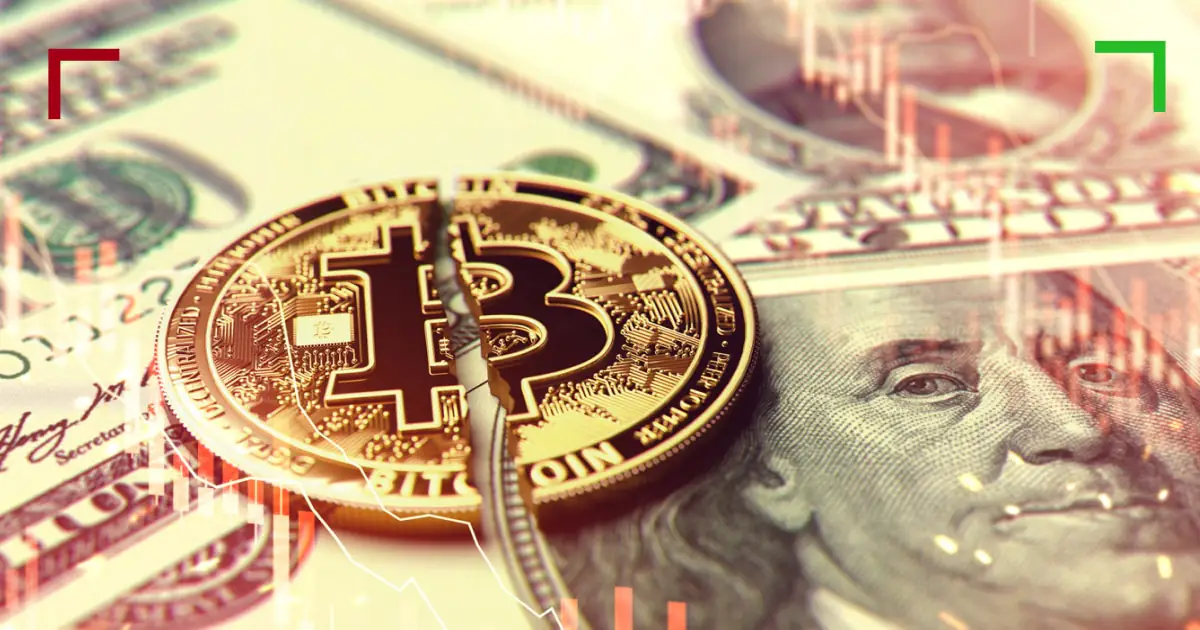
The historical four-year Bitcoin cycle, driven by halvings and retail speculation, appears to be evolving due to increased institutional adoption and ETF inflows, leading to shallower drawdowns and potentially longer market phases. Institutional demand, now holding approximately 12% of Bitcoin's supply via ETFs and corporate treasuries, is smoothing price volatility and altering the market's reaction to traditional catalysts like halvings. While the halving's impact on inflation has diminished, the market's response to macro factors like Fed policy is also becoming less predictable, suggesting a more complex interplay of forces driving Bitcoin's price. The diminishing returns across recent cycles and the shift in Bitcoin's identity towards a store of value, as suggested by JPMorgan's target and on-chain metrics, indicate a maturing asset class that requires updated analytical frameworks.

Kalshi's expansion into Brazil via partnership with XP Inc. marks a significant internationalization step, introducing event contracts tied to macroeconomic indicators like inflation and interest rates. The move into Brazil, a market with nascent prediction market regulations, suggests a strategic approach to capturing new user bases and exploring regulatory arbitrage opportunities. Availability of these contracts to both U.S. Kalshi investors and select XP users in Brazil indicates a dual-market strategy, potentially increasing liquidity and market participation.
Kalshi's expansion into Brazil via partnership with XP Inc. marks a significant international growth step, introducing event contracts tied to macroeconomic indicators. The move into Brazil, despite nascent regulatory clarity, signals potential for new financial derivatives markets on blockchain technology. This partnership could pave the way for broader adoption of event-based contracts in emerging markets, offering novel hedging and speculation tools.
Signal context only. Validate with price action, liquidity, and risk limits before taking a position.
