
Navigating Crypto News

CoinFeather
Navigating Crypto News
Quick market read from this story
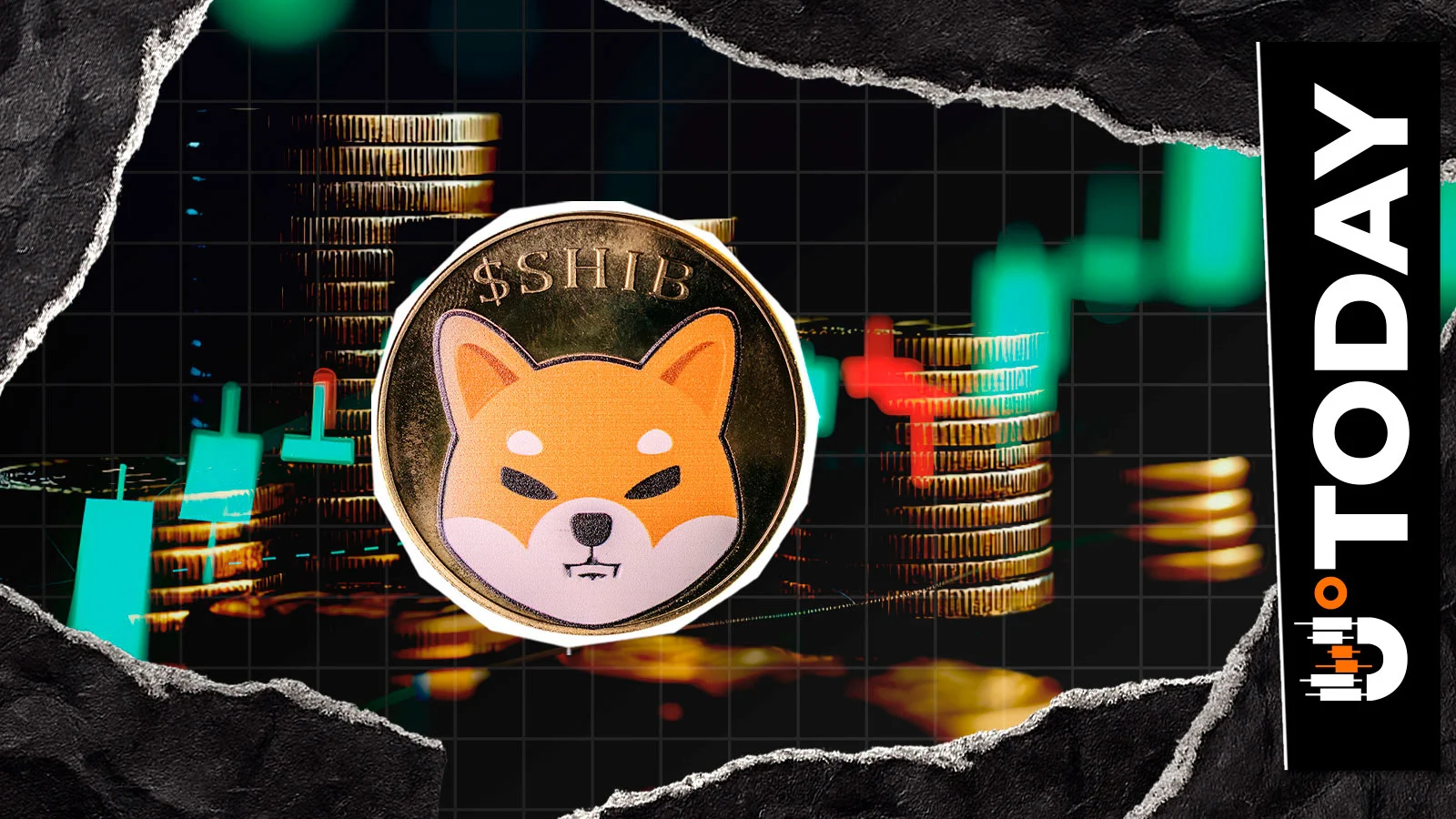
Shiba Inu's burn rate has surged over 3,230% in 24 hours, removing approximately 4.11 million SHIB from circulation, which signals increasing demand and a potential positive catalyst for price action.
The significant reduction in SHIB supply, despite the small dollar value of tokens burned, is interpreted by market participants as a bullish indicator, potentially supporting the recent 4.7% price increase.
While the burn event is positive, the relatively small amount of SHIB burned ($24 worth) suggests this is more of a sentiment driver than a fundamental supply shock, warranting a 'WATCHLIST' action type.
Source, catalyst, and sector overlap from the latest feed.
Adam Back has again denied being Satoshi Nakamoto, emphasizing that Bitcoin's creation was a synthesis of existing cryptographic concepts rather than a singular invention. Back's assertion that Bitcoin's anonymity as a creator is a strength, not a weakness, reinforces the narrative of its decentralized and autonomous nature, which is a core tenet for its market perception. The repeated discussion around Satoshi's identity, even with denials, highlights persistent market interest in Bitcoin's origins, though this specific development offers no direct trading catalyst.
XRP experienced a significant short seller liquidation event, with imbalances jumping 1,278% as the price rose over 4%, indicating strong short-covering pressure. The price surge in XRP, exceeding 5% in 24 hours and breaking key resistance levels, is supported by broader market recovery and positive institutional sentiment, including significant ETF inflows. Despite recent price action, the $1.40-$1.42 resistance zone remains a critical hurdle for XRP; failure to breach it could lead to a retest of the $1.30 support level.
Live Feed
Loading the broader stream in the same flow as the homepage feed.
The synchronized surge of XRP and Japan's Nikkei 225 following the Strait of Hormuz ceasefire highlights a growing correlation between geopolitical stability, energy market relief, and crypto asset performance, particularly for assets with strong institutional ties to affected regions. This development suggests that macroeconomic and geopolitical events are increasingly influencing crypto market dynamics, positioning XRP as a potential barometer for how global stability shifts impact digital assets with significant regional adoption. The reported whale accumulation of XRP and significant liquidity levels at key price points ($1.27-$1.35) indicate strong underlying demand and potential for continued price action, driven by both macro factors and on-chain activity.
Solana price hovers near key levels as ETF outflows hit markets, with $76 support and $90 resistance shaping the next move.
Key Takeaways US-Iran ceasefire drove ETH from $2,060 to $2,280 on April 8. Taker buy ratio rising structurally for four […] The post ETH Taker Ratio Turns Bullish: Institutions Already Left appeared first on Coindoo.

Iran's reported plan to charge oil tankers a Bitcoin toll for passage through the Strait of Hormuz introduces a novel use case for crypto as a sanctions-resistant trade infrastructure. The development signifies Bitcoin's potential role as a settlement instrument in geopolitical chokepoints, moving beyond speculative or ideological adoption narratives. While Bitcoin's traceability is a weaker point than claimed, its ability to bypass conventional banking rails makes it a plausible tool for sanctioned entities facing urgent trade needs. The market will closely watch for confirmation of actual BTC settlement versus potential use of stablecoins or other crypto assets, indicating a broader trend of digital assets facilitating trade under sanctions.
The post Coinbase Stock Price Faces Resistance Despite Securing Crypto AFSL appeared first on Coinpedia Fintech News Coinbase stock price teased a bullish spike but then hesitated at the worst possible moment. The recent move up toward $189 looked promising, especially coming off that February support zone around $140–$160. That area isn’t random either as it lines up with a two-year-old demand zone. So naturally, buyers showed up. But let’s not get …
Bittensor (TAO) is testing a critical resistance zone around $350-$360, with indicators showing weakening momentum and money flow despite a bullish price structure. The divergence between rising price and cooling Open Interest suggests the recent rally may be driven by short covering rather than sustained spot demand, increasing the risk of rejection. A decisive break above $380 is required for TAO to confirm a bullish continuation and target higher levels, while failure to do so could lead to a pullback towards $300 or $260. Traders should monitor the $350-$360 resistance and the $380 confirmation level for potential short-term trading opportunities, with caution advised due to conflicting on-chain signals.

Bitcoin's price recovery above $70,000, driven by geopolitical news, is tempered by persistently high leveraged long positions on Bitfinex, suggesting underlying market caution and potential for unwinding. Elevated leveraged long positions, historically a contrarian indicator, signal that market participants may not fully price in the rally's sustainability, creating a risk of sharp pullbacks if sentiment shifts. Muted U.S. institutional demand, indicated by the fluctuating Coinbase Bitcoin Premium Index, raises questions about the current rally's fundamental support and its long-term viability.
The SEC's shift away from aggressive enforcement actions and dismissal of prior cases signals a potential reduction in regulatory overhang, which could encourage institutional capital inflow into the crypto market. A move towards formal rulemaking and a focus on fraud-only oversight by the SEC may de-risk innovation for crypto projects, allowing for more constructive engagement with regulators. The significant drop in enforcement actions and penalties suggests a change in regulatory strategy, potentially leading to a more predictable environment for crypto businesses and investors.

Standard Chartered's potential full acquisition of Zodia Custody signals a significant consolidation trend within the institutional crypto custody space, driven by increasing regulatory clarity and competition. The move by Standard Chartered, a major global bank, to integrate or acquire a dedicated crypto custodian like Zodia indicates a maturing market where traditional finance is actively seeking to control key infrastructure for digital assets. This development could lead to increased institutional adoption of crypto custody services, potentially benefiting projects and platforms that align with established financial institutions' operational and compliance standards.

The post Polygon Labs Eyes $100 Million to Launch Stablecoin Payments appeared first on Coinpedia Fintech News Polygon Labs is in early talks to raise up to $100 million to scale a regulated stablecoin payments business, shifting its focus from generic blockchain support to real‑world money movement that boosts on‑chain transaction volume. The push builds on its recent acquisitions of licensed U.S. payment and wallet firms Coinme and Sequence, aiming to integrate fiat …
Bitcoin briefly surged to three-week highs on news of a US-Iran ceasefire, but failed to sustain the momentum above $72,000, indicating that the market is quickly discounting geopolitical relief. The failure to hold higher levels suggests that while geopolitical events can provide short-term catalysts, underlying market sentiment and technical levels remain critical for sustained price action. Upcoming US inflation reports are highlighted as a key driver for future volatility, suggesting that macroeconomic data will likely overshadow geopolitical news in the near term for BTC price direction.
XRP's surge to become the top-traded asset on Upbit, surpassing BTC and ETH, highlights South Korea's significant influence on altcoin market dynamics and investor appetite for payment-focused tokens. The substantial trading volume for XRP on Upbit suggests increasing institutional interest and potential for wider adoption in cross-border payments, driven by regional market activity. This development indicates that regional exchanges and specific asset narratives can capture significant market share, challenging the dominance of established large-cap cryptocurrencies in certain markets.

Pharos Network secured a significant $44 million Series A funding round at a $1 billion valuation, signaling strong investor confidence in its RWA-focused Layer 1 blockchain ahead of its mainnet launch. The substantial funding and high valuation underscore growing institutional interest in tokenizing traditional assets, positioning Pharos to capture a share of the projected $50 trillion RWA market. With a mainnet debut imminent and a focus on regulated financial activity, Pharos is poised to become a key infrastructure provider in the expanding RWA sector, potentially driving adoption and integration.
Iran's proposal to collect Bitcoin fees for oil tankers passing through the Strait of Hormuz represents a novel application of cryptocurrency in international trade and sanctions circumvention. This development could signal a growing trend of nation-states exploring digital assets for payment mechanisms, potentially impacting demand for cryptocurrencies like Bitcoin and stablecoins in specific geopolitical contexts. The stated purpose of monitoring ship movements and preventing weapons transfers suggests a dual-use case for blockchain technology beyond simple financial transactions, warranting observation for further implications.
Iran's proposed Bitcoin toll for oil tankers transiting the Strait of Hormuz signals a strategic move to circumvent sanctions by leveraging cryptocurrency for untraceable payments. The implementation of Bitcoin for transit fees could introduce new complexities and potential volatility to oil markets, especially given the geopolitical significance of the Strait. This development highlights the increasing use of digital assets by nation-states to navigate international financial restrictions, potentially setting a precedent for future sanction circumvention strategies.
Signal context only. Validate with price action, liquidity, and risk limits before taking a position.
