
Navigating Crypto News

CoinFeather
Navigating Crypto News

Quick market read from this story
Robinhood's $1.5 billion share buyback signals management confidence in undervaluation, potentially supporting HOOD's stock price despite recent downturns.
The company's commitment to its Layer-2 network and RWA tokenization, evidenced by the upcoming mainnet launch, suggests continued strategic investment in crypto infrastructure.
Despite a significant year-to-date stock decline, the buyback authorization and a strengthened credit facility indicate a focus on shareholder value and financial stability.
Deep Dive
Robinhood, the stock and crypto trading platform, has announced its board of directors has approved a $1.5 billion share repurchase program. This significant buyback initiative is set to be carried out over the next three years, signaling confidence from the company's leadership despite recent stock performance challenges.
The newly authorized program includes $1.1 billion in new capacity, with the remaining amount being rolled over from a previous repurchase plan. Robinhood's financial chief, Shiv Verma, stated that the authorization reflects confidence in the company's ability to innovate and create shareholder value. This move, typically indicating a belief that a company's stock is undervalued, comes as Robinhood's shares (HOOD) have experienced a downturn this year, influenced by broader market declines in stocks and cryptocurrencies.
In addition to the share buyback, Robinhood Securities, a subsidiary, has secured a $3.25 billion revolving credit facility with JPMorgan Chase, replacing its prior $2.65 billion facility. This new facility can be expanded by up to $1.62 billion, potentially reaching a total of $4.87 billion.
Robinhood's stock closed Tuesday down 4.7% at $69.08, marking its lowest point this year, though it saw a slight recovery to $70.90 in after-hours trading. Year-to-date, the stock has fallen nearly 39% and is down 54.7% from its all-time high in October. Despite this recent volatility, the stock has gained nearly 43% over the past 12 months, attributed to its expansion into new products like prediction markets and banking services.
Analyst sentiment remains largely positive, with TipRanks reporting a 12-month average price forecast of $123.85. Based on the assessments of 16 Wall Street analysts, the stock is currently rated as a "strong buy."
Source, catalyst, and sector overlap from the latest feed.
Law enforcement successfully accessed and transferred 500 BTC from a wallet previously thought to be lost, highlighting the potential for significant supply to re-enter circulation if such assets are liquidated. The recovery of Bitcoin from a convicted drug dealer's lost wallet, facilitated by Europol, demonstrates evolving capabilities in tracing and seizing illicitly obtained crypto assets. While the direct market impact of this specific recovery may be limited, it signals increased regulatory and law enforcement pressure on dormant or seized crypto holdings, potentially affecting future market dynamics.
Ongoing net outflows of Bitcoin from exchanges suggest genuine long-term accumulation by investors, indicating sustained demand despite current price consolidation. The removal of BTC from centralized platforms signals growing investor confidence in Bitcoin's fundamentals, potentially positioning it as a hedge against traditional assets. While exchange outflows point to accumulation, the demand is not yet strong enough to restart a significant uptrend, suggesting a continued range-bound market in the near term.
Pharma firm Enlivex secured $21M in debt financing to acquire a substantial amount of RAIN tokens, signaling a strategic move to bolster its treasury with digital assets from a growing prediction market platform. The acquisition of RAIN tokens at a significant discount, coupled with an extended option to purchase more, suggests Enlivex is positioning itself to benefit from the projected growth in the prediction market sector. While Enlivex's stock and RAIN token showed minimal price movement post-announcement, the substantial capital raise and token acquisition could serve as a longer-term catalyst for both entities if the prediction market trend continues.
OpenAI's decision to discontinue its Sora video app after only six months signals a strategic pivot away from consumer-facing video products, potentially impacting the broader AI development landscape. The cancellation of a $1 billion Disney deal alongside the Sora shutdown indicates a significant shift in OpenAI's business strategy, moving focus towards enterprise productivity tools and robotics. Concerns over deepfakes and the rapid proliferation of realistic AI-generated content may have contributed to the early termination of Sora, highlighting regulatory and ethical challenges in AI development.
Ethereum developers are proactively addressing the long-term threat of quantum computing by forming a dedicated team and planning protocol-level solutions by 2029. The implementation of quantum-resistant cryptography, specifically SNARK-based signatures, is a complex undertaking that requires years of coordination and formal verification to avoid network disruption. While the quantum threat is not immediate, the proactive development of quantum-safe solutions by the Ethereum Foundation signals a commitment to network security and long-term viability, potentially influencing investor confidence. The focus on securing standard Ethereum wallets first highlights the team's strategy to protect the largest pools of value, with subsequent efforts targeting operational wallets on exchanges and bridges.
Bittensor's TAO token has seen a significant price surge of nearly 90% in March, driving substantial growth in its subnet ecosystem which now boasts a cumulative valuation close to $1.5 billion. The increasing valuation and trading volume of Bittensor subnets, with many posting substantial gains, indicate strong investor interest and potential for further ecosystem expansion beyond the core TAO token. The introduction of dynamic TAO (dTAO) tokens, backed by TAO reserves and launched in 2025, directly links subnet value to the core asset, creating a more integrated and potentially self-reinforcing ecosystem. Several subnets are demonstrating real-world utility and commercial viability, with examples like Chutes achieving over $100 million valuation and Targon securing significant funding, highlighting the practical applications of decentralized AI.
Litecoin's predictable halving schedule, reducing block rewards by 50% every 840,000 blocks, reinforces its scarcity model and can influence market sentiment and price dynamics. The upcoming Litecoin halving in July 2027, which will decrease the block reward from 6.25 LTC to 3.125 LTC, is a key event that historically correlates with increased attention and potential price volatility. While past halvings have often preceded bullish cycles for LTC, the actual price outcome remains dependent on broader market conditions and demand, making it a catalyst for observation rather than a direct buy signal.
Robinhood's board has approved a significant $1.5 billion share repurchase program, signaling management's confidence in the company's valuation despite recent stock declines. The expanded $3.25 billion credit facility, with an option to increase to $4.875 billion, provides Robinhood with enhanced financial flexibility and liquidity. While the buyback and credit facility are positive for Robinhood's corporate health, the market's reaction will likely depend on its ability to leverage these resources to drive future growth, particularly in its crypto business.
XRP Ledger's increasing dominance of payment transactions, now at 53.2%, signals a maturation towards real-world utility beyond speculative trading. The rapid growth of RLUSD, exceeding $1 billion market cap and doubling supply since December, highlights increasing demand for stable, efficient value transfer on XRPL. Convergence of payment dominance, growing DEX activity (34.2%), and institutional interest, including potential ECB collateral acceptance, positions XRPL as a multifunctional financial ecosystem.
BitMine's aggressive $140 million ETH accumulation in one week, surpassing Michael Saylor's BTC purchases, signals strong conviction in Ethereum's long-term value by a major institutional player. With BitMine now holding 3.86% of the total Ethereum supply, this significant accumulation could influence market dynamics and potentially signal further institutional interest in ETH. The comparison to Strategy's Bitcoin holdings highlights a potential shift in institutional focus or diversification strategies within the digital asset market.
Real estate mogul Grant Cardone reiterates his bullish stance on Bitcoin, asserting it should be valued at $280,000, suggesting significant undervaluation at current market prices. Cardone's company, CardoneCapital, is actively accumulating Bitcoin through a novel strategy of using real estate rental income, demonstrating a growing trend of traditional asset holders integrating crypto into their balance sheets. The article also highlights other institutional accumulation trends, noting Bitmine's significant Ethereum purchases and MicroStrategy's continued Bitcoin acquisition, indicating sustained institutional interest in major cryptocurrencies.
Ripple's RLUSD stablecoin pilot in Singapore's central bank sandbox signals a strategic push into regulated trade finance, potentially streamlining cross-border payments. The initiative leverages smart contracts for automated payments upon shipment verification, aiming to reduce traditional trade finance delays and manual processes. This development positions Ripple beyond speculative crypto trading, focusing on institutional adoption for real-world business applications like trade finance. Successful implementation of this pilot could pave the way for broader adoption of stablecoins in global trade finance infrastructure.
T. Rowe Price's inclusion of Dogecoin in its actively managed crypto ETF filing signals a potential shift in institutional perception of meme coins as a legitimate asset class, though the immediate price targets remain modest. While the ETF filing provides a bullish narrative for DOGE, the article contrasts this with the potential for significantly higher returns in early-stage presale projects like Pepeto, which are positioned to capture gains before institutional capital arrives. The filing represents a significant regulatory event for Dogecoin, potentially increasing its exposure to traditional finance, but the article suggests that the true wealth generation in meme coins historically occurred during retail-driven phases.
Wintermute's launch of WTI crude oil CFDs leverages crypto infrastructure for traditional asset trading, addressing weekend market gaps and potentially attracting new capital flows. The introduction of OTC CFDs by Wintermute offers a bespoke derivative solution, contrasting with Hyperliquid's perpetuals and catering to institutional demand for 24/7 trading flexibility. This move by Wintermute Asia signifies an expansion beyond purely digital assets into tokenized traditional finance products, broadening its market reach and revenue streams. The demand for 24/7 oil trading, highlighted by geopolitical events, suggests a growing intersection between traditional finance and crypto markets, driven by the need for continuous risk management.
Proposed regulatory action targeting stablecoin yield generation could significantly impact Circle's revenue model and reduce USDC's market appeal, potentially leading to decreased demand and price pressure. The market reaction, with Circle and Coinbase shares falling, indicates investor concern over the profitability of stablecoin-related products under potential new regulations, suggesting a shift in risk perception for related assets. While the draft proposes banning interest-like rewards, the allowance of activity-based rewards leaves room for interpretation and potential adaptation, suggesting that the full impact on stablecoin utility and revenue streams is yet to be determined.
Live Feed
Loading the broader stream in the same flow as the homepage feed.
Ripple's participation in Singapore's BLOOM initiative, focusing on tokenized bank liabilities and stablecoins, signals a strategic move towards leveraging blockchain for improved cross-border trade settlement. The pilot project utilizing the XRP Ledger and RLUSD for automating trade obligations and payments indicates a practical application of Ripple's technology in a regulated financial environment, potentially enhancing efficiency and interoperability. This collaboration with the Monetary Authority of Singapore and supply chain firm Unloq positions Ripple to influence the development of future financial settlement frameworks, with potential positive implications for XRP's utility and adoption.

The post Bitcoin Cash (BCH) Price Signals Next Wave: $500 Breakout Now in Play appeared first on Coinpedia Fintech News Bitcoin Cash (BCH) price is beginning to shift gears, and this time, the structure suggests it’s not just another short-term bounce. As the broader crypto market stabilizes with Bitcoin holding higher levels and Ethereum regaining momentum, BCH is now flashing a clean, technically-driven breakout setup. Trading near the $470–$480 range, Bitcoin Cash price is not …
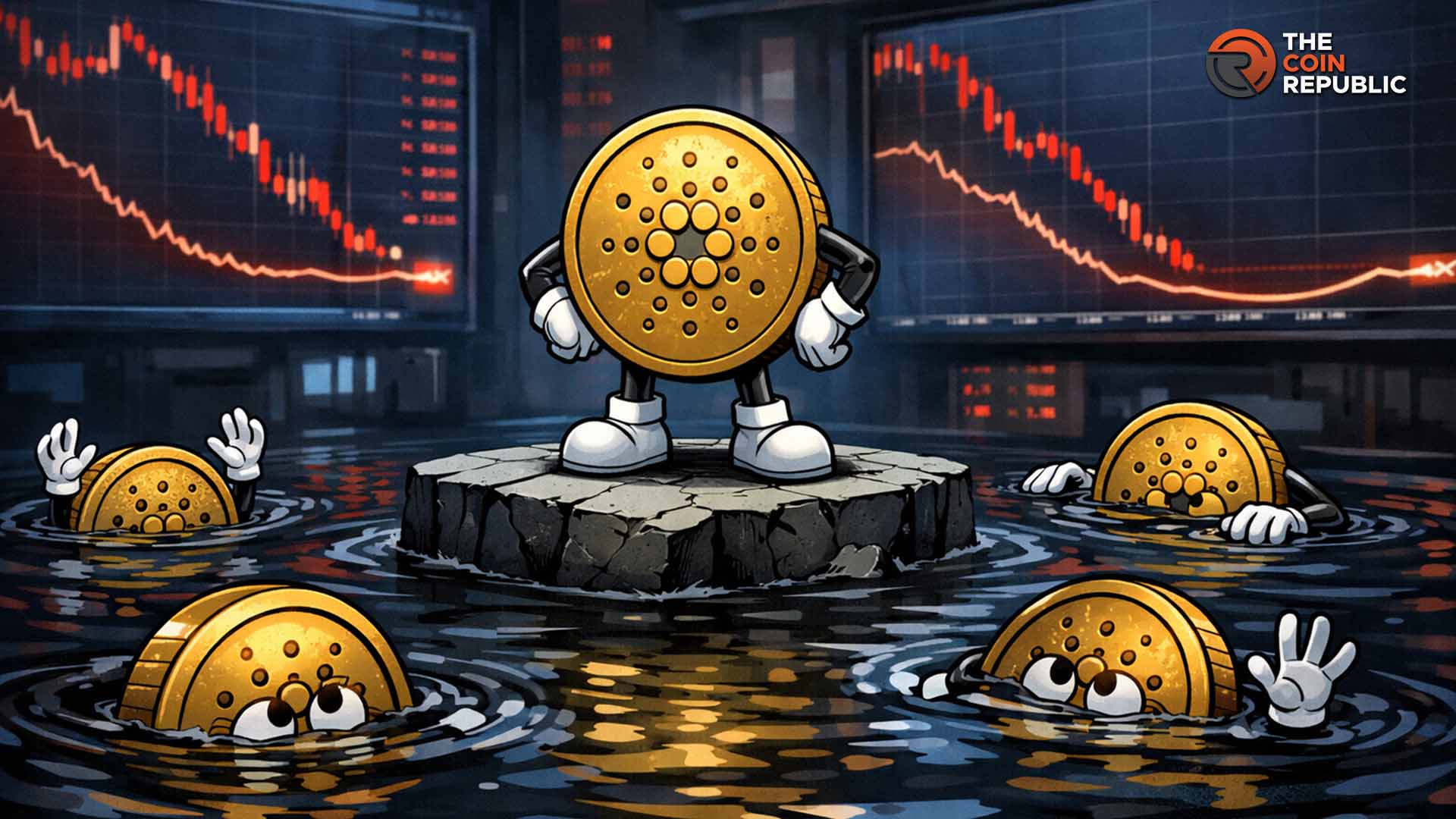
Cardano's ADA price is showing potential turnaround signals as most wallets are deep in loss (approx. 43%), indicating a possible buy zone based on MVRV data. Elevated short positions on Binance suggest a contrarian bullish setup, as extreme bearish sentiment has historically preceded ADA price reversals. Cardano's unique transaction predictability, reducing failed trades and front-running risks, offers a structural advantage for reliability-focused applications, though this is not yet reflected in ADA's price. Historical price action shows ADA has experienced significant rebounds (85%-200%) from similar price levels, suggesting potential for a swift recovery if selling pressure subsides.

UMA's Optimistic Oracle is positioned as critical infrastructure for on-chain verification, with potential price appreciation tied directly to its adoption in DAO governance, prediction markets, and cross-chain solutions. While current price action shows a downtrend, sustained growth in oracle demand and dispute resolution could drive UMA towards significant price targets by 2030, contingent on measurable adoption beyond speculative cycles. The long-term outlook for UMA hinges on its ability to become a foundational layer for decentralized decision-making and real-world data integration, rather than relying on short-term market hype.

Ripple's CTO rejects artificial incentives for XRP adoption, drawing parallels to unsustainable early startup growth models like Uber, signaling a focus on organic utility over subsidized demand. The stance against 'fake discounts' suggests Ripple prioritizes long-term, sustainable adoption for XRP, potentially indicating a more cautious approach to immediate institutional uptake but a stronger foundation for future growth. While Ripple has historically used financial incentives (e.g., MoneyGram), the current emphasis is on removing friction, implying a shift towards letting XRP's inherent value proposition drive adoption rather than relying on direct subsidies.

Flare (FLR) is showing signs of stabilization after a prolonged downtrend, with current price action suggesting a potential transition from distribution to base formation, indicating a possible turning point as 2026 approaches. The price predictions for FLR suggest a gradual recovery, with potential to reach $0.010-$0.014 by 2026 and $0.150-$0.300 by 2030, contingent on reclaiming key resistance levels and favorable market conditions. While the article presents optimistic long-term price targets, the immediate outlook for April indicates a transition phase requiring breakout confirmation, with support at $0.0078-$0.0080 and resistance at $0.0088-$0.0092.

Decred (DCR) has shown a significant 28% intraday rally, breaking above near-term resistance and indicating a potential transition from a prolonged accumulation phase into an early recovery stage. Price predictions suggest DCR could reach $40-$200 by 2026 and potentially $1000 by 2030, contingent on sustained recovery structure and broader market expansion. The current price action around $22 support, with resistance at $25.5-$26, suggests a compression phase where a breakout above resistance could confirm upward momentum towards $30-$32.
Metaplanet's launch of a Bitcoin reward card for shareholders signifies a novel approach to integrating crypto rewards into traditional equity ownership, potentially increasing engagement and Bitcoin adoption among its investor base. The card's 1.6% Bitcoin reward on purchases offers a direct incentive for shareholders to utilize Bitcoin for everyday spending, aligning corporate treasury strategy with retail-level crypto engagement. As a Tokyo-listed company with a significant Bitcoin treasury, Metaplanet's initiative could set a precedent for other publicly traded entities seeking to bridge traditional finance with digital assets and enhance shareholder value.
Franklin Templeton's research comparing XRP to Bitcoin and Ethereum institutional adoption, coupled with the launch of the XRPZ ETF, signals increasing institutional confidence and potential for broader adoption beyond speculative trading. The SEC and CFTC classifying XRP as a commodity provides regulatory clarity, which is crucial for custodians and institutional players, potentially reducing friction for future investment and integration. While analysts note short-term price resistance, the combination of growing network adoption, ETF accessibility, and regulatory clarity suggests a positive long-term outlook for XRP, contingent on breaking key resistance levels. XRP's utility in cross-border payments is highlighted as a core driver for its adoption, linking its market value directly to its functional use case rather than solely speculative interest.

Retail traders are experiencing significantly deeper median losses on prediction markets compared to sportsbooks, indicating a structural disadvantage against more sophisticated participants. Prediction markets are attracting a younger demographic than traditional sports betting platforms, potentially capturing future market participants before they engage with established online gambling operators. While gaming executives downplay the threat, the acquisition of younger users by prediction markets suggests a potential long-term shift in user engagement away from traditional sportsbooks.

Baltimore's lawsuit against xAI over Grok's deepfake generation tests the boundaries of AI regulation in the absence of federal law, potentially setting a precedent for AI accountability. The case hinges on whether AI systems are viewed as active creators or passive tools, which could significantly impact liability for AI companies like xAI. The lawsuit highlights the growing global scrutiny of AI image generation tools and their potential for misuse, particularly concerning non-consensual sexualized content and child exploitation. While settlement is likely, a court ruling could establish new legal frameworks for AI companies regarding consumer protection and public harm doctrines.
Signal context only. Validate with price action, liquidity, and risk limits before taking a position.
