
Navigating Crypto News

CoinFeather
Navigating Crypto News

Source, catalyst, and sector overlap from the latest feed.
HyperLiquid (HYPE) has printed a golden cross, indicating a potential early-stage uptrend and a shift from distribution to accumulation, suggesting a bullish outlook for the asset. XRP shows signs of stabilization with the formation of higher lows, suggesting that the worst of the decline may be over and a potential base formation is underway, despite still trading below key moving averages. Bitcoin's (BTC) decreasing volume during its downtrend and recent short liquidations suggest seller fatigue and a potential exhaustion of bearish momentum, paving the way for a recovery phase. While technical indicators suggest potential uptrends for HYPE, XRP, and BTC, the article emphasizes that these are early signs and periods of consolidation or slight declines may precede further upward movement.
Live Feed
Loading the broader stream in the same flow as the homepage feed.
Bitcoin is consolidating within a rising channel, holding key support at $65,600, but faces resistance near $70,000, indicating a potential breakout setup that requires confirmation. Whale activity shows sustained accumulation in the $60K-$100K range, suggesting institutional interest despite fading retail participation and declining buy-side conviction in futures markets. The current price action, characterized by higher lows but stalled upside momentum and negative CMF, points to a period of range-bound trading with a potential test of $70,000, contingent on a decisive breakout above $71,000. While on-chain data suggests accumulation, derivatives metrics indicate a lack of aggressive demand, creating a divergence that keeps Bitcoin in consolidation rather than a confirmed uptrend.

The introduction of the "Mined in America Act" signals a significant shift in U.S. policy towards domesticating Bitcoin mining infrastructure, aiming to reduce reliance on China and bolster national security. Formalizing a Strategic Bitcoin Reserve and creating a "Mined in America" certification for miners could introduce sustained, institutionalized buy pressure and incentivize domestic production, potentially impacting Bitcoin's supply dynamics and market stability. By framing the bill as an energy, manufacturing, and defense initiative, lawmakers are attempting to build bipartisan support, suggesting Bitcoin's integration into broader U.S. strategic planning is gaining traction beyond purely financial considerations. While the bill's passage is uncertain, its introduction highlights Bitcoin's growing geopolitical significance and the U.S. government's increasing focus on controlling critical digital asset infrastructure.

Rising U.S. real yields, particularly on 10-year TIPS, are creating a headwind for zero-yielding assets like Bitcoin by increasing the opportunity cost of holding them. Deteriorating demand-supply dynamics, evidenced by cooled ETF inflows, stalled stablecoin growth, and a collapsed absorption-to-emissions ratio, suggest that current price levels may lack strong underlying support for a sustained rally. The market's pricing of elevated real yields further out the curve indicates that the current anti-risk asset environment, driven by tightening financial conditions potentially exacerbated by oil prices, could persist, pressuring Bitcoin.

Google's updated research indicates quantum computers may require significantly fewer qubits than previously estimated to break current cryptographic standards, accelerating the timeline for potential threats to blockchains like Bitcoin and Ethereum. The findings suggest a theoretical nine-minute window for an 'on-spend' attack on Bitcoin transactions once a public key is exposed, highlighting the urgency for post-quantum cryptography (PQC) adoption. Ethereum's account model is identified as particularly vulnerable to 'at-rest' quantum attacks, with an estimated nine days to crack the top 1,000 accounts holding substantial ETH, underscoring the need for immediate protocol-level PQC solutions. The research and subsequent discussions by figures like Justin Drake and Nic Carter suggest a potential 'Q-Day' by 2032, pushing the crypto industry towards a more proactive migration to quantum-resistant cryptography.

The collapse of the ONUS platform in Vietnam due to alleged manipulation and false promotions highlights a critical need for verified trading infrastructure, positioning Pepeto's presale as a potentially safer alternative for retail investors seeking protection and high returns. Pepeto's presale is being promoted with aggressive 100x return projections tied to a future Binance listing and a 191% APY staking reward, suggesting a strong marketing push to attract capital before its exchange debut. While DOGE and WLD are experiencing corrections, their established market caps limit near-term upside potential compared to Pepeto's low-cap presale, which is being framed as a more opportune entry for significant gains in the current cycle.
Chiliz (CHZ) is consolidating in a tight range between $0.038 and $0.048, indicating a lack of strong directional momentum following a failed rally. The $0.055 resistance level is critical for CHZ to reclaim to signal improving momentum, with a potential move towards $0.08 in 2026 if successful. A breakdown below the $0.038 support level could expose CHZ to further downside risk, targeting $0.030, suggesting a continued weak structure if this level fails. Despite long-term price predictions suggesting significant growth by 2030 and beyond, the current market analysis points to a stabilization and consolidation phase for CHZ in the near to medium term.
The article provides a comprehensive guide to investing in Bitcoin, detailing strategies like Dollar-Cost Averaging (DCA) and long-term holding, which are crucial for navigating its inherent volatility. Understanding Bitcoin's market cycles, fixed supply, and associated risks such as volatility and regulatory uncertainty is essential for developing a disciplined investment approach. The guide emphasizes risk management by suggesting limited portfolio allocation to Bitcoin (2-5%) and highlights the importance of secure storage, recommending hardware wallets for larger holdings. For beginners, DCA combined with long-term holding is presented as the optimal strategy, balancing accessibility with risk mitigation in the volatile cryptocurrency market.
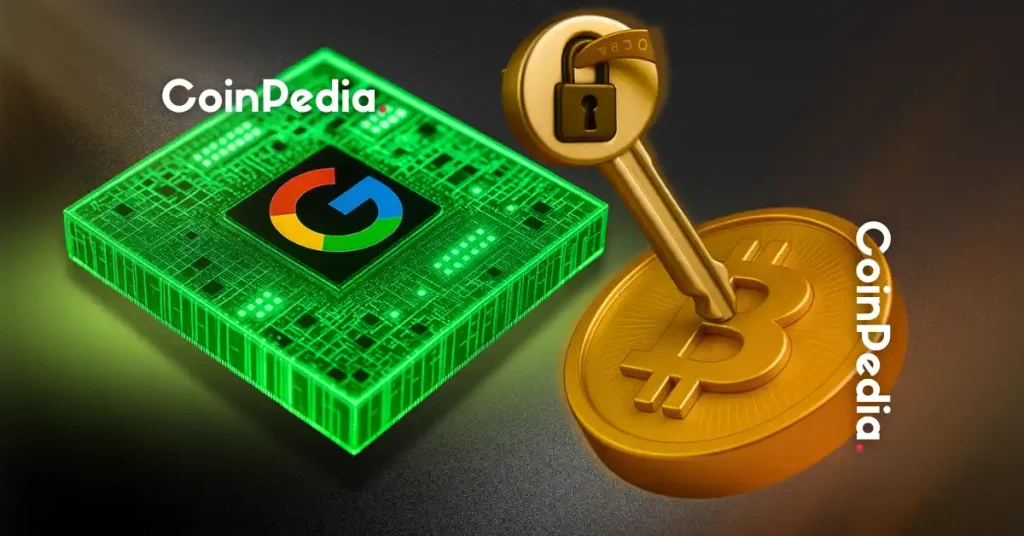
Google's Quantum AI team has published research detailing a more efficient Shor's algorithm implementation, posing a theoretical future threat to Bitcoin and Ethereum's ECDSA signature cryptography. While the quantum threat is theoretical and requires significant advancements in quantum computing (estimated 1,000 logical qubits), Google has set a 2029 deadline for post-quantum cryptography migration, signaling a potential long-term need for blockchain protocol upgrades. The development highlights a long-term, structural risk to current blockchain security, prompting a need for proactive research and development into quantum-resistant cryptography within the crypto space.

Bitcoin is demonstrating relative strength against traditional risk assets like the S&P 500 and MSCI Asia Pacific, holding its range between $65,000 and $73,000 despite geopolitical tensions and broad market downturns. The potential de-escalation of the Iran conflict, signaled by Trump's willingness to end military action even with the Strait of Hormuz partially closed, could remove a key risk premium from Bitcoin, but sustained high oil prices due to the strait's status may complicate inflation outlooks and Fed rate cut expectations. While crypto has shown resilience, the upcoming month hinges on whether geopolitical de-escalation translates into actual policy changes or remains just a headline, impacting Bitcoin's ability to break its current trading range.

Bitmine's aggressive ETH accumulation, totaling $147M this week and over $385M in five weeks, signals strong conviction in Ethereum's potential recovery from a 'mini-crypto winter' despite broader market volatility. The sustained large-scale buying by Bitmine, a leading Ether treasury holder, contrasts with the silence from its closest peers, suggesting a potentially unique strategic outlook or alpha-seeking behavior. While Bitmine focuses on ETH, the article highlights MicroStrategy's dominant BTC treasury demand, indicating divergent institutional strategies between the two largest cryptocurrencies. The commentary on the inverse correlation between crypto and oil prices suggests that a stabilization in oil markets could be a precursor to a broader crypto market recovery, influencing trading sentiment.

The CFTC consent order permanently bars KuCoin operator Peken Global Limited from serving U.S. users, solidifying a market exit that follows a significant $297 million penalty from a prior DOJ criminal case. This regulatory action effectively converts KuCoin's previous temporary U.S. withdrawal into an indefinite ban, signaling a stricter enforcement environment for exchanges operating without proper registration. The $500,000 civil penalty from the CFTC is secondary to the prior DOJ penalties, indicating a coordinated multi-agency approach to penalize KuCoin for operating an unlicensed money transmitting business and violating market access rules.

The significant pivot of major Bitcoin miners like MARA Holdings and Core Scientific towards AI infrastructure, backed by substantial debt financing from Wall Street institutions, signals a structural shift in the mining sector's capital allocation priorities. The recent 6% drop in Bitcoin's hashrate, attributed to geopolitical events in Iran, highlights the concentration risk within the mining industry and its vulnerability to external shocks. The divergence between miners focused on AI infrastructure and those continuing Bitcoin accumulation, exemplified by MARA Holdings versus American Bitcoin, indicates a potential bifurcation in the future business models within the Bitcoin mining ecosystem. Institutional financing of the transition from Bitcoin mining to AI data centers suggests a perceived stability and profitability in AI infrastructure that may outweigh the perceived risk-reward of Bitcoin mining for some large players.

US authorities have charged an individual for a $53 million exploit of Uranium Finance, signaling increased legal scrutiny on smart contract vulnerabilities and fund misappropriation. The indictment highlights the legal system's stance that exploiting code flaws, when combined with money laundering, is not legally permissible, potentially impacting how future DeFi exploits are treated. The case involves the alleged use of Tornado Cash for laundering, underscoring ongoing regulatory focus on privacy tools used in illicit activities.

Google's research suggests quantum computers may break Bitcoin's cryptography with fewer qubits than previously estimated, potentially shortening the timeline for quantum threats. The Taproot upgrade's design, which makes public keys visible, could inadvertently increase the number of Bitcoin wallets vulnerable to future quantum attacks. Attackers could potentially steal Bitcoin mid-transaction by calculating private keys from revealed public keys, with a significant chance of success before confirmation. While Ethereum may be less exposed due to faster transaction finality, the findings highlight a broader, potentially underestimated quantum risk across the crypto market.
Signal context only. Validate with price action, liquidity, and risk limits before taking a position.
Quick market read from this story
Ripple Prime's expanded Hyperliquid integration allows institutions to trade on-chain perpetual contracts for traditional commodities like gold, silver, and oil, bridging TradFi and DeFi.
This development simplifies institutional access to decentralized derivatives by enabling management of commodity positions alongside existing TradFi assets within a single portfolio, reducing operational complexity.
The integration leverages Hyperliquid's significant on-chain liquidity and trading volume, positioning Ripple Prime as a key facilitator for institutional adoption of decentralized commodity derivatives.
Deep Dive
Ripple Prime, Ripple’s institutional prime brokerage platform, has enhanced its integration with the decentralized exchange Hyperliquid to support on-chain perpetual contracts for traditional commodities like gold, silver, and oil. This expansion allows institutional clients to access decentralized derivatives tied to these assets, referred to as "HIP-3 symbols.".
The integration enables institutional clients to manage their DeFi commodity positions alongside traditional assets within a single portfolio. This simplifies operations by eliminating the need for separate Web3 wallets, fragmented collateral, or direct smart contract interactions. Institutional users can also offset their decentralized derivatives exposures against positions in traditional markets such as foreign exchange, fixed income, and over-the-counter swaps, which are already supported by Ripple Prime.
Hyperliquid has rapidly established itself as a leading decentralized perpetual contract trading platform, reporting over $5 billion in open interest and consistently exceeding $200 billion in monthly trading volume. Ripple Prime, launched in late 2025 after Ripple's acquisition of prime brokerage firm Hidden Road for $1.25 billion, is a significant player in the institutional space. The platform's initial integration with Hyperliquid occurred in February 2026, making it the sole counterparty for clients accessing Hyperliquid’s on-chain crypto liquidity.
Ripple Prime continues to focus on bridging traditional financial systems with the decentralized economy, offering a unified platform for institutional investors.
Square's integration of Bitcoin Lightning Network for millions of US small businesses represents a significant step towards mainstream adoption, potentially increasing BTC transaction volume and utility. The default settlement to USD for merchants, coupled with waived processing fees until 2026, lowers the barrier to entry for businesses and signals a pragmatic approach to integrating crypto payments. This large-scale rollout leverages Layer 2 technology, highlighting the scalability and speed improvements of the Lightning Network over the base Bitcoin blockchain for everyday transactions. The development could be interpreted as a 'TCP/IP moment' for financial infrastructure, suggesting a foundational shift in how digital payments are processed and adopted globally.
