
Navigating Crypto News

CoinFeather
Navigating Crypto News

Quick market read from this story
Google's updated research indicates quantum computers may require significantly fewer qubits than previously estimated to break current cryptographic standards, accelerating the timeline for potential threats to blockchains like Bitcoin and Ethereum.
The findings suggest a theoretical nine-minute window for an 'on-spend' attack on Bitcoin transactions once a public key is exposed, highlighting the urgency for post-quantum cryptography (PQC) adoption.
Ethereum's account model is identified as particularly vulnerable to 'at-rest' quantum attacks, with an estimated nine days to crack the top 1,000 accounts holding substantial ETH, underscoring the need for immediate protocol-level PQC solutions.
The research and subsequent discussions by figures like Justin Drake and Nic Carter suggest a potential 'Q-Day' by 2032, pushing the crypto industry towards a more proactive migration to quantum-resistant cryptography.
Deep Dive
New research from Google indicates that quantum computers may require significantly less power than previously estimated to break the cryptography safeguarding cryptocurrency blockchains. The study suggests a quantum computer could crack the encryption protecting Bitcoin (BTC) and Ethereum (ETH) using fewer than 500,000 physical qubits, a notable reduction from prior assumptions.
Google researchers compiled two quantum circuits to test on a cryptographically relevant quantum computer (CRQC). Their findings reported a 20-fold reduction in the number of qubits needed to break the 256-bit elliptic curve discrete logarithm problem (ECDLP-256), a standard used in many cryptocurrency blockchains. In a theoretical scenario, a quantum computer could potentially crack a Bitcoin private key in as little as nine minutes. This timeframe presents a narrow window for an "on-spend attack," where a quantum computer deciphers a private key from a public key exposed during a transaction to steal funds, especially given Bitcoin's 10-minute block time.
Ethereum's account model is identified as particularly vulnerable to "at-rest attacks." These attacks also use a public key to derive a private key but do not require a specific time window. Since an Ethereum account's public key becomes permanently visible on the blockchain upon its first transaction, a quantum attacker can take their time to derive the private key. Google estimates that the 1,000 wealthiest exposed Ethereum accounts, holding approximately 20.5 million ETH, could be compromised in under nine days.
Google has set a 2029 deadline for its own post-quantum cryptography migration, emphasizing that "quantum frontiers" might be closer than anticipated. This research aims to raise awareness and provide recommendations to the cryptocurrency community for enhancing security and stability before such threats become feasible. Google advises blockchains to transition to post-quantum cryptography (PQC) proactively rather than waiting for actual threats to emerge.
In response to these evolving threats, crypto entrepreneur Nic Carter stated that elliptic curve cryptography is nearing obsolescence. He noted that Ethereum developers are actively working on quantum-resistant solutions, while Bitcoin developers have been criticized for a less proactive approach. The Ethereum Foundation released its post-quantum roadmap in February, and co-founder Vitalik Buterin has outlined necessary changes to validator signatures, data storage, accounts, and proofs to prepare for quantum threats.
Source, catalyst, and sector overlap from the latest feed.
Nakamoto's sale of $20 million in Bitcoin at a discount to its valuation signals potential liquidity needs or a strategic shift away from holding large BTC reserves. The company's decision to wind down healthcare operations and focus on BTC Inc and UTXO Management indicates a pivot towards core Bitcoin-related businesses, potentially impacting its operational structure and future revenue streams. Exiting a significant portion of its Metaplanet stake at a loss, coupled with the Bitcoin sale, suggests a period of financial restructuring and a potential reduction in speculative investments. The sharp decline in Nakamoto's share price and previous Nasdaq compliance issues highlight underlying financial distress, making future capital raises or strategic partnerships critical for survival.
Democratic lawmakers are urging regulators to issue guidance clarifying that federal employees are prohibited from insider trading on prediction markets, citing potential STOCK Act violations. The increased scrutiny on prediction markets like Kalshi and Polymarket, driven by allegations of insider trading, suggests a growing regulatory focus on these platforms. While no specific assets are mentioned, the regulatory pressure on prediction markets could indirectly impact platforms that facilitate event-based trading and their user bases.
KuCoin's parent company has settled with the CFTC for $500,000, a significantly smaller penalty than the $300 million agreed with the DOJ, indicating a resolution to ongoing regulatory scrutiny. The settlement restricts KuCoin from serving US customers unless it registers as a foreign board of trade, which is unlikely, effectively limiting its US market access and potentially impacting user growth. While the CFTC penalty is minor, the cumulative regulatory actions and fines from both the CFTC and DOJ highlight significant compliance failures, which could deter institutional interest and impact KuCoin's reputation.
Dubai's VARA has formalized rules for crypto exchange-traded derivatives, enabling retail access with a 5:1 leverage cap, signaling a maturing regulatory environment for more complex financial products in the region. The introduction of these derivative rules, including strict suitability checks and margin controls, suggests a move towards greater institutionalization and investor protection within Dubai's crypto market, potentially attracting more regulated activity. While expanding access to derivatives, the conservative leverage limits compared to offshore platforms indicate a focus on risk management, which could influence how other jurisdictions approach retail derivative offerings.
Bitmine's aggressive ETH accumulation, totaling $147M this week and over $385M in five weeks, signals strong conviction in Ethereum's potential recovery from a 'mini-crypto winter' despite broader market volatility. The sustained large-scale buying by Bitmine, a leading Ether treasury holder, contrasts with the silence from its closest peers, suggesting a potentially unique strategic outlook or alpha-seeking behavior. While Bitmine focuses on ETH, the article highlights MicroStrategy's dominant BTC treasury demand, indicating divergent institutional strategies between the two largest cryptocurrencies. The commentary on the inverse correlation between crypto and oil prices suggests that a stabilization in oil markets could be a precursor to a broader crypto market recovery, influencing trading sentiment.
Bitcoin and Ethereum ETFs saw a positive net inflow on March 30th, marking a reversal after several days of outflows, suggesting that the most aggressive selling pressure may have subsided for now. While Bitcoin ETFs experienced a modest inflow, the overall trend for March was negative, indicating that institutional investors used the mid-March rally to reduce exposure. Ethereum ETFs attracted small inflows, but institutional accumulation by entities like Bitmine, which accelerated holdings during a market downturn, provides a contrasting signal of conviction. Solana and XRP ETFs continue to struggle, with outflows and inactivity suggesting a lack of institutional traction compared to Bitcoin and Ethereum products.
A significant $53 million Bitcoin short position opened on Hyperliquid, coupled with broader geopolitical tensions, indicates a shift towards risk-off sentiment, pressuring Bitcoin's price and suggesting it's still treated as a risk asset during macro stress. Regulatory uncertainty and a lack of clear guidance on Bitcoin activity in the US are creating compliance concerns for institutional investors, potentially limiting long-term capital deployment despite some on-chain accumulation signals. The failure of Bitcoin to hold above $67,000, combined with mixed corporate buying signals and cautious macro data releases, suggests that short-term price action will likely be dictated by external geopolitical and economic factors rather than internal crypto market dynamics.
Keyrock's Series C funding round, led by SC Ventures and including Ripple, at a $1.1 billion valuation signals continued institutional confidence in digital asset market makers and infrastructure providers. The new capital infusion is earmarked for balance sheet strengthening, service expansion, and potential acquisitions, indicating Keyrock's strategic intent to grow market share and enhance its offerings in market making, asset management, and OTC trading. Keyrock's expansion into asset and wealth management via the Turing Capital acquisition, coupled with this significant funding, positions the firm as a more comprehensive financial services provider bridging traditional finance and crypto.
TRX price has broken a descending trendline and is showing signs of accumulation, suggesting potential upside towards $0.37 if immediate resistance at $0.33-$0.35 is overcome. On-chain data indicates stable liquidity and fading selling pressure, with significant treasury holdings and stablecoin activity supporting the network's underlying strength. The shift from accumulation outflows to stable flows as price trends upward suggests a transition from consolidation to early expansion, reinforcing bullish momentum. Despite a confirmed breakout in structure and bullish momentum, the development still requires confirmation at resistance levels to solidify the upward trajectory.
Live Feed
Loading the broader stream in the same flow as the homepage feed.

Google's research significantly lowers the projected hardware and time requirements for quantum computers to break current blockchain encryption, accelerating the timeline for potential quantum threats to digital assets. The accelerated threat of quantum decryption, particularly the possibility of 'mempool attacks' within minutes, implies a critical need for quantum-resistant cryptography upgrades across major blockchains like Bitcoin and Ethereum. The findings suggest that the cryptographic foundations of most cryptocurrencies are more vulnerable than previously assumed, potentially impacting investor confidence and prompting a re-evaluation of long-term security assumptions.
XRP's price action is showing persistent weakness, with relief bounces stalling near key Fibonacci retracement levels, indicating strong seller control and a potential for further downside. Despite technical headwinds and a potential retest of $1.09, XRP maintains strong social sentiment with over 883,000 positive mentions on X in three months, suggesting underlying investor conviction. XRP is consolidating around its 200-week EMA for eight consecutive weeks, a historically significant level that often precedes major market shifts, making the current price action a critical watchpoint for traders.
Ripple CTO David Schwartz reiterates that a higher XRP price enhances payment efficiency by reducing the number of tokens needed for transactions, countering common misconceptions. Franklin Templeton's recent SEC filing, showing XRP comprising 5.91% of its EZPZ ETF, signals growing institutional acceptance and provides a strong fundamental narrative for XRP's utility. The convergence of the Ripple CTO's explanation and Franklin Templeton's ETF inclusion suggests a strengthening case for XRP's value proposition in cross-border payments, potentially driving future price appreciation.

Upbit's listing of SKY and USDS with KRW and USDT pairs enhances market access and liquidity for these tokens. The addition of SKY, a governance token, and USDS, a stablecoin, on a major South Korean exchange like Upbit signals potential increased adoption and trading volume. Traders can now access SKY and USDS directly against fiat (KRW) and a major stablecoin (USDT) on Upbit, potentially leading to increased price discovery and trading opportunities.

Binance Wallet's integration with Predict Fun signifies an expansion of its utility beyond basic storage, aiming to offer users more interactive on-chain opportunities and potentially drive engagement with decentralized applications. This move by Binance Wallet to incorporate prediction markets, starting with a BNB Smart Chain-based protocol, could signal a broader trend of centralized wallets integrating with DeFi functionalities, thereby increasing accessibility for mainstream users. The expansion into prediction markets by Binance Wallet, leveraging external decentralized protocols, represents a strategic effort to enhance user experience and capture a larger share of the growing DeFi ecosystem.
Despite current unrealized losses for several public companies holding XRP, a combination of a favorable regulatory environment and increasing corporate treasury allocations suggests a strategic, rather than speculative, positioning. The growing trend of public companies allocating corporate treasuries to XRP, driven by its cross-border payment infrastructure, indicates a potential shift in how businesses manage reserves and conduct international transactions. The detailed financial disclosures and planned treasury initiatives by companies like SBI Holdings and Trident Digital highlight a maturing ecosystem around XRP, potentially attracting further institutional interest and capital inflows.
Teucrium's XRP ETF has surpassed $500 million in inflows within 12 weeks, demonstrating significant investor demand for regulated XRP exposure through traditional financial products. The strong performance of the paper-based XRP ETF, despite not holding the underlying asset, signals growing institutional comfort with crypto investments via established financial vehicles. The "XRP Army's" active role in driving awareness and adoption highlights the influence of community engagement on ETF success and broader asset demand. Ripple's CEO's vision of becoming a top-20 global bank, leveraging XRP's infrastructure, suggests a strategic shift towards competing with traditional financial institutions.
Bitcoin is consolidating within a rising channel, holding key support at $65,600, but faces resistance near $70,000, indicating a potential breakout setup that requires confirmation. Whale activity shows sustained accumulation in the $60K-$100K range, suggesting institutional interest despite fading retail participation and declining buy-side conviction in futures markets. The current price action, characterized by higher lows but stalled upside momentum and negative CMF, points to a period of range-bound trading with a potential test of $70,000, contingent on a decisive breakout above $71,000. While on-chain data suggests accumulation, derivatives metrics indicate a lack of aggressive demand, creating a divergence that keeps Bitcoin in consolidation rather than a confirmed uptrend.

The introduction of the "Mined in America Act" signals a significant shift in U.S. policy towards domesticating Bitcoin mining infrastructure, aiming to reduce reliance on China and bolster national security. Formalizing a Strategic Bitcoin Reserve and creating a "Mined in America" certification for miners could introduce sustained, institutionalized buy pressure and incentivize domestic production, potentially impacting Bitcoin's supply dynamics and market stability. By framing the bill as an energy, manufacturing, and defense initiative, lawmakers are attempting to build bipartisan support, suggesting Bitcoin's integration into broader U.S. strategic planning is gaining traction beyond purely financial considerations. While the bill's passage is uncertain, its introduction highlights Bitcoin's growing geopolitical significance and the U.S. government's increasing focus on controlling critical digital asset infrastructure.

Rising U.S. real yields, particularly on 10-year TIPS, are creating a headwind for zero-yielding assets like Bitcoin by increasing the opportunity cost of holding them. Deteriorating demand-supply dynamics, evidenced by cooled ETF inflows, stalled stablecoin growth, and a collapsed absorption-to-emissions ratio, suggest that current price levels may lack strong underlying support for a sustained rally. The market's pricing of elevated real yields further out the curve indicates that the current anti-risk asset environment, driven by tightening financial conditions potentially exacerbated by oil prices, could persist, pressuring Bitcoin.

The collapse of the ONUS platform in Vietnam due to alleged manipulation and false promotions highlights a critical need for verified trading infrastructure, positioning Pepeto's presale as a potentially safer alternative for retail investors seeking protection and high returns. Pepeto's presale is being promoted with aggressive 100x return projections tied to a future Binance listing and a 191% APY staking reward, suggesting a strong marketing push to attract capital before its exchange debut. While DOGE and WLD are experiencing corrections, their established market caps limit near-term upside potential compared to Pepeto's low-cap presale, which is being framed as a more opportune entry for significant gains in the current cycle.
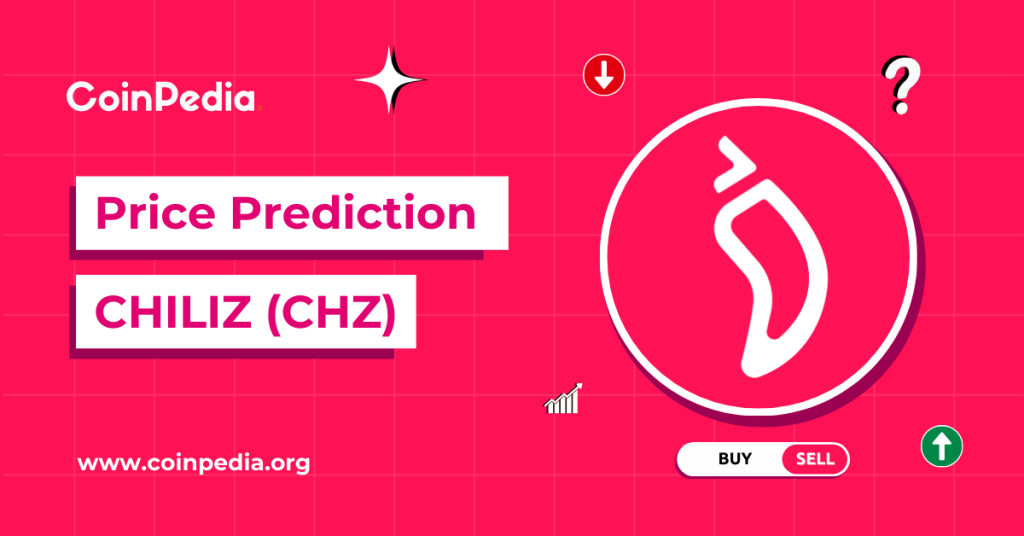
Chiliz (CHZ) is consolidating in a tight range between $0.038 and $0.048, indicating a lack of strong directional momentum following a failed rally. The $0.055 resistance level is critical for CHZ to reclaim to signal improving momentum, with a potential move towards $0.08 in 2026 if successful. A breakdown below the $0.038 support level could expose CHZ to further downside risk, targeting $0.030, suggesting a continued weak structure if this level fails. Despite long-term price predictions suggesting significant growth by 2030 and beyond, the current market analysis points to a stabilization and consolidation phase for CHZ in the near to medium term.
Signal context only. Validate with price action, liquidity, and risk limits before taking a position.
