
Navigating Crypto News

CoinFeather
Navigating Crypto News

Source, catalyst, and sector overlap from the latest feed.
ADA has experienced a significant 90% price crash from its all-time high, currently trading near $0.25, indicating a period of substantial bearish pressure and potential for a slow recovery requiring significant upward movement. The SEC and CFTC classifying ADA as a commodity reduces regulatory risk, a positive development for institutional adoption, but the market's rapid capital rotation towards newer projects like Pepeto highlights a shift in investor sentiment towards higher-growth opportunities. Pepeto, a new exchange project with a Binance listing approaching and a presale that has raised over $8 million, is being positioned as a potential 100x to 300x opportunity, contrasting sharply with ADA's more modest recovery prospects. While ADA faces a challenging path to recovery, the narrative around Pepeto suggests a potential rotation of 'smart capital' seeking outsized returns in newer, high-potential projects, a common pattern observed in crypto market cycles.
Live Feed
Loading the broader stream in the same flow as the homepage feed.
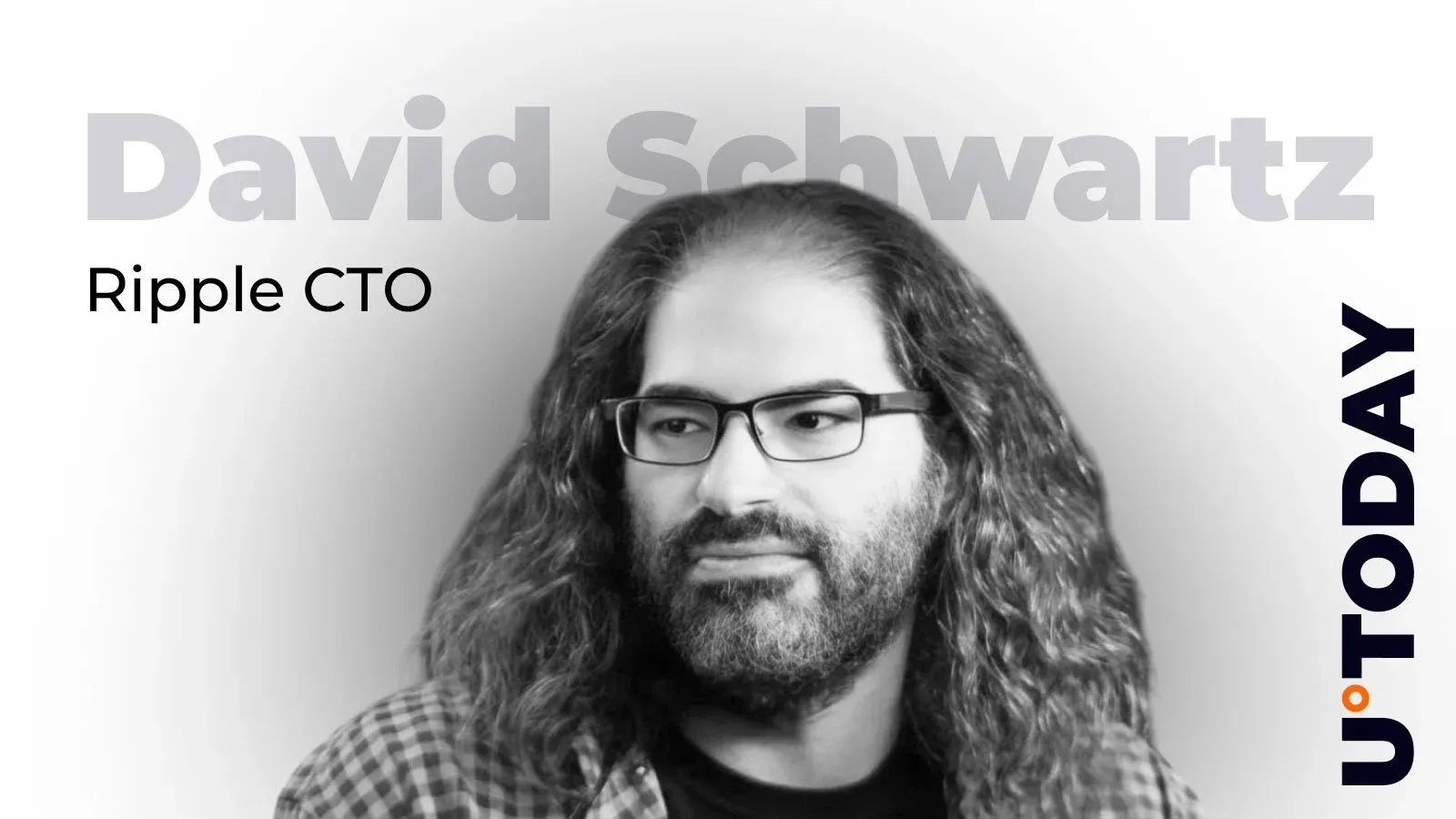
Ripple CTO David Schwartz argues that Bitcoin's Proof-of-Work mechanism is a centralizing force, challenging the narrative that PoW inherently ensures decentralization. The debate over PoW's centralizing tendencies and potential downward price pressure on Bitcoin highlights ongoing governance challenges and the difficulty of altering Bitcoin's core protocol. The recent two-block reorg event involving Foundry USA amplifies concerns about mining pool concentration, potentially impacting market sentiment towards Bitcoin's long-term security model.

Circle is advocating for lower market capitalization thresholds in the EU's proposed Market Integration Package, aiming to facilitate broader institutional participation and enhance liquidity for euro-denominated stablecoins like EURC. The stablecoin issuer argues that current thresholds act as a structural barrier, hindering the growth of e-money tokens and creating a "chicken-and-egg scenario" that limits their utility in settlement. Circle's feedback suggests that more adaptive thresholds based on market uptake and liquidity, alongside expanded access to the DLT Pilot Regime for crypto-asset service providers, are crucial for modernizing the EU's financial system.

TRON DAO's significant expansion of its AI fund to $1 billion signals a strong commitment to capturing the emerging agentic economy, potentially driving demand for its network's high-throughput and low-cost transaction capabilities. The fund's focus on stablecoin rails, agent identity, tokenized RWAs, and developer tooling positions TRON to benefit from the anticipated growth in AI-driven commerce and machine-to-machine payments. By emphasizing its existing strengths in transaction volume and USDt circulation, TRON aims to differentiate itself from other blockchains like Ethereum in the race to become a primary infrastructure for AI agents.

Bitcoin and major altcoins are showing resilience by recovering and holding key price levels despite escalating geopolitical tensions and a sharp downturn in traditional markets, suggesting a potential decoupling or a flight to perceived digital safe havens. The unusual decline in gold prices during a widening conflict, contrasted with Bitcoin's stability above $70,000, challenges historical safe-haven narratives and may indicate a shift in investor perception or forced liquidations impacting traditional assets. The involvement of Saudi Arabia and UAE in the conflict significantly alters the geopolitical risk landscape, potentially impacting oil supply and pricing, which could indirectly influence Bitcoin's price action as a macro-sensitive asset. While crypto assets are currently outperforming traditional markets, their near-term direction remains uncertain, hinging on the evolution of geopolitical events and their subsequent impact on oil prices and broader market sentiment.

Delaware's proposed stablecoin legislation, mirroring federal models, aims to establish a clear licensing framework and guardrails for issuers, potentially attracting businesses seeking regulatory clarity. The introduction of the Delaware Payment Stablecoin Act signals a proactive state-level approach to regulating digital assets, which could influence other jurisdictions and provide a more stable environment for stablecoin operations. Alongside federal efforts by US lawmakers to clarify crypto tax rules and regulatory oversight, Delaware's move indicates a growing trend towards structured regulation within the US crypto landscape. While the bills aim to modernize Delaware's financial sector and attract businesses, their progression through the Senate Banking Committee and subsequent debate will be crucial for determining their actual market impact.

Bitmine's significant ETH accumulation, adding $139 million last week, signals strong conviction in Ether's potential recovery from its recent slump. The chairman's view of a 'mini-crypto winter' thawing, supported by ETH outperforming broader markets during geopolitical tension, suggests a potential shift in investor sentiment towards digital assets as a 'wartime' store of value. Bitmine's aggressive buying pace and current holdings of 4.6 million ETH, representing 3.86% of the circulating supply, position them as a major player influencing ETH's market dynamics.

Australian pension fund Hostplus is exploring crypto offerings, signaling growing institutional interest beyond Bitcoin and potentially tokenized assets like music rights. The move by Hostplus, managing $105 billion, could set a precedent for other Australian super funds to follow if regulatory clarity improves, driven by member demand. While Hostplus explores broader digital asset exposure, the recent exit of AMP Super from most of its Bitcoin futures position highlights ongoing volatility concerns for institutional investors. The exploration of crypto by a major Australian pension fund, even with a focus on a self-directed window, represents a positive step for sector legitimacy and potential future adoption.

A 2-block reorg on Bitcoin's network, while not a security threat, highlights increasing hashrate concentration among major mining pools like Foundry USA. The event underscores the impact of declining mining difficulty and smaller miners exiting the market, leading to greater control by fewer entities and a higher probability of such reorgs. While orphaned transactions are recovered, the concentration of mining power raises questions about network decentralization and potential future implications for consensus mechanisms.
Bitcoin price surged past $71,000 following a geopolitical de-escalation signal from the US, triggering significant short liquidations and a shift in market sentiment. The immediate price reaction to geopolitical news highlights Bitcoin's sensitivity to macro events, with over $270 million in BTC shorts liquidated within an hour. Despite the positive price action and CME gap fill, lingering geopolitical uncertainty and mixed signals from Iranian officials suggest potential for continued volatility. The market is now focused on Bitcoin's ability to sustain levels above $72,000, with key support identified between $64,000 and $65,000 if bearish sentiment re-emerges.

Prediction market platforms Kalshi and Polymarket are implementing new user bans to combat insider trading, signaling increased regulatory scrutiny on event contracts. The platform actions coincide with a bipartisan bill introduced in the US Senate aiming to ban sports-betting-like event contracts, potentially impacting the future of prediction markets. These developments highlight the ongoing tension between decentralized prediction markets and traditional regulatory frameworks, suggesting a period of uncertainty for the sector.

NovaBay Pharmaceuticals' strategic pivot to stablecoins and rebranding as Stablecoin Development Corporation signals a significant shift in corporate strategy, potentially attracting new investor interest in the stablecoin ecosystem. The company's substantial holdings of SKY tokens and its participation in the SKY protocol ecosystem indicate a direct play on the growth and utility of this specific blockchain infrastructure. The explicit interest in yield-bearing stablecoins suggests a focus on generating income through digital assets, aligning with broader trends in decentralized finance and treasury management.

US lawmakers are considering a legislative compromise that may ban yield on stablecoin holdings, reflecting banking sector concerns about deposit stability. The Senate Banking Committee's review of stablecoin regulation, including draft language on rewards, is on a tight timeline with limited room for revisions before April. A forthcoming White House study on stablecoin yield's impact on bank deposits could influence the regulatory debate, potentially challenging arguments against yield-bearing stablecoins. The potential restriction on stablecoin rewards could impact how these assets integrate into the broader financial system and affect user incentives.
Signal context only. Validate with price action, liquidity, and risk limits before taking a position.
Quick market read from this story
Playnance's introduction of a Democratic Social Gaming Protocol aims to integrate users into the economic layer, shifting value distribution towards participants rather than solely the platform.
The protocol's success is evidenced by over 1 million GCOIN holders and significant staking activity, indicating growing user engagement within its participation-driven model.
This development signals a potential trend in social gaming towards more equitable economic models, where user actions directly contribute to and benefit from ecosystem growth.
Deep Dive
Playnance is launching a new social gaming model with its Democratic Social Gaming Protocol, designed to embed users directly into the platform's economic system. This initiative emphasizes user participation as a core element of the ecosystem's growth and functionality.
The protocol is driven by GCOIN, directly linking user actions to the overall network dynamics. Unlike traditional platforms that often extract value from users, Playnance's system facilitates economic activity that circulates within the network, making participants integral to the ecosystem rather than external observers. The platform aims to combine user-friendly interfaces with transparent and verifiable blockchain infrastructure.
Playnance has achieved significant milestones, including over 1 million GCOIN holders and more than 1.3 billion GCOIN staked. The staking rewards treasury has surpassed 58 million GCOIN. Furthermore, the 'Be The Boss' program boasts over 3,000 partners, who have collectively generated more than $2.3 million in earnings, contributing to over $5.3 million across the entire ecosystem. This model signifies a trend towards participation-driven platforms in digital entertainment.
Cardano's current oversold RSI and negative MVRV ratio suggest a potential price reversal, historically preceding significant rallies. Upcoming events like the Midnight launch and the Cardano Node 10.7.0 upgrade, aimed at enhancing privacy and smart contract capabilities, could boost institutional interest and ADA's price. While ADA is trading significantly below its all-time highs, the confluence of technical indicators and upcoming protocol upgrades presents a bullish short-to-medium term outlook, contingent on holding key support levels.
