
Navigating Crypto News

CoinFeather
Navigating Crypto News

Quick market read from this story
Bitcoin has demonstrated superior returns compared to gold and the S&P 500 over the past month amidst geopolitical tensions, suggesting a potential flight to digital assets as a safe haven or inflation hedge.
The historical outperformance of Bitcoin during crises like COVID-19 and regional banking issues, coupled with its increasing institutional adoption via ETFs, reinforces its narrative as a distinct asset class capable of uncorrelated gains.
Despite Bitcoin's recent strength, all three asset classes (BTC, gold, SPX) are currently exhibiting 'sell' or 'extreme fear' sentiments, indicating that broader market uncertainty and potential liquidations could still impact Bitcoin's price in the short term.
Deep Dive
In the past month, Bitcoin (BTC) has demonstrated superior returns compared to gold and the S&P 500 (SPX), particularly during the recent US-Iran conflict. This period has seen significant investor uncertainty and volatility across crypto, stock markets, and gold prices. Iran's stance on continuing offensive actions, with alleged non-existent pacification talks with the US, suggests this trend may persist.
Data from River Financial indicates that Bitcoin has achieved 60-day returns of 12%. In contrast, gold saw returns of -16%, and the S&P 500 experienced -4% during the same timeframe. This performance divergence has been observed during other significant global events, including the COVID-19 outbreak, the Russia-Ukraine war, the 2023 US regional banking crisis, and the 2020 US-Iran crisis.
Currently, BTC is trading at $71,023, marking a 3.93% increase in the last 24 hours. Gold, however, is trading at $4,413, down 3.55% and experiencing its worst week in four decades. The S&P 500 is trading at 6,585.28 points, up 1.21% over the past 24 hours.
Despite Bitcoin's strong recent performance, the S&P 500 leads in market capitalization at $59.5 trillion. Gold follows with $30.62 trillion, while the cryptocurrency market stands at $2.43 trillion, with Bitcoin accounting for $1.41 trillion of that total.
Bitcoin's appeal as an investment stems from its historically high long-term return on investment (ROI). Over the past decade, Bitcoin's ROI has reached +15,355%, significantly outperforming the S&P 500's +289.7% and gold's +125.8%.
Furthermore, Bitcoin's increasing decoupling from traditional equities has boosted its institutional appeal. The adoption of spot ETFs is on the rise, with major financial institutions like Morgan Stanley joining the trend. Cryptocurrencies also offer advantages such as 24/7 trading, censorship resistance, and portability. Bitcoin's scarcity provides an inflationary edge, contributing to its adoption in war-affected regions like Ukraine, Russia, and Iran.
However, all financial instruments remain susceptible to price fluctuations influenced by geopolitical events, inflation data, interest rate decisions, and employment reports. Currently, all three asset classes exhibit
Source, catalyst, and sector overlap from the latest feed.
Geopolitical uncertainty surrounding US-Iran relations is creating a period of consolidation for Bitcoin, with price action likely to remain range-bound until clearer de-escalation signals emerge. Despite conflicting reports on US-Iran talks, the market reacted positively to initial signals of de-escalation, leading to a short-term price increase in Bitcoin and Ethereum. Historical post-halving cycle data suggests a potential bear trend initiation in approximately two months, indicating that current consolidation could precede a significant price movement. Upcoming inflation data and Fed commentary on interest rates, alongside continued whale accumulation, present key factors that could influence Bitcoin's trajectory in the near term.
While XRP's transaction burn mechanism suggests a long-term deflationary trend, current escrow releases by Ripple mean significant supply constraints are not imminent, tempering immediate scarcity narratives. The analysis reframes Ripple's ongoing XRP sales not just as selling pressure but as a mechanism for wider distribution, potentially increasing market confidence and decentralization over time. The discussion highlights that XRP's potential to become 'hard to get' is a future evolutionary stage, dependent on the interplay between decreasing Ripple holdings and increasing transaction volume, rather than a present condition.
Dogecoin is currently in a consolidation phase, indicating potential for a larger move as sellers lose control and buyers absorb supply. Long-term price predictions suggest significant upside potential for DOGE, with forecasts reaching $1.25 by 2026 and $3.00 by 2030, contingent on broader market sentiment and adoption. The asset's price action is heavily influenced by sentiment and market mood, suggesting that a shift in overall crypto market conditions could disproportionately impact DOGE's performance.
Solana's technical outlook suggests a potential recovery towards $200 by 2026 and a significant long-term target of $1,400 by 2030, contingent on overcoming current resistance levels and sustained adoption. The article presents a long-term price forecast for SOL, indicating substantial growth potential over the next decade, driven by its high-performance blockchain architecture and increasing use cases in DeFi and payments. Despite recent downtrends and consolidation, Solana's price action shows signs of stabilization, with key resistance at $97 needing to be breached to confirm a bullish reversal and target higher price levels.
Bittensor's price surge, driven by increased social engagement and ecosystem milestones like the Covenant-72B LLM training and Grayscale's private trust, signals renewed investor interest in its AI narrative. The TAO price is approaching a critical resistance zone between $302-$312, where a confirmed breakout is necessary to validate a potential Wave 3 extension and target higher levels towards $400-$500. While momentum indicators show strengthening, the RSI nearing overbought territory suggests caution, with a failure to break resistance potentially leading to a pullback to the $240-$260 range. The development highlights the market's sensitivity to AI narratives and tangible project progress, with potential for further upside if subnet utility announcements continue to drive social volume.
Ethereum's price rejection at $2,100, coupled with a dormant whale depositing 15,000 ETH to Coinbase, signals potential selling pressure and a bearish short-term outlook, with $1,800 identified as a key downside target. The market is interpreting the large ETH deposit from a long-term whale to Coinbase as a bearish signal, potentially indicating profit-taking or repositioning in a declining broader market, despite the whale's significant unrealized gains. Technical analysis suggests that failure to defend the $2,000 support level for ETH could trigger accelerated selling, stop-loss orders, and panic in futures markets, confirming a breakdown and targeting lower price levels.
Solana has rebounded from the $86 support level, indicating renewed short-term buying interest, but faces significant resistance around the $93-$95 zone which could lead to a pullback. While short-term price action is consolidating with mixed sentiment, the long-term weekly structure for SOL remains constructive, suggesting potential for a broader uptrend towards $200-$300 if key resistance is overcome. Traders should monitor the $95 level as a critical breakout point; a decisive move above it could signal further upside towards $100, while failure to break through may result in a retest of lower support levels near $85.
MicroStrategy's continued Bitcoin accumulation, despite a reduced purchase amount this week, signals ongoing conviction in BTC as a treasury reserve asset, potentially influencing other corporate treasuries to follow suit. The shift in MicroStrategy's funding strategy from STRC equity sales to Class A Common Stock for its latest BTC acquisition indicates a potential adjustment in its capital raising approach, which could impact MSTR stock dynamics. The news of H100 Group's intent to acquire Bitcoin treasury assets mirrors MicroStrategy's strategy, suggesting a growing trend of corporate adoption of Bitcoin as a treasury reserve outside the US, potentially increasing institutional demand.
Ethereum is exhibiting conflicting technical signals, with a short-term head and shoulders pattern suggesting potential downside risk below $2,040, while a long-term ascending triangle on the weekly chart indicates a bullish structure remains intact above key support. Traders are closely monitoring the $2,040 support level for ETHUSD, as a breakdown could trigger a sharp selloff, whereas holding this level might allow for a short-term rebound within the larger bullish triangle formation. The long-term ascending triangle pattern on Ethereum's weekly chart, with resistance near $4,900 and a rising support trendline, suggests potential for significant upside if the resistance is decisively broken, though this remains a technical scenario.
Bitcoin's price action is consolidating within a significant on-chain 'No Trade Zone' between $65,636 and $70,685, indicating a battleground where a decisive breakout or breakdown is required to establish a new trend. The Relative Strength Index (RSI) has broken its uptrend on the daily chart, signaling a potential loss of momentum and drawing parallels to a similar pattern observed in January 2026, which could precede a price decline. Traders should monitor the $65,636 support and $70,685 resistance levels closely, as a clear breach of either boundary is expected to dictate Bitcoin's next significant price movement and market sentiment.
Live Feed
Loading the broader stream in the same flow as the homepage feed.

Protests targeting major AI labs like OpenAI, Anthropic, and xAI signal growing public concern over AI development risks, potentially influencing regulatory sentiment and investor caution. The call for a conditional pause in frontier AI model development, backed by advocacy groups, highlights a divergence between rapid innovation and safety-focused research, which could impact future funding and development trajectories. While the protest itself is not a direct market event for crypto assets, the underlying concerns about AI safety and control could indirectly affect investor sentiment towards AI-integrated blockchain projects or infrastructure.
Easing geopolitical tensions in the Middle East have triggered a broader risk-on sentiment, directly benefiting high-beta assets like Shiba Inu and contributing to its over 8% price surge. A significant 637% spike in Shiba Inu's burn rate, coupled with its recent classification as a digital commodity by U.S. regulators, provides structural support and enhances its scarcity narrative. Increased derivatives volume and open interest in SHIB, alongside positive MACD and Chaikin Money Flow indicators, suggest building upward momentum and trader conviction in the short term. While SHIB shows bullish momentum, maintaining the $0.000006 support level is crucial; failure could lead to a pullback, but current indicators favor buyers.

The latest draft of the Digital Asset Market Clarity Act restricts stablecoin yield to activities rather than balances, a move perceived as overly narrow by industry insiders. This legislative development, while a step towards regulatory clarity, introduces limitations that could impact stablecoin utility and adoption by restricting passive yield generation. The compromise on stablecoin yield, driven by banking industry concerns, highlights ongoing friction between traditional finance and the crypto sector regarding product equivalence and market competition. Further legislative hurdles remain, including oversight of DeFi and provisions targeting government officials, indicating that comprehensive regulatory certainty for the crypto market is still some way off.

Traders exhibit persistent skepticism, evidenced by low bullish positioning in Bitcoin derivatives, suggesting a lack of conviction despite short-term price bounces. Macroeconomic pressures from inflation concerns and cautious Federal Reserve policy continue to suppress risk assets, limiting Bitcoin's upside potential. The market is pricing in a low probability of significant Bitcoin price appreciation in the near term, as indicated by subdued options market activity and futures premiums. Geopolitical de-escalation provided a temporary relief rally for Bitcoin and oil, but underlying market sentiment remains cautious due to persistent inflation and interest rate concerns.

XRP reserve reduction on Binance suggests holders are moving assets to private wallets, indicating increased buying pressure and potential for price appreciation. Shiba Inu experienced a brief short liquidation event, but the price has since returned below a key moving average, suggesting a lack of sustained upward momentum despite the short-term volatility. Dogecoin exhibits a strong bullish long-short ratio on major exchanges, signaling high trader confidence in a potential reversal, though this crowded positioning carries a risk of sharp downside if momentum falters.
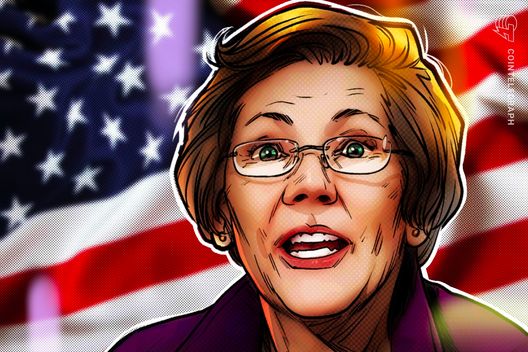
Senator Warren's inquiry into MrBeast's potential marketing of crypto to minors via the Step banking app introduces regulatory scrutiny, potentially impacting future youth-oriented financial product launches. The inquiry highlights the intersection of influencer marketing and financial services, raising concerns about consumer protection for younger demographics and potentially influencing how similar acquisitions are perceived. While the article mentions MrBeast's existing financial ties to crypto and Step's past plans for a teen crypto product, the immediate market impact is limited to increased regulatory attention rather than a direct catalyst for asset repricing.
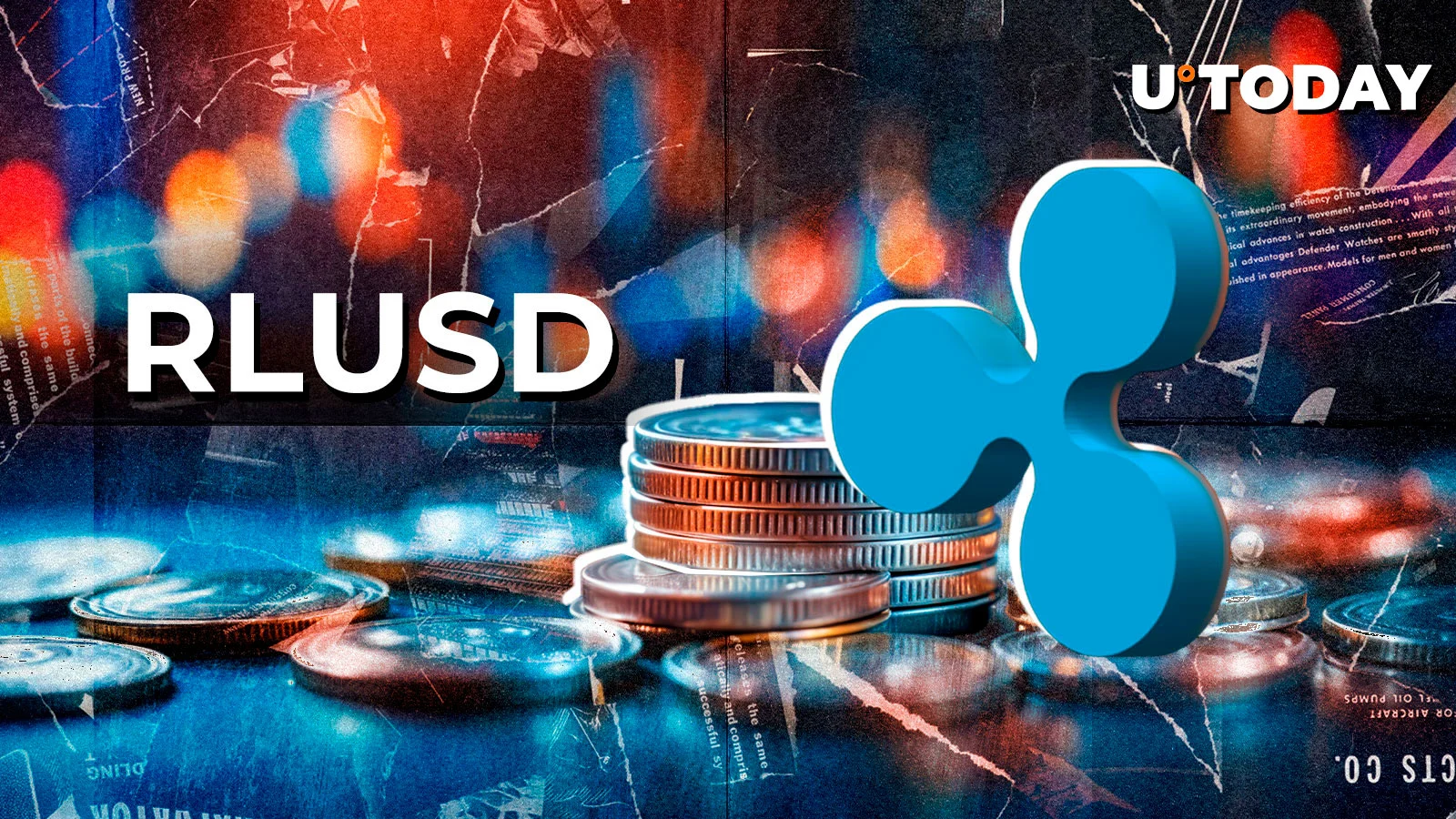
Ripple's aggressive RLUSD burn of 45 million tokens against 10 million minted in the past week indicates significant institutional redemptions or strategic treasury rebalancing, suggesting potential shifts in stablecoin demand dynamics. The substantial RLUSD supply contraction, driven by burns, is presented as a standard operational procedure for fully-backed stablecoins, reinforcing the link between on-chain supply and fiat reserves rather than signaling distress. While the market often associates stablecoin minting with liquidity, Ripple's current burn activity highlights a focus on supply management and reserve backing, which could be interpreted as a sign of operational maturity as RLUSD competes with established players.

Marc Syz's departure from Banque Syz to focus on Bitcoin signals a growing divide within traditional Swiss banking between legacy wealth preservation and digital asset adoption. The public listing of Future Holdings AG's 5,000 BTC on Nasdaq and SIX Swiss Exchange represents a significant move to provide direct investor exposure to Bitcoin, mirroring strategies like MicroStrategy's. The planned CHF 500 million IPO aims to expand the Bitcoin treasury, indicating a strategic intent to leverage public markets for further BTC accumulation and potentially influence institutional approaches to crypto holdings. This development highlights a generational shift in wealth management, where younger heirs perceive Bitcoin as a crucial hedge against monetary debasement, challenging established conservative financial practices.
Dogecoin's price is at risk of a 23% decline due to a tightening descending triangle pattern and a significant 87% collapse in new address growth, indicating waning buyer momentum. The sustained realization of losses on the Dogecoin network, reaching its deepest point since January, suggests that recent buyers are exiting positions rather than holding for a recovery. The confluence of a bearish technical pattern and deteriorating on-chain metrics points to a high probability of further downside for DOGE unless a substantial demand catalyst emerges.

Bitcoin's hold above $70,000 is directly tied to geopolitical de-escalation between the U.S. and Iran, with a positive outcome potentially enabling a retest of recent highs around $76,000. Conversely, a failure in diplomatic talks or renewed conflict could trigger a risk-off sentiment, pushing oil prices higher and potentially dragging Bitcoin back towards the mid-$60,000s. The market is closely monitoring energy prices and shipping stability in the Strait of Hormuz as key indicators for Bitcoin's near-term price action, highlighting the asset's sensitivity to macro-economic and geopolitical events.

Stripe's Machine Payments Protocol (MPP) represents a potential paradigm shift in micropayments by enabling AI agents to execute transactions autonomously, removing human behavioral barriers that have historically hindered adoption. The development signals a broader trend towards machine-to-machine transactions, potentially increasing demand for stablecoins and payment infrastructure that can support programmatic, low-value exchanges. While MPP itself is not blockchain-native, its interoperability with existing rails and potential integration with crypto rails could drive adoption of digital assets for automated payments, impacting sectors like payments and stablecoins.

Prediction market platforms Polymarket and Kalshi are implementing new policies and integrity rules to combat insider trading, responding to growing regulatory and political scrutiny. These measures, including enhanced monitoring and preemptive screening, aim to mitigate risks highlighted by recent high-profile insider trading allegations and potential legislative actions. The proactive steps by Polymarket and Kalshi suggest an effort to preempt stricter regulatory intervention and maintain platform integrity, potentially influencing the future operational framework of prediction markets.
Digital asset investment products saw a significant slowdown in inflows last week, totaling $230 million, primarily due to the Federal Reserve's hawkish pause and geopolitical tensions, indicating a shift in market sentiment towards caution. Bitcoin attracted the largest inflows ($219 million) while Ethereum experienced outflows, suggesting a rotation from established large-caps to potentially higher-growth altcoins amidst broader market uncertainty. Solana continues to show resilience with its seventh consecutive week of inflows ($17 million), consolidating between $78 and $95, with traders watching for a breakout above resistance that could target $110-$120 or even $500 long-term. Despite overall market caution, the persistent inflows into select altcoins like Solana, Chainlink, and Hyperliquid highlight a growing investor preference for specific assets with perceived upside potential.
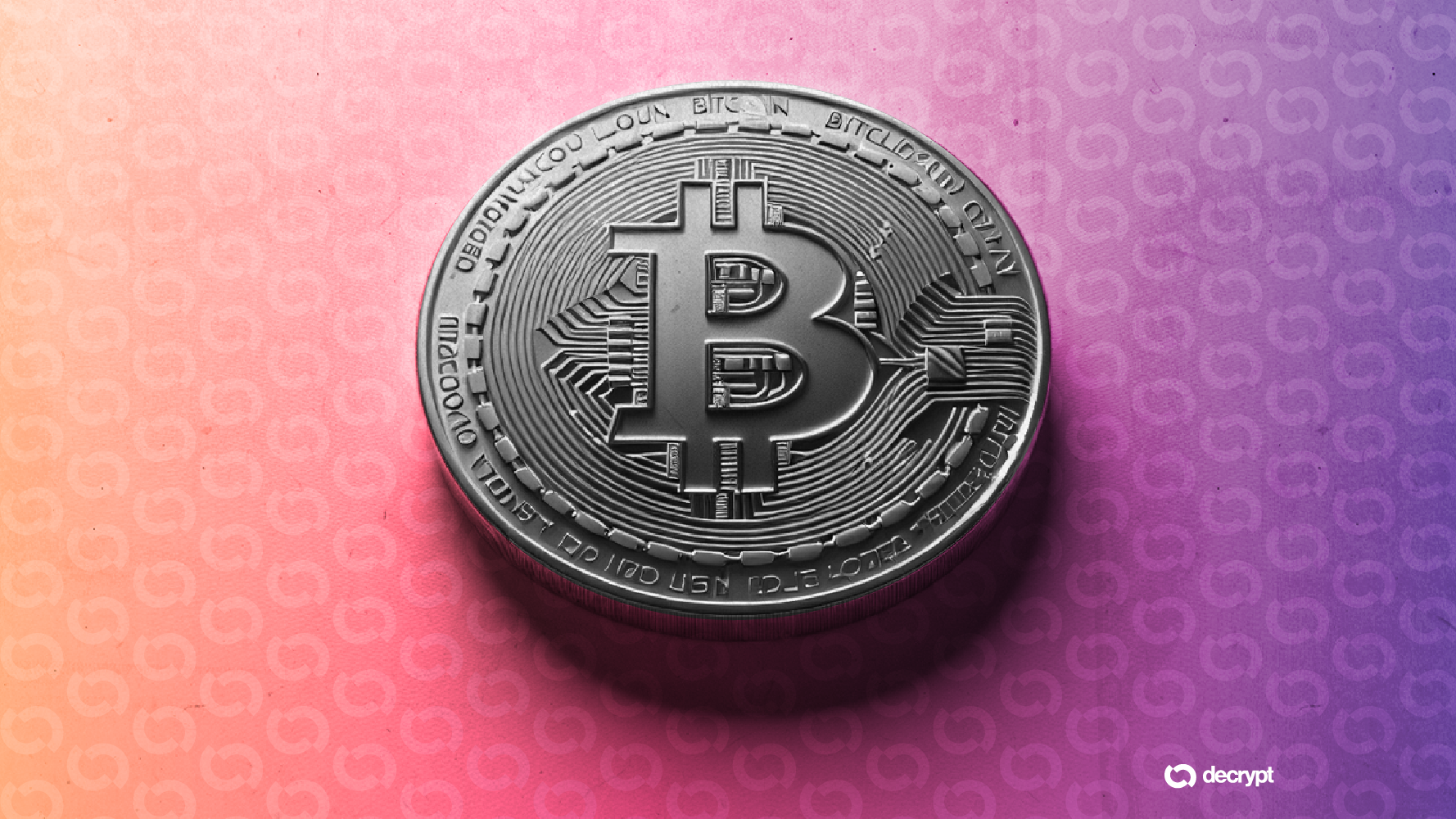
Bitcoin's recent price recovery above $71,000 mirrors patterns seen before previous major crashes in October 2025 and January 2026, suggesting a potential for a similar downturn if the current wedge pattern persists. Despite short-term bullish sentiment and a neutral RSI, the prevailing bearish trend is indicated by the 50-day EMA trading below the 200-day EMA, a technical signal that suggests caution for traders. The market is divided, with traders on prediction markets showing a near 50/50 split on whether Bitcoin will pump to $84K or dump to $55K, highlighting significant uncertainty and a lack of strong conviction. A decisive break above the descending resistance line with high volume would be required to invalidate the bearish pattern and signal a potential bottom, otherwise, the risk of a significant price drop remains elevated.
Signal context only. Validate with price action, liquidity, and risk limits before taking a position.
