
Navigating Crypto News

CoinFeather
Navigating Crypto News
Source, catalyst, and sector overlap from the latest feed.
Key Insights: Ripple Prime has partnered with Coinbase to expand institutional access to crypto derivatives trading. The agreement allows the former firm’s clients to trade a range of derivatives contracts available on the Coinbase platform. The move expands the firm’s brokerage services as the firm continues to broaden its market infrastructure for institutional clients. Ripple […] The post Ripple Prime Teams With Coinbase to Expand Institutional Crypto Derivatives Access appeared first on The Coin Republic.
Live Feed
Loading the broader stream in the same flow as the homepage feed.

Florida's Senate passage of SB 314 establishes a local stablecoin framework, integrating them into existing AML laws and potentially paving the way for state-level adoption and payment utilization. Governor Ron DeSantis is expected to review the bill, and his approval would position Florida as a key state for stablecoin regulation, potentially influencing other jurisdictions. The legislation defines stablecoins as 'monetary value' and allows the state to accept them for payments, signaling a move towards practical integration of digital assets into state financial operations.
Former Ripple CTO's sentiment reflects broader market malaise, suggesting that current altcoin struggles, including XRP's, are symptomatic of a wider crypto downturn rather than project-specific issues. Shiba Inu's significant spike in futures flow, while symbolic, highlights increased speculative positioning amid rising volatility, though its underlying bearish chart structure remains intact. Dogecoin's brief 'zero removal' above $0.10 demonstrates temporary buying pressure but ultimately failed to break significant resistance, indicating continued downtrend pressure.

A former CFO's conviction for diverting $35 million to DeFi investments highlights the inherent risks and regulatory scrutiny surrounding decentralized finance, potentially impacting investor confidence in the sector. The loss of the entire $35 million due to market downturn and DeFi yield failures underscores the speculative nature and volatility of high-yield DeFi protocols, serving as a cautionary tale for asset managers. This regulatory action against Nevin Shetty, involving wire fraud and a prison sentence, reinforces the ongoing enforcement landscape for financial misconduct within the crypto space, signaling increased risk for illicit activities.

Grammarly's new AI feature, 'Expert Review,' faces criticism for using deceased scholars' identities without explicit consent, raising ethical concerns about AI's use of personal data and intellectual property. The controversy highlights potential regulatory and trust issues for AI tools that mimic individuals, particularly in academic and professional contexts, potentially impacting user adoption and developer reputation. While Grammarly states the AI is inspired by published works and does not claim direct endorsement, the lack of consent and the 'morbid' nature of the feature could deter users and prompt scrutiny from ethicists and legal bodies.
Shiba Inu's successful defense of the $0.00000544 support level, coupled with broader market recovery, suggests potential for a short-term upward trend. Analysts have identified $0.00000586 as the immediate resistance target, with a break above this level potentially leading to a further 15.6% climb towards $0.00000644. While short-term targets are outlined, the sustainability of any uptrend for SHIB remains contingent on continued positive momentum in the broader cryptocurrency market, particularly Bitcoin's performance.
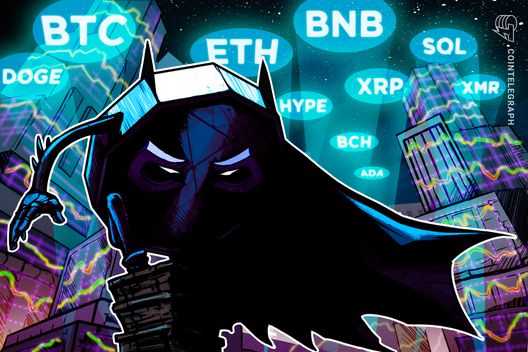
Bitcoin's failure to sustain above $70,000 suggests the recent rally was a relief bounce, with the $68,000-$70,000 zone now critical for preventing a further decline. Several major altcoins are also showing weakness at resistance levels, indicating a broader market sentiment shift towards bearishness or consolidation. While some analysts point to historical BTC/gold ratios suggesting a potential bottom, on-chain data indicates a persistent bear market, creating divergence in outlooks. Traders should monitor key moving averages and support/resistance levels for BTC and altcoins like ETH, BNB, XRP, SOL, DOGE, ADA, BCH, HYPE, and XMR to gauge short-term directional bias.

The potential passage of the Clarity Act in July presents a significant regulatory catalyst for the digital asset industry, potentially clarifying market structure and reducing uncertainty for participants. Despite past opposition and complexities, renewed engagement from the executive branch and ongoing negotiations suggest a shifting political landscape that could favor legislative progress. While optimistic timelines exist, the inherent difficulties of passing legislation during an election year and the need for bipartisan consensus indicate that passage is not guaranteed, warranting a cautious outlook.
Dogecoin is trading below its daily middle Bollinger Band at $0.0963, indicating that bearish sentiment currently dominates price action. While short-term futures data shows net inflows, longer-term 24-hour and three-day data reveal net outflows, suggesting cautious sentiment among broader market participants. The asset is consolidating between $0.093 and $0.096, with a reclaim of the $0.096 midline needed to challenge the $0.1036 resistance zone.

Curve Finance has accused PancakeSwap of using its proprietary StableSwap code without proper licensing, highlighting potential legal and cybersecurity risks in DeFi development. This dispute underscores the importance of intellectual property and licensing in the rapidly evolving DeFi space, potentially impacting future code sharing and collaboration. PancakeSwap has indicated a willingness to discuss the issue with Curve, suggesting a potential resolution through licensing or partnership rather than outright conflict.

Despite a wave of positive institutional news including ETF custodianship and banking access, Bitcoin's price action was dominated by macro factors like a strengthening dollar and shifting interest rate expectations, highlighting crypto's increasing correlation with traditional risk assets. The pullback suggests that short-term holders are more sensitive to macro uncertainty and geopolitical events, leading to profit-taking rather than conviction-driven long-term holding. While short-term price action was negative, underlying structural developments like expanded custody services and exchange investments point to a maturing crypto market infrastructure, even as macro headwinds currently overshadow crypto-native catalysts. Positive net inflows into spot Bitcoin ETFs and unwound leveraged positions suggest a potential foundation for future rallies, contingent on a stabilization of macro conditions and reduced speculative excess.

Senator Warren's call for anti-corruption provisions in crypto legislation, referencing the Justin Sun settlement, signals increased regulatory scrutiny on the intersection of crypto and political influence. The ongoing debate around the crypto market structure bill, with differing views from lawmakers and industry participants, suggests potential legislative hurdles and uncertainty for the sector. The SEC's settlement with Justin Sun, while resolving an unrelated case, has become a focal point for broader discussions on crypto regulation and potential conflicts of interest.
Signal context only. Validate with price action, liquidity, and risk limits before taking a position.
Quick market read from this story
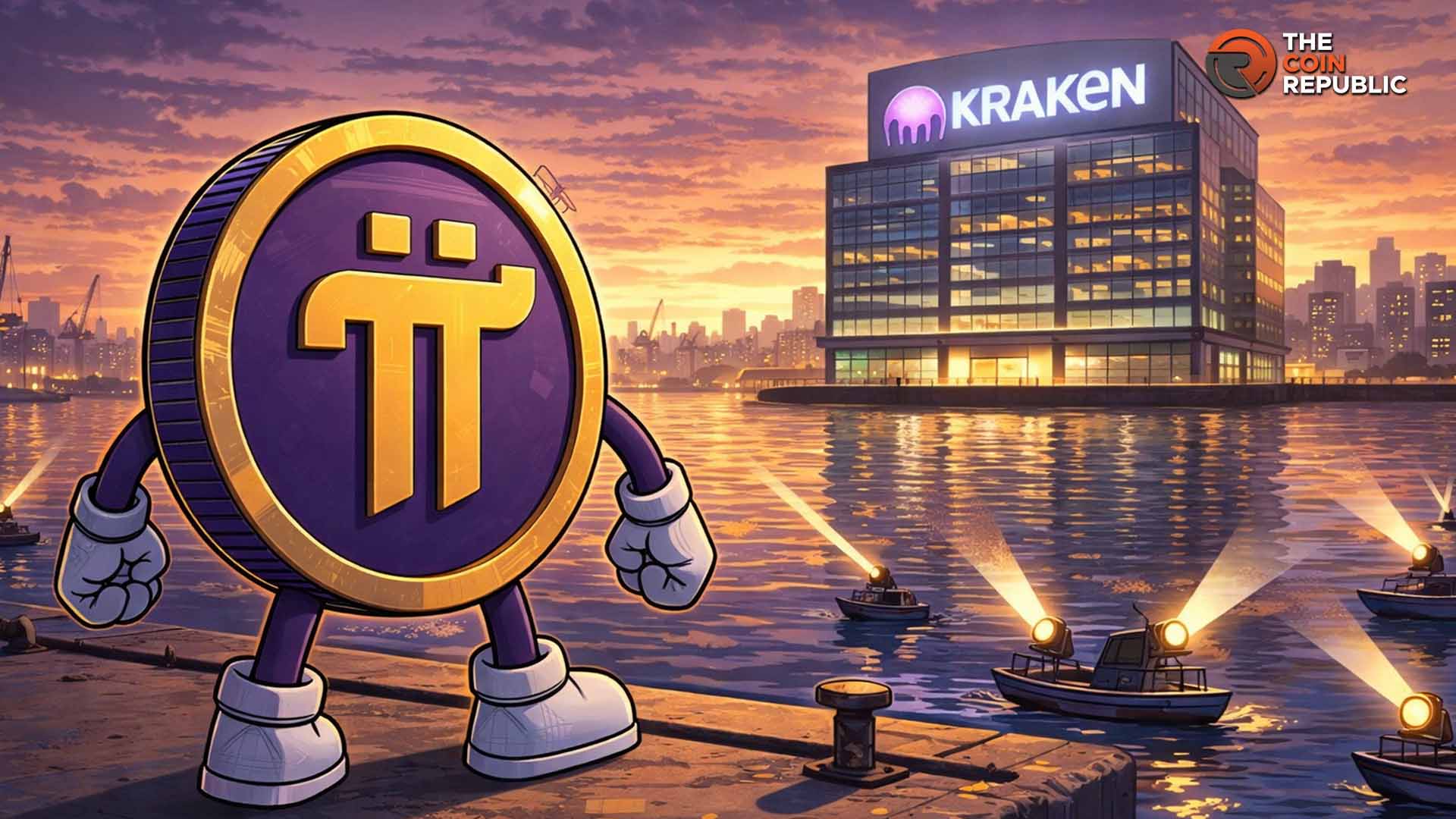
Speculation around a potential Kraken listing has driven Pi Coin's price up 19.4% this week, indicating renewed trader interest despite ongoing criticisms of the project's tokenomics and distribution.
The Pi Core Team's confirmation of protocol v19.9 migration and upcoming v20.2 upgrade signals ongoing development and preparation for broader adoption, potentially enhancing network capabilities.
A looming 21 million token unlock on March 7 presents a near-term risk to Pi Coin's price momentum, potentially counteracting positive sentiment from the Kraken listing rumors and recent price surge.
While the potential Kraken integration is framed as access to institutional flows and Fed payment rails, the lack of an official exchange announcement and persistent FUD suggest caution is warranted for traders.
Deep Dive
Pi Coin (PI) has experienced a significant rally, jumping 19.4% this week, driven by speculation surrounding a potential listing on the cryptocurrency exchange Kraken. This surge has positioned PI as a top performer in the market, reigniting trader interest.
The Pi Core Team has announced the successful completion of the network's protocol v19.9 migration. Furthermore, an upgrade to v20.2 is anticipated before Pi Day on March 14, 2026. These updates are designed to support structured growth, enhance readiness for mainstream adoption, manage increasing transaction volumes, and prepare the network for web3 integration.
Following the news, the PI token saw a 15% spike in the last 24 hours, trading around $0.20 according to CoinGecko data. Trading volume also surged to $36 million, indicating strong market activity. The price action has broken through the 50-day simple moving average (SMA) and is now targeting the 200-day SMA resistance at $0.2345. The Relative Strength Index (RSI) is at 67.65, suggesting strong demand.
Despite the positive momentum, Pi Network faces criticism, with some labeling it a
US banking regulators have clarified that tokenized securities will receive the same capital treatment as traditional securities, removing a significant barrier for banks. This regulatory clarity is expected to boost bank confidence and participation in the growing tokenized securities market, potentially accelerating adoption. The market for tokenized public equities has already reached $1.1 billion, indicating existing momentum that this regulatory development could further amplify. By treating tokenized assets under existing frameworks, regulators signal a supportive stance towards blockchain innovation without altering fundamental capital requirements.
