
Navigating Crypto News

CoinFeather
Navigating Crypto News
Quick market read from this story
PEPE is exhibiting a falling wedge pattern, a bullish reversal signal, suggesting potential upside if resistance is broken.
Weakening bearish momentum and stabilization near key support levels indicate a possible shift in market sentiment for PEPE.
A confirmed breakout above the falling wedge's upper trendline could target $0.000016, presenting a favorable risk-reward scenario for traders.
Source, catalyst, and sector overlap from the latest feed.
Significant exchange inflows of $110 million suggest increased selling pressure on Solana, potentially testing support levels between $66 and $70. A breakdown from a daily bear flag and loss of market structure at $85 indicates a shift in momentum favoring sellers, with potential retests of broken structure acting as resistance. Despite short-term bearish signals, some analysts maintain a long-term bullish outlook, anticipating new all-time highs if Solana reclaims key resistance levels above $100 and sustains ecosystem growth. The current market sentiment for Solana is bearish due to technical breakdowns and exchange inflows, but a sustained reclaim above $90 is needed to invalidate the short-term downtrend.
Live Feed
Loading the broader stream in the same flow as the homepage feed.
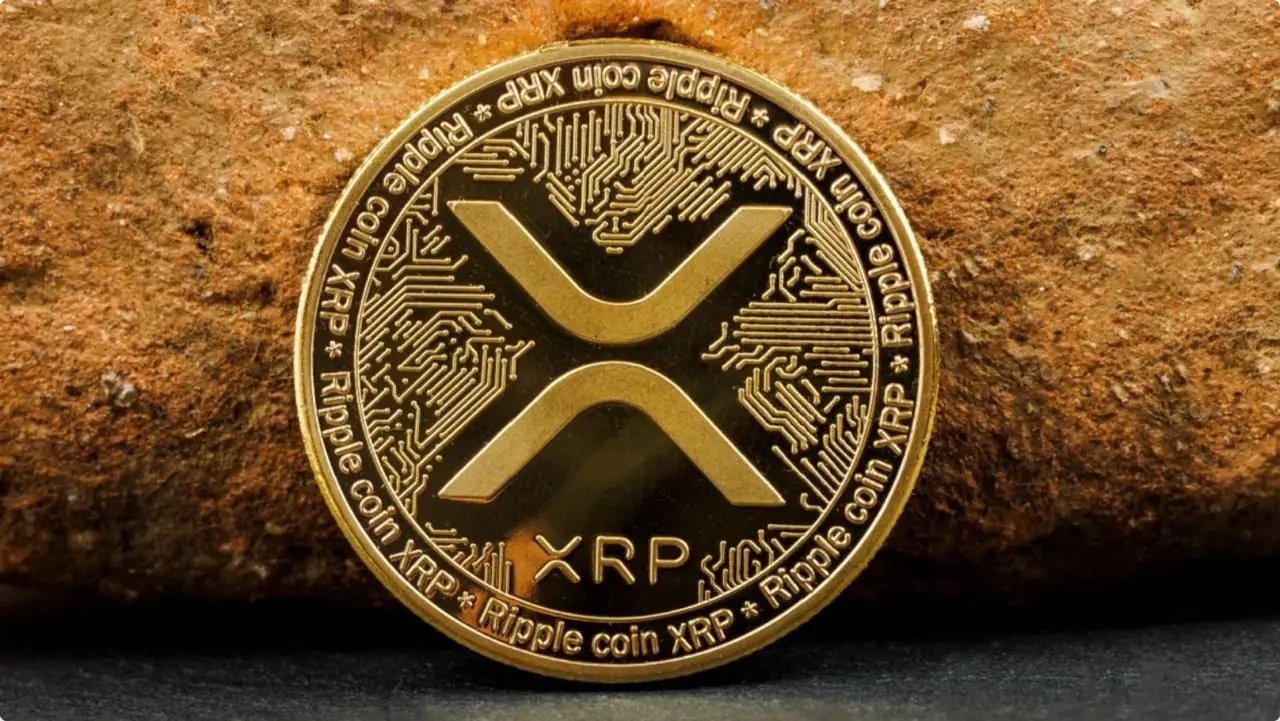
XRP derivatives market has reset with open interest at two-year lows, indicating exhausted leveraged positioning and reduced downside risk from forced liquidations. Funding rates near zero suggest a lack of directional conviction in the derivatives market, creating a neutral backdrop that could amplify a future price move. The positive taker ratio, coupled with increased volume without a breakout, points to accumulation behavior, suggesting buyers are stepping in but awaiting a catalyst to drive significant price appreciation. XRP's price action is heavily reliant on external catalysts, such as regulatory developments like the Clarity Act or broader market recovery, as it currently lacks independent strength.

Governments attempting to ban Telegram in Iran have inadvertently driven mass adoption of VPNs, highlighting the ineffectiveness of censorship against decentralized technologies. The increased reliance on VPNs and alternative communication methods like BitChat in Iran and Russia suggests a growing demand for censorship-resistant tools, potentially benefiting privacy-focused infrastructure. Past instances of BitChat download spikes during political unrest in Nepal and Madagascar indicate a correlation between civil unrest and the adoption of decentralized communication, signaling potential for similar trends elsewhere.

OpenAI's GPT-5.4 Pro achieving a 150 IQ score on a public benchmark signals accelerating AI capability gains that could influence enterprise spending and capital allocation decisions. The significant jump in AI performance, from 136 to 150 IQ, suggests a compounding effect in machine intelligence that may soon intersect with economic variables like inflation and growth expectations. While IQ benchmarks have limitations, the consistent upward trend across various AI capabilities indicates a rising frontier that could impact workflow automation, software budgets, and infrastructure demand. The market is increasingly viewing AI advancements like GPT-5.4 Pro not just as technological progress but as a potential macro-economic variable influencing capital expenditure and labor productivity assumptions.

Bitcoin demonstrates a consistent pattern of outperforming gold and the S&P 500 in the 60-day period following significant global economic or geopolitical shocks. The analysis by Mercado Bitcoin highlights Bitcoin's resilience and potential as a 'digital safe haven' asset, showing stronger recovery and returns compared to traditional assets post-crisis. Despite short-term volatility and liquidity scrambles during crises, Bitcoin's historical performance suggests a capacity to rebound and generate alpha, a trend observed across multiple historical events including recent geopolitical tensions. The findings suggest that investors may increasingly consider Bitcoin as a strategic allocation during periods of global uncertainty, challenging traditional safe-haven narratives.

Jimmy Song advocates for a conservative Bitcoin node client to maintain monetary properties and decentralization, emphasizing that limiting arbitrary data storage costs is crucial for accessibility. The recent removal of the OP_Return data limit in Bitcoin Core 30, despite community pushback, led to a significant increase in alternative node implementations like Bitcoin Knots, highlighting ongoing debates about network scalability versus decentralization. ProductionReady's initiative to restore the 83-byte OP_Return limit signals a focus on preserving Bitcoin's core monetary functions by prioritizing node operator accessibility over increased data capacity.

Tron's Q1 revenue leadership, driven by high transaction volume of stablecoins like USDT, highlights its role as a low-cost settlement layer, contrasting with higher-fee chains like Ethereum. Despite record revenue, Tron's low TVL indicates it's primarily a transfer network rather than a value-storage platform, making its revenue model susceptible to shifts if competitors lower fees. Tron Inc.'s acquisition of 159,004 TRX at $0.3145 signals institutional confidence and a potential floor for the asset, aligning with the technical recovery observed on the chart. The market is currently assessing whether Tron's revenue performance represents a sustained repricing or a short-term reaction to current transaction volumes and corporate buying.

Former UK Chancellor Kwasi Kwarteng's endorsement of Bitcoin signals a potential shift in institutional perception, framing it as a hedge against traditional financial system instability. Kwarteng's involvement with Stack BTC, a firm holding 31 BTC, suggests a growing trend of traditional finance figures actively participating in the digital asset space. The commentary highlights a perceived "doom loop" in UK fiscal policy and a broader critique of short-termism in markets, positioning Bitcoin as a long-term alternative. Kwarteng's pushback against Bitcoin criticism, particularly from Boris Johnson, indicates a developing narrative supporting digital assets as legitimate forms of money.

Ethereum price is showing signs of stabilization and potential upward momentum, with analysts targeting a breakout above $2.1K and $2.2K if key resistance levels are held. The Ethereum Foundation's significant staking of $46.64M in ETH signals a strong conviction in the network's long-term value and a reduced immediate selling pressure from a major holder. Increased whale balances and decreasing small wallet balances suggest a potential shift in accumulation patterns, which could precede a price rally if confirmed by broader market sentiment.

The market is signaling that passive accumulation of digital assets is no longer sufficient for corporate treasuries, shifting focus to active yield generation and capital discipline. Emerging strategies for digital asset treasuries include infrastructure participation and staking, active trading and market-driven income, and credit deployment via borrowing against holdings. Companies with digital asset exposure will increasingly be valued on their ability to generate sustainable income, moving beyond simple price appreciation as a measure of maturity. The most resilient treasuries may be those that diversify income sources, potentially blending crypto-native yields with traditional finance strategies or even AI compute services.

Anthropic's establishment of a Political Action Committee (PAC) signals a strategic move to influence U.S. AI policy and regulatory landscape. The PAC formation occurs amidst ongoing legal disputes with the Trump administration over AI usage, suggesting a proactive approach to managing political and regulatory risks. This development highlights a broader trend of major AI companies engaging directly in political lobbying to shape future legislation and government contracts.

The narrative of Bitcoin as a stable corporate reserve asset is being challenged as multiple companies, including Genius Group and Riot Platforms, liquidate holdings to meet debt obligations, suggesting a shift from long-term conviction to short-term liquidity needs. This trend implies that institutional adoption may not inherently reduce Bitcoin's volatility, as corporate treasuries could act as pro-cyclical sellers during market stress rather than providing a stabilizing influence. The ease of converting Bitcoin to cash, a key feature for its adoption as a treasury asset, paradoxically makes it the first asset liquidated when financial pressures arise, undermining its role as a true reserve asset. While some large holders like Strategy and Metaplanet continue to accumulate, the broader trend of corporate selling for debt repayment suggests the 'treasury trade' is bifurcating, with significant participants treating Bitcoin as a financing tool rather than a permanent store of value.

Prediction markets indicate a significant shift in crowd sentiment, with a sharp decline in confidence regarding the normalization of Strait of Hormuz traffic, suggesting increased geopolitical risk pricing. Elevated bets on WTI crude oil prices exceeding $120 and $130 signal market expectations of continued supply disruptions and inflationary pressures stemming from geopolitical tensions. The crypto market is likely to experience heightened volatility in April as geopolitical instability intensifies, impacting risk assets like BTC and ETH through ripple effects on global trade and market sentiment. Traders are positioning for a volatile April, with prediction markets reflecting a strong sentiment for 'pressure' rather than 'peace,' implying a short-term bearish bias for risk-on assets.
Ethereum exchange balances have reached an all-time low of 10.969%, indicating a significant supply contraction as holders move assets off exchanges, likely for staking or cold storage. The Ethereum Foundation's completion of its 70,000 ETH staking target signifies a shift from a selling model to direct network participation, enhancing operational legitimacy despite not solving funding needs. The divergence in holding behavior between ETH (staking) and BTC (cold storage) suggests a market repricing of Ethereum as infrastructure with a yield and governance function, rather than purely a speculative asset. The technical feasibility of the Ethereum Foundation's solo-staking move was enabled by EIP-7251, which raised the effective validator balance limit, making large-scale staking more manageable.
Signal context only. Validate with price action, liquidity, and risk limits before taking a position.
No explicit catalyst tagged.
Rising mortgage rates in the US, UK, and EU, driven by geopolitical tensions and oil price shocks, signal a broader inflationary pressure that could impact consumer spending and investment appetite. The conflict's influence on oil prices and bond yields is directly affecting mortgage pricing, indicating that global macroeconomic factors and geopolitical events are now significant drivers for traditional finance markets. While not directly a crypto event, the increased volatility and inflation concerns in traditional finance markets could lead investors to seek uncorrelated assets or hedge against traditional market downturns, potentially benefiting Bitcoin.
