
Navigating Crypto News

CoinFeather
Navigating Crypto News

Quick market read from this story
Dogecoin's official team maintains a lighthearted, humorous stance on market downturns, signaling a community focus on brand identity over immediate price action.
Despite the team's playful commentary, Dogecoin's price action remains technically bearish, trading below key moving averages and facing potential downside to $0.079 if support breaks.
The article highlights a broader market sentiment characterized by FUD and a lack of optimism, with Bitcoin also experiencing increased bearish discussions.
Source, catalyst, and sector overlap from the latest feed.
Bitcoin has been heavily scooped by high-profile and institutional investors in the last three days, with about 10,000 BTC entering the wallets of whale holders.
Coinbase CEO Brian Armstrong reiterated the long-term vision of achieving 1 billion crypto users, signaling continued focus on user experience and mainstream adoption. The company's pursuit of becoming the 'No. 1 financial services app' is supported by recent regulatory progress, including conditional OCC approval for trust bank operations. Coinbase's expansion into payment products and industry standards like the x402 protocol indicates a strategic push to integrate crypto into everyday financial activities.
Live Feed
Loading the broader stream in the same flow as the homepage feed.
Rising mortgage rates in the US, UK, and EU, driven by geopolitical tensions and oil price shocks, signal a broader inflationary pressure that could impact consumer spending and investment appetite. The conflict's influence on oil prices and bond yields is directly affecting mortgage pricing, indicating that global macroeconomic factors and geopolitical events are now significant drivers for traditional finance markets. While not directly a crypto event, the increased volatility and inflation concerns in traditional finance markets could lead investors to seek uncorrelated assets or hedge against traditional market downturns, potentially benefiting Bitcoin.

Tron's Q1 revenue leadership, driven by high transaction volume of stablecoins like USDT, highlights its role as a low-cost settlement layer, contrasting with higher-fee chains like Ethereum. Despite record revenue, Tron's low TVL indicates it's primarily a transfer network rather than a value-storage platform, making its revenue model susceptible to shifts if competitors lower fees. Tron Inc.'s acquisition of 159,004 TRX at $0.3145 signals institutional confidence and a potential floor for the asset, aligning with the technical recovery observed on the chart. The market is currently assessing whether Tron's revenue performance represents a sustained repricing or a short-term reaction to current transaction volumes and corporate buying.

Former UK Chancellor Kwasi Kwarteng's endorsement of Bitcoin signals a potential shift in institutional perception, framing it as a hedge against traditional financial system instability. Kwarteng's involvement with Stack BTC, a firm holding 31 BTC, suggests a growing trend of traditional finance figures actively participating in the digital asset space. The commentary highlights a perceived "doom loop" in UK fiscal policy and a broader critique of short-termism in markets, positioning Bitcoin as a long-term alternative. Kwarteng's pushback against Bitcoin criticism, particularly from Boris Johnson, indicates a developing narrative supporting digital assets as legitimate forms of money.

Ethereum price is showing signs of stabilization and potential upward momentum, with analysts targeting a breakout above $2.1K and $2.2K if key resistance levels are held. The Ethereum Foundation's significant staking of $46.64M in ETH signals a strong conviction in the network's long-term value and a reduced immediate selling pressure from a major holder. Increased whale balances and decreasing small wallet balances suggest a potential shift in accumulation patterns, which could precede a price rally if confirmed by broader market sentiment.

The market is signaling that passive accumulation of digital assets is no longer sufficient for corporate treasuries, shifting focus to active yield generation and capital discipline. Emerging strategies for digital asset treasuries include infrastructure participation and staking, active trading and market-driven income, and credit deployment via borrowing against holdings. Companies with digital asset exposure will increasingly be valued on their ability to generate sustainable income, moving beyond simple price appreciation as a measure of maturity. The most resilient treasuries may be those that diversify income sources, potentially blending crypto-native yields with traditional finance strategies or even AI compute services.

Anthropic's establishment of a Political Action Committee (PAC) signals a strategic move to influence U.S. AI policy and regulatory landscape. The PAC formation occurs amidst ongoing legal disputes with the Trump administration over AI usage, suggesting a proactive approach to managing political and regulatory risks. This development highlights a broader trend of major AI companies engaging directly in political lobbying to shape future legislation and government contracts.

The narrative of Bitcoin as a stable corporate reserve asset is being challenged as multiple companies, including Genius Group and Riot Platforms, liquidate holdings to meet debt obligations, suggesting a shift from long-term conviction to short-term liquidity needs. This trend implies that institutional adoption may not inherently reduce Bitcoin's volatility, as corporate treasuries could act as pro-cyclical sellers during market stress rather than providing a stabilizing influence. The ease of converting Bitcoin to cash, a key feature for its adoption as a treasury asset, paradoxically makes it the first asset liquidated when financial pressures arise, undermining its role as a true reserve asset. While some large holders like Strategy and Metaplanet continue to accumulate, the broader trend of corporate selling for debt repayment suggests the 'treasury trade' is bifurcating, with significant participants treating Bitcoin as a financing tool rather than a permanent store of value.

Prediction markets indicate a significant shift in crowd sentiment, with a sharp decline in confidence regarding the normalization of Strait of Hormuz traffic, suggesting increased geopolitical risk pricing. Elevated bets on WTI crude oil prices exceeding $120 and $130 signal market expectations of continued supply disruptions and inflationary pressures stemming from geopolitical tensions. The crypto market is likely to experience heightened volatility in April as geopolitical instability intensifies, impacting risk assets like BTC and ETH through ripple effects on global trade and market sentiment. Traders are positioning for a volatile April, with prediction markets reflecting a strong sentiment for 'pressure' rather than 'peace,' implying a short-term bearish bias for risk-on assets.
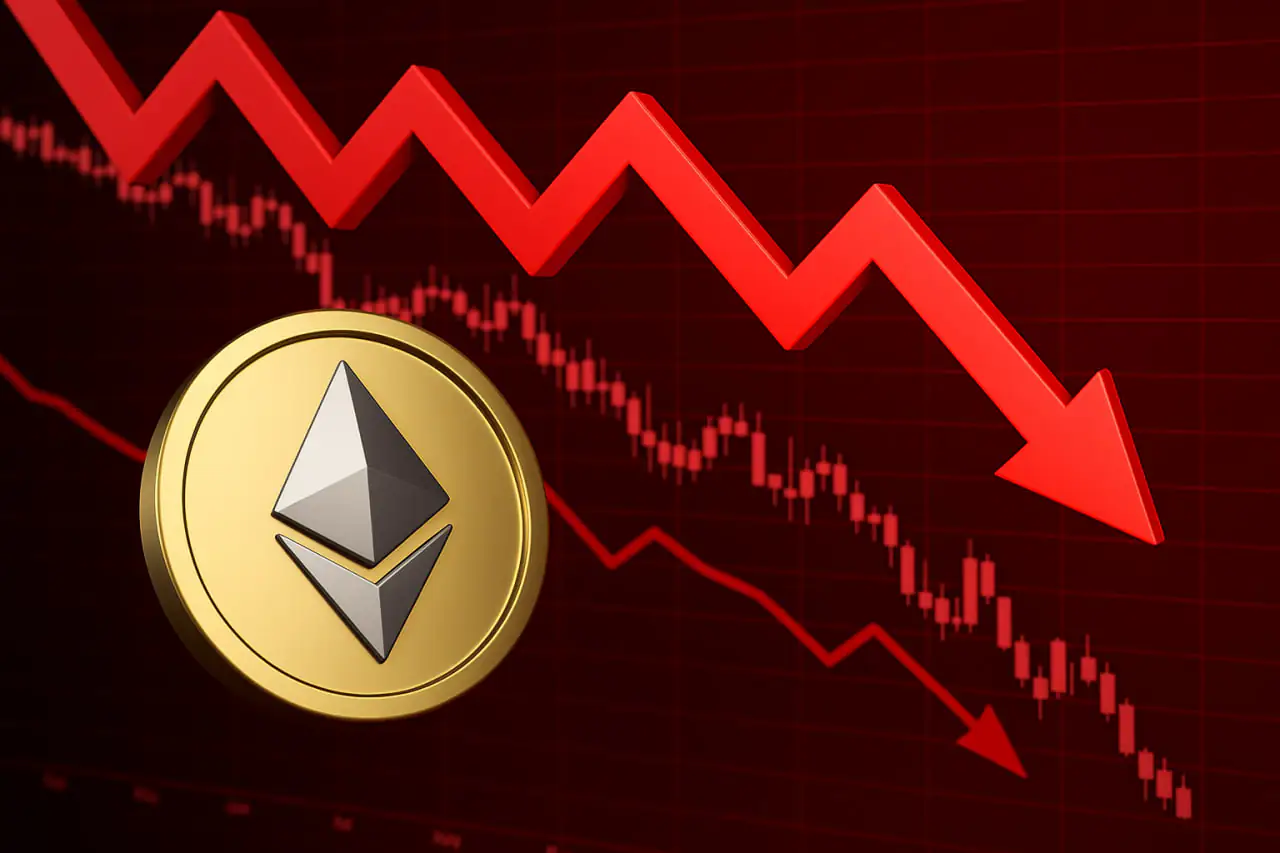
Ethereum exchange balances have reached an all-time low of 10.969%, indicating a significant supply contraction as holders move assets off exchanges, likely for staking or cold storage. The Ethereum Foundation's completion of its 70,000 ETH staking target signifies a shift from a selling model to direct network participation, enhancing operational legitimacy despite not solving funding needs. The divergence in holding behavior between ETH (staking) and BTC (cold storage) suggests a market repricing of Ethereum as infrastructure with a yield and governance function, rather than purely a speculative asset. The technical feasibility of the Ethereum Foundation's solo-staking move was enabled by EIP-7251, which raised the effective validator balance limit, making large-scale staking more manageable.
Cathie Wood suggests Bitcoin's extreme crash cycles may be concluding as the asset matures, implying a shift towards less volatile market behavior and potentially more stable price action. The observed 52% decline from Bitcoin's recent peak, while significant, is notably smaller than historical 80%+ drawdowns, supporting the thesis of maturing market cycles and reduced volatility. A growing base of long-term holders and institutional investors is cited as a key factor in moderating Bitcoin's price swings, mirroring historical transitions in assets like gold and equities. While April historically shows seasonal strength, the primary narrative centers on Bitcoin's structural evolution, suggesting a potential for a less volatile, more predictable price trajectory moving forward.
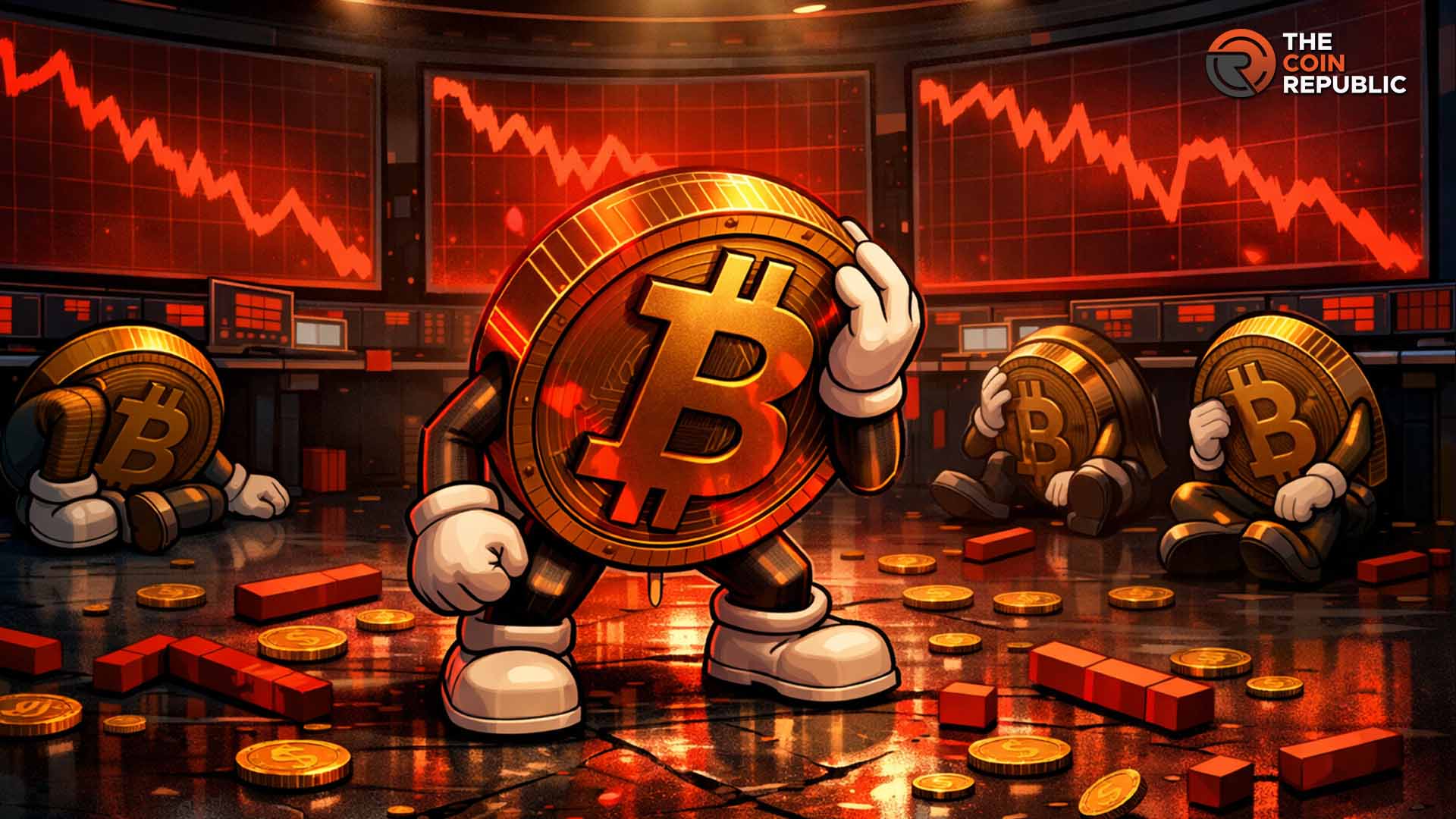
Bitcoin whales and sharks have realized $30.9 billion in losses year-to-date, a scale not seen since the 2022 bear market, indicating significant capitulation pressure. Historical data suggests that periods of similar high realized losses in 2022 preceded major price drops of 20%-50%, signaling elevated downside risk for BTC. Despite different macro conditions than 2022, current geopolitical tensions and AI-driven risk trades are contributing to a bearish outlook and potential for further price declines. Onchain data indicates that even long-term holders (over 6 months) are selling at significant losses, with daily realized losses remaining elevated, suggesting that selling pressure is not yet exhausted and a market stabilization below $25M daily losses is needed.

The move towards 24/7 stock trading by major exchanges like NYSE and Nasdaq aims to eliminate after-hours price manipulation, potentially benefiting retail traders by leveling the playing field against intermediaries who exploit thin liquidity. Decentralized exchanges like Hyperliquid, already operating 24/7, demonstrate the demand for continuous trading, with significant derivatives volume and revenue, suggesting a potential shift in market structure towards always-on access. While exchanges anticipate increased trading fees from 24/7 operations, the primary beneficiaries are expected to be traders, particularly retail investors, who will gain the ability to react to news in real-time without being subject to potentially manipulated opening prices.

The upcoming FDIC finalization of rules under the GENIUS Act on April 7, 2026, marks a significant regulatory milestone for stablecoins, potentially increasing their integration into traditional finance. The substantial holdings of U.S. Treasuries by stablecoin issuers (over 80%) introduce 'contraction risk,' where a mass redemption could force large-scale liquidation of government debt, impacting interest rates. Workarounds for the ban on stablecoin interest payments are emerging through crypto exchanges, suggesting that yield-seeking behavior may persist despite regulatory efforts to curb it. The GENIUS Act's regulatory framework, including the FDIC's final rule, signifies a shift from 'regulation by enforcement' to a more structured approach for digital assets, impacting market participants' operational strategies.

XRP Ledger's core infrastructure upgrades, including telemetry and type safety, aim to enhance network stability and developer experience, signaling a focus on long-term foundational improvements rather than immediate speculative catalysts. XRP's integration into corporate treasury systems via Ripple's acquisition of GTreasury represents a tangible step towards enterprise adoption, positioning XRP as a tool for managing digital assets within traditional financial workflows. Speculation surrounding SWIFT's potential adoption of XRP, fueled by executive departures and Ripple's partnership, remains unconfirmed but highlights ongoing market interest in XRP's role in cross-border payments and interbank communication.
Signal context only. Validate with price action, liquidity, and risk limits before taking a position.
No explicit catalyst tagged.
