
Navigating Crypto News

CoinFeather
Navigating Crypto News
Quick market read from this story
Geopolitical escalation and persistent inflation are pressuring crypto majors, with Bitcoin falling below $70k, signaling a risk-off sentiment in the broader market.
The launch of S&P 500 perpetual futures on Hyperliquid, backed by a licensing agreement, represents a significant step in bringing traditional market derivatives on-chain, potentially increasing institutional interest and trading volume.
The Clarity Act faces a critical May deadline, with ongoing disputes over stablecoin yield and ethics provisions highlighting the legislative hurdles for crypto regulation in the US.
Kraken's decision to delay its IPO, citing challenging market conditions, reflects a cautious approach from major crypto firms and suggests a potential slowdown in traditional market access for the sector.
Deep Dive
The cryptocurrency market experienced a significant downturn, with major assets like Bitcoin falling below $70,000, driven by escalating geopolitical tensions in the Middle East and hotter-than-expected inflation data. The February Producer Price Index (PPI) printed at +0.7% month-over-month, exceeding the 0.3% forecast and signaling persistent inflationary pressures. These factors, coupled with a neutral stance from Federal Reserve Chair Jerome Powell on interest rate cuts, contributed to a broad market sell-off across cryptocurrencies, stocks, and gold.
In a notable development for on-chain derivatives, Hyperliquid has launched S&P 500 perpetual futures through a licensing agreement with S&P Dow Jones Indices. These contracts, officially listed by TradeXYZ, are settled in USDC and trade 24/7, allowing for leveraged exposure to the S&P 500 index. This expansion follows Hyperliquid's previous introduction of gold, oil, and equity-linked perpetuals, which now constitute 5.5% of the platform's total volume. The HYPE token saw a brief surge following the announcement.
The proposed Clarity Act, a significant piece of digital asset legislation, now has a firm deadline. Senators have indicated that the bill must pass the Senate Banking Committee markup in the latter half of April and clear the Senate floor before the Memorial Day recess on May 21st. Failure to pass by this date would likely prevent its passage for the foreseeable future. While progress has been made on the stablecoin yield dispute, an ethics provision targeting crypto involvement by public officials remains a key point of contention. Polymarket currently assigns the bill a 62% chance of becoming law in 2026.
Cryptocurrency exchange Kraken has reportedly postponed its plans for an Initial Public Offering (IPO). The company had confidentially filed a draft S-1 with the SEC in November, following an $800 million funding round at a $20 billion valuation. However, Kraken is now waiting for improved market conditions before proceeding. This decision comes as other crypto-related companies face market challenges, with BitGo down 44% from its IPO price and Citi downgrading Gemini to a sell rating.
The FTX Recovery Trust is set to distribute an additional $2.2 billion to creditors on March 31st, marking the fourth payout under the exchange's Chapter 11 reorganization plan. These distributions, processed through BitGo, Kraken, and Payoneer, are calculated based on asset prices from November 2022. This means creditors holding assets like Bitcoin at the time of FTX's collapse are receiving dollar-equivalent recoveries at significantly lower valuations than current market prices.
The broader crypto market saw significant declines, with Bitcoin down 4% to $69.7k and Ethereum down 5% to $2,160. Oil prices spiked to $98 following attacks on energy infrastructure, while gold fell to $4,696. The SEC approved Nasdaq's rule change to allow tokenized securities trading on the exchange through a pilot program. The Algorand Foundation announced a 25% staff reduction due to market weakness. Tempo Network launched its mainnet, a payments-focused layer-1 backed by Stripe and Paradigm, featuring a new protocol for AI agent transactions. Citi downgraded Gemini from Neutral to Sell, citing profitability concerns. Bitcoin ETFs experienced net outflows of $163.5 million, breaking a streak of inflows, while ETH ETFs saw $55 million in outflows. Meme coins also trended downwards. On a positive note, Zcash's hashrate reached a new all-time high, indicating growing adoption.
Source, catalyst, and sector overlap from the latest feed.
Cryptocurrency exchange Crypto.com is laying off around 180 employees as it shifts focus to AI-driven operations.
The Federal Reserve's hawkish hold on interest rates, coupled with geopolitical tensions, has triggered a broad market sell-off, impacting Bitcoin and traditional assets alike. Significant whale selling of BTC and a large options expiry approaching on March 27th are contributing to downward pressure and potential for continued low volatility. Despite the recent dip, the $70,000-$72,000 zone is identified as key support, with sustained ETF inflows potentially absorbing supply and limiting downside.
OP_NET is a new protocol that aims to bring smart contracts and decentralized finance directly to Bitcoin transactions.
Authorities have seized approximately 40 BTC as part of a criminal investigation into a rideshare driver accused of defrauding COVID-19 relief programs. The case highlights ongoing regulatory scrutiny and enforcement actions against individuals misusing pandemic relief funds for cryptocurrency investments. This development underscores the risk of regulatory action and asset seizure for illicitly obtained digital assets, impacting market perception of compliance.
BTQ Technologies has launched a Bitcoin Quantum testnet implementing BIP 360, introducing quantum-resistant transaction structures and post-quantum signatures to a separate blockchain environment. The primary challenge for quantum readiness in Bitcoin is not technical but social, as adoption of BIP 360 would require consensus to migrate to a new chain or upgrade the existing network, a historically difficult process. While a practical quantum computer could eventually compromise Bitcoin's elliptic-curve cryptography, the current development on a testnet addresses future transaction security, not historical vulnerabilities. The launch of Bitcoin Quantum testnet, a separate chain from genesis block, bypasses Bitcoin's governance but faces significant hurdles in achieving user and miner adoption compared to network upgrades.
Ripple's CTO Emeritus David Schwartz hinted at a potential euro stablecoin launch, signaled by his social media post of the 'Eurion constellation,' which could expand Ripple's presence in the EU following its EMI license acquisition. Despite hawkish Fed signals, top Binance traders are accumulating Shiba Inu (SHIB), with whale sentiment showing a strong Long/Short ratio, suggesting a bullish outlook near the $0.00000570 support level. Analyst Benjamin Cowen warns that Bitcoin may underperform gold by up to 30%, indicating a potential shift in risk appetite away from BTC towards traditional safe-haven assets in the near term. The crypto market is transitioning from retail-driven euphoria to institutional accumulation post-FOMC, with analysts anticipating the second half of 2026 for the next major bull cycle, contingent on macro stability.
Canada's FINTRAC has significantly increased its enforcement actions by revoking 47 crypto-related firm registrations in 2026, signaling a heightened regulatory environment. The intensified crackdown, driven by concerns over money laundering and fraud, suggests increased compliance pressure on crypto exchanges, payment services, and ATMs operating within or serving Canada. This regulatory tightening by Canadian authorities indicates a broader trend of global regulators increasing scrutiny on virtual asset platforms to align with traditional financial compliance standards.
Former SEC official Marc Fagel clarifies that retail XRP holders never faced legal restrictions on trading XRP, addressing a common point of confusion stemming from the Ripple lawsuit. The SEC's recent crypto guidance, while acknowledged as a positive step by Fagel, is noted to be less impactful than congressional legislation due to its reversible nature and lack of force of law. The clarification on XRP's retail trading status, though historical, reinforces the market's understanding of asset classification and regulatory boundaries within the ongoing Ripple case context.
The SEC's approval of Nasdaq's blockchain settlement pilot for Russell 1000 stocks and ETFs marks a significant step towards tokenized securities, potentially unlocking substantial dormant capital and reducing reconciliation costs. Nasdaq's integrated approach prioritizes minimal disruption and liquidity preservation, while the NYSE's parallel model aims for a cleaner slate for new market structures, highlighting divergent strategies for tokenized asset adoption. The global regulatory trend towards 'functional regulation' signifies that tokens performing the economic function of securities will be treated as such, regardless of underlying technology, paving the way for broader institutional adoption. The move to tokenized settlements introduces new risks, particularly the speed of smart contract bugs, which could necessitate rapid regulatory responses, contrasting with traditional settlement timelines.
Amundi's launch of a $100M tokenized fund utilizing Chainlink for data integrity signals significant institutional adoption of blockchain technology within regulated European frameworks. The integration of Chainlink's oracle services for NAV data on-chain highlights the critical role of decentralized infrastructure in bridging traditional finance with blockchain for tokenized real-world assets. The fund's operation across Ethereum and Stellar, coupled with low entry barriers, suggests a broader trend towards increased accessibility and efficiency in institutional-grade digital asset products. Market sentiment indicates that this level of TradFi adoption, particularly from a major asset manager like Amundi, may still be undervalued by the broader crypto market.
Grayscale's Head of Research indicates that regulated products like ETFs are opening doors for institutional allocation into XRP, signaling a maturing market beyond Bitcoin and Ethereum. Growing client demand for XRP from financial advisors, as reported by Grayscale, suggests increasing institutional interest in diversifying portfolios beyond top-tier cryptocurrencies. The development of XRP ETFs and increased advisor interest implies a potential for broader adoption and price discovery as institutional capital flows into the asset.
Opera's proposed acquisition of 160 million CELO tokens signifies a strategic shift towards becoming a key stakeholder in the Celo payments network, potentially increasing demand and ecosystem engagement. The move, which represents a substantial portion of Celo's circulating and maximum supply, could be interpreted as a strong vote of confidence in Celo's long-term viability and its MiniPay application's growth, especially given CELO's current low valuation. While the proposal aims to solidify Opera's commitment, the governance cap on voting power suggests a balanced approach to integration, mitigating concerns about concentrated control while still rewarding a significant investment.
Crypto.com's decision to cut 12% of its workforce signals a strategic pivot towards AI integration, potentially impacting operational efficiency and future development focus. The layoffs at Crypto.com, mirroring trends in the broader tech and crypto sectors, highlight a significant industry-wide shift prioritizing AI capabilities over traditional roles. While the direct impact on Crypto.com's token is not specified, the company's aggressive AI push and associated restructuring could influence its long-term market positioning and investor sentiment.
The article argues that the era of traditional crypto listings and on-ramps is ending, as intent-based protocols are making access native to networks, potentially disrupting existing gatekeeper models. This shift implies a structural change where access is enforced by the network itself rather than granted by intermediaries, which could lead to a redistribution of value and leverage away from platforms towards protocols. The transition to native access is described as a quiet but irreversible structural change, suggesting that while it may not be marked by singular events, it will fundamentally alter the crypto ecosystem's economics and distribution dynamics.
Live Feed
Loading the broader stream in the same flow as the homepage feed.
Find out what analysts expect for PulseChain in 2026, with realistic price forecasts, token supply insights, and long-term market outlook.

The CoinDesk 20 Index experienced a 1.6% decline, indicating a broad market downturn driven by underperforming assets like NEAR and HBAR. NEAR Protocol's 3.3% drop and Hedera's 2.9% decline highlight specific project weaknesses within the broader market index. With only two out of twenty assets showing gains, the performance update suggests a prevailing bearish sentiment across the tracked digital assets.
Bitcoin's recent pullback below $70,000 is directly linked to stronger-than-expected US inflation data, signaling that persistent price pressures may delay anticipated Federal Reserve rate cuts. The shift in market expectations away from near-term monetary easing removes a key bullish driver for risk assets like Bitcoin, increasing sensitivity to macroeconomic signals. Profit-taking by short-term holders, evidenced by significant BTC realized profits near $75,000, combined with macro headwinds, is contributing to downside pressure on Bitcoin. Bitcoin's ability to hold above the 200-week EMA near $68,350 is now a critical technical support level, with a failure to maintain this could accelerate further price declines.
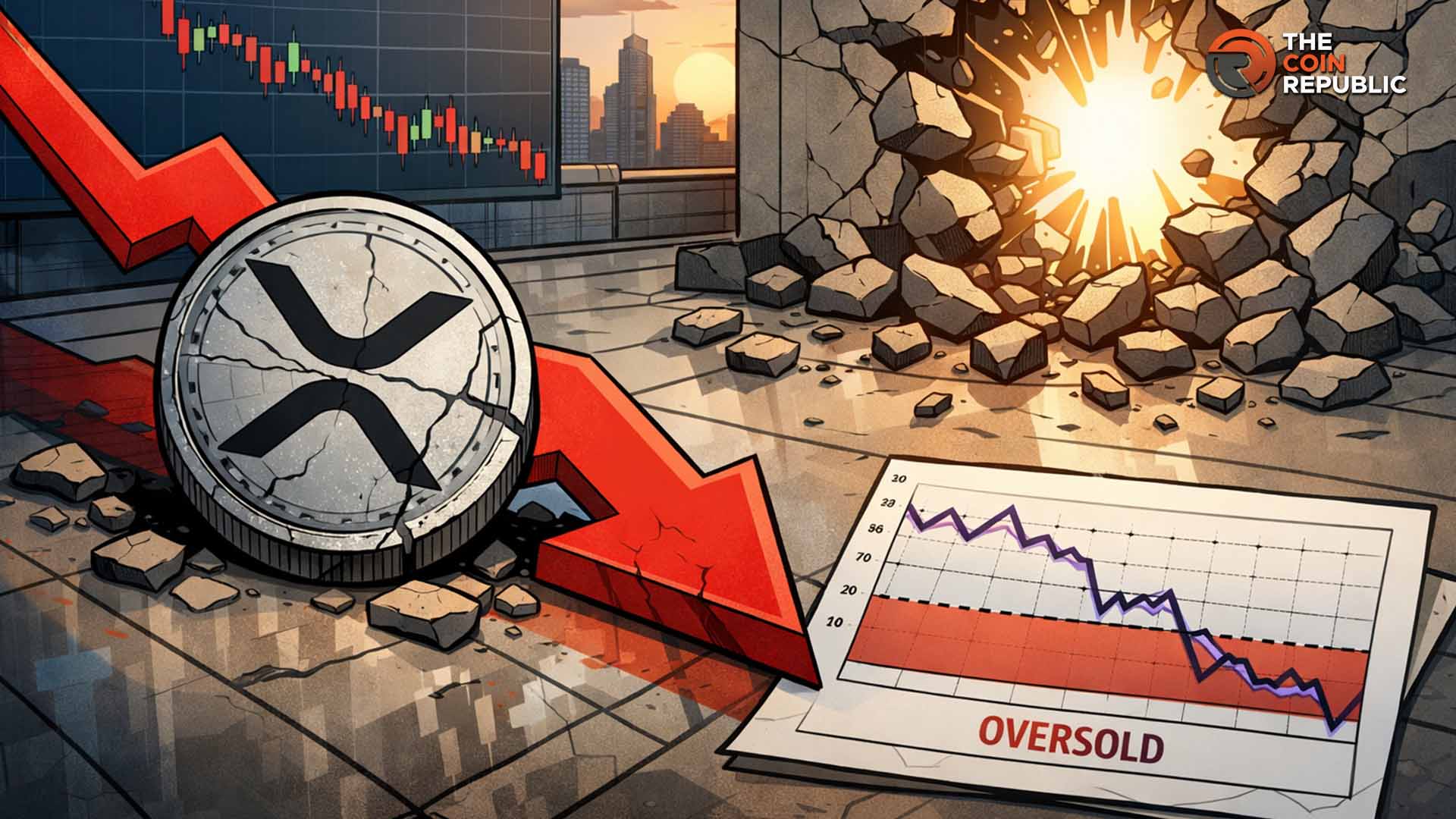
XRP's RSI hitting 2022 bear market lows suggests extreme oversold conditions, historically a precursor to potential reversals, warranting trader attention for momentum shifts. Despite zero daily XRP ETF inflows, the substantial cumulative $1.21 billion indicates sustained institutional interest, with current flat flows likely reflecting market observation rather than disinterest. The surge in XRP Ledger transactions to nearly 3 million daily, coupled with Evernorth's $1 billion XRP treasury plan, signals increasing network utility and growing institutional adoption within the XRP ecosystem. The confluence of technical oversold signals and fundamental on-chain activity growth, alongside institutional treasury plans, presents a potentially bullish setup for XRP if broader market sentiment turns positive.

OP_NET has launched a “SlowFi” DeFi stack that runs smart contracts directly in standard Bitcoin transactions with BTC as the only gas asset, avoiding bridges and wrapped BTC.

Beyond immediate losses, attacks often lead to prolonged downtime, liquidity shocks and confidence erosion, as interconnected DeFi systems amplify the impact across markets.

Apex Group’s Tokeny and Polygon Labs are launching T-REX Ledger, a Polygon-based blockchain that aims to centralize compliance for ERC-3643 security tokens.

Shiba Inu continues to see growing demand, signaled by its negative exchange netflow, which stands at over -141 billion SHIB within 24 hours.
ICICI Bank's redemption of $800 million in debt under its GMTN program, including $16 million in interest, represents a significant financial maneuver that could impact its balance sheet and liquidity metrics. The market reaction, a 2.6% dip in ICICI Bank's share price, suggests investor concern over the substantial cash outflow, despite the bank's overall positive performance over the last five days. This debt redemption event, while primarily affecting traditional finance, highlights the financial health and debt management strategies of major banking institutions, which can indirectly influence investor confidence in broader financial markets.

Evernorth Holdings disclosed a significant $233.7 million digital asset impairment, highlighting the substantial unrealized losses on its XRP holdings acquired at higher prices. The company's proactive treasury management strategy, including DeFi activities and options strategies, suggests an attempt to generate yield and offset losses on its large XRP position. The disclosure of 473.1 million XRP holdings, partly contributed by Ripple, provides transparency into a major XRP treasury and its potential market impact.
XRP death cross is confirmed on hourly chart as bears triggers a correction from $1.50.
Pi Network's Mainnet upgrade to Protocol 20 lays the groundwork for smart contract functionality, signaling a move towards building decentralized applications and DeFi platforms. Despite short-term price fluctuations, the analyst suggests focusing on Pi Network's underlying infrastructure development, indicating that current market price may not reflect the project's long-term utility building. The broader market context highlights a shift towards blockchain integration with traditional finance and other technologies like AI, suggesting that projects with real-world utility and user adoption will drive long-term value.
HDFC Bank's stock experienced a 4% decline following the resignation of its chairman due to ethical concerns, signaling potential governance issues that could impact investor confidence. The appointment of an interim chairman for a three-month period introduces a period of uncertainty for HDFC Bank's leadership, which may lead to continued stock volatility until a permanent successor is named. While the article focuses on a traditional banking entity, the underlying theme of ethical governance and leadership changes can serve as a cautionary tale for the crypto space, where transparency and trust are paramount.

Bitcoin's price action is preserving a new local trading range between 2021 highs and 2025 lows, indicating resilience despite macro headwinds. The Federal Reserve's hawkish stance and projected single rate cut in 2026 are pressuring risk assets, including Bitcoin and gold, suggesting a cautious market environment. Traders are watching for a weekly close above $75,000 for Bitcoin to confirm upward momentum, with potential buying interest noted in the low $60,000s if a deeper correction occurs. Gold's significant drop below $4,700 per ounce, leading a broader macro asset sell-off, highlights a flight to perceived safety or a deleveraging event impacting correlated markets.
Signal context only. Validate with price action, liquidity, and risk limits before taking a position.
