
Navigating Crypto News

CoinFeather
Navigating Crypto News

Quick market read from this story
Polymarket's prediction market for the Oscars Best Actor award shows significant trading volume ($5.6M+), indicating active user engagement with decentralized prediction platforms.
The ongoing regulatory battles in the US, particularly Polymarket's lawsuit against Massachusetts, are critical for the future of prediction markets and could set precedents for federal vs. state oversight.
Polymarket's potential $20 billion valuation in new fundraising rounds, despite regulatory challenges, suggests strong investor confidence in the growth and potential of prediction market platforms.
The shift in odds for Michael B. Jordan winning Best Actor on Polymarket highlights the platform's utility as a real-time sentiment indicator, though its direct market impact is limited to the prediction market itself.
Deep Dive
Michael B. Jordan has surpassed Timothée Chalamet on the prediction market platform Polymarket as the favorite to win the
Source, catalyst, and sector overlap from the latest feed.
The study highlights that while AI can reduce burnout by automating repetitive tasks, excessive use and oversight can lead to significant cognitive fatigue, termed 'AI brain fry,' potentially impacting employee performance and retention. 'AI brain fry' is associated with increased decision fatigue (33% more) and a higher likelihood of major errors (40% more), suggesting a tangible cost to businesses that could translate to financial losses and operational risks. The findings indicate that companies need to strategically implement AI, focusing on clear purpose definition and measurable outcomes rather than incentivizing sheer usage, to mitigate negative employee impacts and maximize AI's benefits. For the crypto industry, which is rapidly integrating AI, this research serves as a cautionary note on managing AI adoption to prevent detrimental effects on developer productivity and overall operational efficiency.
Live Feed
Loading the broader stream in the same flow as the homepage feed.

Market research projects a significant expansion of the global cryptocurrency market from $2.3 billion in 2023 to $5.5 billion by 2033, indicating sustained long-term growth potential. The projected 7.5% annual growth rate is underpinned by increasing demand for transparent payment systems and a rise in cross-border remittances, suggesting fundamental drivers for adoption beyond speculation. The Asia-Pacific region is identified as a key growth engine, driven by increasing crypto adoption and expanding blockchain payment solutions, highlighting regional market dynamics.

Geopolitical tensions in the Middle East are driving oil prices to $110, increasing the probability of a US stock market crash to 35% according to veteran strategist Ed Yardeni. Despite broader market turmoil and a 35% chance of a US stock market crash, Bitcoin is demonstrating resilience, holding near $67K, suggesting a potential decoupling from traditional risk assets in this specific scenario. The article highlights a divergence where traditional markets face increased downside risk due to oil price spikes and geopolitical instability, while Bitcoin shows surprising stability, implying a potential flight to perceived digital safe havens or a market that is less sensitive to this particular commodity shock.

Aster DEX is delisting the OWLUSDT perpetual contract, signaling reduced liquidity and potential market pressure for Owlto Finance's token. The delisting, preceded by a 'reduce-only' mode, indicates a formal exit from the derivatives market for OWLUSDT, impacting traders with open positions. Owlto Finance's OWL token has shown significant underperformance, with substantial weekly and yearly declines, making the delisting a further negative catalyst.

Suspected North Korean hackers exploited the React2Shell flaw to breach crypto cloud systems, stealing sensitive data including private keys and source code. The coordinated attacks targeted staking platforms and exchange providers, indicating a sophisticated effort to compromise core infrastructure and potentially impact user funds. While attribution is moderate, the exploitation of cloud credentials and specific vulnerabilities highlights ongoing systemic risks to crypto service providers.

Bitcoin is demonstrating resilience by holding steady against a backdrop of significant global market turmoil, suggesting potential decoupling or a flight to perceived safe havens within crypto. Despite current stability, the article highlights analyst Willy Woo's view that any near-term Bitcoin rally to the mid-$80,000s could be a 'bull trap' within a broader bear market, cautioning against over-optimism. The contagion effect from Asian market crashes impacting US futures indicates heightened market volatility, posing a significant test for Bitcoin's ability to maintain its current price levels.

The G7's consideration of releasing up to 400 million barrels of oil from strategic reserves signals a potential increase in global energy supply, which could exert downward pressure on oil prices. While the article focuses on oil markets, significant shifts in energy prices can indirectly impact broader financial markets, including cryptocurrencies, by influencing inflation expectations and investor risk appetite. The immediate market reaction saw oil prices slip below $108 per barrel, indicating that traders are pricing in the possibility of this supply increase, a sentiment that could extend to other commodities or risk assets.

Solana's significant increase in stablecoin volumes, reaching $650 billion in February and surpassing Ethereum and Tron, indicates a growing utility beyond speculation and a strong contender in the stablecoin transaction space. The surge in Tether Gold (XAUT) volumes on Solana to over $280 million highlights the network's increasing adoption for Real-World Assets (RWAs), positioning it as a key player in this emerging sector. Solana's rapid growth in RWA holder accounts, now exceeding 1.16 million, demonstrates a significant shift in its ecosystem's focus and potential to capture a substantial share of the growing RWA market.

Fantium CEO Jonathan Ludwig emphasizes that successful sports tokenization hinges on utility and real financial alignment, not just speculation, suggesting a shift towards more grounded applications in the sector. The introduction of the $BANK token for on-chain poker bankroll management signifies Fantium's expansion into formalizing private financial markets within niche sports verticals, aiming to create buyback and utility flywheels. Fantium's strategic choice to build on Solana is driven by its existing liquidity and infrastructure, indicating a preference for established ecosystems that can support practical, non-speculative tokenization models.
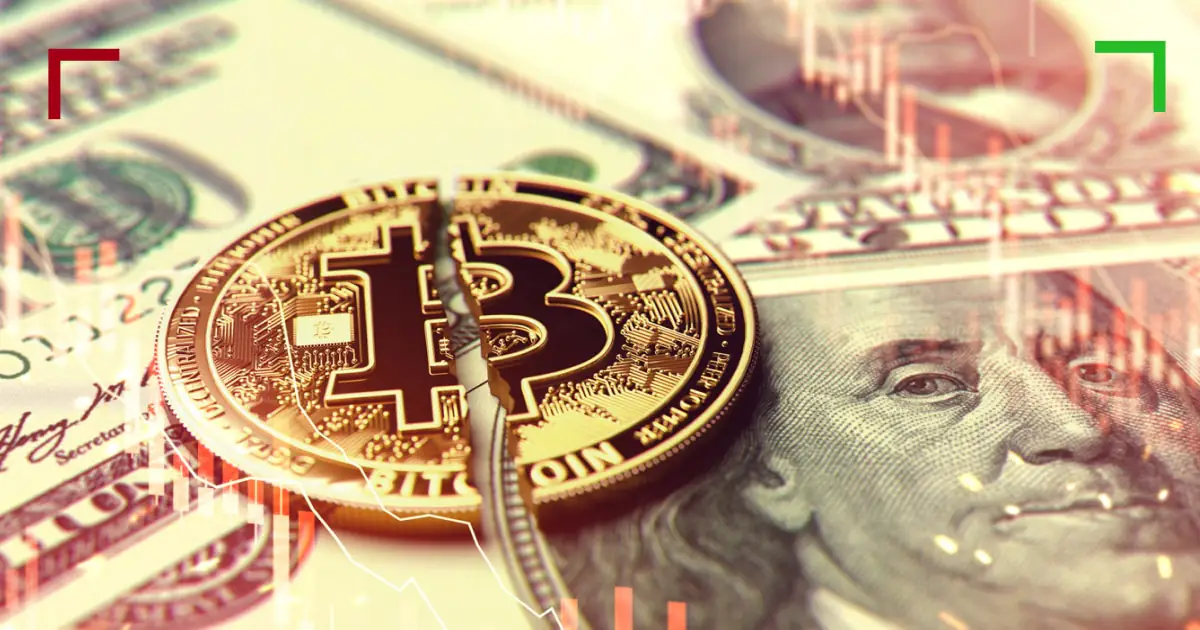
The historical four-year Bitcoin cycle, driven by halvings and retail speculation, appears to be evolving due to increased institutional adoption and ETF inflows, leading to shallower drawdowns and potentially longer market phases. Institutional demand, now holding approximately 12% of Bitcoin's supply via ETFs and corporate treasuries, is smoothing price volatility and altering the market's reaction to traditional catalysts like halvings. While the halving's impact on inflation has diminished, the market's response to macro factors like Fed policy is also becoming less predictable, suggesting a more complex interplay of forces driving Bitcoin's price. The diminishing returns across recent cycles and the shift in Bitcoin's identity towards a store of value, as suggested by JPMorgan's target and on-chain metrics, indicate a maturing asset class that requires updated analytical frameworks.

Kalshi's expansion into Brazil via partnership with XP Inc. marks a significant internationalization step, introducing event contracts tied to macroeconomic indicators like inflation and interest rates. The move into Brazil, a market with nascent prediction market regulations, suggests a strategic approach to capturing new user bases and exploring regulatory arbitrage opportunities. Availability of these contracts to both U.S. Kalshi investors and select XP users in Brazil indicates a dual-market strategy, potentially increasing liquidity and market participation.
Kalshi's expansion into Brazil via partnership with XP Inc. marks a significant international growth step, introducing event contracts tied to macroeconomic indicators. The move into Brazil, despite nascent regulatory clarity, signals potential for new financial derivatives markets on blockchain technology. This partnership could pave the way for broader adoption of event-based contracts in emerging markets, offering novel hedging and speculation tools.
The article provides a guide to crypto airdrops, detailing their purpose as a marketing strategy for new projects to gain awareness and users. Airdrops can offer users opportunities to earn free tokens, but also carry risks of scams and low-value distributions, necessitating careful verification. The guide highlights ten specific websites that track and list airdrop opportunities, serving as a resource for users interested in participating.

Chainlink is exhibiting a tightening consolidation pattern near a key descending trendline, suggesting a potential breakout is imminent as capital inflows persist despite broader market weakness. Sustained inflows into LINK investment products, totaling nearly $90.66 million, indicate strategic accumulation by investors who are positioning for a potential upward move. A decisive break above the $9.20-$9.40 resistance trendline could propel Chainlink towards the $10 psychological level and potentially the $11-$12 region, while support at $8.40-$8.60 remains critical.
Signal context only. Validate with price action, liquidity, and risk limits before taking a position.
Finance and insurance job openings have fallen to 13-year lows, signaling potential headwinds for traditional finance employment that could indirectly impact crypto market sentiment. Despite a decline in job openings, the finance sector saw a net employment gain in February, suggesting a mixed picture for the broader financial industry. Weak US jobs data, while potentially increasing the likelihood of Fed rate cuts which could benefit crypto, also raises concerns about economic fragility and may prompt risk-off strategies.
