
Navigating Crypto News

CoinFeather
Navigating Crypto News
Quick market read from this story
Despite significant unrealized losses of approximately $60 million on his portfolio, trader Murad Mahmudov maintains a strong conviction in SPX6900, projecting a 400,000% increase to a $1 trillion market cap.
Technical analysis suggests SPX6900 is poised for a further 20% decline in the short term, which would result in an additional $1.56 million loss for Mahmudov's holdings.
Mahmudov's refusal to sell, even with substantial unrealized losses and bearish technicals, highlights a high-risk, high-conviction trading strategy within the volatile memecoin sector.
Deep Dive
Murad Mahmudov, a crypto trader known as the “Memecoin messiah,” has reportedly lost nearly $60 million over the past nine months. Despite these substantial unrealized losses, Mahmudov remains optimistic, predicting a significant bullish reversal for the memecoin SPX6900 (SPX).
Mahmudov recently claimed that SPX6900, a memecoin aiming to rival the US S&P 500 index, could see its market capitalization surge to $1 trillion from its current valuation of approximately $250 million. This represents an anticipated increase of nearly 400,000%. For perspective, only Bitcoin (BTC) has achieved a $1 trillion market cap among cryptocurrencies, driven by institutional interest.
According to Arkham Intelligence, Mahmudov's publicly tracked wallets, operating under the entity “Muststopmurad,” hold about 29.964 million SPX tokens, currently valued at roughly $7.79 million. This single holding constitutes approximately 96% of his total tracked portfolio, which is valued at around $8.1 million. At its peak in July of the previous year, this portfolio was worth approximately $67 million, indicating a decline of about $60 million in unrealized losses as the memecoin sector, including SPX, experienced a correction of over 80%.
Despite the significant paper losses, Mahmudov has not sold off his SPX6900 holdings or other memecoins. Portfolio trackers show no substantial sales, with realized profits and losses on his tracked assets remaining at zero. This suggests he may be holding out for potential gains, with over $6.22 million in unrealized gains currently on his books.
This steadfastness contrasts with the broader memecoin market, which has been challenging for holders. A CoinGecko report indicated that 53.2% of cryptocurrencies tracked since 2021 have become inactive, with 11.6 million token failures recorded in 2025 alone, disproportionately affecting the memecoin sector. Smaller wallet holdings tracked for Mahmudov also highlight the volatility and limited functionality of some memecoins, with certain tokens showing minimal liquidity, few transactions, or even zero trading activity, raising concerns about reliable exit liquidity during sell-offs.
Technical indicators for SPX6900 suggest potential further losses. The three-day chart shows SPX6900 breaking down from a rising wedge pattern, a bearish signal that typically leads to price declines. The token has fallen below the wedge's lower trendline near $0.26 and is trading below its 20-, 50-, and 100-period exponential moving averages, indicating weak momentum. If this breakdown is confirmed, the measured move suggests a potential drop to $0.205, which would represent a further 20% decrease from current levels and could reduce Mahmudov's portfolio value by approximately $1.56 million.
Source, catalyst, and sector overlap from the latest feed.
Bitcoin's current price action indicates a significant portion of holders are underwater, with unrealized losses totaling $598.7 billion, mirroring conditions seen in the Q2 2022 bear market. The persistent contraction in apparent demand and negative Coinbase Premium Index suggest ongoing distribution and a lack of strong US investor re-entry, implying further downside risk. Long-term holders are showing signs of capitulation with rising realized losses, indicating a potential prerequisite for a market base formation if selling pressure significantly cools.
DeFi's current architecture prioritizes gas efficiency over market resilience, leading to vulnerabilities during periods of high volatility. The computational constraints of current blockchains limit the sophistication of financial logic, pushing complex risk management off-chain and creating an illusion of simplicity. For DeFi to scale responsibly, its computational foundations must evolve to support more capable execution environments, enabling transparent on-chain risk assessment and adaptation. The limitations faced by DeFi are primarily architectural choices related to execution design, not inherent inevitabilities of decentralization.
Bitcoin's price is facing downward pressure, with a prominent analyst suggesting a potential return to $10,000 due to macroeconomic concerns and historical price levels. The correlation between Bitcoin and US stocks is evident as both asset classes decline amid rising oil prices and geopolitical tensions, indicating a risk-off sentiment in broader markets. The surge in oil prices to $114 per barrel, driven by supply fears, could lead to higher inflation, potentially impacting Federal Reserve policy and further pressuring risk assets like Bitcoin.
Lise's planned tokenized IPO for ST Group represents a significant test for the viability of on-chain capital markets in solving real-world problems for SMEs. The development highlights growing investor interest in tokenized equities, with the market value approaching $1 billion, suggesting potential for broader adoption if liquidity and regulatory hurdles are overcome. Regulatory approvals from French and EU authorities for Lise's DLT Pilot Regime operations are crucial, indicating a path for regulated tokenized securities trading in Europe. The success of this tokenized IPO could signal a new paradigm for fundraising and investment, potentially impacting traditional financial infrastructure and attracting further institutional interest in RWA.
Altura's launch of an onchain gold arbitrage product targets retail investors with a projected 20% yield, signaling a new phase in tokenized real-world assets moving beyond passive exposure to active yield generation. The product leverages institutional-style gold arbitrage strategies, aiming to democratize access for retail investors by tokenizing the arbitrage process itself, rather than just commodity price exposure. Despite the potential for attractive yields, the reliance on complex offchain structures and the historical rise in losses within tokenized RWA markets highlight inherent risks for retail participants.
A Solana meme coin, JONATHAN, experienced a brief surge in market cap from $40,000 to $380,000 following a fabricated death hoax of a 194-year-old tortoise, highlighting the speculative and event-driven nature of meme coin markets. The JONATHAN meme coin's market cap has since retraced to approximately $50,000, indicating the ephemeral impact of the hoax and the lack of sustained investor interest beyond the initial speculative frenzy. The perpetrator of the hoax explicitly linked the event to the JONATHAN meme coin, soliciting crypto donations and promoting the token, demonstrating a tactic to leverage social media virality for meme coin promotion.
Lamar Odom's foray into meme coins, including his own ODOM token, highlights a trend of celebrities leveraging their platform for crypto ventures, though the speculative nature of meme coins suggests limited fundamental market impact. The article details Lamar Odom's significant financial fluctuations, from over $100 million earned in the NBA to a current estimated net worth of $20-30 million, underscoring the volatility of athlete earnings and personal financial management. Odom's involvement in cryptocurrency, particularly with a token aimed at supporting addiction recovery, represents a niche application of digital assets for social causes, but its market impact is likely to remain minimal.
Significant 4.8 billion SHIB tokens moved to exchanges, indicating potential selling pressure or rebalancing by holders, despite mixed historical April performance for the asset. While large inflows and outflows were observed across major exchanges like Revolut, Binance, and Bitstamp, the net inflow suggests a cautious market sentiment rather than a clear directional conviction for SHIB. Despite early April losses and mixed historical performance, the average April return for SHIB has been positive, suggesting that current price action may not fully reflect potential month-end trends.
Despite a 2.03% price decline in SHIB, a 2,332% surge in the token burn rate indicates significant supply reduction efforts, which could provide a long-term bullish fundamental signal if sustained. The substantial increase in SHIB token burns, while currently burning only ~$49 worth of tokens, highlights active community or developer-led supply management, a key narrative for meme coins. Bearish signals in SHIB's derivatives market, including a 1.68% decline in open interest and a 6.56% drop on Coinbase futures, suggest short-term caution among traders despite the burn rate increase.
Goatseus Maximus (GOAT) is positioned as an AI-driven memecoin on Solana, with its price trajectory heavily reliant on AI narratives and speculative hype rather than fundamental utility. The project's future price action is contingent on the sustained relevance of AI-generated content and viral meme trends, making it a high-risk, volatile asset with significant speculative potential. Price predictions for GOAT range widely, with potential highs of $1.13 by 2030, underscoring the speculative nature and dependence on the evolving AI narrative in the crypto space.
Live Feed
Loading the broader stream in the same flow as the homepage feed.

The CFTC's lawsuit against Illinois asserts exclusive federal jurisdiction over prediction markets as swaps, potentially setting a precedent for regulatory control over novel financial instruments. This legal challenge by the CFTC highlights a significant regulatory conflict between federal and state authorities regarding the oversight of prediction markets, impacting their operational clarity and potential for growth. The ongoing legal battles, including an upcoming Ninth Circuit hearing, indicate a period of regulatory uncertainty for prediction market platforms, which could influence investor sentiment and platform development.
Binance's expansion into energy futures with up to 100x leverage on WTI, Brent crude, and natural gas contracts offers crypto traders new avenues for commodity exposure. The introduction of these energy derivatives on a crypto-settled platform diversifies Binance's offerings beyond crypto and metals, potentially attracting traditional commodity traders. The 24/7 trading schedule and 4-hour funding rate settlements for these contracts present unique opportunities and risks for short-term trading strategies. While offering high leverage, the inherent volatility of energy markets combined with crypto derivatives mechanics necessitates careful risk management for traders.

Coinbase's conditional OCC bank charter approval signifies increased integration with traditional finance, potentially enabling new product offerings for institutional and retail clients. The federal charter provides regulatory uniformity for Coinbase's custody services, removing potential barriers to interstate expansion in banking-related operations. Despite the banking charter, Coinbase explicitly stated it will not operate as a commercial bank, avoiding deposit-taking and fractional reserve practices, thus maintaining a distinct operational model.

Coinbase's conditional OCC approval for a national trust charter signifies a move towards enhanced regulatory compliance and a more stable revenue stream from custody services, potentially reducing reliance on volatile trading fees. The federal charter, if finalized, would position Coinbase as a federally regulated crypto custodian, offering greater assurance to institutional investors seeking secure asset holding and potentially attracting more capital into regulated crypto products. This development, alongside similar applications from other firms, indicates a growing institutional demand for regulated custody solutions, suggesting a maturing crypto market infrastructure focused on trust and security.

Vitalik Buterin's emphasis on local-first AI processing and custom security daemons highlights a growing concern for data privacy and security in the AI era, potentially influencing future decentralized AI development. The integration of human approval for AI-initiated transactions, mirroring Buterin's crypto security practices, suggests a model for secure agentic systems that could be adopted by other blockchain projects. Buterin's critique of cloud-based AI and citation of malicious code in open-source AI tools underscore the risks associated with current AI development, reinforcing the value proposition of privacy-focused and decentralized solutions. The adoption of the Qwen3.5:35B model on local hardware demonstrates the increasing viability of running advanced AI locally, potentially reducing reliance on centralized cloud infrastructure for AI tasks.
Ripple Prime has secured an investment-grade BBB rating from Kroll, validating its financial strength, operational reliability, and technological infrastructure. This rating positions Ripple Prime comparably to traditional banks in the eyes of regulators and institutional investors, potentially attracting more conservative capital. Despite the positive rating, XRP's price remains stagnant, indicating a disconnect between fundamental validation and current market sentiment among retail investors. The BBB rating serves as a significant de-risking factor for Ripple's institutional offerings, potentially paving the way for broader adoption and integration.
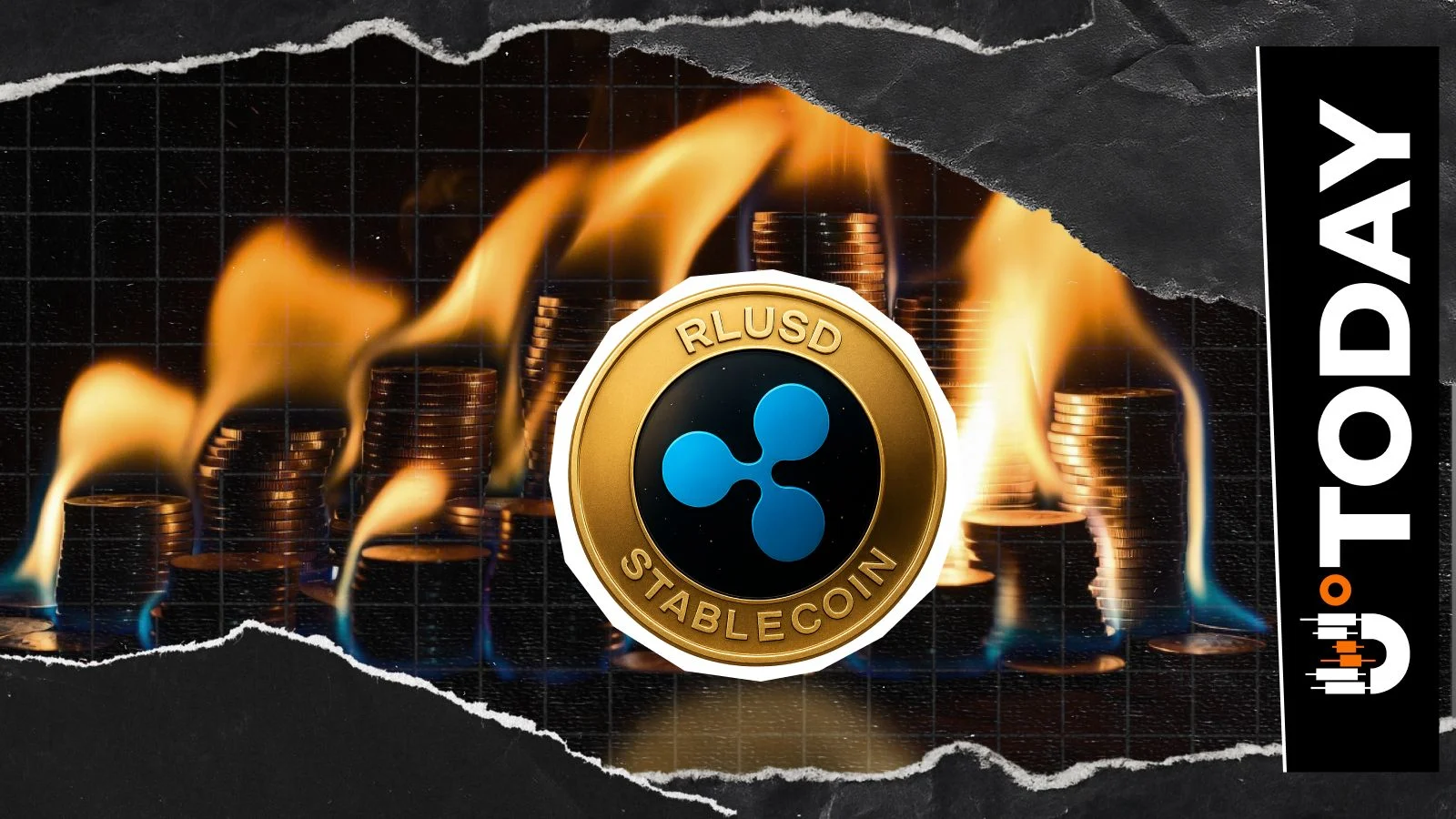
Ripple's substantial RLUSD burn of nearly 40 million tokens demonstrates a commitment to supply management, potentially signaling a strategy to support stablecoin value through scarcity. The community's demand for transparency regarding RLUSD burns highlights a growing need for clear communication from stablecoin issuers, as a lack of explanation can foster speculation. While the burn itself is a supply-side event, the lack of immediate price impact suggests the market is currently absorbing this information without significant repricing, indicating a neutral short-term outlook for RLUSD.

CME Group's expansion to 24/7 crypto futures and options trading, pending regulatory approval, signals increased institutional demand and aims to capture missed opportunities in a non-stop market. The move by CME Group to offer continuous trading for Bitcoin, Ethereum, Solana, XRP, Cardano, Chainlink, and Stellar futures and options could enhance liquidity and accessibility for institutional traders. Increased client demand for risk management in digital assets, evidenced by CME Group's record $3 trillion notional volume in 2025, underpins this strategic shift towards round-the-clock trading.
Ripple President says the XRP Ledger could empower billions with self-owned identities and global financial access.

XRP's core value proposition as a payment and settlement asset is being tested by current macro conditions, specifically rising oil prices and dollar strength, which are causing it to behave like a high-beta risk asset rather than a utility-driven solution. Despite Ripple's expanding institutional footprint and product launches like GTreasury, XRP's price action is currently dominated by macro factors, raising questions about when its fundamental utility will translate into token value capture. Upcoming macro data releases, including employment and CPI reports, will be critical in determining whether XRP can reclaim its infrastructure narrative or continue to trade as a macro-correlated speculative asset.
Solana's price has broken a key support zone between $110-$120, which has now flipped to resistance, indicating a potential distribution phase rather than a recovery. The current price action suggests a bearish outlook, with lower highs forming and a critical downside target identified at the $50 accumulation zone. Traders should adopt a wait-and-see approach, as Solana is not yet showing signs of a bottom; a confirmed reclaim of the $100-$110 range is needed to signal a potential rally.

Cardano founder Charles Hoskinson's sarcastic remark on XRP's 'standard' status signals ongoing competition and potential regulatory concerns for Ripple, impacting its perceived industry dominance. The public exchange between Hoskinson, Sirer, and Garlinghouse highlights the competitive landscape in the RWA tokenization market, with Cardano, Avalanche, and Ripple vying for market share. Hoskinson's critique of the Ripple-backed Clarity Act suggests a potential legislative battleground where XRP's regulatory standing could be influenced, affecting other decentralized projects.

Significant whale outflows of $592 million in XRP from major exchanges suggest a shift from potential selling pressure to self-custody, reducing immediate sell-side supply. Despite large XRP withdrawals, the price has fallen below key technical indicators like the 50 SMA, indicating that broader market sentiment, influenced by geopolitical news, is currently overriding on-chain accumulation signals. XRP's market liquidity is at critically low levels, meaning any directional move, whether up or down, is likely to be amplified and occur rapidly due to the shallow order book. While on-chain data points towards accumulation and reduced selling pressure, the price action is heavily dictated by external news cycles, specifically geopolitical events, making technicals and on-chain metrics secondary catalysts for near-term price discovery.
Bloomberg Intelligence analyst Mike McGlone reiterates a bearish outlook for Bitcoin, warning of a potential return to $10,000 by 2026 due to a post-pandemic bubble burst and market dilution. The $10,000 Bitcoin price level is framed as a 'fundamental anchor' based on historical trading data and regression analysis, suggesting a potential reversion to its pre-2020s mean. McGlone highlights that only stablecoins demonstrate real utility in the current crypto landscape, positioning Bitcoin as a high-beta, speculative asset vulnerable to broader market downturns, particularly if the S&P 500 experiences a recession.

X's new security measure to auto-lock first-time crypto mentioners directly targets the incentive behind widespread phishing attacks, potentially reducing scam activity on the platform. This development highlights the ongoing battle against crypto-related scams on social media and signals a proactive approach by platforms to protect users from fraudulent schemes. While not directly impacting token prices, the enhanced security on X could indirectly benefit the broader crypto ecosystem by fostering greater user trust and reducing negative publicity from scams.
Questions are being raised as to what is next for XRP’s price action since the altcoin faces a critical test at the 50-month EMA.

The $270 million exploit on Drift Protocol highlights a critical vulnerability in Solana's 'durable nonces' feature, which allows indefinitely valid transactions, demonstrating how legitimate protocol features can be weaponized for large-scale theft. This event underscores a growing trend of exploits targeting the 'human layer' and operational security rather than smart contract bugs, suggesting a shift in attacker methodologies and increasing risk for DeFi protocols relying on multi-signature security. The attack's reliance on pre-signed transactions and the subsequent movement of funds through bridges and privacy mixers like Tornado Cash points to systemic risks within cross-chain infrastructure and the challenges of tracing illicit assets. While the exploit did not involve a code vulnerability, the misuse of durable nonces presents a significant challenge for Solana-based protocols, potentially requiring fundamental changes to transaction signing and multisig approval processes to mitigate future risks.

In the middle of a surge higher following President Trump's overnight comments, the price of WTI crude oil quickly fell nearly $6 per barrel on the news.
Signal context only. Validate with price action, liquidity, and risk limits before taking a position.
