
Navigating Crypto News

CoinFeather
Navigating Crypto News

Quick market read from this story
Lombard's partnership with Bitwise to offer yield and lending against Bitcoin without moving assets from custody addresses significant institutional barriers, potentially unlocking substantial dormant capital.
The 'Bitcoin Smart Accounts' approach, utilizing native Bitcoin tools to avoid bridges and wrapped assets, mitigates key risks (custody, bridge, counterparty) historically limiting institutional DeFi participation.
This development signals a shift in how institutions view Bitcoin, moving it from a passive store of value towards productive capital, with a projected rollout in Q2 2026.
Deep Dive
Lombard, a company focused on building Bitcoin-based lending infrastructure, has announced a strategic partnership with Bitwise Asset Management. This collaboration aims to enable institutional investors to earn yield and borrow against their Bitcoin holdings without transferring assets out of their existing custody solutions. The initiative is designed to unlock an estimated $500 billion in Bitcoin currently held in institutional custody.
The partnership, announced at the Digital Asset Summit in New York, introduces a novel solution called Bitcoin Smart Accounts. Jacob Phillips, CEO and co-founder of Lombard, described this as a breakthrough connecting institutional custody with onchain finance. Bitwise will develop yield strategies that integrate Decentralized Finance (DeFi) lending with tokenized real-world assets. The lending infrastructure will be provided by Morpho, a decentralized lending protocol.
A key innovation of the platform is its use of Bitcoin-native tools, such as partially signed transactions and timelocks, to verify collateral. This allows positions to be represented onchain without the need to transfer or rehypothecate the underlying Bitcoin assets. Phillips highlighted that this approach eliminates custody, bridge, and counterparty risks, which have historically hindered institutional Bitcoin lending. The offering is targeted at high-net-worth individuals, asset managers, and corporate treasuries looking to generate returns on their Bitcoin without altering custody arrangements or triggering taxable events.
The platform is expected to roll out in the second quarter of 2026. Lombard plans to expand access by integrating more custodians and protocols. Phillips expressed a vision to transform Bitcoin from a passive store of value into
Source, catalyst, and sector overlap from the latest feed.
The CFTC's establishment of an Innovation Task Force signals a proactive regulatory stance towards emerging technologies like crypto and AI, potentially creating a clearer framework for market participants. This initiative by the CFTC, alongside the SEC's prior efforts, indicates a growing focus on developing regulatory clarity for digital assets in the US, which could reduce uncertainty for institutional and retail investors. The task force's inclusion of AI and prediction markets suggests a broader regulatory scope beyond just cryptocurrencies, potentially impacting multiple tech sectors and their integration with blockchain.
Increased stablecoin flows to $440 billion indicate a shift towards capital preservation and a readiness to buy dips, suggesting holders are less prone to panic selling. Elevated Bitcoin realized volatility, coupled with reduced futures open interest and subdued spot volumes, points to a market characterized by caution and a lack of strong directional conviction. The current market dynamic, driven by geopolitical uncertainty and hawkish Fed sentiment, suggests a period of consolidation where traders are building cash reserves rather than aggressively entering new positions. Despite high volatility, the absence of widespread forced selling and stable one-year realized volatility suggest a more mature market response compared to previous cycles.
Tether's commitment to a full audit by a 'Big Four' firm signals a significant step towards enhanced transparency and regulatory compliance for the largest stablecoin by market cap. This move by Tether addresses historical concerns regarding reserve transparency, potentially bolstering confidence among institutional and retail users and mitigating future regulatory scrutiny. The audit's comprehensive scope, including assets, reserves, and internal controls, aims to set a new standard for stablecoin issuers, impacting market perception and competitive dynamics within the stablecoin sector.
BitGo and Susquehanna Crypto are launching institutional OTC access to prediction markets, enabling large investors to trade event-based contracts using crypto collateral, which addresses key infrastructure gaps for institutional participation. This development comes amid increasing regulatory scrutiny of prediction markets in the US, with several states taking action against platforms, highlighting a complex regulatory landscape that could impact future growth. The offering allows for bilateral trades using crypto collateral like Bitcoin or stablecoins, potentially increasing demand for these assets as collateral in new financial products. By facilitating institutional access to prediction markets, this partnership could signal a growing trend of integrating crypto-native financial products into traditional institutional workflows.
Bitcoin's resilience amid geopolitical tensions and macro asset weakness suggests a potential "regime shift," where BTC may decouple from traditional risk assets. Despite a dip below $70,000, analysts observe higher lows forming for BTC, indicating potential for a near-term rally towards $77-80K if current support levels hold. Uncertainty remains regarding Bitcoin's short-term direction, with some analysts warning of potential downside due to the unreliable nature of the 200-week EMA as support.
MoonPay's Open Wallet Standard (OWS) aims to create a unified, secure interface for AI agents to interact with digital assets across multiple blockchains, potentially driving adoption of AI-native financial infrastructure. The OWS supports a wide range of blockchains including EVM, Solana, Bitcoin, and TON, with a focus on secure key management and policy-gated transactions, which could enhance interoperability and user control in the emerging agent economy. Solana is testing key resistance levels between $92-$95, with its short-term direction contingent on breaking this zone or facing potential selling pressure, indicating a critical juncture for the asset's immediate price action.
XRP Ledger's increasing dominance of payment transactions, now at 53.2%, signals a maturation towards real-world utility beyond speculative trading. The rapid growth of RLUSD, exceeding $1 billion market cap and doubling supply since December, highlights increasing demand for stable, efficient value transfer on XRPL. Convergence of payment dominance, growing DEX activity (34.2%), and institutional interest, including potential ECB collateral acceptance, positions XRPL as a multifunctional financial ecosystem.
The NYSE's partnership with Securitize to build a tokenized securities platform signals a significant institutional embrace of blockchain for traditional finance infrastructure. Europe's focus on developing its own onchain settlement infrastructure, independent of US dollar stablecoins, indicates a strategic move towards monetary sovereignty in the digital asset space. Invesco's expansion into tokenized Treasury funds, alongside other major asset managers, highlights a growing trend of institutional adoption and demand for blockchain-based yield products. The progression of tokenization from pilot projects to core financial infrastructure globally suggests a fundamental shift in how assets will be issued, traded, and settled in the future.
BMO's integration with CME Group's tokenized cash platform on Google Cloud signifies a major step towards 24/7 institutional settlement, potentially reducing friction and increasing capital efficiency in traditional finance. This development highlights the growing institutional adoption of tokenization for core financial operations, moving beyond speculative assets to utility-based applications like collateral and treasury management. The partnership between a major bank, a derivatives exchange, and a cloud provider indicates a maturing ecosystem for tokenized assets, setting a precedent for future financial infrastructure.
The CFTC's establishment of an Innovation Task Force signals a proactive regulatory stance towards crypto, AI, and prediction markets, aiming to provide clearer rules of the road for emerging financial technologies. Increased coordination between the CFTC and SEC on crypto regulation, with a focus on classifying most digital assets as non-securities, could reduce market uncertainty and encourage institutional participation. Circle's warning highlights that Europe risks falling behind the US in digital asset innovation due to regulatory delays, suggesting that jurisdictions offering greater clarity and efficiency will attract more institutional capital. The CFTC's focus on prediction markets indicates a growing regulatory scrutiny of novel financial instruments, potentially creating a complex jurisdictional landscape with state-level authorities.
Proposed regulatory action to ban stablecoin yields could significantly impact crypto-focused stocks like Circle and Coinbase, as evidenced by their substantial market cap declines. The Clarity Act's proposed ban on passive stablecoin yields, driven by lobbying from traditional banks, highlights ongoing tensions between the crypto industry and established financial institutions regarding competitive interest offerings. While a ban on passive yields may reduce user returns on stablecoins, it could paradoxically increase short-term profitability for exchanges like Coinbase by lowering reward payouts. The debate around stablecoin yields and the Clarity Act underscores the broader trend of traditional finance entities exploring blockchain technology, such as RWA tokenization, to enhance their own services.
BNY Mellon CEO Robin Vince positions large banks as essential bridges between traditional finance and digital assets, suggesting institutional adoption hinges on their infrastructure and client base. The commentary from BNY Mellon's CEO highlights tokenization of traditional products like money market funds as a near-term focus for driving adoption, indicating a pragmatic approach to integrating digital assets. Vince emphasizes that regulatory clarity and trust are critical prerequisites for broader institutional participation in crypto, suggesting that ongoing legislative efforts are key to unlocking significant growth. The long-term outlook for crypto adoption is framed as a 5-15 year journey, implying that while progress is expected, it will be gradual and dependent on technological, regulatory, and market evolution.
Proposed CLARITY Act provisions targeting stablecoin yields could significantly impact Coinbase's revenue model, which relies partly on its partnership with Circle for USDC reserve income and user rewards. The potential restriction on offering passive yields for stablecoin balances, as suggested by draft legislation, may reduce incentives for holding USDC on platforms like Coinbase, potentially affecting demand and associated revenue streams. Coinbase stock's 10% drop reflects market sensitivity to regulatory developments that threaten core business segments, highlighting the ongoing risk associated with legislative uncertainty in the US crypto market.
Live Feed
Loading the broader stream in the same flow as the homepage feed.
Missouri's advancement of a bill to include XRP in a state crypto reserve, alongside BTC and ETH, signals growing institutional acceptance and could provide a long-term demand driver. Despite recent price pressure, Elliott Wave analysis suggests XRP may be completing a corrective phase, with potential for a Wave 5 rally targeting new highs if the structure holds. The classification of XRP as a commodity in the US, coupled with potential regulatory refinements in Japan, provides a more defined landscape for its adoption and trading.

Bitcoin is increasingly functioning as a real-time geopolitical risk indicator, reacting swiftly to de-escalation events by rallying, suggesting a shift from a traditional safe-haven asset to a dynamic macro sentiment barometer. The article posits that Bitcoin's rapid price discovery in response to geopolitical shifts, particularly those impacting oil prices and inflation expectations, positions it as a primary venue for expressing macro probabilities before traditional markets. While Bitcoin demonstrates sensitivity to geopolitical events, its recent price action aligns more with high-beta relief behavior than a digital gold narrative, indicating its role is evolving towards a first-response instrument for global shocks. The market's current phase is characterized by development-driven reflexivity, where Bitcoin's speed and continuous trading enable it to register geopolitical shifts faster than equities or gold, though sustained acceptance above key levels remains unproven.
Shiba Inu exhibits a double bullish divergence on the RSI and has broken above the $0.00000504 resistance, signaling potential easing of sell pressure and a possible trend reversal. The current technical setup suggests a potential 37% rally towards the 200-day moving average at $0.00000842, contingent on breaking immediate resistance at $0.00000662. A sustained weekly close above $0.0000068 by quarter-end could act as a catalyst for momentum-driven buying, attracting institutional and algorithmic interest.

Epic Games' significant layoffs, impacting over 1,000 employees, signal a challenging market environment for gaming companies, driven by declining engagement in flagship titles like Fortnite and broader industry slowdowns. Despite the layoffs, CEO Tim Sweeney explicitly stated that AI is not the cause, indicating that the company views AI as a productivity enhancer rather than a direct threat to its workforce, aligning with its embrace of AI in game development. The news highlights the financial pressures within the gaming sector, where even successful titles can face profitability issues due to high operational costs and shifting player engagement, potentially impacting investment in related technologies.

The sentencing of Aleksei Volkov to 81 months in prison for facilitating ransomware attacks highlights ongoing law enforcement efforts against cybercrime impacting the crypto ecosystem. Volkov's role as an 'initial access broker' underscores the interconnectedness of cybercrime, where stolen network access is sold to ransomware groups demanding cryptocurrency, impacting overall market security perception. While the direct financial impact on specific cryptocurrencies is minimal, the news reinforces the persistent risks associated with ransomware and the use of crypto for illicit payments, potentially influencing investor caution.

Goldman Sachs projects two Fed rate cuts in September and December, signaling a potential shift from previous hawkish sentiment, which could support risk assets. Despite optimism for rate cuts, persistent inflation risks and geopolitical tensions (US-Iran war) introduce uncertainty, potentially delaying easing or even prompting rate hikes. The market interpretation of potential Fed rate cuts versus hikes will be a key driver for crypto asset pricing in the near term, with geopolitical events acting as significant volatility catalysts. While the article discusses macro trends, it lacks specific crypto asset implications, suggesting a neutral stance on direct trading signals but highlighting the importance of macro for the broader market.
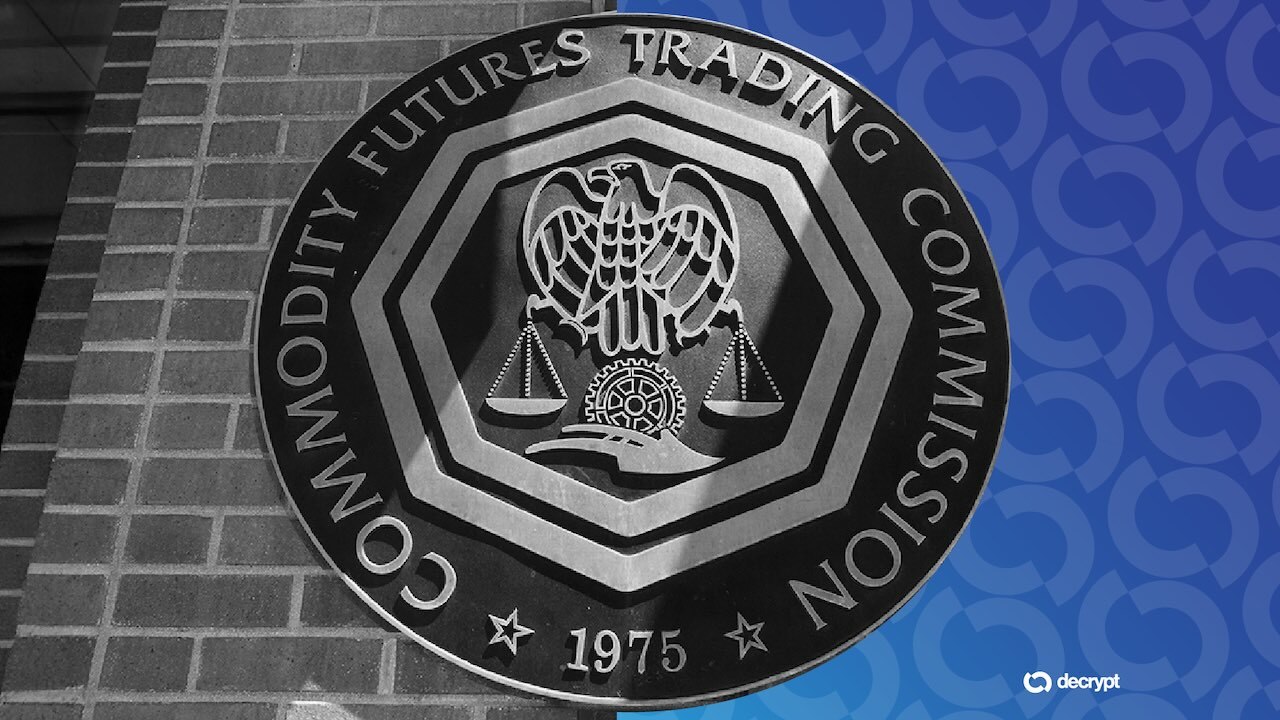
The CFTC's establishment of an Innovation Task Force signals a proactive regulatory approach to emerging technologies like crypto and AI, aiming to provide clarity for market participants and foster innovation within U.S. derivatives markets. This move by the CFTC, coordinating with the SEC, suggests an increasing focus on establishing regulatory guardrails for decentralized finance and AI applications, potentially impacting future development and adoption. The task force's focus on crypto, AI, and prediction markets indicates a strategic effort to integrate these nascent sectors into existing financial frameworks, which could lead to more defined operational parameters for related businesses.
Dogecoin price experienced a short-term rally driven by significant short liquidations, overriding bearish technical signals like the death cross. The broader crypto market rebound, supported by a weaker USD and easing Fed tightening expectations, provided a tailwind for DOGE's price action. Over $570 million in crypto liquidations, predominantly shorts, indicates a market caught off guard by the recovery, suggesting potential for continued upward pressure if sentiment holds.

JPMorgan CEO Jamie Dimon reiterates his strong belief in blockchain technology for institutional use, while maintaining deep skepticism towards cryptocurrency speculation, signaling a continued divide in institutional adoption perspectives. Dimon's emphasis on JPMorgan's proprietary blockchain solutions like Kinexys and JPM Coin highlights the bank's focus on practical, enterprise-level applications rather than speculative digital assets. The commentary from a major traditional finance leader reinforces the narrative that while underlying blockchain tech is gaining traction, the speculative crypto market faces ongoing scrutiny from established financial institutions.

Ontology's nearly 50% price surge is directly linked to the EU's eIDAS 2.0 digital identity framework, signaling potential for increased adoption of decentralized identity solutions. The development highlights a growing demand for interoperable identity systems, positioning Ontology as a key player in the emerging decentralized identity narrative. Traders are actively positioning around identity-focused infrastructure plays, suggesting a near-term bullish sentiment for ONT driven by this regulatory catalyst. While the fundamental catalyst is strong, the sustainability of ONT's rally hinges on its ability to maintain price above key support levels and break through resistance zones.

Technical analyst Gareth Soloway maintains a short-term bullish outlook for BTC, targeting $80,000-$85,000, but warns this is an intra-bear market rally, implying a larger downside trend is still in play. Soloway identifies Solana as the most bullish chart among the analyzed assets, with near-term targets at $100-$105 and a best-case scenario of $118, suggesting potential for near-term outperformance. While ETH shows a near-term bullish structure, its longer-term macro picture mirrors Bitcoin's bearish outlook, indicating potential for a significant pullback if key support levels are breached. XRP is presented with a strong chart setup, showing a breakout, pullback, and support hold, suggesting a potential move towards the $1.70 resistance level.
Signal context only. Validate with price action, liquidity, and risk limits before taking a position.
