
Navigating Crypto News

CoinFeather
Navigating Crypto News

Quick market read from this story
Justin Sun's accusations of a hidden blacklisting function and illegitimate governance in WLFI's smart contract raise serious concerns about investor safety and project decentralization.
WLFI's controversial $75 million stablecoin borrowing using self-issued tokens highlights potential circular financing risks and liquidity manipulation, contributing to the token's recent price decline.
The allegations and financial scrutiny surrounding WLFI, coupled with a 24% monthly price drop, suggest a negative outlook for the token and could impact investor confidence in similar projects.
Source, catalyst, and sector overlap from the latest feed.
Geopolitical tensions between the US and Iran have directly impacted Bitcoin's price, causing a nearly 2% drop as negotiations failed. Technical analysis suggests Bitcoin's support is now at $70,000, with a potential retest indicated if selling pressure from geopolitical uncertainty persists. The market is reacting to the increased geopolitical risk, which traditionally affects risk assets like Bitcoin. Analysts are monitoring the $70,000 support level for Bitcoin, with a breakdown potentially leading to further declines amid ongoing international tensions.
Geopolitical tensions and rising inflation fears are pressuring the crypto market, leading to broad-based losses across major assets like BTC and ETH. Upcoming US PPI data and the CLARITY Act hearing are critical events that could significantly influence crypto market direction and regulatory sentiment. The potential for increased oil prices due to Middle East tensions could exacerbate inflation concerns, posing a downside risk to crypto valuations if sustained. Traders should monitor the PPI data for signs of intensifying wholesale inflation and the CLARITY Act hearing for regulatory clarity, both of which are key drivers for near-term price action.
Live Feed
Loading the broader stream in the same flow as the homepage feed.
Strategy's recent $1 billion Bitcoin purchase at $71,902 is currently underwater, highlighting the immediate price pressure on the asset and the firm's breakeven level at $71,710. The current market action shows a pause in selling without a clear buying catalyst, with Bitcoin consolidating around $70,500-$71,000, awaiting a significant event to break the stalemate. A reclaim of the 50-day SMA at $71,710 would signal accumulation and a potential upward retest, while a break below $70,000 could lead to Strategy's largest drawdown on its current holdings. The RSI's recovery from oversold levels suggests stabilization, but the overhead resistance from the falling 50 SMA indicates a challenging path for immediate price appreciation.
Stack BTC's recent $2.7 million Bitcoin treasury addition signals continued corporate adoption and reinforces the company's strategy, potentially attracting further investor interest in publicly traded crypto-exposed assets. The purchase occurs amidst increasing UK regulatory scrutiny on crypto donations to political parties, highlighting a potential conflict between political figures' crypto involvement and evolving compliance landscapes. Stack BTC's share price saw a 7.5% increase following the Bitcoin purchase, indicating positive market reception to the treasury strategy and potentially signaling near-term trading opportunities for the stock.

Michael Saylor's MicroStrategy continues its aggressive Bitcoin accumulation strategy, adding 13,927 BTC for $1 billion, reinforcing its position as a major corporate holder. The company funded these acquisitions through the sale of preferred stock, indicating a strategic use of corporate finance to expand its Bitcoin treasury without immediate dilution concerns. Despite the significant BTC purchase, MSTR shares are showing weakness in pre-market trading, suggesting a potential disconnect between corporate treasury actions and immediate stock price performance.

South Korea's FSS is increasing scrutiny on API crypto trading, which constitutes 30% of market turnover, signaling a potential crackdown on manipulative automated trading patterns. The regulator's warning about inflated volumes and price manipulation via API trading suggests a heightened risk environment for automated strategies and could lead to stricter oversight on exchanges. This regulatory focus on automated trading abuse in South Korea, a significant market, may prompt similar actions in other jurisdictions and impact algorithmic trading strategies.

Toncoin's price action shows consolidation above a breakout zone, with whale accumulation suggesting conviction ahead of a potential move above $1.50 resistance. A sustained hold above $1.30-$1.35 support is critical for Toncoin to maintain its bullish structure and target the $1.70-$2.00 range. The $1.50 level is a key trigger for Toncoin, with a breakout potentially initiating a short-covering rally and accelerating upside momentum.
A prominent musician lost $420,000 in Bitcoin due to a sophisticated phishing scam involving a fake Ledger Live application, highlighting ongoing security risks for crypto users. The incident underscores the persistent threat of social engineering and fake software distribution, even for experienced crypto holders, emphasizing the need for extreme vigilance in verifying software sources. With the FBI reporting over $11 billion in crypto fraud losses in 2025, this event serves as a stark reminder of the increasing sophistication of scams and the critical importance of robust security practices in the digital asset space.

The increasing reliance on AI agents for crypto transactions introduces significant security risks through vulnerable LLM routers, potentially leading to widespread credential theft and wallet drains. A newly identified flaw in AI infrastructure allows malicious actors to intercept sensitive data, including private keys and API credentials, posing a direct threat to crypto assets and user funds. The research highlights a critical 'weakest-link' problem in AI-driven crypto payments, where a single compromised intermediary can cascade into systemic risk for users and protocols. Despite projections of massive growth in AI-mediated commerce, the underlying AI infrastructure's security vulnerabilities suggest a potential mismatch between adoption trends and safety guarantees.

Bitcoin's resilience above $70,000 is a critical support level, with a break below potentially accelerating downward momentum due to thinner liquidity. Speculative froth, evidenced by extreme rallies in obscure tokens like RAVE, suggests that market excesses have not yet been fully flushed out, potentially delaying durable bottoms. Geopolitical tensions and recent exploits like the Hyperbridge incident create negative optics and undermine confidence, even as major cryptocurrencies show price stability. While BTC faces headwinds from macro and speculative concerns, the outperformance of tokens like HYPE on platforms like Hyperliquid indicates potential for specific use-case projects to decouple from market leaders.
XRP sentiment has reached extreme fear levels not seen in two years, historically preceding bullish reversals and indicating potential capitulation by retail investors. Prolonged 63-day consolidation with muted momentum suggests accumulation by stronger market participants, potentially setting the stage for a price breakout. Technical indicators like the oversold RSI on higher timeframes and emerging bullish signals in the Ichimoku structure support the narrative of an impending trend shift. The divergence between extreme negative sentiment and stabilizing technicals, coupled with on-chain activity, positions XRP at a critical inflection point.
Last week's $1.1 billion inflow into crypto ETPs, the strongest since January, signals a significant resurgence in institutional investor appetite for digital assets, primarily driven by Bitcoin. The rebound in Ether ETP inflows, despite year-to-date net outflows, suggests a potential shift in sentiment for ETH, though its overall year-to-date performance remains challenged compared to Bitcoin. Easing inflation data and geopolitical de-escalation appear to be key drivers for increased investor risk appetite, directly impacting demand for regulated crypto investment products like Bitcoin ETFs. The concentration of inflows in the US, particularly into spot Bitcoin ETFs, highlights the dominant role of the US market in driving institutional capital flows into the crypto space.

Dogecoin's spot flows have seen a significant drop, indicating reduced immediate trading interest and potentially signaling a period of consolidation or caution among traders. Analysts suggest Dogecoin is in a 'coiling' phase, with potential accumulation between $0.060 and $0.090, implying a bullish outlook if key resistance levels are breached. Experimental post-quantum secure transactions on the Dogecoin mainnet represent a forward-looking technological advancement, though its immediate market impact is speculative. Upcoming U.S. tax deadlines and PPI data could introduce volatility, making it crucial for traders to monitor macroeconomic factors alongside Dogecoin-specific developments.

Tokenized real-world assets (RWAs) are demonstrating significant volume growth, outperforming traditional cryptocurrencies like Bitcoin and Ethereum, indicating a capital shift towards assets with predictable value anchors. The increasing volume in tokenized commodities such as gold and oil suggests a growing demand for on-chain financial replication over speculative altcoin narratives. Infrastructure providers for tokenized derivatives are emerging as key beneficiaries, generating revenue through minting, redemption, and trading fees, contrasting with hype-driven altcoin models. The current market trend indicates a move towards blockchain utility for financial instruments rather than pure speculation, suggesting a sustained shift unless macro conditions drastically change.
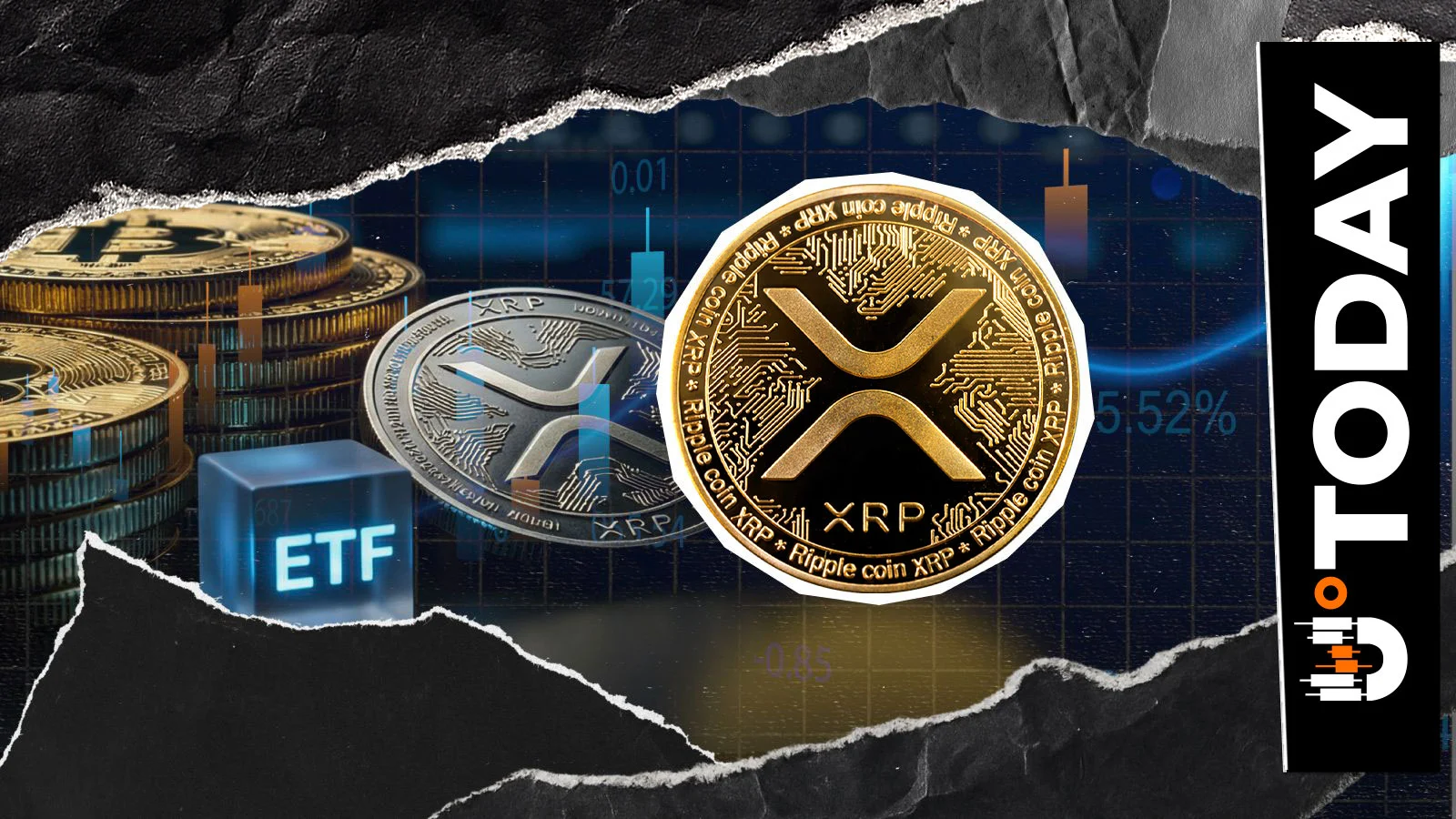
XRP ETFs experienced their strongest weekly inflow since February 6th, indicating a potential resurgence in institutional interest following recent price action. The significant inflow, primarily driven by Bitwise and Franklin Templeton ETFs, suggests renewed confidence in XRP as an investment vehicle, despite current price stagnation below $1.35. While current price action is muted, the sustained institutional demand via ETFs could serve as a precursor to a broader price recovery if this trend continues.

Alameda Research has moved $16 million in SOL to an FTX creditor wallet as part of the ongoing repayment plan, signaling continued asset distribution from the defunct exchange's estate. While the transfer is part of a structured repayment, the market will monitor potential sell pressure from these distributions, though the FTX team aims to mitigate sudden price drops. Alameda still holds a substantial amount of SOL, indicating that further distributions and potential market impact could occur over time.

Pi Network's price decline is attributed to internal community frustration and selling pressure from token unlocks and migration, rather than broader market trends affecting Bitcoin and Ethereum. The current price of Pi is consolidating around a key demand zone, with a potential upside target of 65% if resistance levels are cleared, but a breakdown below $0.160 could lead to further downside. Despite a recent 30% drop, the article suggests a potential recovery for Pi, contingent on holding the $0.160 support level and overcoming selling pressure from token unlocks and migrations.

Last week's $1.1 billion in digital asset investment product inflows, the strongest since January, indicate a significant resurgence in investor appetite driven by favorable macroeconomic data and easing geopolitical tensions. Bitcoin's dominance with $871 million in inflows, representing nearly 80% of the total, highlights its continued role as the primary beneficiary of renewed institutional interest, suggesting potential for further price appreciation. While Bitcoin shows strong year-to-date inflows, Ethereum's net outflows persist despite recent gains, signaling a divergence in investor sentiment between the two largest cryptocurrencies that warrants monitoring. The presence of $20 million in short-Bitcoin products suggests that some market participants are employing hedging strategies, indicating a degree of caution or anticipation of volatility despite the overall bullish trend.
Signal context only. Validate with price action, liquidity, and risk limits before taking a position.
