
Navigating Crypto News

CoinFeather
Navigating Crypto News
Quick market read from this story
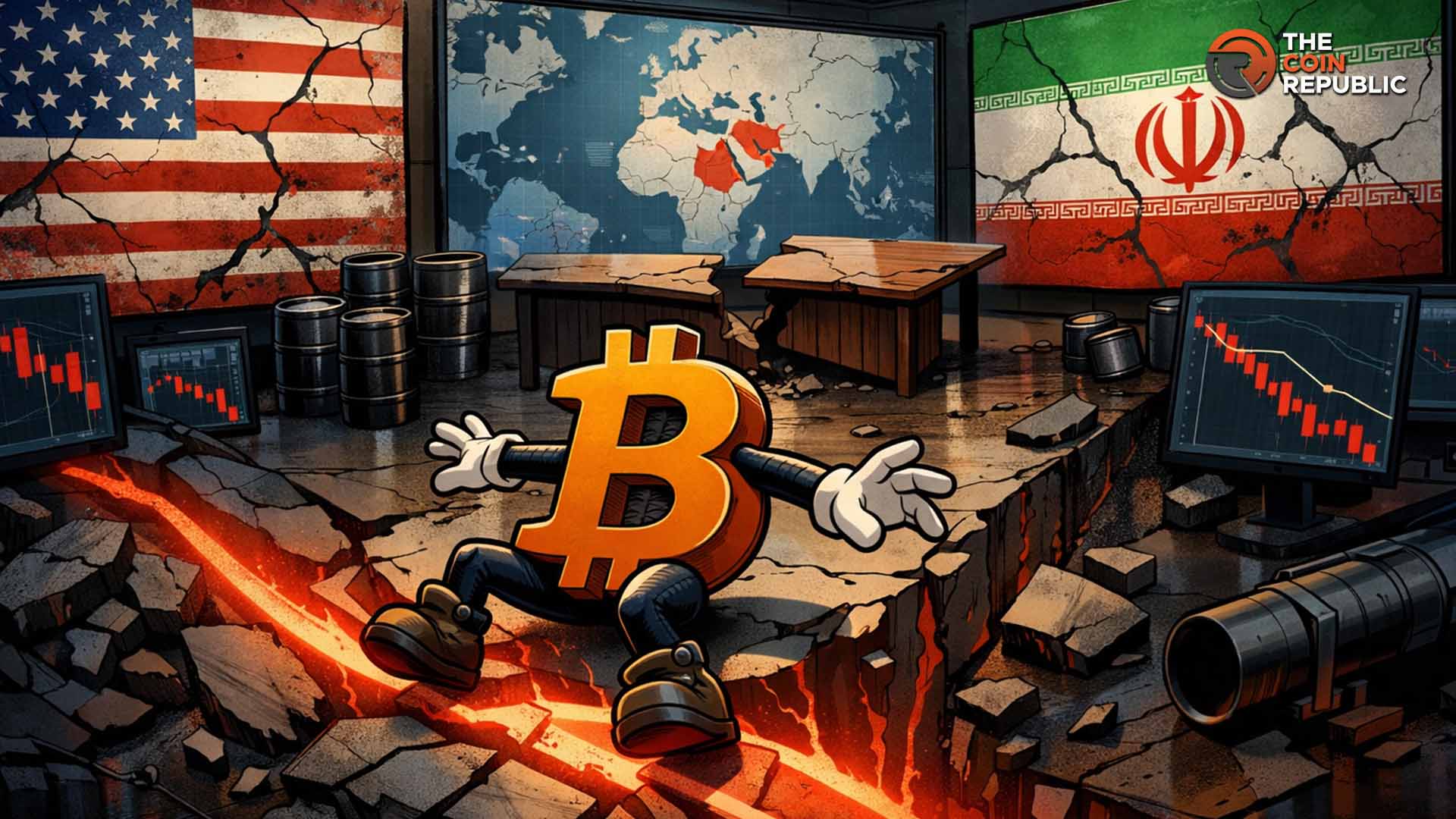
Geopolitical tensions between the US and Iran have directly impacted Bitcoin's price, causing a nearly 2% drop as negotiations failed.
Technical analysis suggests Bitcoin's support is now at $70,000, with a potential retest indicated if selling pressure from geopolitical uncertainty persists.
The market is reacting to the increased geopolitical risk, which traditionally affects risk assets like Bitcoin.
Analysts are monitoring the $70,000 support level for Bitcoin, with a breakdown potentially leading to further declines amid ongoing international tensions.
Source, catalyst, and sector overlap from the latest feed.
Justin Sun's accusations of a hidden blacklisting function and illegitimate governance in WLFI's smart contract raise serious concerns about investor safety and project decentralization. WLFI's controversial $75 million stablecoin borrowing using self-issued tokens highlights potential circular financing risks and liquidity manipulation, contributing to the token's recent price decline. The allegations and financial scrutiny surrounding WLFI, coupled with a 24% monthly price drop, suggest a negative outlook for the token and could impact investor confidence in similar projects.
Live Feed
Loading the broader stream in the same flow as the homepage feed.

Geopolitical tensions driving oil prices above $100 are causing a risk-off sentiment in crypto markets, leading to defensive derivatives positioning and a stall in Bitcoin and Ether's price action. Traders are increasingly favoring downside protection through BTC put options, indicating a cautious outlook despite low implied volatility, suggesting potential for sharp moves if geopolitical events escalate. Speculative memecoins and select DeFi tokens are outperforming major cryptocurrencies as investors rotate into higher-risk niches, signaling a fragmented market sentiment driven by short-term speculation rather than broad adoption.

Investors may be overlooking 'amplification,' a metric comparing MicroStrategy's debt to its BTC holdings, which could increase common stock sensitivity to bitcoin price movements. Surging trading volumes in MicroStrategy's preferred equity (STRC) are reshaping its stock's behavior, potentially making it more volatile and less directly correlated with BTC price action. The increasing reliance on preferred equity like STRC for capital management, coupled with its high dividend, could introduce new risk factors for MSTR holders if not managed carefully against BTC price fluctuations.

SHRMiner promotes AI-driven smart contracts for XRP and BTC investors, claiming potential daily earnings up to $3,900, which could attract retail interest seeking passive income solutions. The platform emphasizes a low barrier to entry with free AI trading strategies and a simple three-step setup, potentially appealing to novice traders or those disillusioned with manual trading challenges. SHRMiner's claims of military-grade protection, global trust, and UK compliance, while unverified, aim to build confidence for users considering its automated trading services.

StarkWare is undergoing a significant strategic pivot, cutting staff and reorganizing into two business units due to a drastic 99% decline in Starknet revenue, signaling a shift from pure infrastructure scaling to in-house product development. The revenue collapse, exacerbated by Ethereum's EIP-4844 upgrade reducing L2 fees, forces StarkWare to focus on 'immense potential revenue' products, potentially impacting its role as a pure L2 scaling solution provider. The appointment of a researcher to lead a new applications unit, following his work on quantum-safe Bitcoin, suggests a potential future focus on specialized, high-value applications rather than broad L2 ecosystem support.

A $237,000 exploit on Hyperbridge, involving the minting of 1 billion bridged DOT tokens on Ethereum, highlights ongoing security vulnerabilities in cross-chain bridge infrastructure. The incident, which affected bridged DOT but not native Polkadot tokens, has led Hyperbridge to pause operations, raising concerns about the reliability of proof-based interoperability solutions. Despite a general year-over-year decline in DeFi exploit losses, this exploit, alongside a separate $130,000 hack on SubQuery Network, indicates persistent security risks within the broader crypto ecosystem.
XRP sentiment has reached extreme fear levels, historically a contrarian indicator that may precede short-term price rebounds. The price is consolidating near a critical support zone ($1.10-$1.12), with a potential for a 15%-30% relief rally if this level holds. A breakdown below $1.10 would invalidate the relief rally thesis and could lead to further downside towards $0.95 or lower, indicating continued bearish momentum. While sentiment suggests a potential bounce, confirmation from price action at the support level is crucial before considering any bullish positioning.

Veteran trader Peter Brandt suggests a complex base formation for Bitcoin, implying a prolonged bottoming process rather than a swift recovery. Brandt's updated roadmap indicates a potential drop below $66,000 before a breakout to $75,000, pushing the next all-time high potentially to 2027. The analysis suggests 2026 may be a 'crab market' for Bitcoin, emphasizing accumulation and patience for long-term holders in the $60,000-$64,000 range.
Live pilot data from Japanese banks demonstrates XRP's 60% cost reduction and sub-four-second settlement for cross-border payments compared to SWIFT, signaling a tangible shift towards blockchain adoption in real-world financial corridors. The convergence of Ripple's XRP with SWIFT infrastructure, rather than outright replacement, suggests a pragmatic approach to institutional adoption, leveraging existing systems to accelerate the integration of blockchain efficiencies. The reported cost savings and speed improvements highlight the direct impact on businesses and users, moving blockchain payments from experimentation to live financial systems with measurable economic benefits.
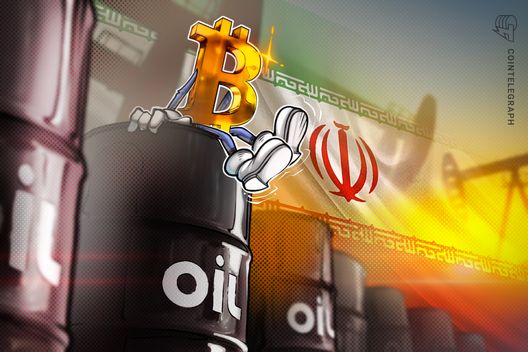
Geopolitical tensions surrounding Iran and the Strait of Hormuz are driving oil prices up, creating potential inflationary pressures that could influence Federal Reserve monetary policy and impact Bitcoin's price action. Despite recent geopolitical events, Bitcoin has maintained its weekly close above $70,000, though analysis suggests profit-taking at this level is capping upside and may necessitate further price discovery lower before a sustained uptrend. On-chain data indicates easing sell-side pressure from short-term holders and increasing demand from long-term holders, suggesting a potential shift towards a calmer market phase despite macro uncertainties. Analysts are observing patterns in Bitcoin's RSI that mirror the end of the 2022 bear market, hinting at potential reversal signals if further downside occurs and bullish divergences materialize.

The explanation for the ION token crash, attributed to a large backer exiting their position, faces skepticism due to past unfulfilled token burn promises and prior ICO controversies associated with the CEO. The Ice Open Network CEO has indicated a potential shutdown if community confidence and momentum do not recover, with a commitment to burn remaining tokens rather than sell them in such a scenario. Significant operational costs ($400k/month) and past expenditures ($18M) highlight the financial pressures on the Ice Open Network, potentially impacting future development or necessitating token sales.
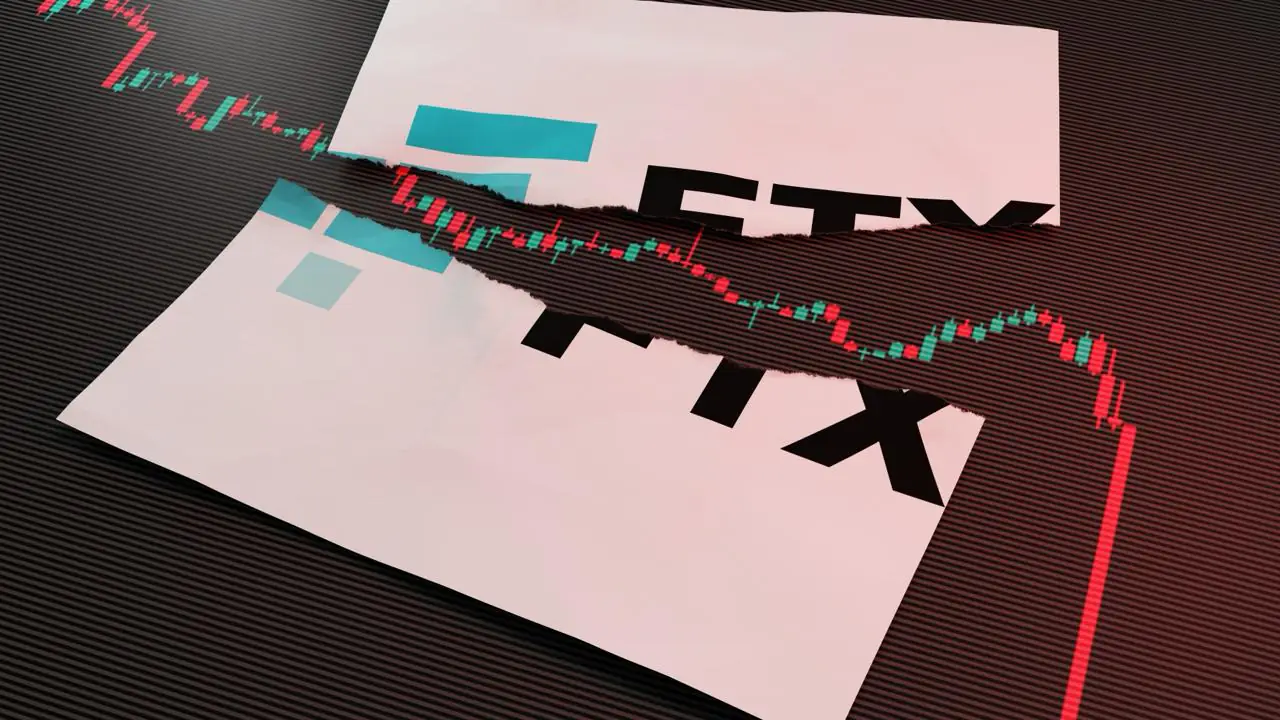
The FTX estate's continued, structured SOL transfers indicate a deliberate strategy to avoid market disruption, suggesting a controlled liquidation process that has largely been absorbed by the market without significant price impact. With most creditor classes reaching 100% recovery at petition prices, the FTX estate demonstrates a capacity to meet and even exceed obligations, signaling a maturing recovery process that could influence sentiment around remaining assets. The ongoing clawback litigation, particularly the case against Binance, represents a significant potential upside for the estate, with any successful settlement or judgment capable of substantially increasing the total recovered value.
Geopolitical tensions impacting US-Iran relations have directly influenced Bitcoin's market sentiment, leading to a significant price pullback from recent highs. The $83 billion crypto market value reduction highlights the sensitivity of digital asset markets to global macroeconomic and geopolitical events. Bitcoin's current range-bound trading between $70,000 and $71,000 suggests consolidation, with traders awaiting clearer directional signals amidst uncertain market conditions.
Aave's DAO approval of the "Aave Will Win" framework signifies a strategic shift towards a DAO-funded model for Aave Labs, allocating $25M in stablecoins and 75,000 AAVE tokens to bolster growth and product development. The transition to a DAO-funded entity and the focus on Aave V4 as the long-term foundation suggest a structural strengthening of the Aave ecosystem, aiming to enhance competitiveness and capture institutional interest. Despite some community concerns regarding funding size and governance transparency, the immediate market reaction shows an 8.7% price increase for AAVE, indicating positive short-term sentiment driven by the growth-oriented framework.
Signal context only. Validate with price action, liquidity, and risk limits before taking a position.
No explicit catalyst tagged.
Geopolitical tensions and rising inflation fears are pressuring the crypto market, leading to broad-based losses across major assets like BTC and ETH. Upcoming US PPI data and the CLARITY Act hearing are critical events that could significantly influence crypto market direction and regulatory sentiment. The potential for increased oil prices due to Middle East tensions could exacerbate inflation concerns, posing a downside risk to crypto valuations if sustained. Traders should monitor the PPI data for signs of intensifying wholesale inflation and the CLARITY Act hearing for regulatory clarity, both of which are key drivers for near-term price action.
