
Navigating Crypto News

CoinFeather
Navigating Crypto News

Quick market read from this story
Major financial institutions like JPMorgan and Goldman Sachs are exploring entry into the prediction markets, signaling a significant trend towards institutional adoption of decentralized finance and novel market structures.
The increasing interest from traditional finance in prediction markets, alongside growth from crypto-native firms like Coinbase and Robinhood, indicates a maturing and expanding market segment with potential for increased liquidity and user access.
Regulatory clarity from bodies like the CFTC is a key factor for the future growth of prediction markets, with major banks likely to proceed cautiously until a more defined legal framework is established.
The competition between blockchain-based platforms like Polymarket and traditional exchanges like Kalshi highlights divergent technological approaches within the prediction market space, offering varied opportunities for different market participants.
Deep Dive
JPMorgan CEO Jamie Dimon has indicated that the bank is exploring a potential move into the prediction markets sector, a rapidly expanding area attracting significant interest from major financial institutions and crypto-native firms alike. While considering the possibility, Dimon specified that JPMorgan would not offer markets related to sports or politics and would adhere to strict rules regarding insider information.
JPMorgan's contemplation mirrors similar sentiments from Goldman Sachs, whose CEO David Solomon has publicly stated the firm is actively investigating the prediction market space. These discussions highlight the sector's swift evolution from a niche dominated by a few players like Polymarket and Kalshi to a rapidly competitive landscape.
Several crypto-native companies, including Coinbase and Robinhood, have integrated prediction market trading, broadening access for retail users. Meanwhile, established leaders like Polymarket, which has secured partnerships with Intercontinental Exchange and is reportedly valued around $20 billion, and Kalshi, recently valued at $22 billion after a funding round led by Coatue Management, continue to expand their operations.
Polymarket utilizes blockchain technology, operating on networks like Polygon for trade recording and smart contract-based settlements. In contrast, Kalshi functions as a traditional exchange under a regulated framework. The approach JPMorgan and Goldman Sachs might adopt remains uncertain. The regulatory environment in the U.S. for prediction markets is still developing, with the Commodity Futures Trading Commission (CFTC) recently taking steps to establish a regulatory framework, suggesting that clearer guidance is anticipated before major banks launch products.
Source, catalyst, and sector overlap from the latest feed.
Galaxy Digital reported a cybersecurity incident affecting an isolated R&D workspace, but confirmed no client funds or data were compromised, mitigating immediate market impact. The incident, while immaterial in financial terms (<$10,000), highlights the persistent security risks within the crypto industry and the importance of robust isolation for development environments. Despite the breach, Galaxy Digital's core operations and client services remain unaffected, suggesting operational resilience and a contained security event.
The convergence of TradFi and crypto necessitates a fundamental shift in AML risk assessment, moving from static identity-based models to dynamic, on-chain activity monitoring. Hybrid blockchain governance models are emerging as the preferred solution for institutional adoption, balancing public verifiability with predictable control and regulatory integration. The increasing complexity of crypto financial crime, including chain-hopping and mixers, requires specialized blockchain intelligence and forensic capabilities beyond traditional AML frameworks. Effective governance and crisis anticipation are becoming critical differentiators for blockchain networks, potentially outweighing raw throughput or token count for long-term endurance.
Google's research suggests quantum computers could break Bitcoin's cryptography with fewer qubits than previously estimated, potentially accelerating the timeline for quantum threats and highlighting the urgency for post-quantum cryptography adoption. The crypto industry is seeing diverging strategies for quantum-resistant development across major ecosystems like Bitcoin and Ethereum, indicating a potential fragmentation in security approaches and a need for clear communication on migration roadmaps. Base's 2026 roadmap, focusing on tokenized markets and stablecoins, signals a strategic shift towards institutional adoption and real-world asset integration within the Ethereum L2 ecosystem, potentially driving new use cases and demand. Australia's new comprehensive digital asset licensing framework targets exchanges and custodians, aiming to enhance investor protection and reduce risks, which could set a precedent for other jurisdictions and influence operational standards in the region.
Cango is actively raising capital through a $10 million convertible note and a $65 million insider round to address its precarious financial situation and potential NYSE delisting. The company's pivot towards AI and computing infrastructure, alongside its ongoing efforts to regain NYSE compliance, signals a strategic shift to diversify revenue beyond bitcoin mining. Despite recent capital raises, Cango's share price remains significantly below the $1 threshold, indicating ongoing market pressure and a challenging path to compliance.
Franklin Templeton's launch of a dedicated crypto division, "Franklin Crypto," signals a significant institutional move beyond passive ETF exposure towards active digital asset strategies. The acquisition of 250 Digital and integration of its liquid strategies, led by former CoinFund executives, indicates a strategic build-out of in-house expertise to meet growing institutional demand for structured crypto investments. The experimental use of BENJI tokens for transaction consideration in the acquisition suggests early adoption of tokenized assets for M&A, potentially streamlining future deals on blockchain rails.
The CFTC's explicit warning on insider trading in prediction markets signals increased regulatory scrutiny, potentially impacting platforms and traders engaging in high-value trades ahead of events. The classification of event contracts as swaps by the CFTC brings prediction markets under existing derivatives regulations, suggesting a move towards stricter oversight and enforcement. Legislative proposals like the Public Integrity in Financial Prediction Markets Act and the PREDICT Act indicate a growing political will to address insider trading risks in these markets. While platforms like Kalshi and Polymarket are implementing internal compliance, the CFTC's proactive stance suggests a focus on enforcement actions for clear misuse of non-public information.
XRP is showing technical indicators suggesting a bottom near $1.35, coupled with an ascending triangle pattern, which analysts believe could lead to a short-term price surge to $3.32. The broader altcoin season narrative, supported by a rising market cap and historical patterns, combined with XRP's increasing real-world utility via Bitget Wallet integration and RLUSD, suggests potential for significant long-term upside targets. The convergence of technical analysis, a favorable altcoin market cycle, and expanding utility positions XRP as a key asset to watch, potentially driving broader market growth if trends persist.
Naoris Protocol's launch of a post-quantum layer-1 blockchain addresses a significant future threat to existing cryptographic standards, potentially positioning it as a key infrastructure provider in a quantum-resistant future. The timing of this launch, coupled with recent research highlighting the reduced resource requirements for quantum computers to break current encryption, increases the urgency for quantum-resistant solutions in the blockchain space. While the mainnet is currently invite-only, the project's focus on post-quantum cryptography and its integration of NIST standards signals a proactive approach to long-term security, which could attract institutional interest as quantum threats materialize. The development of post-quantum cryptography in blockchains, exemplified by Naoris and ongoing efforts in ecosystems like Solana and Ethereum, indicates a growing trend towards future-proofing network security against advanced computational threats.
CFTC Chair Michael Selig's statement indicates the agency is prepared to regulate the entire crypto market, suggesting a potential shift towards greater regulatory oversight without immediate legislative action. The CFTC's stance on prediction markets as 'swaps' rather than 'gaming' could lead to increased enforcement actions and regulatory clarity in this niche, impacting platforms like Kalshi and Polymarket. Despite the CFTC's readiness, the stalled market structure bill highlights ongoing legislative hurdles, implying that comprehensive regulatory clarity for the crypto industry may still be some time away.
The extradition of Li Xiong, former chairman of Huione Group, to China signals a significant enforcement action against a major illicit finance enabler in the crypto space. Huione Group's alleged processing of at least $4 billion in illicit funds highlights the substantial role of certain entities in facilitating crypto-related crime and money laundering. While this action disrupts specific networks, the adaptability of criminal actors suggests that enforcement may lead to fragmentation rather than outright elimination of illicit finance channels.
Geopolitical de-escalation in the Strait of Hormuz could reduce macro uncertainty, potentially favoring risk-on assets like Bitcoin and Ethereum. The significant drop in ETH exchange supply to an all-time low of 11% suggests strong accumulation, potentially reducing selling pressure. Bitcoin's transaction fees hitting six-year lows indicates subdued network demand, historically preceding periods of heightened volatility. Franklin Templeton's launch of a dedicated crypto division with substantial AUM signals growing institutional commitment to digital assets.
Ripple's RLUSD stablecoin is now accessible in South Korea via Coinone with KRW trading, expanding its international reach into a key Asian market with strong retail participation. The integration of XRP and RLUSD into Ripple Treasury's new on-chain capabilities for enterprise finance signals a move towards broader institutional adoption of digital assets for treasury management. The RLUSD stablecoin's market cap exceeding $1.2 billion and its listing on multiple major exchanges indicate growing adoption and utility beyond Ripple's direct ecosystem.
Live Feed
Loading the broader stream in the same flow as the homepage feed.
SpaceX's confidential IPO filing targeting over $1.75 trillion valuation signals significant institutional interest in the aerospace and AI sectors, potentially drawing capital away from traditional tech listings. The planned Nasdaq listing and potential inclusion in major index benchmarks could drive substantial inflows into SpaceX stock, impacting broader market liquidity for growth-oriented assets. The integration with xAI and the substantial revenue/EBITDA figures reported suggest a strong fundamental narrative for SpaceX, positioning it as a major player beyond just launch services. With a target debut in 2026 and a large syndicate of 21 banks, the IPO preparation indicates a well-orchestrated event that, while not directly impacting crypto markets, reflects a broader trend of large-scale capital raising.
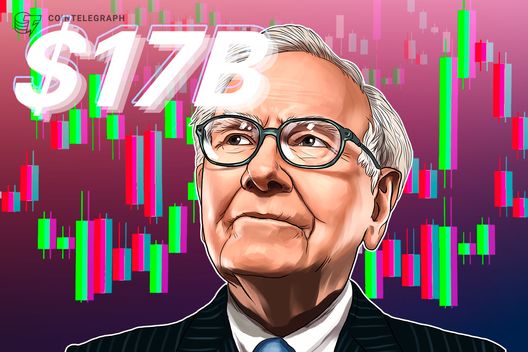
Warren Buffett's significant increase in cash reserves and purchase of US T-bills signals a risk-off sentiment, potentially pressuring risk assets like Bitcoin due to its correlation with traditional markets. Historical patterns suggest Buffett's accumulation of cash precedes major stock market downturns, implying a bearish outlook for equities and, by extension, Bitcoin in the near to medium term. The article highlights Bitcoin's increasing correlation with the Nasdaq, suggesting that a potential stock market correction, as signaled by Buffett's actions, could lead to a significant price decline for BTC.
Intel's strategic buyback of a 49% stake in its Irish Fab 34 facility for $14.2 billion signals renewed confidence in its AI and CPU growth strategy, potentially boosting EPS and strengthening its credit profile. The market reaction, with a 10% surge in Intel stock, reflects investor optimism regarding the company's ability to capitalize on the increasing demand for CPUs in the AI era, where they play a critical role beyond GPUs. While the buyback and strategic positioning in AI are positive, Intel faces ongoing challenges with intense competition and the need for consistent execution to fully realize its turnaround.

Bitcoin faces a critical test at the $70,000 resistance zone, where a large supply overhang from recent buyers is expected to be absorbed by renewed demand, influenced by upcoming U.S. payroll data. Improved macro conditions, including easing geopolitical tensions, a softer dollar, and lower yields, provide a supportive backdrop for Bitcoin, but internal market structure requires validation through increased demand to break through overhead supply. The derivatives market shows neutral funding and compressed volatility, indicating reduced leverage and a lack of strong directional conviction, suggesting conditions are ripe for a significant move once a clear catalyst emerges. U.S. ETF flows are showing positive signs, but not yet at a scale to overcome the immediate $70,000 resistance, highlighting that while external factors are improving, internal demand must prove sufficient to absorb selling pressure.

Bitcoin exchange reserves have fallen to a multi-year low of 2.7M BTC, indicating a significant reduction in available sell-side supply. Sustained whale accumulation since October 2025, characterized by dominant large-order participation and net outflows from exchanges, suggests accumulation at scale during the recent price correction. The Fund Flow Ratio returning to a historical reset level of ~0.065, coupled with a thin float and patient whale accumulation, historically precedes significant upward price movements. While on-chain data suggests a strong setup for potential price appreciation due to reduced supply and accumulation, the timing remains uncertain, and a material break below current support could invalidate the bullish thesis.
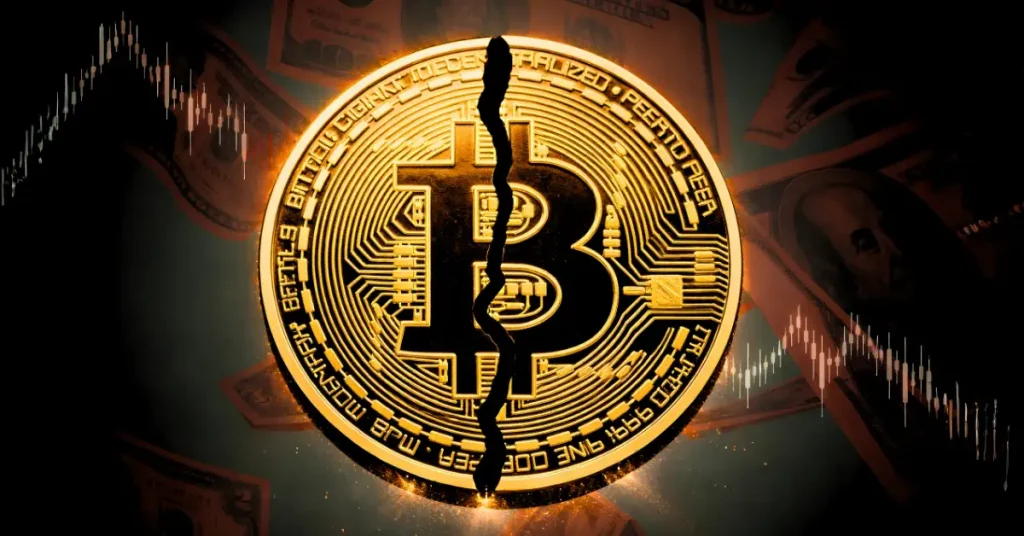
Bitcoin's current consolidation between $60K and $70K indicates a market equilibrium rather than expansion, with spot demand absorbing sell-side pressure without a clear catalyst for a breakout. On-chain data reveals increased realized losses, suggesting capitulation among some holders, but the lack of subsequent strong inflows prevents a price floor formation or upward momentum. The normalization of perpetual market premiums and declining volatility risk premium signal that excess leverage has been removed, reducing the fuel for significant price swings and indicating trader uncertainty. The market is currently in a state of absorption without expansion, meaning Bitcoin is likely to remain range-bound until a significant catalyst emerges to drive demand and conviction for a breakout.

Meta's strategic pivot to integrating existing stablecoins rather than issuing its own reflects regulatory lessons learned from Libra, signaling a pragmatic approach to market entry. By leveraging its massive user base across Facebook, Instagram, and WhatsApp, Meta aims to create a dominant digital payment ecosystem by focusing on distribution and user experience, rather than currency control. The partnership-driven model, potentially with entities like Stripe, allows Meta to bypass complex regulatory hurdles and infrastructure development, focusing instead on seamless integration and AI-driven commerce applications. The planned 2026 rollout positions stablecoins as critical infrastructure for AI-powered commerce and everyday transactions, potentially driving significant adoption if user friction is minimized.
Ripple's introduction of an on-chain treasury system integrates fiat, XRP, and RLUSD into a single corporate dashboard, potentially increasing XRP utility beyond a bridge asset and driving institutional adoption. The launch of Ripple Treasury, a product of the Ripple-GTreasury partnership, signifies a move towards unifying traditional finance and digital assets for corporate treasury management, enhancing efficiency and compliance. By enabling corporations to manage digital assets directly within their existing dashboards, Ripple Treasury streamlines cross-border payments and yield strategies, potentially impacting traditional payment systems and treasury operations.

New research suggests quantum computers may require fewer resources to break current encryption, potentially accelerating the timeline for "Q-Day" and increasing the urgency for quantum-resistant upgrades across the crypto ecosystem. While quantum computers do not pose an immediate threat to Bitcoin or Ethereum, the findings highlight a long-term engineering challenge that necessitates proactive development and migration strategies to ensure future network security. The potential threat of quantum computing is not uniform across all blockchains, with Bitcoin's UTXO model offering some near-term protection compared to Ethereum's account model, though both require eventual transition to quantum-safe cryptography. Institutional investors should prioritize understanding the sequencing of quantum threats, with traditional finance likely to be targeted before crypto, providing a window for the crypto industry to prepare and upgrade its cryptographic foundations.

Ripple's routine 1 billion XRP escrow unlock, while standard practice, introduces potential short-term liquidity shifts that traders monitor for price impact. The integration of XRP Ledger into Bitget Wallet signifies an expansion of payment infrastructure, aiming to drive real-world utility and potentially increase demand for XRP over time. Significant RLUSD burns, exceeding 180 million tokens, indicate a reduction in stablecoin supply due to institutional redemptions, reflecting a dynamic balance between minting and demand within Ripple's ecosystem.

Cardano's Protocol 11 hard fork in April 2026 and the launch of its Midnight privacy sidechain with major validators signal significant technical progress, yet the market has not reflected this with ADA trading 91% below its all-time high. The article contrasts Cardano's substantial development with its lagging price performance, suggesting that retail investors may seek alternative opportunities like the Pepeto presale, which offers exchange tools and a Binance listing catalyst. While Cardano's technical upgrades and regulatory clarity (SEC classifying ADA as a commodity) provide a positive outlook, sustained on-chain activity beyond governance is needed to bridge the gap between development and price appreciation. The Pepeto presale is positioned as a potential high-return opportunity due to its combination of meme coin appeal, zero-cost trading, risk scoring, free bridging, and a confirmed Binance listing, aiming to capitalize on market noise and investor search for clear value.
Franklin Templeton's launch of a dedicated crypto investment management platform, Franklin Crypto, signals increased institutional commitment to digital assets. The acquisition of 250 Digital and liquid strategies from CoinFund by Franklin Templeton indicates a strategic move to bolster its crypto investment capabilities and product offerings. This development suggests a growing trend of traditional asset managers establishing specialized units to cater to institutional demand for regulated and sophisticated crypto investment products.
Signal context only. Validate with price action, liquidity, and risk limits before taking a position.
