
Navigating Crypto News

CoinFeather
Navigating Crypto News

Quick market read from this story
Ethereum experienced a significant 52% price correction from its peak, influenced by macroeconomic factors and geopolitical events, leading to liquidations in leveraged positions.
Despite the price drop, underlying Ethereum infrastructure shows strength with substantial inflows into BlackRock's staked ETH fund and existing spot ETH ETFs, indicating institutional confidence.
While ETH faces limitations for 100x returns due to its large market cap, emerging projects like Pepeto are positioned to offer such high-growth potential, particularly with upcoming exchange listings.
The current market environment presents a dichotomy: established assets like ETH are consolidating with institutional backing, while new presale tokens aim for exponential growth, attracting capital seeking higher multiples.
Deep Dive
Ethereum experienced a significant 52% drop from its October 2025 peak of $4,831, reaching a low of $2,079 on March 23. This decline was influenced by geopolitical tensions, oil prices exceeding $110, and the Federal Reserve maintaining interest rates at 3.5%, which collectively reduced risk appetite and led to the liquidation of $144 million in ETH long positions. Despite the volatility, underlying support for Ethereum appears to be strengthening, evidenced by BlackRock's iShares Staked Ethereum Trust attracting $254 million in its first week and existing spot ETH ETFs holding over $13 billion.
The Ethereum price saw a cycle low of $1,473 in February 2026 before recovering to $2,079. BlackRock's new staked ETH fund, launched on March 12, has already amassed substantial assets, staking between 70% and 95% of its holdings and offering a monthly yield. This institutional backing, alongside the significant holdings in spot ETH ETFs, suggests a positive long-term outlook, though the recent crash highlights that even large-cap cryptocurrencies are not immune to macroeconomic factors and global events.
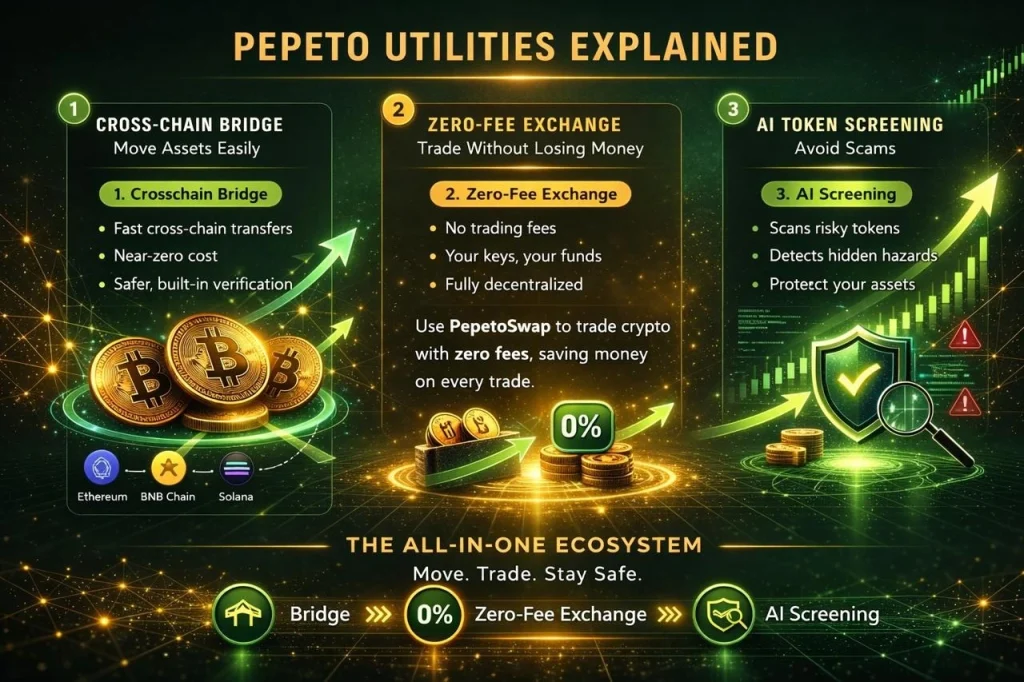
While Ethereum's market capitalization of $250 billion limits its potential for exponential growth, new projects are capturing investor attention by offering opportunities for higher returns. Pepeto, a new project with a presale that has already raised over $8 million, is drawing interest due to its focus on real exchange utility and a potential 100x return. The project features a live platform with tools designed to protect capital, zero-fee trading on PepetoSwap, and a cross-chain bridge. The development team includes a former Binance expert, and the project has completed a SolidProof audit. With a Binance listing anticipated, Pepeto aims to provide returns that larger, established cryptocurrencies like Ethereum can no longer offer to early investors.
As of March 23, ETH is trading around $2,079, with resistance levels identified at $2,235 and $2,380. A sustained break above these levels could pave the way for a move towards $2,500. Some analysts suggest that a bullish scenario could see ETH reach $3,000 if the Federal Reserve pivots on interest rates and geopolitical tensions ease. However, even a move to $3,000 represents a modest 43% return from current levels. In contrast, Pepeto's presale offers the potential for significantly higher returns, with projections of over 100x, particularly as its Binance listing approaches. The narrative suggests that while Ethereum's price prediction indicates a potential recovery, the era of 100x returns for such large-cap assets has passed, shifting such opportunities to early-stage presale projects.
The current Ethereum price prediction suggests a floor is forming, with potential for recovery supported by institutional inflows and network development. However, the opportunity for substantial gains, akin to those seen with early investments in projects like Pepe or Shiba Inu, is now more likely found in presale stages. Pepeto's presale, which has already garnered significant funding, is presented as an opportunity to achieve returns that ETH, with its substantial market cap, cannot match. The project emphasizes its exchange infrastructure and the potential for rapid growth following its upcoming Binance listing, drawing parallels to historical presale successes.
Source, catalyst, and sector overlap from the latest feed.
Peter Schiff predicts a significant surge in gold prices to $11,400, drawing parallels to the 2008 financial crisis bull run, suggesting current market conditions are a strong buy signal for the precious metal. The current gold price decline is attributed to high interest rates driven by inflation concerns stemming from the Iran conflict, making U.S. Treasury bonds more attractive than gold. Despite a recent losing streak and a 27% drop from its January high, Schiff argues that the underlying fiscal and inflationary pressures will ultimately drive gold prices higher, overriding short-term geopolitical de-escalation narratives. The market's consensus forecast for gold is significantly lower than Schiff's prediction, highlighting a divergence in expert opinion and potential for unexpected price action.
Significant reduction in Chainlink exchange reserves, with nearly 50% of LINK tokens withdrawn since 2022, suggests strong long-term accumulation by holders. Chainlink's integration with Euroclear to address a $58B+ annual corporate actions problem, alongside SEC/CFTC classification as a digital commodity, signals a shift towards institutional infrastructure adoption. Despite current price consolidation around $8, the combination of shrinking supply, increasing adoption, and a strengthening institutional narrative suggests potential for a significant upward repricing if key resistance levels are broken. The market is currently testing Chainlink's ability to price in its expanding infrastructure role, with a break above $10 indicating potential acceleration towards $14, while a fall below $8 could lead to a drop to $6.
The recent surge of SIREN on Binance-linked platforms is fueling renewed community speculation about a potential Pi Network listing, despite Pi's current trading on multiple other exchanges. Despite significant community demand and a strong Binance poll result last year, Pi Network's Binance listing remains unconfirmed, with potential delays attributed to compliance and ecosystem readiness. Pi's price is currently trading near $0.19, showing consolidation despite increased listing hype, indicating that market sentiment is divided on whether a Binance listing is the primary catalyst for future growth. While a Binance listing could boost Pi's visibility and demand, its long-term success is increasingly seen as dependent on internal ecosystem development and user activity rather than exchange listings alone.
Bitmine's continued aggressive ETH accumulation, now holding 4.66 million ETH (3.86% of supply), signals strong conviction in Ethereum's long-term value and potential for yield generation. With over 3 million ETH staked and earning significant rewards, Bitmine's strategy highlights the growing importance of staking yield as a core component of institutional investment in Ethereum. Bitmine's stated goal of controlling up to 5% of Ethereum and expanding yield via its MAVAN platform indicates a strategic, long-term play that could influence market dynamics if successfully executed.
Binance's upcoming AI Pro tool signals a continued focus on integrating advanced technology to enhance user trading experience and analytics capabilities. The market reaction, including community speculation and meme coin activity, highlights the potential for new AI tools to drive speculative interest and short-term trading opportunities. Binance's cautionary note emphasizes the need for traders to prioritize due diligence over hype, suggesting a mature market awareness despite speculative fervor.
XRP funds experienced a significant turnaround with $2.91 million in inflows, outperforming Ethereum which saw $27.5 million in outflows, suggesting a potential shift in institutional investor sentiment towards XRP. Despite overall crypto fund inflows slowing to $230 million, the positive flow into XRP products indicates renewed investor interest, potentially driven by retail adoption and a search for alternatives to ETH. The broader market sentiment appears cautious due to the Federal Reserve's 'hawkish pause' and revised rate cut expectations, leading to risk-off behavior, yet regional inflows suggest resilience in certain markets.
Institutional accumulation by Bitmine, adding 65,341 ETH, signals confidence in Ethereum's long-term prospects despite current market volatility. The CEO's 'mini-crypto winter' comment, coupled with ETH outperforming equities recently, suggests a potential shift in market sentiment towards recovery for Ethereum. Technical analysis indicates ETH is in a short-term downtrend with critical support at $2,070-$2,090; a break below could lead to $1,800, while sustained moves above $2,280 are needed for a trend reversal. With over 3.1 million ETH staked and generating significant annual rewards, Bitmine's strategy highlights the yield-generating potential of ETH as a core holding.
MicroStrategy has significantly expanded its capital-raising capacity to $42 billion through new equity programs, signaling continued aggressive accumulation of Bitcoin. The substantial increase in potential funding, coupled with recent Bitcoin purchases, suggests MicroStrategy is positioning itself for further market participation and could act as a significant buyer. The company's strategy of leveraging equity issuance to acquire Bitcoin directly impacts market supply dynamics and reinforces its role as a major institutional holder.
Strategy's announcement of a $44 billion equity issuance plan signals a significant capital raise aimed at fueling future Bitcoin acquisitions, potentially increasing demand for BTC. The firm's reliance on preferred shares like STRC for funding highlights a strategic shift towards alternative financing, though recent performance below par value may impact its immediate Bitcoin buying capacity. Despite a slowdown in recent Bitcoin purchases, Strategy's continued accumulation and substantial holdings position it as a key corporate holder, making its buying activity a notable market signal.
NovaBay Pharmaceuticals' rebranding to Stablecoin Development Corporation and significant SKY token acquisition signals a strategic pivot into the DeFi ecosystem, potentially influencing demand for SKY and related stablecoin infrastructure. The company's substantial holdings (8.78%) and active staking of SKY tokens suggest a long-term commitment, which could stabilize or increase the token's value through reduced circulating supply and yield generation. Despite the company's pivot and staking activities, SKY's recent underperformance relative to the broader market indicates potential headwinds or a lack of immediate market conviction in this development.
A sophisticated scam network on X is exploiting geopolitical tensions and war panic to lure users into fraudulent crypto schemes, highlighting a new tactic in social engineering for illicit gains. The identified scam network has generated six-figure profits through pump-and-dump schemes and fake giveaways, demonstrating the significant financial incentives and effectiveness of these coordinated online operations. The use of engagement farming via emotionally charged content, followed by the promotion of crypto scams, and the subsequent changing of usernames by scammers, presents a challenge for user protection and platform moderation.
Cardano founder Charles Hoskinson's teaser for 'Midnight' and the anticipated mainnet launch this March signals a significant upcoming development for the ADA ecosystem. The Midnight network's expansion with new federated node operators like Worldpay and Bullish indicates growing infrastructure and potential for increased adoption and security. The NIGHT token has shown positive price action, rising over 11% in anticipation of the mainnet launch, suggesting market optimism for the new network's potential.
Bitmine's aggressive accumulation of ETH, now representing 3.86% of total supply, signals strong institutional conviction and a strategic shift towards integrating ETH as a core treasury asset for long-term value and yield generation. The company's significant staking of over 3.14 million ETH, projected to yield $272 million annually, transforms ETH into an income-producing asset and highlights a growing trend of institutional players optimizing yield alongside price appreciation. The contrasting actions of Bitmine accumulating ETH while an early holder liquidates a large position underscore a divergence in market strategies, with institutions focusing on long-term treasury management and early adopters realizing profits. The increasing concentration of ETH supply within large institutional treasuries like Bitmine's could lead to a tightening of available tokens on the open market, potentially contributing to reduced long-term volatility.
Bitcoin's price surge past $71,000, validating Jim Cramer's bullish call, has triggered significant liquidations, indicating a potential shift in market sentiment and increased volatility. The $801 million in liquidations, with substantial amounts impacting BTC and ETH, highlights the risk of overleveraging in a rapidly moving market and suggests a short-term capitulation event for bearish positions. While Cramer's call is validated by the immediate price action, the article suggests this is a short-term 'bulls rule' moment rather than a confirmed long-term trend reversal, implying caution for sustained bullish plays.
Live Feed
Loading the broader stream in the same flow as the homepage feed.

A bipartisan bill targeting sports prediction markets signals increased regulatory scrutiny on platforms like Kalshi and Polymarket, potentially impacting their operations and associated tokens. The proposed legislation, framing prediction markets as unlicensed sports bets, escalates a conflict between state and federal regulators, suggesting a challenging environment for these platforms. While the bill focuses on sports wagers, it could set a precedent for broader regulatory action against prediction markets, impacting investor sentiment and potentially leading to asset repricing if enacted.
Crypto wallet provider Tangem is issuing a public warning against fraudulent Initial Coin Offerings (ICOs) and impersonation scams, emphasizing they do not conduct airdrops or issue their own tokens. The warning from Tangem highlights a persistent risk of scams targeting crypto users, particularly concerning fake airdrops and token offerings, which could lead to user fund losses. Traders should remain vigilant against phishing attempts and verify all communications through official channels, as impersonation scams can directly impact user trust and security within the ecosystem.

BitMine Immersion Technologies significantly increased its ETH holdings by acquiring 65,341 ETH last week, reinforcing its position as the largest institutional holder with over 4.66 million ETH, signaling strong conviction despite current unrealized losses. The company's chairman, Tom Lee, expressed optimism for a crypto market recovery, suggesting that current fears are being priced in and opportunities are emerging, which could influence investor sentiment towards ETH. BitMine's substantial ETH holdings are actively being deployed into staking, with plans to stake the entire treasury to generate an estimated $272 million annually in yield, highlighting a strategy focused on passive income generation and long-term value accrual. Ethereum's price saw a 5% increase, partly attributed to optimistic geopolitical sentiment following President Trump's comments on delaying actions against Iran, suggesting that macro events can still provide short-term catalysts for major altcoins.

XRP's growth potential is framed as a speculative bet on adoption and utility expansion, contrasting with BNB's established utility within the Binance ecosystem, suggesting different investor profiles for each asset. While neither XRP nor BNB show strong short-term bullish momentum, XRP's regulatory clarity and potential for institutional adoption present a long-term growth narrative, whereas BNB's demand is anchored to existing exchange and ecosystem utility. Surpassing BNB's market cap would require significant, sustained institutional inflows and substantial XRPL transaction volume growth for XRP, indicating a high bar for XRP's potential to overtake BNB's current market position.
The U.S. stock market experienced a significant rally, with the Dow Jones and S&P 500 gaining over 2%, driven by a de-escalation in geopolitical tensions with Iran and a subsequent sharp drop in oil prices. The market's rapid recovery highlights its sensitivity to geopolitical events, suggesting that sentiment can shift quickly based on news flow, particularly concerning energy supply and inflation concerns. While the immediate market reaction is positive, ongoing uncertainty regarding U.S.-Iran relations means that any renewed escalation could quickly reverse these gains, making continued monitoring of Middle East developments crucial for traders. The drop in oil prices, a key inflation driver, eased market concerns about rising costs, contributing to the broader equity market rebound after weeks of pressure.

Bitcoin's price decline is attributed to a broad risk-off sentiment driven by geopolitical tensions, causing it to act as a risk asset rather than a safe haven. The crypto market followed Bitcoin lower, with significant liquidations exacerbating the downturn, indicating a macro-driven selloff across multiple asset classes. Despite the broader market slide, U.S. spot Bitcoin ETFs saw net inflows last week, suggesting some continued institutional interest amidst the price pressure. The immediate outlook for Bitcoin hinges on holding the $68,000 support level, with a break below potentially leading to a further drop towards the $65,500-$66,000 range.
MicroStrategy's aggressive Bitcoin accumulation strategy, aiming for 1 million BTC by end of 2026, continues to be funded via equity issuance, raising concerns about potential share dilution and financial sustainability if BTC prices decline. Michael Saylor's rebranding of MicroStrategy to 'Strategy Inc.' and his continued role as executive chairman underscore the company's deep commitment to Bitcoin as a primary treasury asset, positioning it as a 'Bitcoin Treasury Company'. The article provides a biographical overview of Michael Saylor, highlighting his early career, the founding of MicroStrategy, and his pivot to Bitcoin, which has significantly influenced his net worth and the company's market perception. Despite concerns about funding models and past volatility, Saylor's unwavering conviction in Bitcoin as a long-term asset and inflation hedge continues to drive Strategy's accumulation efforts, impacting institutional adoption narratives.

Kraken traders are actively accumulating Dogecoin on dips, with 4.5 million DOGE purchased in 12 hours, signaling confidence in a potential price rebound despite recent market pullbacks. The sustained buying pressure on Kraken, alongside increased volume on other exchanges like Gate, Bitget, and Coinbase, suggests growing investor engagement and a belief that current price levels represent a favorable entry point. Despite a recent price drop and trading below key moving averages, Dogecoin's ability to hold the $0.088 support level is being viewed as a bullish indicator by traders anticipating a recovery, especially with the Qubic network stress test approaching.

Major international banks are accelerating pilots for tokenized deposit systems, signaling a strategic shift to integrate blockchain technology rather than compete with stablecoins. The development of tokenized deposits by banks aims to leverage blockchain's programmability while retaining traditional regulatory protections, positioning them as a more stable alternative to existing stablecoins. European infrastructure efforts to link blockchain platforms with existing payment rails by late 2026 indicate a move towards interoperability and the coexistence of traditional and digital money. Banks are increasingly viewing custody and tokenization services as primary business models in digital finance, driven by the perceived risk of disintermediation from fintech and crypto.

A significant 637% surge in Shiba Inu's burn rate, removing over 8 million SHIB from circulation, directly addresses supply scarcity, a key driver for memecoin valuations. The increased token burn coincides with a 4.17% price increase and a decline in exchange reserves, suggesting growing investor demand and potentially signaling a short-term bullish trend for SHIB. While the burn rate is a positive deflationary signal, the long-term impact on SHIB's price will depend on sustained demand and the broader market sentiment for memecoins.
Signal context only. Validate with price action, liquidity, and risk limits before taking a position.
