
Navigating Crypto News

CoinFeather
Navigating Crypto News
Quick market read from this story
Ethereum is currently testing a critical resistance zone between $2,150 and $2,200, with a reclaim potentially signaling a move towards $2,400, while a rejection could lead to a pullback towards $1,900.
Analysis of MVRV bands suggests Ethereum has historically found bottoms near the 0.80 band ($1,880) and begins bull runs upon reclaiming the Realized Price ($2,449), indicating these levels are key for trend confirmation.
The market is closely watching Ethereum's price action at key resistance and support levels, as a decisive move above $2,200 or a fall below $1,900 will likely dictate short-term trading sentiment and positioning.
Source, catalyst, and sector overlap from the latest feed.
Significant 4.8 billion SHIB tokens moved to exchanges, indicating potential selling pressure or rebalancing by holders, despite mixed historical April performance for the asset. While large inflows and outflows were observed across major exchanges like Revolut, Binance, and Bitstamp, the net inflow suggests a cautious market sentiment rather than a clear directional conviction for SHIB. Despite early April losses and mixed historical performance, the average April return for SHIB has been positive, suggesting that current price action may not fully reflect potential month-end trends.
Live Feed
Loading the broader stream in the same flow as the homepage feed.
The Clarity Act's stablecoin yield provisions are nearing a legislative deal, potentially unlocking a key revenue stream for U.S. exchanges like Coinbase and reducing reliance on offshore platforms. Despite banking sector concerns, Coinbase's CLO stated there is no evidence of significant deposit flight to stablecoins, potentially easing regulatory fears and paving the way for bill passage. The potential passage of the Clarity Act, with a 65% probability according to prediction markets, could provide much-needed regulatory clarity, impacting Coinbase's stock performance and the broader stablecoin market.
Hyperliquid is showing signs of short-term exhaustion with a 13% price drop and significant declines in derivatives volume, indicating waning speculative interest. Aggressive capital withdrawal is suggested by a -285% netflow decline, with both spot and leveraged participants reducing exposure, pointing to a potential trend reversal. Technical indicators show difficulty maintaining short-term moving averages and a failed breakout, suggesting the recent rally phase is likely over and consolidation or a gradual decline may follow. The waning momentum and lack of increased participation suggest that without a rebound in volume and inflows, Hyperliquid's upside trend is likely ending.

Despite a 2.03% price decline in SHIB, a 2,332% surge in the token burn rate indicates significant supply reduction efforts, which could provide a long-term bullish fundamental signal if sustained. The substantial increase in SHIB token burns, while currently burning only ~$49 worth of tokens, highlights active community or developer-led supply management, a key narrative for meme coins. Bearish signals in SHIB's derivatives market, including a 1.68% decline in open interest and a 6.56% drop on Coinbase futures, suggest short-term caution among traders despite the burn rate increase.

Hyperliquid's rapid growth in derivatives volume to levels comparable with Binance in under a year highlights the market's increasing demand for on-chain transparency in trading. The platform's success, particularly its ability to handle high volume during off-market hours like the Iran conflict, demonstrates a structural advantage over centralized exchanges in terms of 24/7 accessibility and verifiable operations. Traders are prioritizing verifiable on-chain data and transparency, as evidenced by Hyperliquid's rise, suggesting a potential shift in market preference away from opaque CEX operations.

The US Treasury's proposed GENIUS rule establishes a federal framework for stablecoin governance, aiming to transition the market from fragmented regulation to a coordinated national system. The rule defines a $10 billion ceiling for state-licensed stablecoin issuers, signaling that larger-scale operations will be required to operate under federal oversight, potentially driving market concentration. This regulatory clarity, while potentially increasing compliance overhead, could reduce uncertainty for institutional adoption and pave the way for significant market growth, as projected by financial institutions. The proposed framework prioritizes federal control over reserve assets, redemption, and compliance, indicating that future stablecoin innovation and issuance will occur on Washington's terms.

Increased U.S. enforcement actions, including an FBI-created token sting operation, signal a shift towards prosecuting crypto market manipulation as wire fraud, impacting market integrity and investor trust. The pervasive nature of wash trading, particularly in lower-cap tokens and unregulated exchanges, highlights a persistent challenge for market participants and regulators seeking to establish fair trading environments. While enforcement actions like the DOJ's case against alleged wash trading firms may initially create uncertainty, they are likely to strengthen the asset class long-term by fostering greater institutional scrutiny and weeding out illicit practices. The FBI's novel approach of using a custom token to expose manipulation services indicates a more sophisticated and proactive stance by law enforcement, suggesting a higher likelihood of future crackdowns on market manipulation.

Coinbase CEO Brian Armstrong's personal focus on post-quantum security signals a growing industry-wide concern, potentially driving future protocol upgrades and infrastructure investments. The announcement highlights Bitcoin's current lack of a clear migration plan for quantum resistance, indicating a potential need for significant coordination and development efforts within the BTC ecosystem. While quantum threats are still theoretical, Coinbase's proactive stance and internal initiatives suggest a strategic risk assessment that could influence market participants' long-term security considerations.
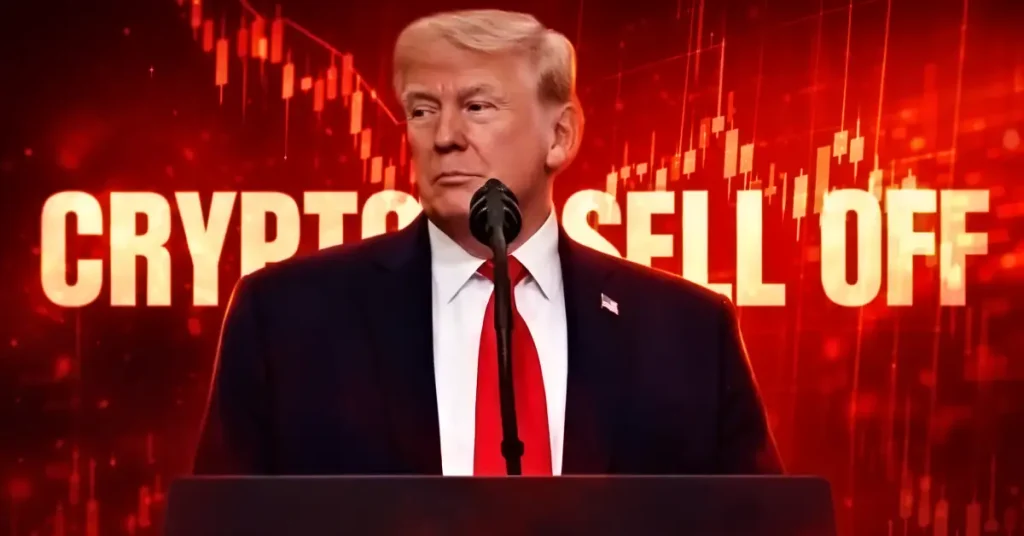
Donald Trump's public statements are directly influencing Bitcoin's price movements, creating volatility that challenges traditional trading strategies. The market is currently exhibiting a high sensitivity to geopolitical commentary, suggesting that traders must monitor political developments alongside technical indicators. The unpredictable nature of these price swings, driven by a single individual's remarks, indicates a heightened risk environment for short-term traders. The correlation between Trump's statements on the US-Iran conflict and significant Bitcoin price shifts highlights a new, albeit volatile, market driver.

CoinStats API offers a unified solution for developers needing aggregated market data, wallet activity, and news feeds, potentially reducing engineering complexity for portfolio trackers and analytics tools. The integration of CoinStats API with MCP (Model Context Protocol) enables AI assistants to directly query crypto data, positioning it as a data source for AI-native applications and autonomous agent workflows. With a credit-based pricing model and a free tier for testing, CoinStats API aims to provide flexible access to enriched crypto data, supporting developers across multiple chains including Solana. While CoinStats API simplifies data aggregation, it does not replace low-level blockchain infrastructure, serving primarily as a product-data layer for enriched, user-facing information.
Former Ripple CTO reveals XRP’s development had guidance from Bitcoin lead developer, PayPal co-founder, and top tech innovators.

eToro's launch in New York, after a three-year wait for its BitLicense, signifies a potential easing of state-level regulatory hurdles and unlocks a significant user base. The potential passage of the Digital Asset Market Clarity Act could provide much-needed federal regulatory clarity, defining roles for the SEC and CFTC and offering a clearer rulebook for crypto platforms. EDX Markets' application for a national trust bank charter, backed by major financial institutions, indicates a strategic move to build institutional-grade infrastructure for crypto custody and settlement. Despite positive regulatory developments, persistent macro headwinds and unresolved details in the Clarity Act, particularly regarding stablecoin yield, present ongoing risks to market sentiment and adoption.
Signal context only. Validate with price action, liquidity, and risk limits before taking a position.
No explicit catalyst tagged.
Ripple's demonstration of transferring $92.5M in RLUSD on the XRP Ledger for $0.000183 highlights its potential to disrupt traditional banking by offering superior speed and cost-efficiency in payments. The successful high-value transaction and RLUSD's listing on Coinone indicate growing institutional adoption and traction for Ripple's stablecoin solutions, signaling a positive outlook for its payment infrastructure. The XRP Ledger's demonstrated capacity for handling massive financial flows at near-zero fees positions Ripple as a competitive alternative to legacy financial systems, suggesting potential market share gains in cross-border transactions.
