
Navigating Crypto News

CoinFeather
Navigating Crypto News
Quick market read from this story
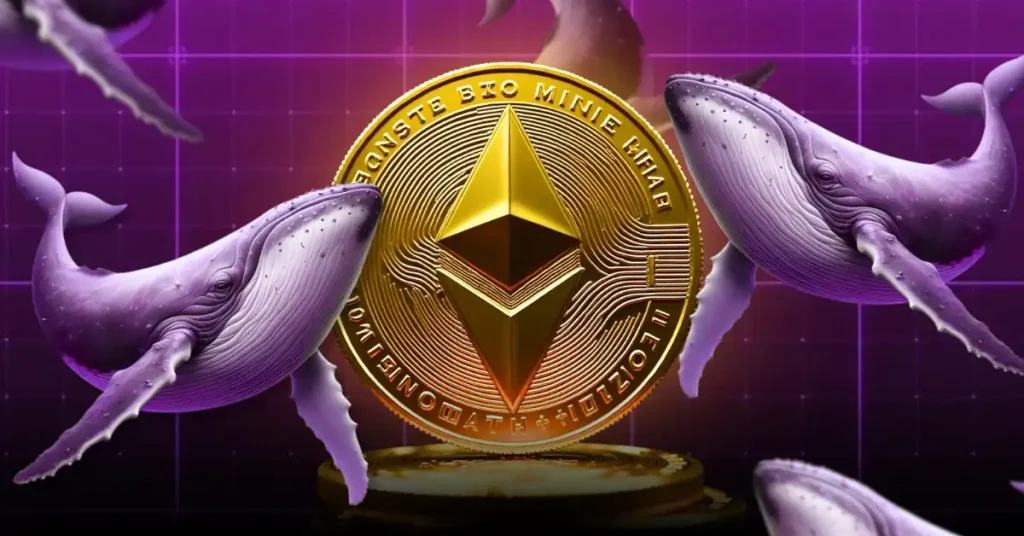
Despite record network usage, Ethereum's price is diverging from adoption metrics, with CryptoQuant warning of a potential slide to $1,500 by late 2026 if bearish trends persist.
Weakening capital inflows, indicated by negative realized market cap and increased exchange deposits, suggest holders may be preparing to sell, pressuring ETH prices.
The ETH/BTC pair's decline and six consecutive red monthly candles highlight Ethereum's relative weakness and ongoing market stress, signaling a 'clean-up phase' for the asset.
While short-term risks are present, sustained network adoption during price suppression could establish a stronger long-term base for Ethereum's eventual recovery.
Deep Dive
Blockchain analytics firm CryptoQuant has issued a warning that Ethereum (ETH) could experience further price declines, potentially reaching $1,500 by late Q3 or early Q4 of 2026 if bearish market conditions persist. This forecast comes despite Ethereum's network usage hitting record highs, creating a notable disconnect between adoption and price.
Analysts are observing an "adoption paradox" where Ethereum's network activity, including daily active addresses and smart contract interactions, has surpassed levels seen during the 2021 bull cycle. However, ETH's price has fallen over 50% from its peak, indicating that strong on-chain usage is not currently translating into price momentum.
Further signs of potential downside include weakening capital inflows into the Ethereum network, as indicated by CryptoQuant's one-year realized market cap metric turning negative. This suggests more capital is exiting Ethereum than entering. Additionally, Ethereum has seen rising inflows to exchanges, particularly compared to Bitcoin, which often signals holders preparing to sell. The ETH/BTC pair has also weakened, showing Ethereum's declining relative strength against Bitcoin.
Ethereum has experienced six consecutive months of price declines as of March 2026, pushing its price towards the $2,000–$2,050 range. CryptoQuant analysts describe the current market phase as a "clean-up phase" designed to flush out weaker positions. Extremely negative funding rates in derivatives markets also point to extreme bearish sentiment among traders.
Despite the short-term risks, analysts suggest that the current conditions, characterized by strong network usage and suppressed prices, could potentially build a stronger long-term price base. A future recovery cycle may be supported by this high adoption rate once broader market conditions stabilize and capital inflows resume.
Source, catalyst, and sector overlap from the latest feed.
Lido DAO's dominance in Ethereum liquid staking, coupled with upcoming upgrades like stVaults and ValMart, is projected to strengthen stETH demand and foster LDO ecosystem growth, potentially driving price appreciation. The article presents a bullish long-term outlook for LDO, with price predictions ranging up to $15.42 by 2030, contingent on successful value-capture strategies and Lido's expansion into institutional finance and RWA integrations. Despite a current downtrend, technical analysis suggests LDO is near a critical support level, with potential for a significant move if it breaks the descending trendline, supported by decreasing volatility indicated by tightening Bollinger Bands.
The confirmation that Elon Musk's X Money will launch in April without any Dogecoin integration suggests that DOGE's price action will continue to be driven by speculation and Musk's social media activity rather than fundamental utility. Pepeto is being positioned as a potential successor to Dogecoin, leveraging frog meme branding and a low entry price, with its core value proposition centered on an exchange with revenue sharing and a proven founding team, aiming for significant upside independent of social media hype. While Dogecoin faces resistance at $0.10 and limited upside potential according to current predictions, Pepeto's presale offers a high-risk, high-reward opportunity with claims of substantial returns based on its underlying exchange product and tokenomics.
CRV is showing signs of a potential bottom formation around the $0.18 support level, mirroring patterns seen before its late 2024 rally. Technical indicators suggest a multi-month accumulation phase is underway, potentially setting CRV up for a retest of $1.00 and subsequent resistance levels if demand increases. Despite a significant drop from its all-time high, the article presents long-term price predictions for CRV ranging from $3.00 by 2026 to $8.00 by 2030, contingent on sustained DeFi relevance and market recovery. Recent integrations, such as with River for satUSD liquidity, highlight ongoing ecosystem development, while a dispute with PancakeSwap underscores competitive dynamics in the DeFi space.
NEAR Protocol's price is projected to see significant growth, with predictions suggesting a potential surge to $71.78 by 2030, driven by strong fundamentals and increasing adoption. The integration of NEAR with Solana and TON via Chain Signatures, coupled with positive on-chain data and potential institutional interest signaled by ETF filings, indicates a bullish outlook for the token. Traders should monitor the $2.00 resistance level as a key indicator for a potential breakout towards higher targets, while the $1.00-$1.25 support zone offers strategic entry points.
Cardano's price is projected to reach $2.75-$3.25 in 2026, driven by strong support levels and improving market sentiment, indicating a potential significant recovery from current levels. On-chain data reveals whales are accumulating ADA while retail holdings decline, suggesting smart money is positioning for a long-term supply base and potential price appreciation. The weighted sentiment for ADA has flipped positive, indicating a shift from fear to optimism, which, combined with whale accumulation, suggests a potential bullish rally is forming. Long-term forecasts predict ADA could reach $10.25 by 2030 and significantly higher by 2050, contingent on continued ecosystem growth, investor demand, and broader altcoin market momentum.
Solana's price is exhibiting a Bollinger Bands squeeze, indicating a period of low volatility that historically precedes significant price movements, suggesting a potential breakout is imminent. Elliott Wave analysis supports a bullish outlook for Solana, suggesting the completion of a corrective phase and the commencement of a strong upward impulse wave, potentially targeting higher price levels. Consistent inflows into Solana ETFs, totaling $957.2 million, signal renewed institutional confidence and provide underlying support for SOL's price, despite recent fluctuations.
Bitcoin's stabilization above $71,000 suggests consolidation, potentially setting the stage for further upside if key psychological levels are maintained. Despite overall market cap growth, cautious sentiment persists, indicated by a low Fear & Greed Index, suggesting traders are awaiting clearer macro or regulatory signals before committing significant capital. While Bitcoin shows stability, selective altcoins and meme coins are exhibiting strength, though the Altcoin Season Index remains below the threshold for a broad altcoin rally, indicating continued Bitcoin dominance. The market is in a consolidation phase, with potential catalysts like ETF inflows, regulatory clarity, and macro shifts expected to drive the next significant price movement.
XRP price is consolidating within a 34-day range, with key support at $0.87 and resistance at $1.65, indicating a lack of immediate directional conviction from traders. Ripple's collaboration with Mastercard through the Crypto Partner Program signals broader industry integration, potentially boosting adoption of blockchain for payments. Potential regulatory classification of XRP as a financial product, particularly in Japan, could hinder its utility as a fast, low-cost bridge currency, posing a risk to its core use case. The prolonged consolidation suggests a market pause before a significant move, with a breakout above $1.65 or breakdown below $0.87 likely to dictate the next trend.
Bitcoin's recent sharp decline, preceding a global stock market downturn, reinforces its role as a leading indicator for risk assets, suggesting potential further downside for equities. The historical pattern of Bitcoin peaking and declining before major stock indices like the S&P 500 and Nasdaq, as observed in 2021-22 and now, indicates a potential for continued weakness in traditional markets. Traders should closely monitor Bitcoin's price action and ETF flows as a predictive tool for broader market sentiment and potential shifts in risk appetite.
Ethereum's spot ETFs are experiencing significant institutional inflows, outperforming Bitcoin's on March 12th, which suggests growing institutional confidence in ETH as a distinct investment vehicle beyond BTC. The sustained positive net inflows for both ETH and BTC ETFs indicate a broader trend of traditional finance capital entering the digital asset sector, potentially supporting prices across major cryptocurrencies. While ETH shows strong performance driven by ETF flows, Bitcoin's price action is characterized by a 'modest' accumulation cluster, suggesting that while buying pressure exists, the conviction for a near-term breakout is still developing.
Live Feed
Loading the broader stream in the same flow as the homepage feed.
IKEA's unique foundation-based ownership structure is intentionally designed to maintain long-term independence and avoid short-term market pressures, making a public IPO highly unlikely in the foreseeable future. Despite its global scale and strong brand recognition, IKEA's private status means there is no direct investment opportunity, limiting potential market impact from its operational performance. Investors seeking exposure to the furniture and home retail sector must consider publicly traded competitors or broad consumer retail ETFs as indirect investment avenues.

BlackRock's new staked ether ETF (ETHB) has demonstrated strong initial market reception, trading over $15 million on its first day, indicating investor appetite for yield-generating crypto products. The launch of ETHB signifies a potential shift in crypto ETFs from passive exposure to income-generating instruments, as it leverages Ethereum's staking rewards. This development could pave the way for similar yield-focused ETFs on other proof-of-stake networks, expanding the product suite for traditional investors in the digital asset space. With a 0.25% sponsor fee (temporarily discounted), ETHB offers a competitive entry point for investors seeking exposure to ETH and its staking yield, potentially influencing demand for ETH itself.

The U.S. Senate's ban on Federal Reserve digital dollar issuance until 2030, coupled with the SEC/CFTC agreement, signals a regulatory environment favoring private stablecoins and potentially increasing their market share. This legislative action creates a distinct divergence from global CBDC development trends, potentially impacting U.S. competitiveness in digital finance while providing clarity for existing private stablecoin issuers. The explicit carve-out for private stablecoins like USDC and Tether suggests a strategic regulatory approach to foster private innovation while restricting central bank digital currency development.
The CFTC's assertive stance on prediction markets, including a staff advisory and rulemaking review, signals a significant regulatory push to assert jurisdiction over event contracts. The agency's actions highlight the ongoing debate classifying prediction markets as financial derivatives versus gambling, potentially impacting platforms like Kalshi and Polymarket. While the CFTC aims to protect its jurisdiction, industry experts suggest the immediate impact may be limited to restating existing regulations, with major shifts dependent on future court rulings or new rule proposals. Traders should monitor the CFTC's ANPRM comment period and potential legal challenges, as regulatory clarity or crackdowns could significantly affect the operational landscape for prediction market platforms.

Legendary investor Stanley Druckenmiller, previously skeptical of crypto, now suggests it could eventually replace the US dollar as the global reserve currency, indicating a significant shift in his long-term outlook. Druckenmiller's commentary on crypto as a potential reserve currency, coupled with his past purchase of Bitcoin as a hedge against fiat debasement, signals a growing institutional consideration of digital assets beyond speculative trading. The investor's warning about 'narrative-driven asset bubbles' in the current market environment, likening it to the 'eighth inning' of a cycle, suggests a cautious stance on overall market valuations, including crypto.

Bitcoin miners face declining profitability due to reduced block rewards and stagnant transaction fees, necessitating a strategic shift beyond traditional HODLing. The AI industry's demand for computing power presents a significant opportunity for Bitcoin miners to leverage their existing power infrastructure and generate new revenue streams. Miners can unlock yield from their BTC treasuries through active management strategies like derivatives and lending protocols, moving beyond passive reserves to enhance profitability. Active treasury management and diversification into areas like AI hosting are crucial for miners to gain a structural advantage heading into the next Bitcoin halving cycle.

The Bitcoin Policy Institute is actively lobbying the US Federal Reserve to challenge the Basel framework's 1,250% risk weighting for BTC, arguing it's excessively punitive and hinders banking services for crypto-related entities. The Federal Reserve's upcoming proposal to implement Basel III finalization in the US presents a critical juncture for how banks will treat Bitcoin, with potential implications for institutional adoption and capital requirements. A shift away from the 'toxic asset' classification and the 1,250% risk weighting under Basel could significantly reduce the cost for banks to hold Bitcoin, potentially unlocking greater institutional capital flow.
EthZilla's pivot to blockchain infrastructure and its strategy of holding significant Ethereum reserves positions it to benefit from potential ETH price appreciation and the growth of tokenized real-world assets. The company's stock (FRMM) is highly volatile and directly correlated with Ethereum's price movements and broader crypto market sentiment, making it a speculative play on the convergence of traditional and decentralized finance. While EthZilla aims to bridge traditional finance with DeFi through tokenization, its micro-cap status and dependence on evolving crypto trends present substantial risks alongside potential upside.

Eightco secured $125 million in funding from notable crypto-focused investors like Ark Invest and Kraken's parent company, signaling continued institutional interest in the intersection of AI and blockchain. The capital infusion will support Eightco's strategic investments in OpenAI and MrBeast's ventures, positioning the company within key frontier AI and content creation sectors. Despite a recent surge, Eightco's stock (ORBS) remains significantly down year-to-date, indicating potential volatility and a speculative nature to its recent market moves tied to crypto and AI plays.
Signal context only. Validate with price action, liquidity, and risk limits before taking a position.
