
Navigating Crypto News

CoinFeather
Navigating Crypto News

Quick market read from this story
ENS is showing signs of stabilization after a prolonged correction, with current price action suggesting a transition from decline to equilibrium, potentially preceding a directional move.
The article presents long-term price predictions for ENS, forecasting significant growth to $100 by 2026 and up to $300 by 2030, contingent on increased Web3 adoption and sustained utility as an Ethereum identity layer.
While the current price action is consolidating, a decisive break above the $7-$8 resistance zone is identified as a key short-term catalyst for ENS to potentially reach the $15-$20 range.
Source, catalyst, and sector overlap from the latest feed.
Bhutan's significant reduction in Bitcoin holdings, selling approximately 70% over 18 months, suggests a strategic shift away from its BTC reserves, potentially impacting market sentiment for holders of large, previously stable positions. The substantial liquidation of $215.7 million in Bitcoin this year, coupled with a decline in mining inflows, indicates a potential exit from Bitcoin mining operations, signaling a reduced demand-side pressure from sovereign entities. While the direct market impact of Bhutan's sales may be limited due to its relatively small size, the trend of a nation-state reducing its Bitcoin exposure could be interpreted as a bearish signal by some market participants, especially if other sovereign entities follow suit.
Live Feed
Loading the broader stream in the same flow as the homepage feed.

Proposal 106 approval introduces smart contract rule changes to Tron, enhancing security by preventing malicious contract deletions and potentially boosting demand for TRX through adjusted energy costs. Tron's TVL has seen a significant increase of over 15% in the past four weeks, reaching $4.96 billion, indicating renewed investor confidence and potential liquidity return to the network. Despite positive network developments and TVL growth, TRX price is encountering resistance at its 6-month highs, suggesting a potential profit-taking phase if demand falters, though whale inflows show a bullish bias.
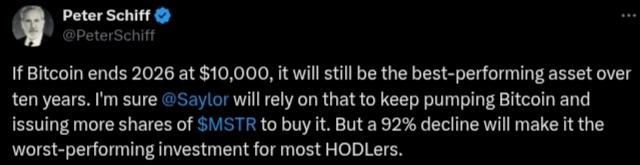
Peter Schiff's bearish commentary on Bitcoin, including a hypothetical $10K scenario, contrasts sharply with MicroStrategy's continued accumulation, highlighting a divergence in market sentiment and strategy. The article presents a worst-case scenario for Bitcoin potentially dropping to $10,000 due to macro factors like geopolitical tensions and liquidity collapse, suggesting significant downside risk if these conditions materialize. Despite bearish predictions and market volatility, MicroStrategy's recent $330 million BTC purchase underscores a strong conviction in Bitcoin's long-term value, potentially signaling confidence to other institutional investors. While some analysts predict a sharp decline, others, like Michaël van de Poppe, anticipate a near-term recovery to $86,000, indicating a divided outlook on Bitcoin's immediate price action amidst escalating geopolitical risks.
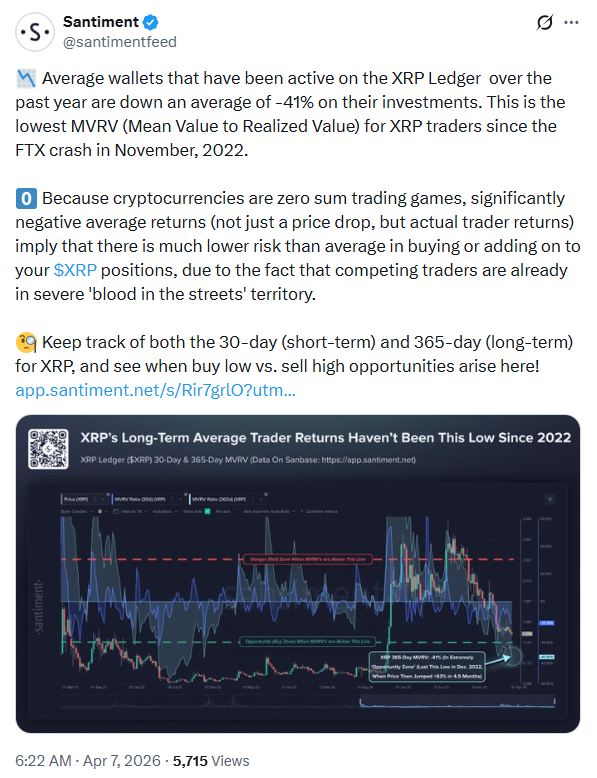
XRP Ledger active wallets are experiencing significant losses, with MVRV levels at their lowest since the FTX crash, suggesting that most weak hands may have already exited the market. Despite on-chain losses, Ripple's strategic expansion in Africa, driven by strengthening regulatory frameworks, indicates a long-term growth strategy that could support future XRP Ledger activity. Mixed inflows into XRP ETFs, with total assets near $940 million, signal cautious institutional interest, suggesting that large investors are still assessing the market rather than committing to firm long-term positions.
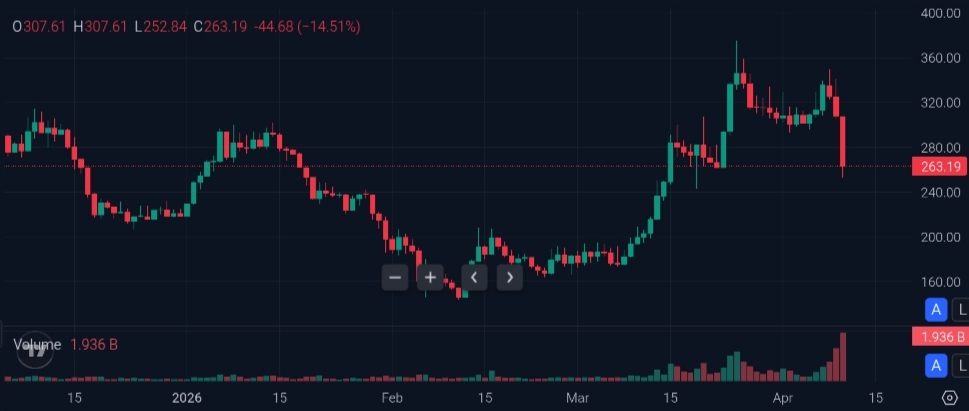
Key Insights: Bittensor dropped by almost one-fifth as Covenant AI pulled out of the network and sold TAO tokens. Sam Dare charged Jacob Steeves with centralized control, terming governance to be a decentralization theatre. Analysts attribute the Bittensor price crash to panic selling, and a massive exit by the subnet, but others consider that the […] The post Here’s Why Bittensor Price Crashed 20%, Will TAO Crypto Bounce Back? appeared first on The Coin Republic.
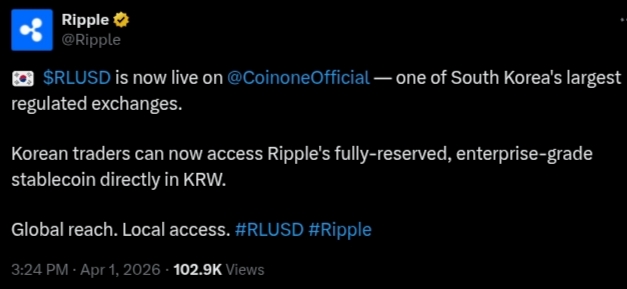
Ripple's RLUSD stablecoin securing a listing on Coinone in South Korea expands its accessibility to a regulated market and offers Korean traders direct trading against the Korean won. The RLUSD listing on Coinone, coupled with the recent Convera partnership, enhances its utility for cross-border payments and enterprise treasury needs, aligning with Ripple's strategy to integrate blockchain into traditional finance. An independent Deloitte audit confirming overcollateralization for RLUSD reinforces its 1:1 peg to the USD, addressing potential concerns about stablecoin stability and regulatory compliance.

Charles Schwab's entry into crypto trading with a 2026 launch date signals a significant mainstream adoption trend, potentially increasing liquidity and demand for BTC and ETH. The phased rollout starting with employees and select clients suggests a cautious approach by Schwab, indicating a focus on regulatory compliance and operational stability before broader client access. Schwab's move into spot trading positions it as a direct competitor to existing crypto exchanges, potentially impacting market share and driving further innovation in the retail brokerage crypto space. Despite the positive development, the limitations on availability (specific states, territories) and the lack of insurance on crypto assets highlight ongoing risks and regulatory complexities for institutional players entering the market.
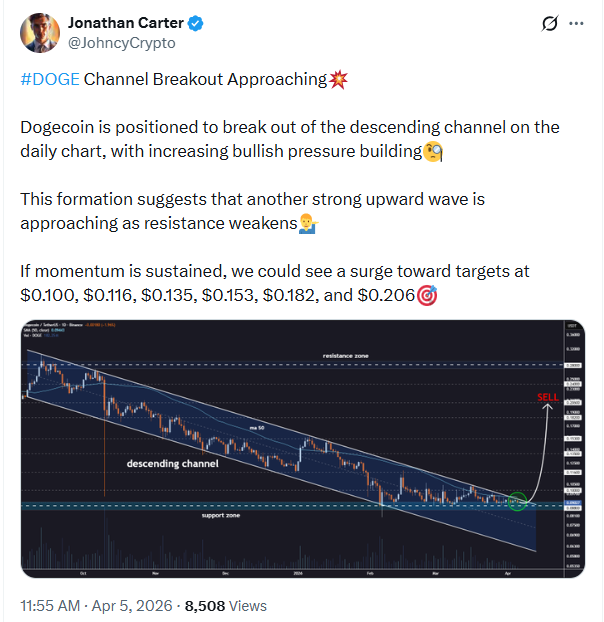
Increased trading volume and a Bollinger Bands squeeze suggest Dogecoin is poised for a significant price move, indicating heightened volatility ahead. Dogecoin's breakout from a descending channel, supported by a 63% volume surge, signals a potential bullish reversal and increased buying pressure. Historical logarithmic analysis indicates Dogecoin may be retesting a critical support level within a long-term uptrend channel, potentially leading to substantial gains if defended. Technical indicators point to potential upside targets for DOGE, with analysts projecting price movements to $0.15 or higher if bullish momentum continues post-channel breakout.
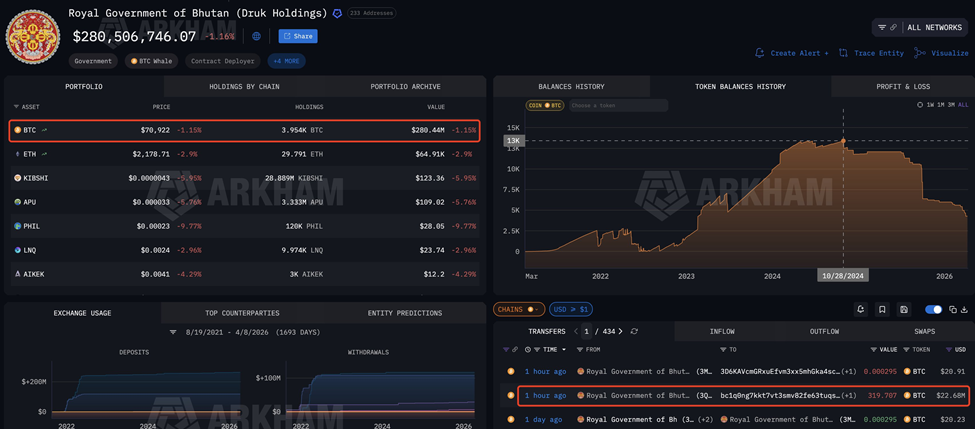
Bhutan's consistent offloading of Bitcoin, totaling $610 million, suggests a potential strategic exit from its sovereign reserve, impacting market sentiment among institutional holders. The timing of Bhutan's sales, often coinciding with price rallies, indicates a profit-taking strategy, which could encourage other holders to re-evaluate their positions. While Bhutan's sales are notable, the broader market context shows contrasting behavior from entities like MicroStrategy and BlackRock, highlighting diverse institutional approaches to Bitcoin holdings.

Bitcoin's price action on Binance shows a constructive higher low and higher high structure, supported by a rising 50 SMA, indicating bullish momentum despite recent consolidation. A significant collapse in Binance exchange inflows to 842 BTC on April 11, down from a peak of ~4,900 BTC, suggests reduced selling pressure and a tightening supply picture. The confluence of five Binance on-chain datasets, including low inflows, high whale concentration, and stablecoin reserves, points to a whale-guided rally with potential for further upside. With the Squeeze Risk Oscillator at -0.32 and MVRV Adaptive Z-Score crossing its 30-day SMA, the market exhibits reduced short-term selling pressure and a decreased probability of new lows.

A federal court's temporary injunction against Arizona officials enforcing gambling laws on Kalshi's event contracts, siding with the CFTC, signals a potential shift in regulatory clarity for prediction markets under federal derivatives law. The ruling suggests that event contracts traded on CFTC-regulated markets are likely to be classified as 'swaps,' placing them under exclusive federal jurisdiction and potentially preempting state-level gambling regulations. This development, alongside a similar Nevada ruling, highlights an ongoing legal battle over the classification of prediction markets, with implications for platforms like Kalshi and Polymarket and their ability to operate across different states. While the Arizona injunction is temporary, it creates a near-term window of operational stability for Kalshi in that state, pending further court decisions on preliminary injunctions.
XRP has broken above the critical $1.35 Bollinger Band middle line, a technical signal historically preceding upward price movements. The current technical setup on the XRP chart mirrors a mid-March 2026 pattern that resulted in a 17% rally, suggesting potential for a similar short-term upside. Holding the $1.35 support level is crucial for XRP's bullish outlook, with the upper Bollinger Band at $1.42 identified as the next potential target. Favorable regulatory developments, such as the Clarity Act, are providing a supportive backdrop for XRP's technical breakout, reinforcing bullish sentiment.
Signal context only. Validate with price action, liquidity, and risk limits before taking a position.
No explicit catalyst tagged.
The potential resolution of the US-Iran conflict, particularly concerning the Strait of Hormuz and nuclear weapons, could remove a significant macro headwind for Bitcoin, potentially driving prices towards $75,000-$80,000. A breakdown in US-Iran diplomatic talks poses a direct risk to Bitcoin, with a potential retest of $65,000 support if geopolitical tensions escalate and oil prices rise. The prolonged period of 'extreme fear' indicated by the Crypto Fear and Greed Index suggests that a credible path to peace could trigger a significant shift in market sentiment and investor positioning.
