
Navigating Crypto News

CoinFeather
Navigating Crypto News
Quick market read from this story
edgeX's recent launch and exchange listings have injected fresh liquidity, driving speculative price discovery in its EDGE token.
The platform's strong trading volumes exceeding $200 million daily indicate genuine usage, supporting the narrative of a high-performance perpetual DEX.
While currently in a momentum-driven expansion phase, the sustainability of edgeX's rally hinges on continued volume and support levels, with a risk of sharp pullbacks if momentum fades.
edgeX's positioning as a high-speed, self-custody perpetual DEX aligns with current market rotation into advanced decentralized trading platforms.
Deep Dive
The price of edgeX (EDGE) has experienced a significant surge following its recent launch, quickly becoming a top-performing token in the crypto market. This upward momentum is attributed to a combination of fresh liquidity, strong narrative appeal, and early-stage price discovery, though its long-term sustainability remains uncertain.
edgeX is a decentralized exchange designed for perpetual futures and spot trading. It utilizes an order book model, differentiating itself from traditional Automated Market Makers (AMMs). The platform aims to provide high-speed execution comparable to centralized exchanges while ensuring users maintain on-chain custody of their funds. This is achieved through a custom infrastructure layer engineered to enhance latency, throughput, and overall trading efficiency.
The recent token launch and subsequent exchange listings have injected significant liquidity, acting as a primary catalyst for edgeX's price increase. Newly launched tokens often exhibit sharp volatility during the initial price discovery phase, attracting traders seeking early momentum opportunities. Furthermore, edgeX has demonstrated substantial trading activity, with daily volumes exceeding $200 million. This indicates genuine platform usage beyond mere hype, bolstering bullish sentiment.
The project also benefits from a prevailing market narrative favoring high-performance decentralized trading platforms that offer a centralized exchange-like experience with self-custody. edgeX aligns perfectly with this trend, positioning itself as a notable player in the evolving perpetual DEX landscape.
From a trading standpoint, edgeX is currently in a momentum-driven expansion phase. The rally is expected to continue as long as trading volumes remain high and the price holds above recent breakout levels. This upward structure suggests potential for further gains as traders continue to favor the project's narrative.
However, risks include potential exhaustion if trading volumes decline, which could lead to a sharp pullback. Failure to maintain support levels might result in rapid downside movement due to the lack of established historical price structure. While edgeX is currently benefiting from the convergence of fresh liquidity, a strong narrative, and active trading participation, its current rally is largely speculative. The project must demonstrate sustained demand and stability to confirm a long-term trend beyond this early-phase expansion.
Source, catalyst, and sector overlap from the latest feed.
Cardano's price action is showing signs of stabilization near key support levels, diverging from broader market weakness, which suggests potential for a breakout if underlying on-chain improvements translate to price appreciation. Increased whale accumulation since March, coupled with stabilizing on-chain activity and a doubling of stablecoin supply, indicates strengthening demand and capital availability within the Cardano ecosystem, setting a foundation for potential price recovery. While ADA is currently range-bound around $0.24, a sustained move above $0.27 resistance and ultimately $0.33 could signal a breakout, potentially targeting $0.40-$0.50, provided the $0.23 support level holds.
A mystery wallet, rumored to be linked to Trump's inner circle, has opened a significant $109 million short position on BTC and ETH, signaling potential downside risk. The wallet's purported 100% win rate and past accurate predictions of geopolitical events suggest this move could precede a market downturn. Traders are advised to monitor the correlation between geopolitical developments, particularly those involving Trump and Iran, and the crypto market's reaction, as indicated by this large short position. The timing of the short, coinciding with a potential deadline for US military action against Iran, suggests a speculative bet on market volatility driven by geopolitical news.
New research suggests quantum computers could crack Bitcoin's cryptography with significantly fewer qubits than previously estimated, raising concerns about the security of existing BTC holdings. Unlike centralized systems that can implement post-quantum upgrades, Bitcoin's decentralized nature presents a significant challenge for adopting new cryptographic standards, potentially leading to forks or vulnerabilities. The 'harvest now, decrypt later' threat means that even if quantum computers are not yet capable of cracking current encryption, data collected today could be compromised in the future, highlighting the urgency for Bitcoin to adapt. While the quantum threat affects most internet infrastructure, Bitcoin's unique governance model makes its adaptation process more complex and potentially slower than that of traditional financial and governmental systems.
Algorand's decisive trendline breakout on expanding volume suggests a bullish reversal, with the $0.10 level acting as a key support for continued upside momentum. NEAR Protocol is consolidating near a critical $1.40-$1.42 resistance, indicating a potential breakout that could lead to a 50% price increase if sustained above this level. The analysis highlights a rotation into specific altcoins like Algorand and Near Protocol, suggesting traders are seeking opportunities beyond the broader market consolidation.
The Ethereum Foundation's shift to funding operations via staking yield instead of periodic ETH sales removes a consistent source of sell pressure, representing a structural positive for ETH supply dynamics. Despite the Foundation's move to reduce sell pressure, ETH is struggling to break above $2,000 due to declining user retention and significant outflows from Ethereum ETFs, indicating cautious institutional sentiment. The repeated inability of ETH to sustain levels above $2,000, coupled with concerns about its #2 position, suggests a lack of strong demand catalysts despite the positive supply-side development. While the Foundation's staking strategy is a long-term positive, the immediate market reaction is muted, highlighting the need for renewed demand drivers to overcome technical resistance and current bearish sentiment.
The upcoming Ethereum Glamsterdam upgrade is anticipated to drive a 20%-40% rally in ETH, a historical pattern that could attract capital rotation into other assets. Pepeto is positioned as a potential 'next Shiba Inu' due to its upcoming Binance listing and a presale that has already raised over $8 million, suggesting significant market interest. While SHIB and ETH offer potential gains, their large market caps and current price points suggest limited upside compared to the projected 100x returns for early Pepeto investors before its exchange debut. The article highlights a market rotation towards meme coins with confirmed catalysts like exchange listings, driven by recent gains in the AI token sector and anticipation of network upgrades.
The $285 million Solana exploit highlights significant audit gaps in DeFi, prompting a capital rotation towards projects with verified audits and upcoming exchange listings like Pepeto. Pepeto's presale success, nearing $8 million with a Binance listing anticipated, positions it as a potential 'next Pepe coin' opportunity, contrasting with PEPE's current market position and lack of utility. While Bitcoin holds steady, the narrative suggests that presale opportunities like Pepeto offer potentially higher, compressed returns compared to large-cap assets, especially following major security incidents.
Ripple's stablecoin RLUSD has launched new trading pairs against tokenized gold (PAXG, XAUT) on Bitrue, expanding its utility beyond traditional fiat-backed stablecoins. The integration with tokenized gold assets, coupled with strong trading volumes on Binance and Uniswap, and a recent Deloitte audit confirming over-collateralization, suggests growing confidence and adoption for RLUSD. The expansion into tokenized commodities like gold, alongside integration into B2B payment channels like Convera, positions RLUSD as a potential bridge asset between crypto and traditional finance, indicating a medium-term growth narrative.
Naoris Protocol's mainnet launch introduces quantum-resistant cryptography, addressing the long-term threat of quantum computing to existing blockchains like Bitcoin and Ethereum. The protocol's focus on post-quantum cryptography, utilizing NIST-approved algorithms, positions it as a potential infrastructure solution for future security needs across various crypto sectors. While the immediate impact on current market prices is limited, the development signals a proactive approach to a systemic risk, potentially influencing future development and investment in blockchain security.
Circle's entry into the wrapped Bitcoin market with cirBTC intensifies competition with established players like BitGo and Coinbase, potentially impacting market share and driving innovation in DeFi accessibility for institutions. The launch of cirBTC on Ethereum and Circle's own Arc blockchain signals a strategic move to leverage its stablecoin expertise for broader Bitcoin utility, aiming to capture institutional demand for secure and neutral wrapped assets. While Circle's established reputation may attract institutional interest, cirBTC faces significant competition from dominant players WBTC and cbBTC, suggesting a period of market share consolidation and potential price pressure for existing wrapped Bitcoin solutions.
US lawmakers are nearing a resolution on stablecoin yield regulations, potentially accelerating the CLARITY Act's progress and reducing uncertainty for crypto firms and banks. The resolution of the stablecoin yield debate could unlock legislative momentum for the CLARITY Act, with a committee markup and potential floor vote anticipated in the coming weeks. Market sentiment is cautiously optimistic, reflected in Polymarket odds suggesting a 64% probability of the CLARITY Act being enacted in 2026, indicating a potential positive catalyst for the stablecoin sector. The core dispute over whether digital asset platforms can offer yield on stablecoin holdings is being addressed, which is crucial for competitive parity and user adoption in the crypto space.
A significant XRP short position opened on Hyperliquid with 20x leverage highlights bearish sentiment among some large players, though it carries extreme liquidation risk. Japanese analysts warn of a potential Bitcoin "black swan" event, suggesting a collapse to $10,000 driven by global liquidity crises and geopolitical tensions, underscoring Bitcoin's sensitivity to macro factors. The Ethereum Foundation's strategic shift to staking 70,000 ETH ($143 million) signals a new operational funding model, potentially reducing future ETH sell pressure and demonstrating confidence in network security. The current market faces a "liquidity vacuum" due to the Easter holiday, increasing vulnerability to sharp price movements for assets like Bitcoin, which is currently trading below key resistance levels.
Ethereum's derivatives market has reset to 2023 bear market lows with Open Interest collapsing to $13.4B and funding rates turning negative, indicating a significant deleveraging event that could fuel a sharp rally on positive catalysts. ETH is currently testing a critical support level at $2,060, identified as the last meaningful floor before a potential 25% drop to $1,551 or further to $1,070, with the geopolitical situation in the Middle East acting as the primary deciding variable. The market has shifted from a persistently long-biased derivatives structure to neutral-to-short-biased, meaning any positive catalyst could trigger a disproportionate short squeeze, potentially driving ETH towards the $2,970 resistance level. While the derivatives market has largely absorbed leveraged positions, a continued escalation of the Iran conflict could lead to sustained spot selling pressure, driving ETH down through key support levels without the moderating effect of futures liquidations.
Ethereum price is showing signs of weakness, retreating over 5% and threatening to fall below $2,000, driven by cooling geopolitical optimism and declining open interest in derivatives markets. The decrease in Ethereum's open interest suggests investor indecisiveness and a potential bearish turn, especially as leveraged positions are unwinding and ETF flows have turned negative. Despite recent price weakness, the combination of low open interest and reduced liquidations could historically precede a market comeback, contingent on a substantial increase in spot demand, which is currently lacking according to ETF data. Bearish sentiment in Ethereum ETFs, with significant outflows in early April, indicates that broader macroeconomic conditions are likely to continue pressuring ETH price action and the overall crypto market.
Live Feed
Loading the broader stream in the same flow as the homepage feed.

The CoinDesk 20 Index shows broad-based strength with 19 out of 20 assets trading higher, indicating positive market sentiment across a significant portion of the crypto market. NEAR Protocol and Avalanche are leading the gains within the CoinDesk 20, suggesting potential outperformance from these specific Layer 1 or Layer 2 solutions. Bitcoin's flat performance alongside altcoin gains suggests a potential shift in market focus away from the dominant cryptocurrency towards smaller cap assets, a common pattern during periods of altcoin strength.

ChangeNOW is a reputable crypto exchange platform that has spent nearly a decade championing user-controlled crypto assets. This reputed exchange has officially opened its new regional headquarters in the heart of Dubai’s business district. This expansion marks a new chapter in the company’s history. It is transitioning from a global service provider to a localized, […] The post Calculated Ambition: ChangeNOW Defies Market Uncertainty with New Dubai Headquarters appeared first on The Coin Republic.

Arkham Intelligence data reveals Vitalik Buterin is not the largest individual ETH holder, with Rain Lohmus holding more but being inaccessible. The ETH2 Beacon Deposit Contract holds the largest amount of ETH, highlighting significant locked supply essential for network security. Institutional holders like Bitmine and BlackRock are now major ETH holders, driven by ETF demand and staking strategies. While Buterin is the largest accessible individual ETH holder, the data shifts focus to institutional accumulation and locked supply dynamics.
XRP Ledger's payment volume has seen a significant 70% drop in 24 hours, signaling a sharp decline in network activity and transactional demand. The combination of decreased on-chain activity and a bearish price structure suggests continued short-term downside risk for XRP, with key resistance levels at $1.38-$1.40 and $1.60. Without a rebound in ledger usage and a move back to higher price levels, expectations for XRP should remain muted, indicating a lack of immediate bullish catalysts. The current market behavior for XRP points to passive drift lower rather than aggressive selling, reinforcing a bearish short-term outlook.
Bitmine significantly increased its ETH staking by 167,578 ETH, bringing its total staked holdings to 300,000 ETH, signaling strong conviction in Ethereum's long-term value despite current market weakness. The substantial increase in Bitmine's staked ETH, following a period of unstaking, suggests a strategic rebuilding of its position and a renewed commitment to the Ethereum ecosystem, potentially indicating anticipation of future price appreciation. While the article notes Ethereum's recent 1.47% price increase, the primary driver for market participants is Bitmine's large-scale staking activity, which can be interpreted as a bullish signal for ETH's underlying demand and network security.
Global stock markets shut on Good Friday 2026. Here’s what’s closed, what’s open, and what traders should expect next.
Shiba Inu faces significant bearish pressure as it fails to break key resistance around $0.0000060, indicating a potential continuation of the downtrend. Weakening market structure, characterized by lower highs and increased selling pressure evidenced by exchange inflows, suggests that short-term strength is being met with profit-taking. Potential downside targets are identified at $0.00000562 and $0.00000523, implying a 6% to 12% decline from current levels if the bearish trend persists. A sustained close above $0.00000630 is required to invalidate the current bearish technical setup and signal a potential shift in momentum.

Stronger-than-expected US jobs data in March, with 178,000 jobs added versus expectations of 60,000, suggests a resilient economy. The positive jobs report did not significantly move Bitcoin from its $67,000 level, indicating that market participants are currently prioritizing other macro factors like Middle East tensions and oil prices over domestic economic growth for rate hike expectations. Fed Chairman Powell's recent comments suggest the central bank will not rush to raise rates based on short-term oil price fluctuations, providing a degree of stability for risk assets despite inflationary pressures.
XRP has experienced its longest monthly losing streak since 2014, shedding over 55% of its value since October 2025, indicating significant bearish pressure and potential for continued downside if support levels fail. Despite the prolonged downtrend, technical analysis suggests a potential bullish reversal with a breakout from a local wedge pattern and a confirmed bull flag on the 3-month chart, signaling strong buying interest above key support. The immediate focus for XRP is the $1.38 resistance level; a decisive break above this could unlock further upside potential by tapping into "primary liquidity," while failure to do so may reinforce bearish sentiment.

Cambodia's new draft law imposing severe penalties, including life imprisonment, for crypto scam kingpins signals increased global regulatory pressure on illicit financial activities. While the crackdown aims to curb crypto fraud, experts suggest it may lead to the displacement of these operations rather than their eradication, highlighting the industry's portability and the need for broader international cooperation. The extensive use of crypto for cross-border illicit fund movement and laundering by these scam networks underscores the ongoing challenges for regulators in tracking and seizing digital assets, as evidenced by significant US seizures.
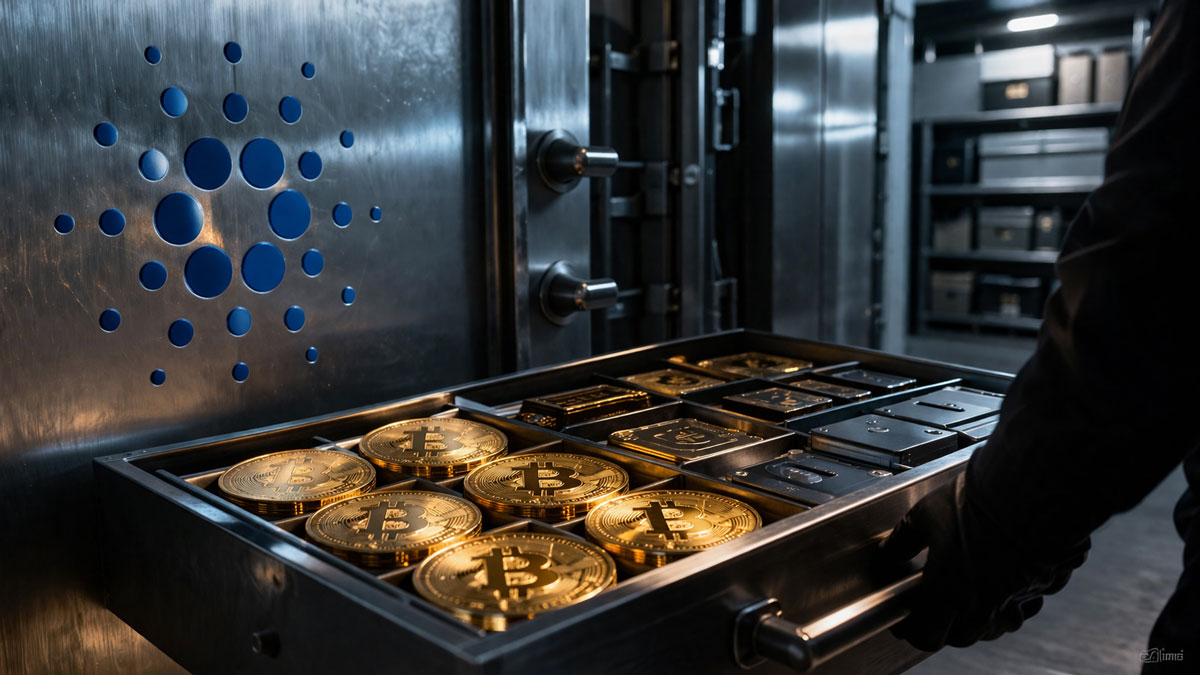
The Cardano Foundation's strategic shift to diversify its treasury away from ADA towards Bitcoin and cash signals a reduced direct financial linkage to ADA's price performance, potentially altering internal alignment and feedback loops. A significant decrease in ADA holdings from 76.7% to 51.6% of the Cardano Foundation's reserves, coupled with an increase in Bitcoin and cash, indicates a strategic de-risking and a move towards a more diversified treasury management approach. The Foundation's increased focus on technology, adoption, and governance spending, including initiatives in digital identity and RWA, suggests a strategic pivot to bolster Cardano's ecosystem infrastructure and attract institutional interest, independent of ADA's direct price action.
Despite a 300% surge in trading volume over the past week, the Midnight (NIGHT) token is experiencing a price decline, suggesting distribution rather than accumulation and indicating a lack of buyer conviction. The current market structure for NIGHT shows lower highs and consolidation near local lows, with major moving averages sloping downward, reinforcing a bearish sentiment despite increased trading activity. While Midnight's privacy-focused fundamentals are sound, short-term market behavior is dominated by flows and positioning, with exchange long/short ratios favoring shorts, implying further downside or sideways movement is likely. Traders should interpret the increased volume as a potential distribution signal in a downtrend, cautioning against assuming strength and expecting continued consolidation or a further leg down unless key resistance levels are broken.
The launch of BlackRock's staked Ethereum ETF transforms ETH into a yield-bearing asset, potentially attracting traditional investors and signaling renewed institutional interest despite short-term macro pressures. Regulatory uncertainty, particularly the stalling of US crypto legislation, continues to act as a cap on ETH's upside, creating a push-and-pull dynamic with improving institutional infrastructure. Upcoming network upgrades like Glamsterdam, coupled with broader ecosystem growth in Layer 2, stablecoins, and RWA tokenization, reinforce Ethereum's long-term fundamental value as a dominant smart contract platform. Ethereum is transitioning from a hype-driven asset to a core component of global financial infrastructure, with staking ETFs and network enhancements driving structural transformation rather than immediate speculative rallies.

Ripple CTO Emeritus David Schwartz questions the viability of a 'no-freeze' stablecoin strategy, highlighting that court orders legally dissolve redemption obligations, suggesting such a model could lead to fractional reserves and first-come, first-served redemption issues. The XRP Ledger's implementation of a 'deep freeze' feature in 2025 enhances compliance for stablecoin issuers and RWA providers by enabling the blocking of illicit transfers, which contrasts with the theoretical 'no-freeze' stablecoin model discussed. The debate around stablecoin differentiation and legal obligations, spurred by Omid Malekan's prediction and Schwartz's response, indicates ongoing market discussion about regulatory compliance versus user appeal in the stablecoin sector.
Signal context only. Validate with price action, liquidity, and risk limits before taking a position.
