
Navigating Crypto News

CoinFeather
Navigating Crypto News

Quick market read from this story
Bitcoin is on the verge of a rare six-month losing streak, underscoring persistent downside risk driven by macro pressures and technical weakness.
Despite nearing a historical losing streak, Bitcoin remains above key long-term support levels like the 200-week moving average and realized price, suggesting potential for a rebound if these levels hold.
Ongoing geopolitical tensions and concerns over quantum computing add layers of uncertainty, potentially prolonging the bearish sentiment and impacting investor confidence in the short to medium term.
While a six-month losing streak is a significant bearish signal, the historical precedent of a subsequent recovery offers a glimmer of hope for bulls, though current macro conditions differ significantly from the 2018-2019 period.
Deep Dive
Bitcoin is on the verge of matching a record six consecutive monthly losses, a streak not seen since August 2018 to January 2019. With only hours remaining in March, Bitcoin (BTC) is down approximately 1% for the month, trading around $66,600. To avoid this record-tying streak, BTC would need to close above $67,300.
The current monthly downtrend follows significant drops in previous months: 4% in October, 18% in November, and 3% in December. The year 2026 continued the trend with a 10% fall in January and a 15% drop in February. Historically, the period of six consecutive down months in 2018-2019 was followed by five months of gains, offering a potential precedent for recovery.
Despite the historical precedent, current technical indicators and macroeconomic conditions suggest continued pressure. Bitcoin remains above key long-term support levels: its 200-week moving average at $59,268 and its realized price at $54,177. In past bear markets, BTC has typically fallen below these levels and stayed there for extended periods.
Macroeconomic factors are acting as a significant headwind. The ongoing conflict in the Middle East has kept oil prices elevated above $100 per barrel for over a month, complicating central bank decisions on interest rates. Additionally, renewed concerns about the risks posed by quantum computing add another layer of uncertainty to the market.
However, one positive sign is that Bitcoin has shown some resilience, edging slightly higher since the Middle East conflict began, indicating a degree of stability despite the broader risk-off sentiment.
Source, catalyst, and sector overlap from the latest feed.
Mercado Libre's decision to shut down Mercado Coin signals a broader trend of large tech firms re-evaluating branded digital assets, potentially impacting investor confidence in similar loyalty-based tokens. The discontinuation of Mercado Coin, while not directly affecting major cryptocurrencies, highlights the challenges in sustaining utility for project-specific tokens outside of core blockchain ecosystems. Despite ending its Mercado Coin experiment, Mercado Libre's continued support for stablecoin transfers and its significant Bitcoin holdings indicate an ongoing, albeit more cautious, engagement with the broader digital asset space.
Bitfarms is strategically divesting its Bitcoin holdings to fund a pivot towards AI infrastructure, signaling a significant shift in its business model away from traditional mining. The company's plan to eventually hold zero Bitcoin on its balance sheet indicates a long-term strategy to capitalize on the growing AI data center market, potentially impacting its correlation with BTC price action. The transition to AI infrastructure and rebranding to Keel Infrastructure (KEEL) suggests a move towards a more diversified tech-focused business, aiming to capture value beyond the volatile crypto mining sector. While Bitfarms is selling BTC 'opportunistically into strength,' the gradual wind-down implies a focus on maximizing cash flow before a full transition, suggesting a measured approach to asset liquidation.
The CoinDesk 20 Index showed a slight gain of 0.1%, indicating a broadly flat market with mixed performance among its constituents. Bitcoin Cash (BCH) and NEAR Protocol (NEAR) were the top performers within the CoinDesk 20, each showing positive price action. The performance of specific assets like BCH and NEAR suggests localized strength, but the overall index flatness implies no strong directional trend for the broader market.
Base is strategically shifting its focus towards tokenized markets and stablecoin payments, signaling a move to capture institutional interest in on-chain finance. The network's pivot away from Optimism's tech stack towards in-house infrastructure indicates a drive for greater independence and scalability, potentially impacting its integration with the broader Superchain ecosystem. By prioritizing developer growth and AI integration, Base aims to foster innovation and increase user activity, which could lead to higher transaction volumes and network adoption. The emphasis on stablecoins and tokenized assets positions Base to capitalize on the growing trend of on-chain financial services, potentially attracting significant capital inflows.
Chainalysis's integration of AI agents aims to democratize blockchain intelligence, lowering the barrier to entry for non-technical users and traditional finance professionals. The move signifies a competitive response to TRM Labs' similar AI agent announcement, indicating a potential new AI-driven era in blockchain analytics and investigation. By enabling custom AI agents, Chainalysis empowers enterprises and law enforcement to build bespoke investigation workflows, enhancing their ability to track illicit asset movements.
While Google's quantum research paper has raised concerns about Bitcoin's cryptography, Elon Musk's commentary highlights a potential, albeit unusual, benefit of such advancements: the recovery of lost private keys. Industry figures like CZ and Ledger's CEO downplay immediate quantum threats, suggesting current hardware limitations and ongoing efforts to develop quantum-resistant solutions, implying that panic is premature but long-term adaptation is necessary. The discussion around quantum computing's impact on Bitcoin, particularly concerning Satoshi's coins, introduces a speculative element that could influence market sentiment if perceived as a future vulnerability.
XRP is consolidating near a critical $1.31 technical level, with a breakout potentially signaling a significant upward move, while a failure could lead to a retest of $1.09. The U.S. Department of Labor's proposal to allow 401(k) plans to include crypto could unlock $10-12 trillion in institutional capital, representing a major macro tailwind for XRP and the broader market. The confluence of a tightening technical structure and potential institutional capital inflow positions XRP at a pivotal moment, suggesting an end to its quiet phase and the potential for a substantial price movement. While technicals present immediate upside or downside scenarios, the long-term implication of regulatory shifts and institutional interest suggests a fundamental re-rating potential for XRP.
Despite a bearish technical outlook for Ethereum with a potential 17% drop indicated by a head and shoulders pattern, institutional investor BitMine has significantly increased its ETH holdings through staking, signaling a conviction in long-term value generation via staking yields. The substantial staking activity by BitMine, adding $340 million in ETH, highlights the attractiveness of staking yields (2.74%-3.15% annually) as a strategy for generating income, even amidst short-term price depreciation concerns for ETH. The divergence between short-term price weakness signaled by technical patterns and whale distribution, and BitMine's long-term staking strategy, suggests a market where yield generation is becoming a primary driver for institutional capital allocation in ETH.
XRP futures market data indicates renewed accumulation with rising open interest and a net long bias, suggesting potential for a significant price breakout. Increased XRP Ledger payment activity and modest inflows into XRP ETFs signal growing adoption and renewed institutional confidence, supporting a bullish outlook. Despite recent price dips, the combination of on-chain accumulation signals and positive adoption trends suggests XRP is building energy for a potential upward move.
Bitcoin is approaching a historically significant oversold level around $54,000, identified by CryptoQuant's realized price model, suggesting a potential accumulation zone for long-term investors. The current market structure shows a downward trend with lower highs and rejections, indicating that while selling pressure is decreasing, the market has not yet fully reset into an accumulation phase. Trading below the realized price historically marks the point where weak hands capitulate, and coins transfer to stronger hands, signaling a potential bottoming process is underway. The 'best buy zone' narrative emerges when Bitcoin trades near or below its realized price, offering a historically favorable risk-reward asymmetry due to purchasing assets below the average market cost basis.
Live Feed
Loading the broader stream in the same flow as the homepage feed.
Oobit's launch in Chile, backed by Tether, signifies a strategic expansion into a growing LATAM crypto market with favorable regulatory conditions. The move leverages Chile's high crypto adoption rate and regulatory clarity from its Fintech Law, aiming to convert crypto holdings into everyday payment instruments. This expansion by Oobit, a Tether-backed entity, highlights the increasing momentum of crypto payment solutions in Latin America, potentially driving further adoption and utility for digital assets in the region.
Rec Room's shutdown highlights the persistent challenge of monetizing large user bases in the gaming and VR sectors, indicating that high engagement alone does not guarantee a sustainable business model. The company's decision to wind down operations due to escalating costs and market shifts, despite attracting over 150 million users, suggests a critical failure in aligning revenue with operational expenses, a key risk for many digital platforms. The phased reduction in platform functionality and monetization features ahead of the June 1, 2026 closure serves as a case study for orderly digital asset ecosystem wind-downs, impacting user sentiment and asset utility.
The U.S. Labor Department's proposed rule change creates a clearer path for fiduciaries to consider Bitcoin and other digital assets in 401(k) plans, potentially unlocking significant long-term demand from the $10.1 trillion retirement market. While the proposal lowers adoption barriers, actual allocation to Bitcoin will likely be through diversified or professionally managed vehicles, suggesting a slow rollout and limiting immediate price impact from direct purchases. The potential for even a small percentage allocation (e.g., 1%) from the vast 401(k) market represents a substantial capital inflow opportunity for Bitcoin, estimated at over $100 billion, which is a key driver for market interest. Despite the positive regulatory development, Bitcoin's price sensitivity to macroeconomic factors and existing investor positioning means this news alone is unlikely to cause an immediate breakout, requiring further adoption and product development.
Interactive Brokers' expansion of crypto trading to EEA clients, offering 11 digital assets on a unified platform, signifies increased institutional adoption and accessibility for European retail investors. The integration of crypto alongside traditional assets on a single platform by a major broker like Interactive Brokers simplifies portfolio management and may attract new capital into the digital asset space. The partnership with Zerohash for crypto transactions highlights the growing importance of regulated infrastructure providers in facilitating mainstream access to digital assets.

The drastic reduction in SHIB burn rate to near-zero levels suggests a significant decrease in community-driven supply reduction efforts, potentially impacting long-term deflationary narratives. Shibarium's transition to a 'clean stabilization phase' following an infrastructure upgrade indicates ongoing development, but the concurrent drop in mainnet transactions warrants monitoring for user activity recovery. While half of the circulating SHIB supply has been removed, the current collapse in burn activity raises questions about the sustainability of future supply reduction and its potential price impact.

Growing crypto adoption among UK youth, with 80% viewing it as a primary financial entry point, signals a significant shift in financial literacy that political parties must acknowledge to engage future voters. The UK's pause on political crypto donations contrasts with the increasing influence of crypto awareness among young voters, suggesting a potential disconnect between regulatory policy and demographic financial engagement. Political parties that demonstrate an understanding of crypto and blockchain technology are likely to gain trust and support from younger demographics, indicating a new criterion for political credibility in the UK.
Hyperliquid's open interest has surged to $1.56 billion, driven by Ripple's integration for on-chain perpetual contracts of traditional commodities, signaling increased institutional interest in bridging traditional and decentralized finance. Despite the significant open interest growth and high trading volume, HYPE experienced a 5.36% price decline in the last 24 hours, indicating current volatility and a potential short-term bearish pressure despite underlying positive developments. The integration with Ripple Prime opens Hyperliquid to institutional players seeking to hedge decentralized derivatives against traditional market positions, potentially driving future demand and price appreciation if sustained.

The U.S. Department of Labor's reversal of its 2022 stance on crypto in 401(k) plans removes a significant legal barrier, potentially opening up substantial retirement assets to digital asset investment. Plan fiduciaries can now legally offer crypto exposure if they adhere to a new six-factor safe harbor framework, emphasizing documentation and due diligence, which could drive demand for compliant crypto products. The DOL's move, coupled with the introduction of the 'Mined in America Act,' signals a broader regulatory shift towards acknowledging and integrating digital assets into traditional financial and industrial frameworks. With the $10.1 trillion 401(k) market now more accessible, even a small allocation shift towards crypto could have significant implications for asset managers and the broader digital asset ecosystem.

Cardano founder Charles Hoskinson's struggle to prove his identity on social media highlights a critical gap in online verification, potentially impacting user trust and security across platforms. The incident underscores the need for robust identity solutions, with Hoskinson pointing to Zero-Knowledge (ZK) systems as a potential fix, aligning with the principles of Cardano's recently launched Midnight network. This situation draws attention to the prevalence of impersonation in the crypto space and the ongoing challenge of distinguishing legitimate actors from scammers, a problem ZK technology aims to address.
Ripple's partnership with Convera leverages stablecoin settlements to enhance cross-border payments, signaling increased enterprise adoption of blockchain for financial infrastructure. The integration aims to improve transaction speed, liquidity, and transparency, offering a competitive alternative to traditional payment systems and potentially driving demand for Ripple's payment solutions. This collaboration highlights a strategic move by Ripple to expand its reach in the corporate finance sector, utilizing its blockchain technology to address inefficiencies in global commerce.
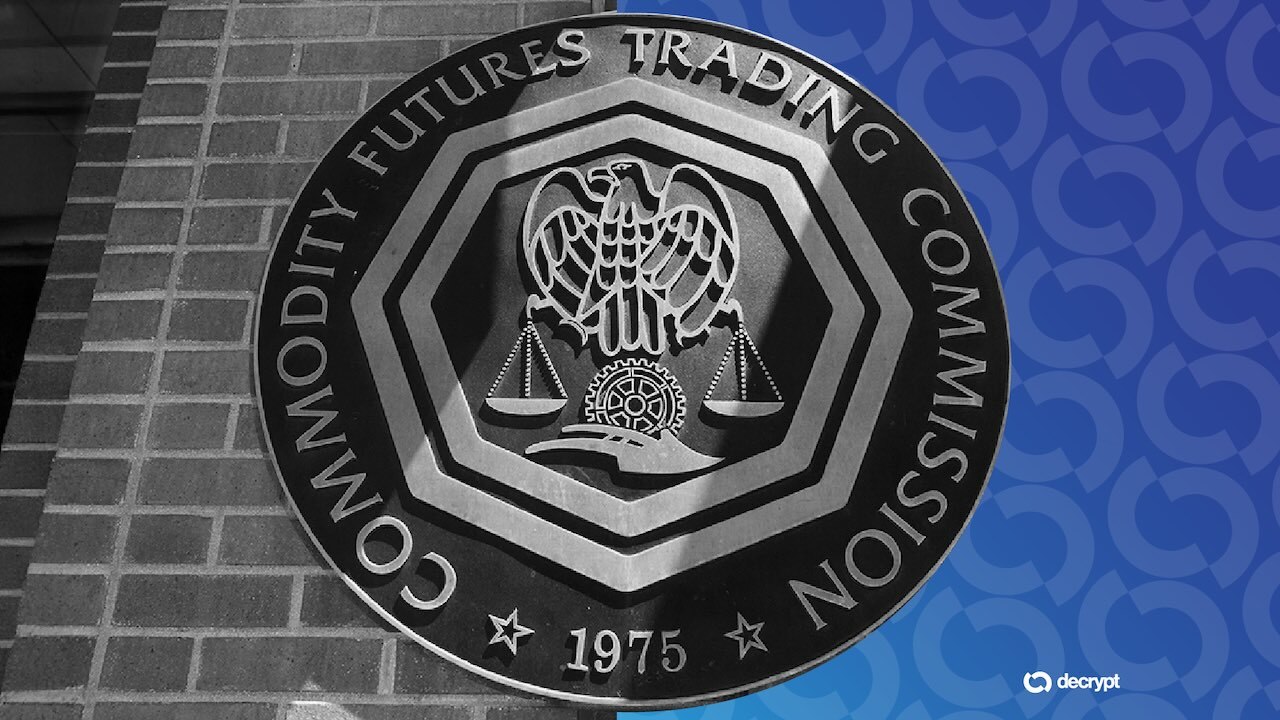
KuCoin operator Peken Global has been permanently barred from serving U.S. users unless registered, following a $500,000 CFTC settlement and a prior guilty plea to operating an unlicensed money transmitting business. The regulatory action against KuCoin, including a two-year exit from the U.S. market, signals increased enforcement and compliance scrutiny for centralized exchanges operating without proper registration. This development, coupled with the CFTC's recent coordination pact with the SEC and formation of an innovation task force, suggests a more aggressive regulatory stance towards crypto platforms in the U.S.

The shift towards social engineering as the primary attack vector, highlighted by the Kraken user's $18.2M loss, indicates a growing need for enhanced user education and personal security measures over protocol-level defenses. With wallet compromises and phishing accounting for over 80% of March's losses, the crypto market faces persistent threats to individual holdings, underscoring the importance of robust security practices for users and exchanges. Despite a significant year-on-year drop in Q1 losses, the underlying trend of substantial financial damage from exploits and scams suggests ongoing systemic risks within the DeFi and broader crypto ecosystem. The repeated use of THORChain as a laundering route for stolen funds points to the challenges in tracing and recovering assets in a permissionless cross-chain environment, impacting overall market confidence.

OpenFX's $94M Series A funding round signals significant investor confidence in stablecoin-based cross-border payment solutions, potentially driving adoption and infrastructure development in this niche. The expansion into Southeast Asia and Latin America by OpenFX, leveraging stablecoins for faster settlement, could create new market opportunities and pressure traditional FX services. While OpenFX highlights rapid settlement times, regulatory divergence across major markets presents a key hurdle that could temper the broader adoption of stablecoin-based payment infrastructure. The "ChatGPT moment" analogy for stablecoins suggests a potential inflection point for corporate crypto adoption, with significant implications for payment infrastructure providers like OpenFX.
Signal context only. Validate with price action, liquidity, and risk limits before taking a position.
