
Navigating Crypto News

CoinFeather
Navigating Crypto News

Quick market read from this story
The public feud between CZ and Star Xu, reignited by CZ's memoir, centers on historical contract disputes and alleged forgery, potentially impacting the reputation of both Binance and OKX founders.
Xu's direct accusations of CZ being a 'habitual liar' and disputing specific claims from the memoir suggest a prolonged and potentially damaging public relations battle for the involved parties.
While the dispute involves historical events and personal accusations, it touches upon past exchange operational issues like withdrawal halts, which could resurface concerns among users about exchange reliability.
Source, catalyst, and sector overlap from the latest feed.
Iran's consideration of Bitcoin tolls for ships transiting the Strait of Hormuz introduces a novel use case for cryptocurrency in international trade and sanctions evasion. The reported $1 per barrel tariff in Bitcoin suggests a potential, albeit small-scale, demand driver for BTC, particularly if the geopolitical situation necessitates alternative payment rails. This development highlights the growing role of digital assets in circumventing traditional financial systems and sanctions, potentially influencing future geopolitical payment strategies.
Live Feed
Loading the broader stream in the same flow as the homepage feed.

Proposed U.S. Treasury regulations mandate stablecoin issuers implement robust anti-illicit finance controls, mirroring traditional financial institutions. These rules, stemming from the GENIUS Act, aim to enhance transaction monitoring and compliance with the Bank Secrecy Act, potentially increasing operational costs for stablecoin firms. The Treasury's approach emphasizes industry self-assessment of risks, suggesting a balance between regulatory oversight and operational autonomy for stablecoin issuers. The proposed framework is designed to protect the U.S. financial system from national security threats while seeking to avoid hindering innovation in the stablecoin ecosystem.
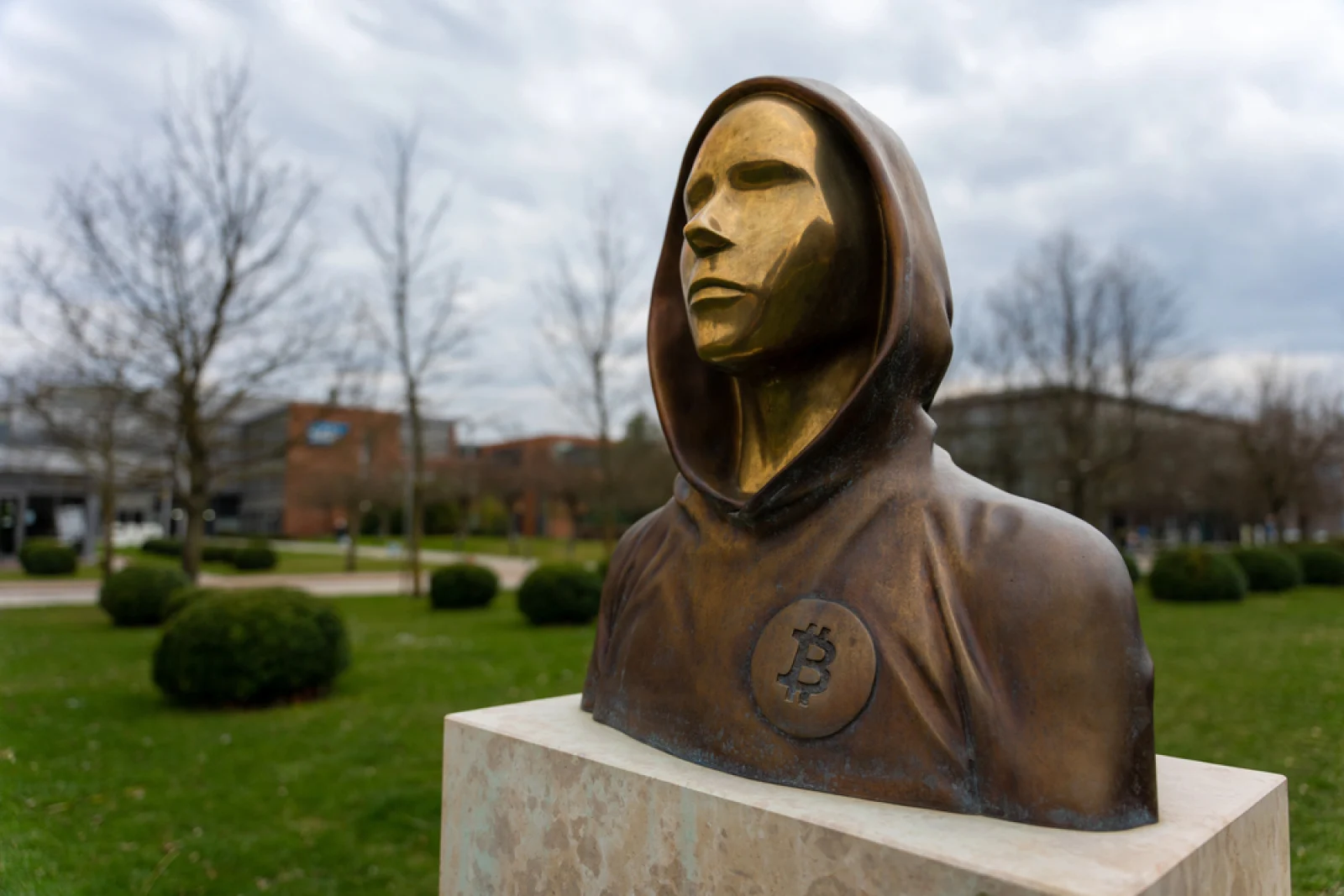
Adam Back has again denied being Satoshi Nakamoto, emphasizing that Bitcoin's creation was a synthesis of existing cryptographic concepts rather than a singular invention. Back's assertion that Bitcoin's anonymity as a creator is a strength, not a weakness, reinforces the narrative of its decentralized and autonomous nature, which is a core tenet for its market perception. The repeated discussion around Satoshi's identity, even with denials, highlights persistent market interest in Bitcoin's origins, though this specific development offers no direct trading catalyst.
Solana price hovers near key levels as ETF outflows hit markets, with $76 support and $90 resistance shaping the next move.

Key Takeaways US-Iran ceasefire drove ETH from $2,060 to $2,280 on April 8. Taker buy ratio rising structurally for four […] The post ETH Taker Ratio Turns Bullish: Institutions Already Left appeared first on Coindoo.

Iran's reported plan to charge oil tankers a Bitcoin toll for passage through the Strait of Hormuz introduces a novel use case for crypto as a sanctions-resistant trade infrastructure. The development signifies Bitcoin's potential role as a settlement instrument in geopolitical chokepoints, moving beyond speculative or ideological adoption narratives. While Bitcoin's traceability is a weaker point than claimed, its ability to bypass conventional banking rails makes it a plausible tool for sanctioned entities facing urgent trade needs. The market will closely watch for confirmation of actual BTC settlement versus potential use of stablecoins or other crypto assets, indicating a broader trend of digital assets facilitating trade under sanctions.

The post Coinbase Stock Price Faces Resistance Despite Securing Crypto AFSL appeared first on Coinpedia Fintech News Coinbase stock price teased a bullish spike but then hesitated at the worst possible moment. The recent move up toward $189 looked promising, especially coming off that February support zone around $140–$160. That area isn’t random either as it lines up with a two-year-old demand zone. So naturally, buyers showed up. But let’s not get …
Bittensor (TAO) is testing a critical resistance zone around $350-$360, with indicators showing weakening momentum and money flow despite a bullish price structure. The divergence between rising price and cooling Open Interest suggests the recent rally may be driven by short covering rather than sustained spot demand, increasing the risk of rejection. A decisive break above $380 is required for TAO to confirm a bullish continuation and target higher levels, while failure to do so could lead to a pullback towards $300 or $260. Traders should monitor the $350-$360 resistance and the $380 confirmation level for potential short-term trading opportunities, with caution advised due to conflicting on-chain signals.

Bitcoin's price recovery above $70,000, driven by geopolitical news, is tempered by persistently high leveraged long positions on Bitfinex, suggesting underlying market caution and potential for unwinding. Elevated leveraged long positions, historically a contrarian indicator, signal that market participants may not fully price in the rally's sustainability, creating a risk of sharp pullbacks if sentiment shifts. Muted U.S. institutional demand, indicated by the fluctuating Coinbase Bitcoin Premium Index, raises questions about the current rally's fundamental support and its long-term viability.

The MOODENG meme coin experienced a short-term price increase driven by mainstream media attention on a viral event, a common pattern for low-utility tokens. Despite the recent 6% rise, MOODENG remains significantly below its all-time high, indicating a lack of sustained fundamental value or market momentum. The broader crypto market's upward trend, influenced by macroeconomic factors, also contributed to MOODENG's performance, suggesting its gains are not solely event-driven.
A significant 3,230% surge in Shiba Inu's token burn rate, removing over 4.1 million SHIB, indicates increased holder conviction and a deliberate effort to reduce supply. While the dollar value of burned tokens is minimal ($24), the dramatic percentage increase in burn activity signals a potential positive shift in scarcity dynamics for SHIB. The price increase of 3.60% to $0.00000604 coincides with the burn surge and a broader crypto market recovery, suggesting a confluence of factors supporting SHIB's recent upward movement. Consistent token burning is crucial for Shiba Inu's long-term scarcity narrative, making this accelerated burn rate a key development for holders focused on supply reduction.

The post Polygon Labs Eyes $100 Million to Launch Stablecoin Payments appeared first on Coinpedia Fintech News Polygon Labs is in early talks to raise up to $100 million to scale a regulated stablecoin payments business, shifting its focus from generic blockchain support to real‑world money movement that boosts on‑chain transaction volume. The push builds on its recent acquisitions of licensed U.S. payment and wallet firms Coinme and Sequence, aiming to integrate fiat …

Pharos Network secured a significant $44 million Series A funding round at a $1 billion valuation, signaling strong investor confidence in its RWA-focused Layer 1 blockchain ahead of its mainnet launch. The substantial funding and high valuation underscore growing institutional interest in tokenizing traditional assets, positioning Pharos to capture a share of the projected $50 trillion RWA market. With a mainnet debut imminent and a focus on regulated financial activity, Pharos is poised to become a key infrastructure provider in the expanding RWA sector, potentially driving adoption and integration.
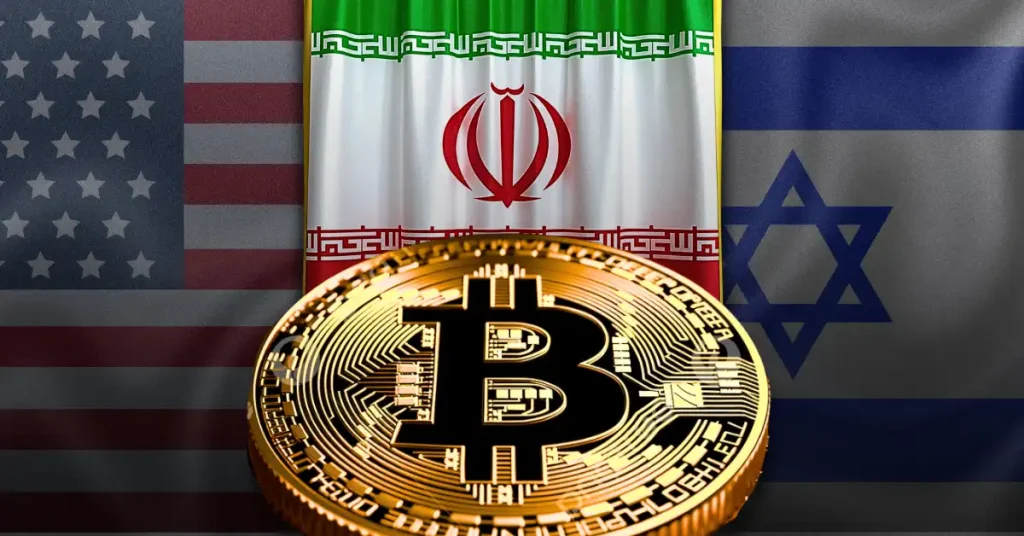
Iran's proposal to collect Bitcoin fees for oil tankers passing through the Strait of Hormuz represents a novel application of cryptocurrency in international trade and sanctions circumvention. This development could signal a growing trend of nation-states exploring digital assets for payment mechanisms, potentially impacting demand for cryptocurrencies like Bitcoin and stablecoins in specific geopolitical contexts. The stated purpose of monitoring ship movements and preventing weapons transfers suggests a dual-use case for blockchain technology beyond simple financial transactions, warranting observation for further implications.
Signal context only. Validate with price action, liquidity, and risk limits before taking a position.
Bitcoin briefly surged to three-week highs on news of a US-Iran ceasefire, but failed to sustain the momentum above $72,000, indicating that the market is quickly discounting geopolitical relief. The failure to hold higher levels suggests that while geopolitical events can provide short-term catalysts, underlying market sentiment and technical levels remain critical for sustained price action. Upcoming US inflation reports are highlighted as a key driver for future volatility, suggesting that macroeconomic data will likely overshadow geopolitical news in the near term for BTC price direction.
