
Navigating Crypto News

CoinFeather
Navigating Crypto News
Quick market read from this story
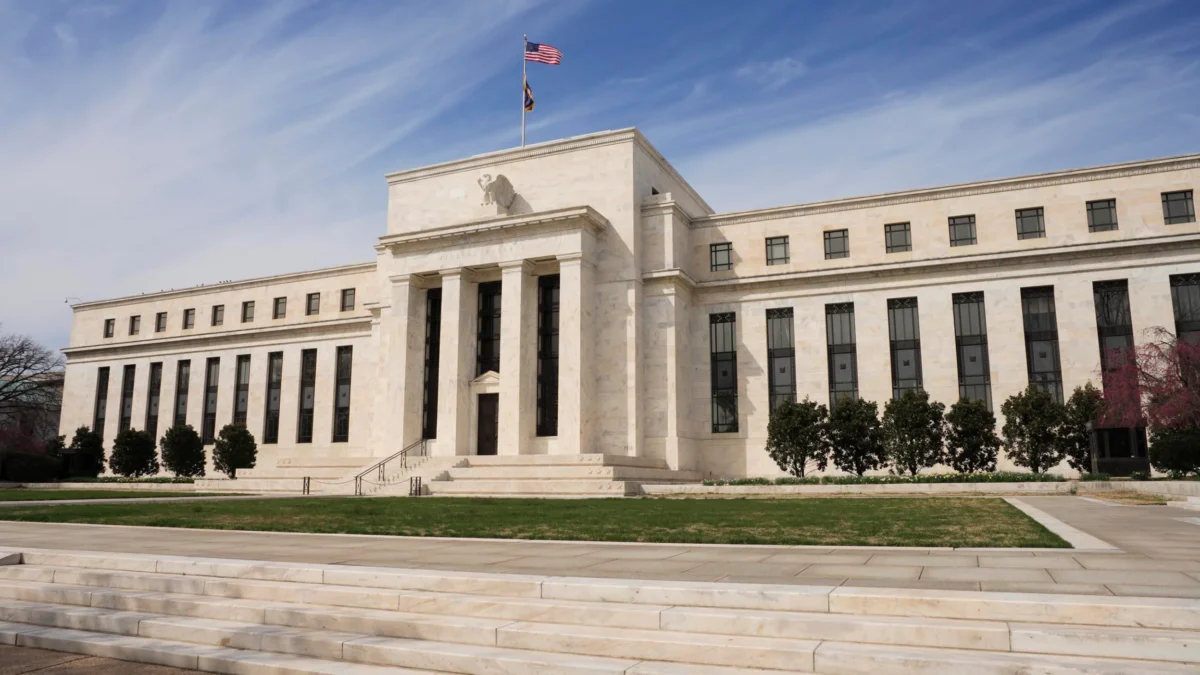
The federal appeals court ruling denying Custodia Bank a master account signifies a significant hurdle for crypto firms seeking direct access to U.S. payment systems, reinforcing the Federal Reserve's discretion.
Despite Custodia's loss, the concurrent granting of a limited master account to Kraken suggests a potential shift in the Fed's approach, possibly favoring 'skinny' accounts for crypto-native entities.
Legislative efforts in the Senate, such as the FIRM Act, aim to introduce greater transparency and objective criteria for master account applications, potentially altering future regulatory outcomes for crypto banks.
The ongoing legal and legislative battles highlight the persistent challenges crypto firms face in integrating with traditional financial infrastructure, indicating continued regulatory uncertainty.
Deep Dive
A federal appeals court has delivered a significant defeat to Custodia Bank, a Wyoming-based crypto lender, ruling that the Federal Reserve has broad discretion to deny banks direct access to the U.S. payment system. The U.S. Court of Appeals for the 10th Circuit voted 7-3 to deny Custodia Bank a rehearing, effectively ending its five-year legal battle to obtain a master account with the Federal Reserve. This decision upholds a previous ruling from October 2025, which stated the Fed is not obligated to grant access to all eligible banks and can deny applications with minimal explanation.
Custodia Bank initially applied for a master account in October 2020. These accounts, held at Federal Reserve Banks, are crucial for direct access to the U.S. payment infrastructure, enabling seamless wire transfers and interbank settlements. Without a master account, banks must rely on partner institutions, increasing costs and operational friction. The Kansas City Fed rejected Custodia’s application in January 2023, citing the bank's substantial exposure to crypto assets. The recent appeals court ruling confirms this rejection and the Fed's right to make such decisions.
The ruling was not unanimous, with Judge Timothy Tymkovich leading a dissent joined by two other judges. The dissenting opinion argued that denying a master account effectively serves as a "death sentence" for a bank, making operations nearly impossible. Judge Tymkovich warned that the majority decision grants unelected Federal Reserve officials excessive power to veto state-chartered banks, undermining the U.S. dual banking system. This dissent raises potential constitutional questions regarding administrative overreach that could be considered by the Supreme Court.
Adding complexity to the situation, just nine days before Custodia's case was effectively closed, the same Kansas City Fed granted Kraken Financial, another Wyoming-chartered crypto firm, a limited master account. This marked the first time a crypto-native company received such access. However, Kraken's account is restricted, providing access only to the Fedwire payment network without features like emergency lending or interest on reserves, and is structured as a one-year pilot. This development follows Fed Governor Christopher Waller's efforts to create a
Source, catalyst, and sector overlap from the latest feed.
Michael Saylor's continued emphasis on Bitcoin accumulation via Strategy signals a persistent institutional demand, reinforcing the asset's role as a treasury reserve. Strategy's ongoing accumulation, despite being slightly underwater on its average purchase price, highlights a long-term conviction that may influence market sentiment and supply dynamics. The company's substantial BTC holdings and consistent purchasing strategy serve as a proxy for institutional adoption, potentially driving broader market narratives and investor confidence.
Ethereum faces immediate resistance at $2.1K and support at $1.8K, indicating a short-term consolidation phase driven by supply dynamics. The upcoming Glamsterdam upgrade in H1 2026 is a significant medium-term catalyst, promising a 78% reduction in gas fees and a substantial increase in TPS to 10,000 on L1, which could fundamentally alter Ethereum's utility and attract institutional interest. Despite current price stagnation, the market appears to be underpricing the potential impact of the Glamsterdam upgrade, suggesting a potential for future repricing if development proceeds on schedule.
Former UK Prime Minister Boris Johnson's 'Ponzi scheme' accusation against Bitcoin, while drawing industry backlash, highlights the persistent narrative battle between crypto skeptics and proponents. The debate underscores the differing views on Bitcoin's value proposition, with critics focusing on speculative risk and proponents emphasizing its decentralized nature, fixed supply, and growing adoption. Despite the controversy, Bitcoin's price action remains muted, suggesting that broader adoption trends and institutional interest are currently outweighing political commentary in market sentiment. The discussion around Bitcoin's scarcity, highlighted by the 20 millionth coin mined, contrasts sharply with Johnson's view, reinforcing the asset's inflation-resistant narrative for its supporters.
The Ethereum Foundation's sale of 5,000 ETH via OTC to BitMine Immersion Technologies for $10.2M, while executed at a discount to market price, signals a strategic move to fund ongoing development and ecosystem grants rather than an immediate bearish signal for ETH. The Foundation's treasury management strategy, balancing ETH holdings with fiat liquidity and now an expanded staking program, indicates a focus on long-term sustainability and operational runway, supporting a neutral to cautiously optimistic outlook for ETH. Despite the sale, Ethereum's price stability above $2,090 and neutral technical indicators suggest a market in consolidation, awaiting clearer catalysts rather than reacting strongly to this specific treasury action.
Bitcoin's recent underperformance relative to gold, with a 5-year return of ~73% versus gold's ~164%, challenges its 'digital gold' narrative and suggests it may be behaving more like a risk asset than a safe haven in many macro scenarios. While Bitcoin showed some safe-haven characteristics during the Iran conflict by moving independently of equities, its broader correlation with tech stocks during tariff shocks indicates a nuanced and context-dependent role as a safe asset. A fractal analysis comparing Bitcoin's current price structure to gold in 1974 suggests a potential parabolic move to $226K if key support at $62K holds, but a breakdown below this level could signal further downside before any significant recovery. The market sentiment, reflected in Polymarket probabilities, favors gold over Bitcoin as the best-performing asset in 2026, underscoring current caution and the need for Bitcoin to prove its resilience against persistent macro headwinds like inflation and geopolitical instability.
The CFTC's proactive stance on insider trading in prediction markets signals a significant regulatory shift, potentially impacting the operational integrity and market design of these platforms. The rapid growth of event contracts necessitates stricter oversight, suggesting that platforms focusing on narrow, single-actor markets may face increased scrutiny or restrictions. The CFTC's rulemaking process could redefine prediction markets as either derivatives or gambling-adjacent products, influencing their integration into mainstream finance and consumer protection frameworks. The potential for regulatory fragmentation between federal and state authorities poses a risk to market expansion, with a single major scandal capable of triggering severe restrictions across the sector.
The European Central Bank's decision to accept tokenized securities as collateral from March 30th signifies a major step in integrating DLT into traditional finance, potentially increasing demand for compliant blockchain infrastructure. While not directly adopting XRP or the public XRP Ledger, the ECB's framework leverages XRPL-derived open-source technology via Axiology, highlighting the growing influence of blockchain innovations in regulated financial markets. This development validates the tokenization of assets, particularly in areas where XRPL has shown strength like tokenized commodities and US Treasuries, suggesting a broader trend towards digital asset adoption in institutional finance.
Regulatory ambiguity surrounding stablecoin classification is hindering traditional banks' ability to deploy digital asset infrastructure, creating an advantage for crypto-native firms. The significant yield gap between stablecoin platforms (4-5%) and traditional bank accounts (<0.5%) poses a risk of deposit migration, potentially accelerating as digital asset comfort grows among users. Attempts to restrict stablecoin yields could inadvertently push capital towards less regulated offshore structures and synthetic dollar tokens, undermining regulatory goals. While not yet critical, the competitive pressure from stablecoins on bank deposits is expected to increase, especially for corporate and globally active clients seeking higher yields.
The US CLARITY Act faces a significantly reduced chance of passing in 2026 if not approved by committee before the end of April, indicating a critical window for regulatory progress. Potential hurdles beyond stablecoin rewards, including DeFi, developer protections, and regulatory authority, suggest that even if the current debate is resolved, further obstacles could delay or derail the bill's passage. The diminishing timeline and potential for further legislative roadblocks imply a prolonged period of regulatory uncertainty for the crypto market, which could impact investment and development.
Tether's reported $10 billion profit in 2025, backed by $122 billion in U.S. Treasuries, signals strong financial health and operational capacity. The launch of the USAT stablecoin and increased U.S. market focus, alongside enhanced lobbying efforts, indicates Tether's strategic pivot towards regulatory compliance and U.S. investor engagement. Tether's diversification into AI, energy, and media, coupled with its significant treasury holdings, positions it as a hybrid tech and investment firm, potentially influencing broader market dynamics beyond stablecoins.
The emergence of AI agents capable of autonomous, high-frequency, low-value transactions presents a structural challenge to traditional payment networks like Visa and Mastercard, potentially driving significant adoption of stablecoins for machine-to-machine economies. Coinbase's x402 protocol, designed for seamless stablecoin integration into HTTP requests, is positioned to capitalize on the predicted surge in AI agent-driven payments, although current adoption remains nascent. While traditional payment giants like Visa and Mastercard are developing their own AI agent protocols, the economic efficiency of blockchain-based micropayments for AI tasks suggests a potential bifurcation in payment infrastructure.
Ethereum's price breach above $2,100 signals returning market confidence, potentially boosting ecosystem projects focused on real-world utility like Remittix. Remittix's successful $29.7 million funding round and the launch of its mobile wallet indicate strong investor interest in PayFi solutions that bridge crypto with traditional finance. The combination of Ethereum's upward momentum and Remittix's fundamental developments positions it as a potential high-growth altcoin, with analysts suggesting 40-50x returns in 2026 if the rally continues. The article highlights a shift towards utility-driven crypto projects, with Remittix aiming to solve payment friction by connecting crypto assets to fiat bank accounts globally.
Autonomous AI agents are increasingly trading on prediction markets like Polymarket, offering retail users a 24/7 strategy-driven edge against human traders. Valory's Olas protocol aims to build an 'agent economy' where AI agents perform tasks and generate value, with prediction markets serving as an initial use case for demonstrating AI's predictive and trading capabilities. AI agents demonstrate a higher positive P&L rate than human traders on prediction markets, suggesting a potential shift in market dynamics and the need for human participants to adapt or collaborate with AI. The development of user-owned AI agents in prediction markets could empower individuals in an increasingly automated economy, contrasting with centralized control scenarios.
Live Feed
Loading the broader stream in the same flow as the homepage feed.

The definition and arrival timeline of Artificial General Intelligence (AGI) remain highly debated among experts, indicating a lack of consensus that could impact long-term AI investment strategies. While current advanced AI models like ChatGPT and Gemini exhibit impressive capabilities, they are generally considered narrow AI, lacking the autonomy and broad task adaptability that defines true AGI. Predictions for AGI's arrival vary significantly, with some industry leaders like Elon Musk forecasting as early as 2026, while others emphasize the gradual evolution of AI capabilities rather than a distinct breakpoint. The focus on AGI in the US contrasts with China's approach, where companies prioritize practical applications and hardware development, suggesting differing market development trajectories for AI technologies.

XRP Ledger's significant increase in daily transactions to over 2.5 million suggests growing network utility, potentially signaling strengthening underlying fundamentals despite stagnant price action. XRP is consolidating near a key resistance level (26-day EMA), indicating a potential breakout or rejection scenario as market participants await a catalyst. The divergence between rising on-chain activity and stable price action could imply that the market is not yet fully pricing in the increased network usage, presenting a potential opportunity for observant traders.

XRP Ledger's upcoming integration of zero-knowledge proofs (ZKPs) and the XLS-372 standard signals a significant move towards enhanced privacy, potentially attracting institutional interest and addressing past criticisms of transparency. The development of a hybrid privacy model for XRP Ledger, allowing for selective disclosure to auditors, aims to balance user confidentiality with regulatory compliance, a crucial factor for broader adoption. XRP Ledger's expansion into AI integration, new stablecoins, FX markets, ETFs, and full smart contract programmability positions it to compete more directly with established DeFi platforms like Ethereum and Solana. The testing of quantum-resistant algorithms and derivative sidechains on XRP Alphanetwork indicates a forward-looking approach to security and advanced financial product development.

Increasing exchange inflows for SHIB, approaching an 81 trillion token threshold, suggest potential selling pressure that could hinder recovery efforts. Despite early consolidation signs, SHIB remains below key moving averages, indicating a bearish technical structure that requires overcoming resistance for a sustainable uptrend. The return of exchange inflows for SHIB presents a risk factor, as increased liquidity could lead to higher volatility and rapid sell-offs if momentum falters.

Despite a 58% drop in XRP trading volume, the asset has seen a price increase over the past week, suggesting a potential shift from speculative trading to accumulation as demand signs emerge. The tightening Bollinger Bands on XRP's daily chart indicate decreasing volatility, often preceding a significant directional move once market liquidity improves. While XRP ETFs have experienced recent outflows, a return of positive inflows could act as a catalyst for renewed demand and price appreciation, though broader market sentiment remains a key factor. A near threefold increase in daily XRP transactions, reaching almost 3 million, signals growing network activity and potential underlying demand that could support price recovery.

The cryptocurrency market is experiencing an unusually prolonged period of 'Extreme Fear' for 45 consecutive days, indicating significant investor caution and risk aversion. Despite recent price recoveries, Bitcoin remains below key long-term resistance levels, suggesting continued uncertainty and potential for erratic price action until these levels are reclaimed. Prolonged extreme fear, historically, can precede periods of significant accumulation as speculative capital exits the market, presenting potential long-term buying opportunities for contrarian investors. The current market sentiment, characterized by fear and declining liquidity, is particularly impacting altcoins, reinforcing a defensive market phase rather than an immediate recovery.

Robert Kiyosaki reiterates his bullish stance on Bitcoin, viewing a potential market crash as a strategic buying opportunity for assets like BTC, gold, and silver. Despite recent controversy regarding his investment history, Kiyosaki's consistent advocacy for Bitcoin as a post-crash asset suggests a narrative that could influence retail investor sentiment. Kiyosaki's strategy of holding cash to "buy priceless assets" during a downturn highlights a contrarian approach to market volatility, positioning Bitcoin as a long-term store of value.
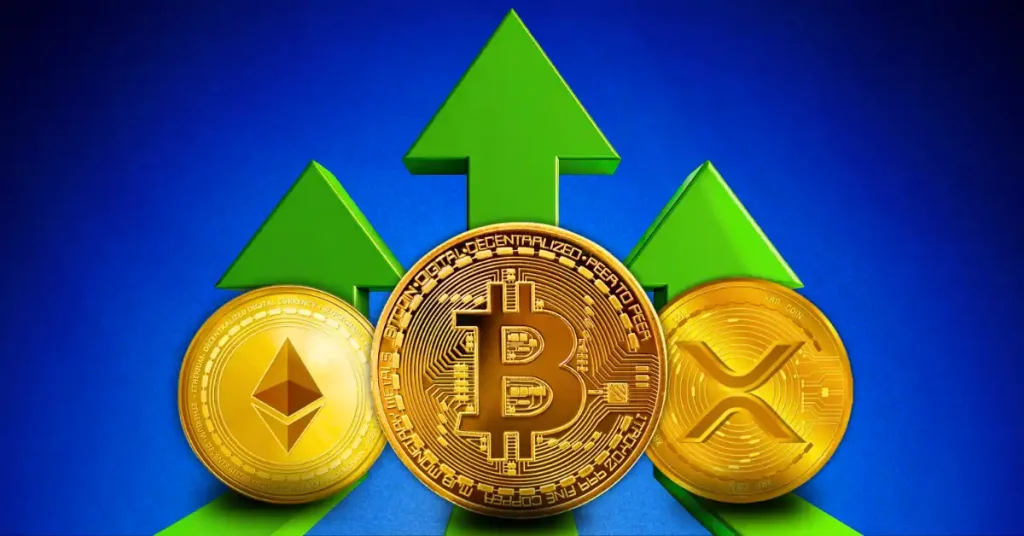
Gareth Soloway identifies a short-term bullish thesis for BTC, ETH, and XRP, projecting potential price targets of $80k-$85k for Bitcoin, $2,600 for Ethereum, and $1.80 for XRP based on technical chart patterns and relative strength against traditional markets. The analysis highlights Bitcoin's outperformance against the S&P 500, gold, and silver as a key indicator of potential near-term upside, suggesting a divergence that market participants should monitor closely. Despite the short-term bullish outlook, Soloway maintains a cautious midterm stance, anticipating a potential broader market drawdown that could impact Bitcoin's price negatively in the longer term.

The era of broad altcoin rallies appears to be over, with market dynamics shifting towards shorter, more volatile rotations driven by limited capital and institutional focus on large-cap assets and RWAs. Increased token supply and ETF liquidity absorption are diluting capital for altcoins, suggesting a future where only fundamentally strong or narrative-driven projects will see significant price appreciation. Traders should anticipate a market environment characterized by rapid sector-specific shifts rather than widespread altcoin performance, requiring a more tactical approach to asset selection. The significant capital outflow from altcoins and continued inflows into Bitcoin ETFs highlight a structural rotation favoring established assets and potentially tokenized real-world assets.
Dogecoin's active addresses have surged 176% to 114K, indicating a significant increase in network participation and potential for renewed bullish sentiment. The price is testing a key ascending support trendline near $0.095, with a successful hold potentially leading to a breakout towards the $0.10-$0.11 range. Elevated network activity combined with price action near a critical support level suggests growing trader interest and a potential for near-term volatility.
Signal context only. Validate with price action, liquidity, and risk limits before taking a position.
