
Navigating Crypto News

CoinFeather
Navigating Crypto News

Quick market read from this story
Crypto.com's workforce reduction of 12% signals a strategic pivot towards AI-driven efficiency, mirroring trends seen in other tech firms and potentially impacting operational costs and future development focus.
The company's significant investment in ai.com and CEO's strong stance on AI integration suggest a long-term commitment to leveraging artificial intelligence for competitive advantage, which could redefine its service offerings and operational model.
This move, alongside similar layoffs at Block and OKX, highlights a broader industry trend of optimizing operations through automation and AI, potentially leading to a more streamlined and cost-efficient crypto exchange landscape.
Deep Dive
Crypto.com, a prominent Singapore-based cryptocurrency exchange, has announced a significant workforce reduction, laying off approximately 12% of its staff, which amounts to about 180 employees. This move is part of a broader strategy to integrate artificial intelligence (AI) across the business to drive efficiencies and prioritize resources in key growth areas.
The exchange's CEO, Kris Marszalek, emphasized the critical need for companies to adopt AI, stating that those who do not pivot towards AI integration will ultimately fail. He believes that pairing advanced AI tools with top performers will enable an unprecedented level of scale and precision. This strategic shift was further underscored by Crypto.com's recent $70 million acquisition of ai.com in February, signaling a strong commitment to the burgeoning AI sector, which saw worldwide spending reach nearly $1.5 trillion in 2025.
Crypto.com's decision aligns with a wider trend in the tech and crypto industries. Prior to these cuts, the exchange had approximately 1,500 employees globally. This is not the first time Crypto.com has undergone workforce reductions; the company previously trimmed its staff by 20% in 2023 and has conducted other layoffs in recent years due to market shifts and restructuring. Other major players, such as Block, have also reduced their workforces, citing AI-enabled productivity gains as a primary reason. OKX and Polygon have also undergone restructuring and layoffs in early 2026.
In 2025, Crypto.com reported 100 million registered accounts and approximately $750 billion in trading volume. The exchange also recently secured conditional approval from the U.S. Office of the Comptroller of the Currency (OCC) to establish a national trust bank, a move that will allow it to expand its custody services under federal oversight.
Source, catalyst, and sector overlap from the latest feed.
The CoinDesk 20 Index experienced a 1.6% decline, indicating a broad market downturn driven by underperforming assets like NEAR and HBAR. NEAR Protocol's 3.3% drop and Hedera's 2.9% decline highlight specific project weaknesses within the broader market index. With only two out of twenty assets showing gains, the performance update suggests a prevailing bearish sentiment across the tracked digital assets.
Opera's proposed acquisition of 160 million CELO tokens signifies a strategic shift towards becoming a key stakeholder in the Celo payments network, potentially increasing demand and ecosystem engagement. The move, which represents a substantial portion of Celo's circulating and maximum supply, could be interpreted as a strong vote of confidence in Celo's long-term viability and its MiniPay application's growth, especially given CELO's current low valuation. While the proposal aims to solidify Opera's commitment, the governance cap on voting power suggests a balanced approach to integration, mitigating concerns about concentrated control while still rewarding a significant investment.
Evernorth Holdings disclosed a significant $233.7 million digital asset impairment, highlighting the substantial unrealized losses on its XRP holdings acquired at higher prices. The company's proactive treasury management strategy, including DeFi activities and options strategies, suggests an attempt to generate yield and offset losses on its large XRP position. The disclosure of 473.1 million XRP holdings, partly contributed by Ripple, provides transparency into a major XRP treasury and its potential market impact.
OpNet's mainnet launch enables native DeFi on Bitcoin Layer 1, potentially unlocking significant yield opportunities for BTC holders without leaving the network. The protocol's approach of embedding smart contract data into standard Bitcoin transactions bypasses the need for wrapped BTC or bridges, mitigating counterparty risks and custody issues. By leveraging Bitcoin's inherent 'slowness' and higher fees during congestion, OpNet aims to foster stickier liquidity and more durable DeFi cycles, contrasting with faster, more volatile chains. The introduction of the OP-20 standard and upcoming stablecoin integration signal a move towards a more comprehensive Bitcoin-native DeFi ecosystem, potentially attracting new capital and use cases.
Proposed regulatory changes in the U.S. targeting stablecoin yields could impact Coinbase's revenue streams, but analysts suggest the exchange can adapt through 'rewards' loopholes, mitigating existential threats. While the CLARITY Act aims to restrict direct interest payments on stablecoins, the language may permit alternative incentive structures like rebates or loyalty programs, allowing firms to retain user engagement and revenue. Coinbase's stablecoin revenue, which grew significantly in 2025, is a key growth area, but its overall business model is diversified, suggesting that regulatory shifts on yield, while impactful, are unlikely to be catastrophic. The ongoing debate highlights the tension between regulatory oversight and maintaining the competitiveness of U.S. stablecoins globally, with potential workarounds indicating a dynamic adaptation within the crypto industry.
Evernorth's planned Nasdaq listing via SPAC, backed by significant institutional funding including Ripple and SBI Holdings, aims to create a regulated XRP treasury, potentially unlocking new avenues for institutional XRP exposure. The development leverages recent regulatory clarity classifying XRP as a commodity, which could reduce perceived risk and encourage broader adoption of XRP-related financial products. While the SPAC merger and treasury strategy are positive developments, XRP's price action remains constrained below key resistance levels, suggesting that market sentiment is still cautious despite fundamental and regulatory improvements.
Grayscale's Head of Research indicates that regulated products like ETFs are opening doors for institutional allocation into XRP, signaling a maturing market beyond Bitcoin and Ethereum. Growing client demand for XRP from financial advisors, as reported by Grayscale, suggests increasing institutional interest in diversifying portfolios beyond top-tier cryptocurrencies. The development of XRP ETFs and increased advisor interest implies a potential for broader adoption and price discovery as institutional capital flows into the asset.
Canada's FINTRAC has significantly increased its enforcement actions by revoking 47 crypto-related firm registrations in 2026, signaling a heightened regulatory environment. The intensified crackdown, driven by concerns over money laundering and fraud, suggests increased compliance pressure on crypto exchanges, payment services, and ATMs operating within or serving Canada. This regulatory tightening by Canadian authorities indicates a broader trend of global regulators increasing scrutiny on virtual asset platforms to align with traditional financial compliance standards.
Crypto.com's decision to cut 12% of its workforce signals a strategic pivot towards AI integration, potentially impacting operational efficiency and future development focus. The layoffs at Crypto.com, mirroring trends in the broader tech and crypto sectors, highlight a significant industry-wide shift prioritizing AI capabilities over traditional roles. While the direct impact on Crypto.com's token is not specified, the company's aggressive AI push and associated restructuring could influence its long-term market positioning and investor sentiment.
The article argues that the era of traditional crypto listings and on-ramps is ending, as intent-based protocols are making access native to networks, potentially disrupting existing gatekeeper models. This shift implies a structural change where access is enforced by the network itself rather than granted by intermediaries, which could lead to a redistribution of value and leverage away from platforms towards protocols. The transition to native access is described as a quiet but irreversible structural change, suggesting that while it may not be marked by singular events, it will fundamentally alter the crypto ecosystem's economics and distribution dynamics.
Live Feed
Loading the broader stream in the same flow as the homepage feed.
Find out what analysts expect for PulseChain in 2026, with realistic price forecasts, token supply insights, and long-term market outlook.
Bitcoin's recent pullback below $70,000 is directly linked to stronger-than-expected US inflation data, signaling that persistent price pressures may delay anticipated Federal Reserve rate cuts. The shift in market expectations away from near-term monetary easing removes a key bullish driver for risk assets like Bitcoin, increasing sensitivity to macroeconomic signals. Profit-taking by short-term holders, evidenced by significant BTC realized profits near $75,000, combined with macro headwinds, is contributing to downside pressure on Bitcoin. Bitcoin's ability to hold above the 200-week EMA near $68,350 is now a critical technical support level, with a failure to maintain this could accelerate further price declines.
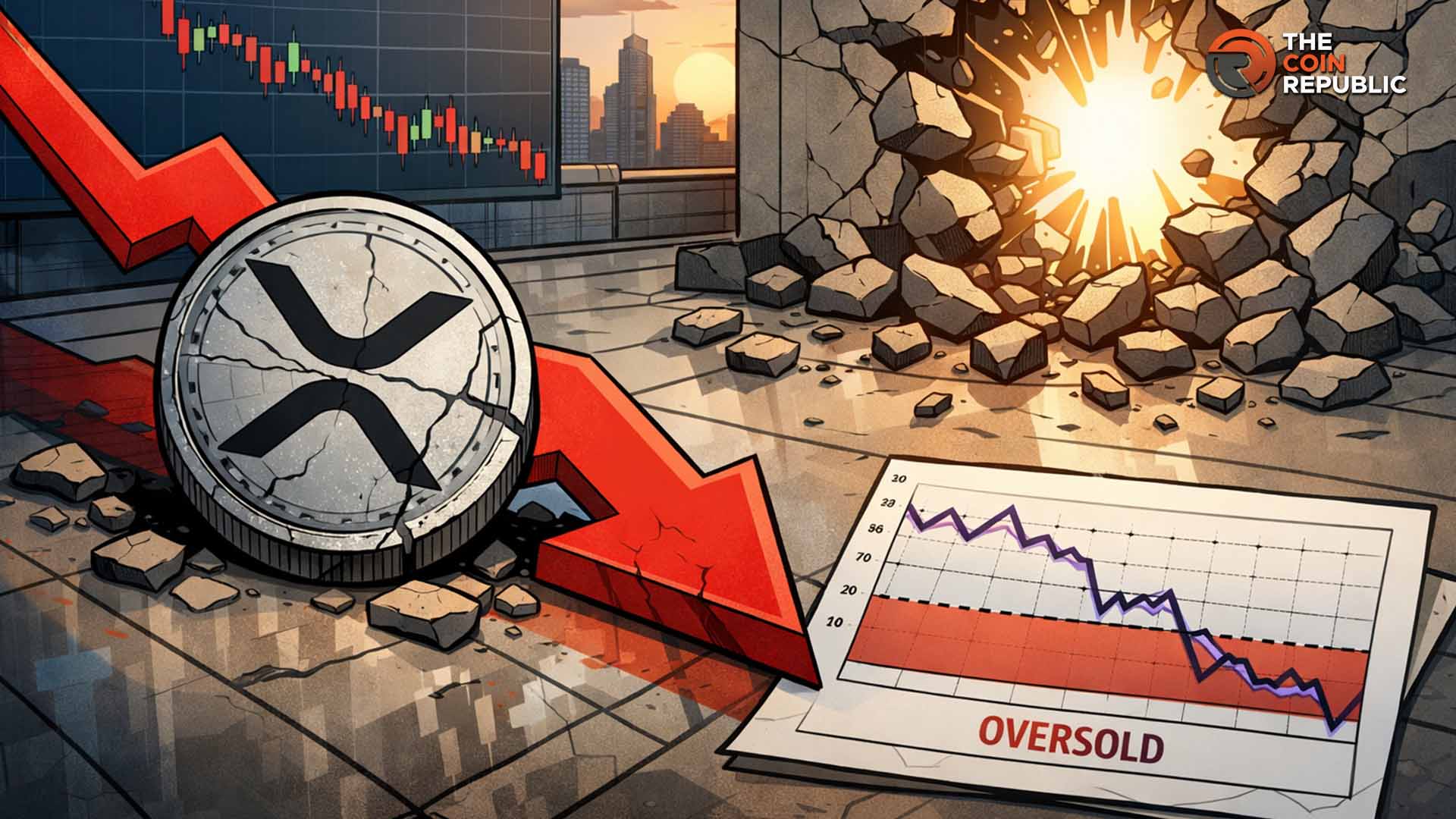
XRP's RSI hitting 2022 bear market lows suggests extreme oversold conditions, historically a precursor to potential reversals, warranting trader attention for momentum shifts. Despite zero daily XRP ETF inflows, the substantial cumulative $1.21 billion indicates sustained institutional interest, with current flat flows likely reflecting market observation rather than disinterest. The surge in XRP Ledger transactions to nearly 3 million daily, coupled with Evernorth's $1 billion XRP treasury plan, signals increasing network utility and growing institutional adoption within the XRP ecosystem. The confluence of technical oversold signals and fundamental on-chain activity growth, alongside institutional treasury plans, presents a potentially bullish setup for XRP if broader market sentiment turns positive.
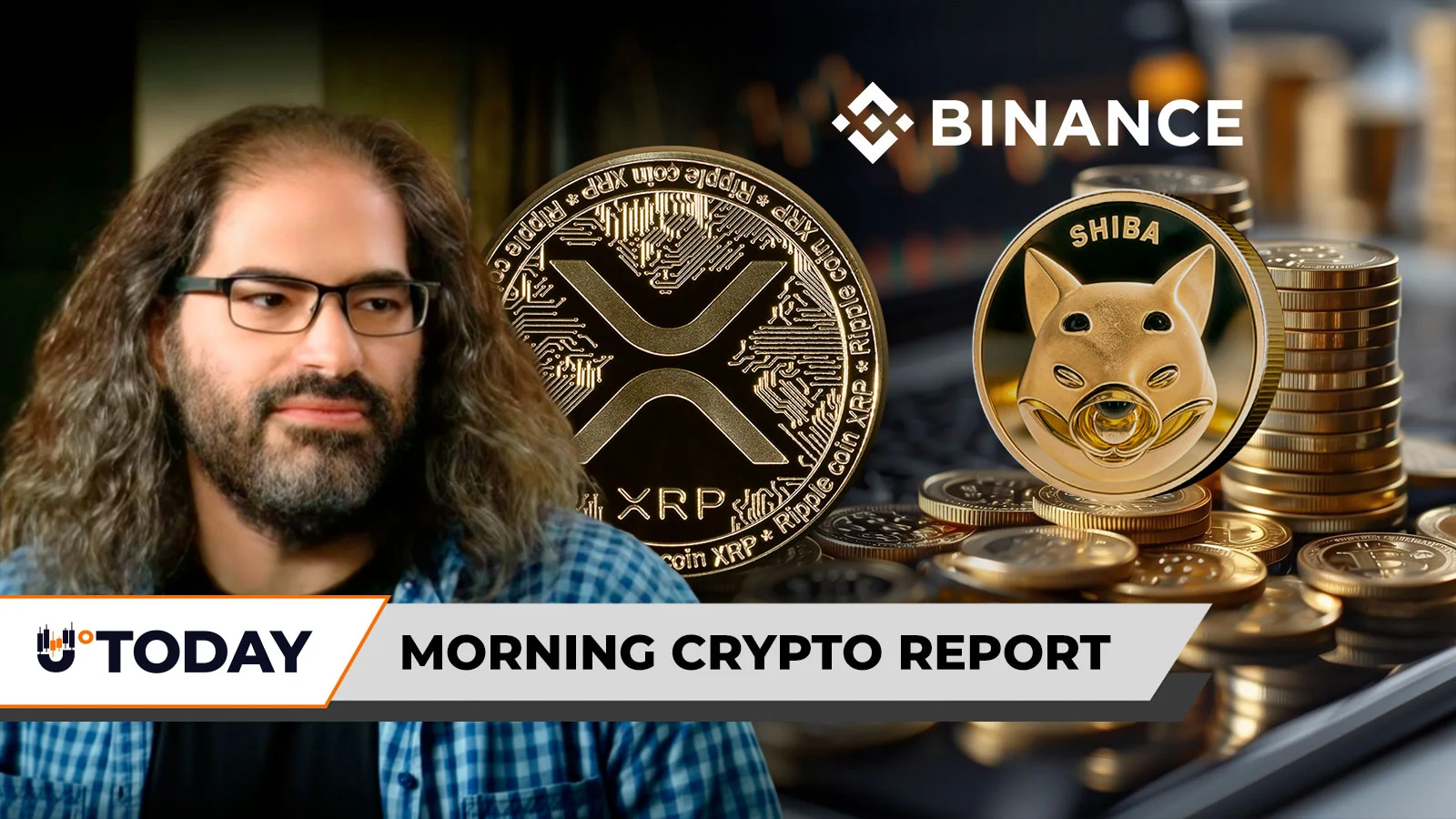
Ripple's CTO Emeritus David Schwartz hinted at a potential euro stablecoin launch, signaled by his social media post of the 'Eurion constellation,' which could expand Ripple's presence in the EU following its EMI license acquisition. Despite hawkish Fed signals, top Binance traders are accumulating Shiba Inu (SHIB), with whale sentiment showing a strong Long/Short ratio, suggesting a bullish outlook near the $0.00000570 support level. Analyst Benjamin Cowen warns that Bitcoin may underperform gold by up to 30%, indicating a potential shift in risk appetite away from BTC towards traditional safe-haven assets in the near term. The crypto market is transitioning from retail-driven euphoria to institutional accumulation post-FOMC, with analysts anticipating the second half of 2026 for the next major bull cycle, contingent on macro stability.

OP_NET has launched a “SlowFi” DeFi stack that runs smart contracts directly in standard Bitcoin transactions with BTC as the only gas asset, avoiding bridges and wrapped BTC.

Beyond immediate losses, attacks often lead to prolonged downtime, liquidity shocks and confidence erosion, as interconnected DeFi systems amplify the impact across markets.

Apex Group’s Tokeny and Polygon Labs are launching T-REX Ledger, a Polygon-based blockchain that aims to centralize compliance for ERC-3643 security tokens.

Cryptocurrency exchange Crypto.com is laying off around 180 employees as it shifts focus to AI-driven operations.

Shiba Inu continues to see growing demand, signaled by its negative exchange netflow, which stands at over -141 billion SHIB within 24 hours.
ICICI Bank's redemption of $800 million in debt under its GMTN program, including $16 million in interest, represents a significant financial maneuver that could impact its balance sheet and liquidity metrics. The market reaction, a 2.6% dip in ICICI Bank's share price, suggests investor concern over the substantial cash outflow, despite the bank's overall positive performance over the last five days. This debt redemption event, while primarily affecting traditional finance, highlights the financial health and debt management strategies of major banking institutions, which can indirectly influence investor confidence in broader financial markets.
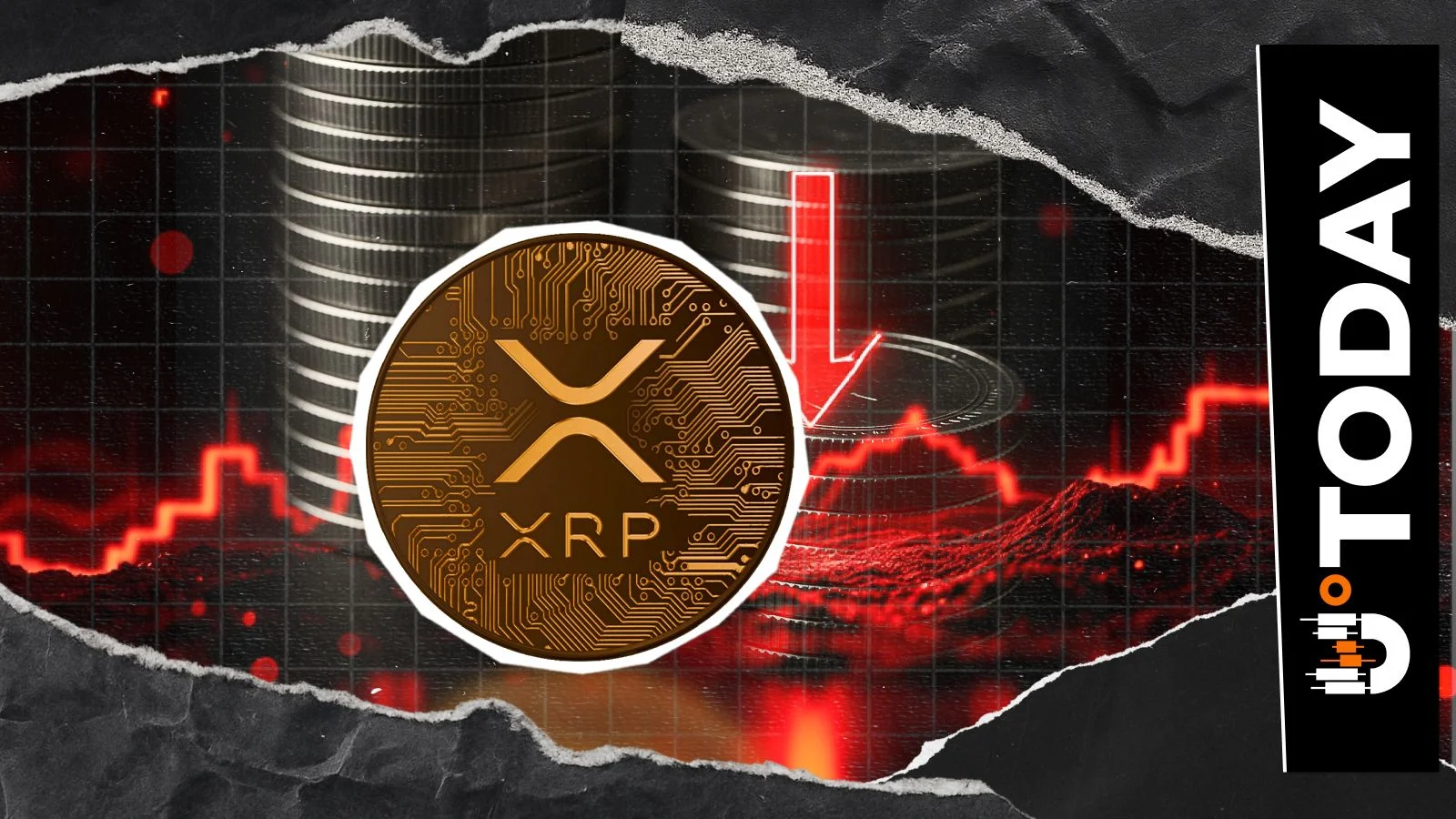
XRP death cross is confirmed on hourly chart as bears triggers a correction from $1.50.
Pi Network's Mainnet upgrade to Protocol 20 lays the groundwork for smart contract functionality, signaling a move towards building decentralized applications and DeFi platforms. Despite short-term price fluctuations, the analyst suggests focusing on Pi Network's underlying infrastructure development, indicating that current market price may not reflect the project's long-term utility building. The broader market context highlights a shift towards blockchain integration with traditional finance and other technologies like AI, suggesting that projects with real-world utility and user adoption will drive long-term value.
HDFC Bank's stock experienced a 4% decline following the resignation of its chairman due to ethical concerns, signaling potential governance issues that could impact investor confidence. The appointment of an interim chairman for a three-month period introduces a period of uncertainty for HDFC Bank's leadership, which may lead to continued stock volatility until a permanent successor is named. While the article focuses on a traditional banking entity, the underlying theme of ethical governance and leadership changes can serve as a cautionary tale for the crypto space, where transparency and trust are paramount.
Signal context only. Validate with price action, liquidity, and risk limits before taking a position.
