
Navigating Crypto News

CoinFeather
Navigating Crypto News

Quick market read from this story
Abra's planned public listing via SPAC at a $750 million valuation signals a maturing crypto infrastructure sector seeking traditional market integration.
The $300 million potential cash infusion will likely fuel Abra's expansion into institutional crypto lending, yield, and custody, potentially increasing competition in these areas.
Abra's strategic shift towards institutional and high-net-worth clients after regulatory challenges highlights a trend of crypto firms adapting to compliance requirements to access broader markets.
The planned Nasdaq listing under ticker ABRX provides a new avenue for traditional investors to gain exposure to crypto-related financial services, potentially driving demand for related assets.
Deep Dive
Crypto wealth platform Abra has announced plans to become a public company through a merger with special purpose acquisition company New Providence Acquisition Corp. III. The deal values the firm at $750 million. The combined entity will be renamed Abra Financial Inc. and is slated to list on Nasdaq under the ticker ABRX.
The transaction is expected to inject up to $300 million in cash from the SPAC's trust account, contingent on shareholder redemptions and deal expenses. These proceeds will be utilized to fuel product development, expand the company's team, and venture into new areas like tokenized real-world assets and decentralized finance. Abra aims to grow its assets under management from hundreds of millions to over $10 billion by 2027.
Founded in 2014 and headquartered in San Francisco, Abra offers a suite of services for crypto investors, including storage, trading of hundreds of tokens, yield generation, and borrowing against holdings. The platform caters to institutions, registered investment advisers, family offices, and high-net-worth individuals. Assets are held in segregated accounts called vaults, separate from the company's balance sheet. Abra operates as an SEC-registered investment adviser, positioning itself as a link between traditional wealth management and crypto markets.
Initially launched as a mobile crypto wallet and remittance app for retail users by CEO Bill Barhydt, Abra expanded into lending and yield products during the previous bull cycle. However, the company faced regulatory scrutiny, leading to settlements with U.S. state regulators and the SEC in 2023 and 2024 concerning unregistered lending and securities offerings. Consequently, Abra ceased its U.S. retail operations and shifted its focus to institutional and high-net-worth clients through its SEC-registered investment arm, Abra Capital Management.
Following regulatory challenges, Abra closed its U.S. retail business and returned funds to customers. The company then rebuilt its operations around institutional clients and high-net-worth individuals via its SEC-registered investment arm, Abra Capital Management. The proposed merger is subject to approval from shareholders and regulatory bodies before completion.
Source, catalyst, and sector overlap from the latest feed.
Bitcoin's surge above $74,000, nearing a 25% bounce from its February low, indicates a potential shift in market sentiment driven by easing geopolitical tensions and a renewed appetite for risk assets. The outperformance of altcoins like ETH and SOL suggests a broadening of the crypto market rally beyond Bitcoin, signaling increased risk-on behavior from investors. The correlation between crypto gains, U.S. equities, and easing oil prices highlights the market's sensitivity to macroeconomic factors and geopolitical stability. The significant AI infrastructure deal between Nebius and Meta, alongside funding for Bitcoin miners like TeraWulf, demonstrates underlying strength in related tech and infrastructure sectors, potentially benefiting crypto-adjacent companies.
Bitcoin's resilience during geopolitical turmoil, driven by institutional accumulation via ETFs and corporate treasuries like Strategy, signals a maturing asset class increasingly viewed as a hedge. The significant accumulation by Strategy and growing ETF holdings, now representing 6.1% of supply, indicate a structural shift in ownership favoring long-term holding and potentially reducing near-term sell pressure. While retail investors have been net sellers, the dominance of long-term holders and Bitcoin's outperformance against traditional assets suggest a growing narrative of 'digital gold' and a potential for sustained demand. For equity investors, MicroStrategy (MSTR) offers a high-beta exposure to Bitcoin's price action, currently trading at a discount to its NAV, presenting a potential arbitrage opportunity.
The CoinDesk 20 Index experienced a broad-based rally, with ETH and DOT leading gains, indicating positive sentiment across major altcoins within the index. The overall market performance, as reflected by the CoinDesk 20 Index's 5.1% rise with all constituents trading higher, suggests a short-term bullish trend or a recovery phase in the broader crypto market. While ETH and DOT showed strong performance, the laggards UNI and BCH also posted gains, implying a general market uplift rather than sector-specific strength.
Bitmine's significant ETH accumulation, totaling nearly 4.6 million tokens, signals strong conviction in Ethereum's long-term value despite current unrealized losses. The company's continued ETH purchases and substantial cash reserves of $1.2 billion indicate a robust financial position to capitalize on market opportunities. Tom Lee's commentary suggests a narrative where crypto, particularly Ethereum, is viewed as a growth asset outperforming traditional markets amid geopolitical uncertainty and inflation concerns. Bitmine's active ETH staking strategy generates substantial annualized revenue, enhancing its treasury's yield and potentially signaling a sustainable accumulation model.
Operation Atlantic represents a coordinated international effort to combat crypto approval-phishing scams, a significant threat that cost victims billions in 2025. The initiative highlights the increasing sophistication of crypto fraud, leveraging social engineering and AI, and underscores the challenges of recovering funds once compromised. This law enforcement action is unlikely to directly impact token prices but signals a growing focus on mitigating risks within the crypto ecosystem, potentially benefiting user confidence long-term. Past operations like Project Atlas and Operation Spincaster demonstrate the scale of these scams and the potential for international collaboration to disrupt illicit activities.
Short seller Culper Research's bearish thesis on Ethereum's tokenomics, citing impaired fee revenue post-Fusaka upgrade, introduces near-term headwinds and impacts sentiment. Despite negative sentiment from short sellers, the article highlights a presale for Pepeto, framing it as a potential opportunity for early entry before its upcoming listing. The narrative contrasts Ethereum's price pressures with the perceived value proposition of Pepeto's presale, suggesting a divergence in market focus for opportunistic traders. While Ethereum faces fundamental questions, the impending listing of Pepeto is presented as a distinct catalyst, potentially drawing capital away from established assets.
The VanEck CEO's assertion of a Bitcoin bottom, coupled with institutional buying, suggests a potential market recovery that could indirectly benefit Solana (SOL) by improving overall sentiment. Pepeto's exchange token presale is highlighted as a potentially higher-return opportunity compared to SOL, driven by its presale pricing and the projected impact of its zero-fee, cross-chain swap functionality. The article emphasizes that early entry into presale tokens like Pepeto, before their exchange listing, is presented as the primary driver of significant wealth creation in crypto, contrasting it with the more capped upside potential of established large-cap assets like SOL. Pepeto's value proposition includes a built-in risk scorer and a former Binance expert on the dev team, aiming to differentiate it from other projects and attract capital seeking high multiples post-listing.
While Cardano's ADA price prediction shows a bullish outlook with targets around $0.40, whale wallets are reportedly prioritizing presale tokens like Pepeto, anticipating significantly higher returns from its upcoming listing. The surge in USDC transaction volume surpassing Tether indicates growing on-chain activity, positioning infrastructure tokens like Pepeto, which offer zero-fee swaps and integrated risk scoring, to potentially capture substantial value. The article highlights a contrast between the moderate recovery potential of ADA and the perceived exponential growth opportunities in presale projects like Pepeto, driven by its founder's past success and a focus on exchange infrastructure development. With Pepeto's presale offering a 199% APY on staking and a strong audit, the narrative suggests smart money is accumulating before its listing, implying a potential for significant price appreciation driven by demand for its integrated trading and security tools.
XRP faces potential dethronement as a leading PayFi solution by emerging competitor Remittix, signaling a shift in market dynamics within the cross-border payments sector. Despite Ripple's infrastructure upgrades, XRP has shown limited price momentum, prompting some investors to reallocate capital to newer, higher-potential altcoins like Remittix. Remittix's significant private funding ($29.7M), CertiK audit, and upcoming CEX listings suggest strong investor confidence and potential for market disruption in the PayFi space.
Dogecoin's path to $1 by 2026 hinges on sustained Bitcoin momentum, a significant short squeeze above $0.10, and breaking key resistance at $0.127, indicating a highly conditional bullish outlook. The article highlights three specific, measurable conditions for Dogecoin's potential $1 price target, emphasizing that current price action and technical indicators suggest significant overhead resistance. While Dogecoin faces technical hurdles, the emergence of Remittix (RTX) with confirmed exchange listings and a focus on payment infrastructure presents a contrasting narrative of active development and adoption.
A minor 2.85% pricing error in wstETH collateral on Aave led to $27 million in liquidations, underscoring the fragility of DeFi systems to even small oracle misconfigurations. The incident highlights the critical dependency of DeFi lending protocols on accurate price oracles and robust risk management systems, as a misconfiguration in Aave's CAPO risk oracle, not the primary feed, caused the issue. While the event caused significant liquidations for individual borrowers, Aave protocol solvency remained intact, with proposals to compensate affected users, indicating a maturing approach to handling technical incidents. This event serves as a crucial reminder for DeFi participants about the inherent risks associated with yield-bearing collateral like wstETH and the need for precise synchronization of smart contract parameters and price feeds.
The $3.7 million flash loan attack on Venus Protocol highlights a persistent vulnerability in DeFi lending platforms, underscoring the ongoing arms race between attackers and security measures. While sophisticated defenses like AI circuit breakers and ZK-proof oracles are emerging, the incident suggests that smart contract bugs and oracle manipulation remain significant risks for DeFi protocols. The article also notes a parallel threat from North Korea-linked actors using social engineering and embedded backdoors, indicating that human vulnerabilities are as critical as code exploits in the current threat landscape.
Increased trading volume on prediction markets, particularly for Iran-related contracts, highlights a surge in speculative activity driven by geopolitical events. Regulatory scrutiny is intensifying with the CFTC classifying event contracts as financial assets and lawmakers proposing bans on war-related bets, signaling potential future restrictions on prediction market operations. The proposed "DEATH BETS Act" and recent insider trading allegations on Polymarket underscore the growing concerns around the ethical and regulatory implications of prediction markets, potentially impacting their future accessibility and scope. While current volume is high, the regulatory headwinds and potential for outright bans suggest a cautious outlook for prediction market platforms, especially those focused on sensitive geopolitical or conflict-related events.
Bitcoin's resilience near $70,000 despite geopolitical tensions and macro sell-offs highlights the sustained impact of consistent Bitcoin ETF inflows, which are absorbing market weakness. The correlation between Bitcoin and the S&P 500 ETF indicates that BTC is currently trading as a risk-on asset, making its price action highly sensitive to broader market sentiment and traditional financial market movements. While $69,659 serves as immediate support, the $73,000-$74,000 resistance zone remains a critical barrier that needs to be decisively broken for further upside momentum, with the upcoming Federal Reserve meeting potentially influencing the next directional move. Despite significant liquidations driven by leverage, the ongoing demand from Bitcoin ETFs and corporate accumulation, such as Strive's recent purchase, provides a foundational support level for BTC price.
USDC has surpassed USDT in transfer volume for the first time in seven years, signaling a shift in stablecoin utility from pure supply to transactional velocity. Solana's low transaction fees and high throughput are driving significant USDC transfer volume, indicating its growing importance as a settlement layer for high-frequency stablecoin activity. Regulatory actions, including the GENIUS Act in the US and MiCA in Europe, alongside institutional integrations like Visa's USDC settlement on Solana, are favoring compliant stablecoins like USDC over USDT. The divergence between USDT's large total supply and USDC's leading transfer volume highlights a market segmentation where utility and regulatory compliance are increasingly valued for active capital movement.
Live Feed
Loading the broader stream in the same flow as the homepage feed.
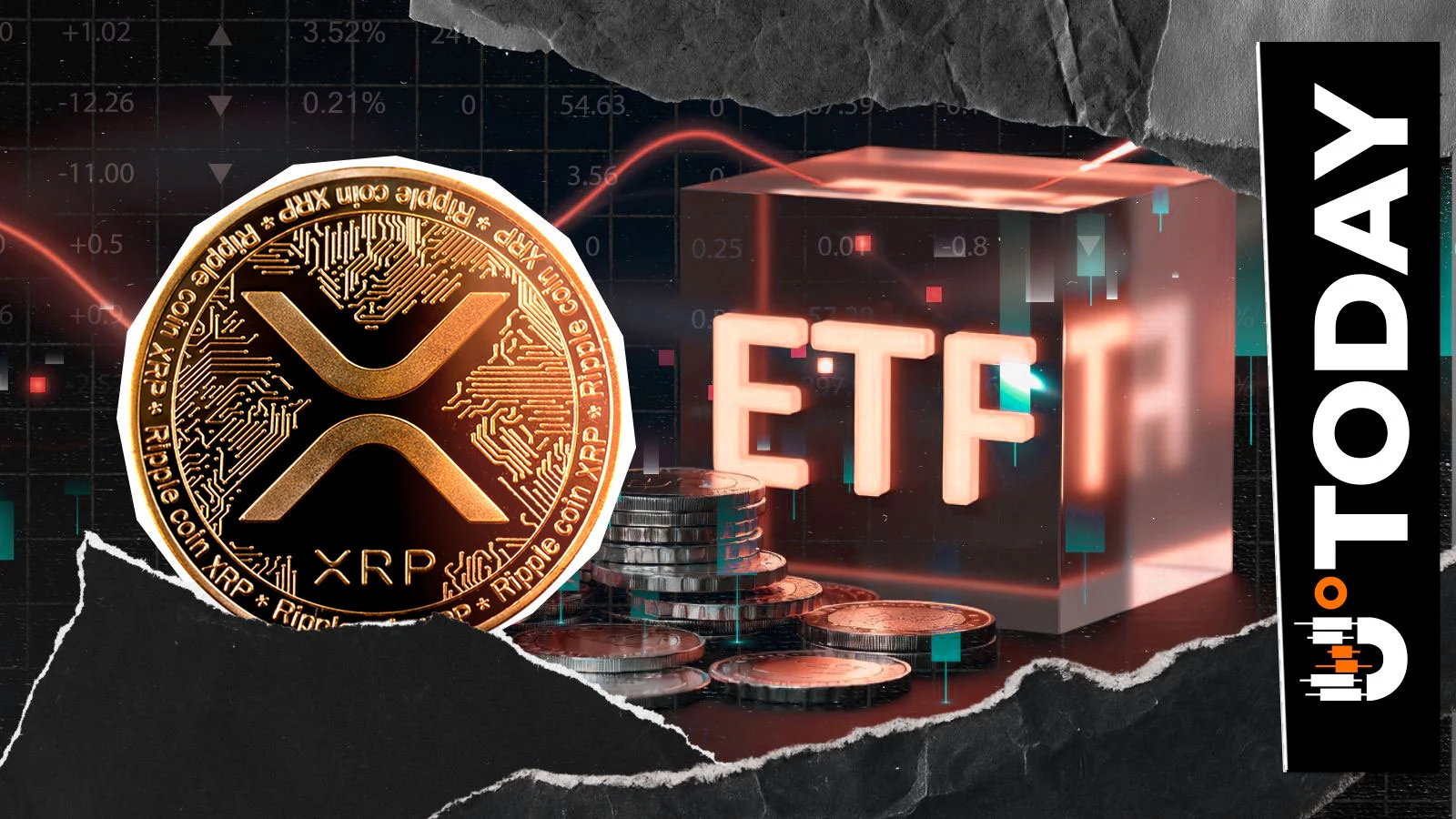
Despite significant XRP ETF outflows totaling $76.1 million, the asset's price has risen over 11% in two weeks, indicating strong retail or private investor demand potentially overriding institutional sentiment. The divergence between institutional outflows and price appreciation suggests a potential disconnect, with retail investors driving the current rally, possibly anticipating future adoption or regulatory clarity. While Bitcoin attracts the majority of new ETF inflows, XRP's resilience in the face of outflows highlights its unique market dynamics, though its perception as a riskier asset amid geopolitical shifts is a key factor.

Ether's price has broken through key resistance levels, invalidating bearish patterns and suggesting a potential rally towards $2,800 based on symmetrical triangle analysis. On-chain data, specifically the unresolved supply overhang around $2,800 and the realized price at $2,350, indicates significant resistance that could cap further upside despite bullish technical signals. Market sentiment is shifting bullishly, with prediction markets showing increased odds for ETH to reach $2,800 in March, signaling growing trader conviction in an upward price movement.
XRP is showing signs of trend exhaustion after a prolonged downtrend, suggesting a potential shift in market momentum from selling to accumulation. The asset's ability to hold above the $1.48 support level indicates growing resilience and could signal the early stages of a recovery phase. A sustained push above current levels could see XRP target the psychological $2 mark, which would be a significant indicator of renewed market confidence and potentially reignite broader interest.

Steven Spielberg's stance against AI replacing creative roles signals a potential friction point for AI adoption in content creation, which could impact demand for AI-related infrastructure if widely adopted by creators. The entertainment industry's ongoing debate and experimentation with AI, as highlighted by Netflix's acquisition and AMC's rejection of AI content, indicates a developing market for AI tools but also potential regulatory hurdles and user resistance. While Spielberg's comments are focused on creative industries, the broader discussion around AI's role in content creation and copyright could indirectly influence investor sentiment towards AI-focused blockchain projects and infrastructure.
Major financial institutions Hana Financial and Standard Chartered are deepening their alliance with a strategic focus on digital assets and tokenized services, signaling increased institutional integration into the crypto space. The expanded partnership builds on prior collaboration in stablecoin development, suggesting a growing commitment to exploring blockchain-based financial infrastructure and potentially influencing regulatory frameworks. Standard Chartered's parallel partnership with B2C2 to enhance institutional access to digital assets underscores a broader trend of traditional banks leveraging crypto-native firms to build regulated on-ramps for investors. This convergence of traditional finance and digital assets, particularly in key Asian hubs, indicates a strategic positioning by major banks to capture growth in tokenized finance and stablecoin markets.
Subway remains a privately held entity, with no stock symbol or price currently available, despite ongoing investor interest and speculation about a potential future IPO. The acquisition by Roark Capital in 2024 for approximately $9.6 billion solidifies Subway's private status, placing it within a large portfolio of restaurant brands and away from public market scrutiny. While a future IPO is not officially planned, it remains a possibility driven by private equity exit strategies or significant capital needs, which could unlock new investment opportunities if realized. Investors seeking exposure to the fast-food sector can consider publicly traded alternatives like McDonald's (MCD) or Restaurant Brands International (QSR) as direct Subway stock is unavailable.

Ethereum's open interest in futures has surged by over 18%, indicating increased leveraged positions and potential for heightened volatility. Despite a recent price rally and significant short liquidations, the continued premium on ETH put options suggests underlying trader caution and a potential 'bull trap' scenario. While bulls target $2,800, the divided market sentiment and put option pricing imply limited odds for a sustained 33% rally, with sideways trading between $1,750 and $2,200 a possibility if current support fails.
MicroStrategy's continued aggressive Bitcoin accumulation, funded by stock sales, signals strong conviction in BTC as a treasury asset, potentially influencing investor sentiment towards the company and Bitcoin itself. The substantial purchase of 22,337 BTC by MicroStrategy reinforces its position as a major corporate Bitcoin holder, with ongoing acquisitions potentially creating consistent demand pressure on Bitcoin. The 4.56% jump in MSTR shares following the announcement highlights the direct market correlation between MicroStrategy's Bitcoin strategy and its stock performance, offering a proxy play for BTC exposure.
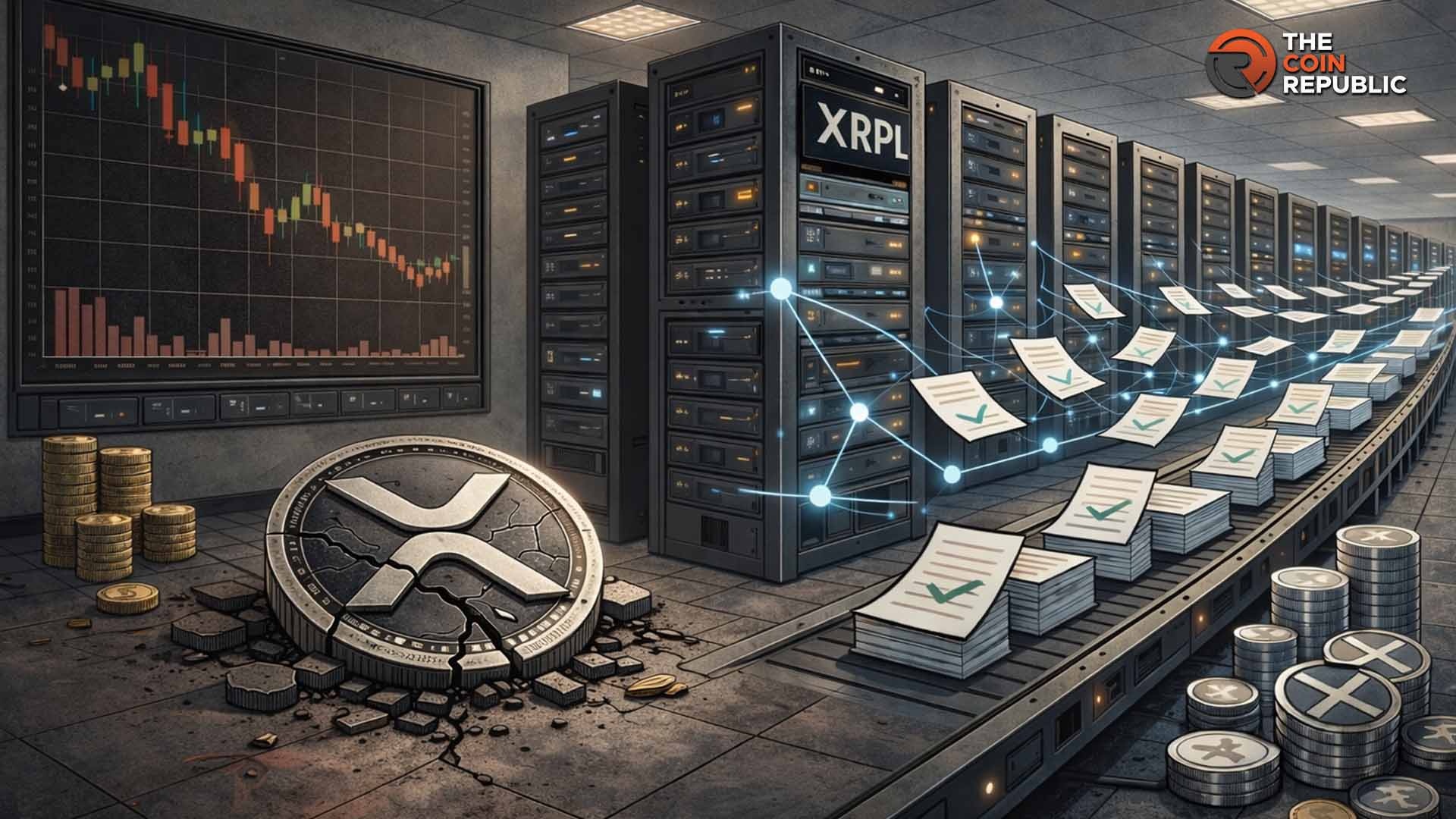
Despite a significant threefold increase in daily transactions on the XRP Ledger (XRPL) to 3 million, indicating strong adoption and utility for payments, liquidity, and tokenized assets, the XRP price is currently experiencing a downtrend, suggesting a decoupling of network activity from immediate price appreciation. The surge in XRPL activity highlights underlying network strength and adoption by both retail and institutional players, which market pundits view positively, yet this fundamental growth is not translating into price momentum amidst broader market downturns. While analysts remain bullish on XRP's long-term prospects with ambitious price targets, the current price action and declining trading volume indicate short-term investor caution or a lack of immediate catalyst to overcome prevailing market sentiment.
Crypto majors are demonstrating significant strength, outperforming traditional markets despite escalating geopolitical tensions and a volatile macro environment. The sustained inflow streak into Bitcoin ETFs, coupled with positive ETH ETF performance, signals growing institutional demand and confidence in major digital assets. Tom Lee's substantial over-the-counter purchase of ETH from the Ethereum Foundation indicates strong conviction from a prominent figure, potentially influencing market sentiment. Stanley Druckenmiller's forward-looking view on stablecoins reshaping global payments highlights a potential long-term growth narrative for the stablecoin sector.

President Javier Milei is under federal investigation for alleged involvement in a cryptocurrency 'rug pull' involving the $LIBRA token, with evidence suggesting a $5 million payment scheme tied to his promotion. Forensic evidence and recovered documents directly contradict President Milei's defense, indicating the $LIBRA token promotion was a pre-arranged deal rather than a spontaneous endorsement. The investigation has escalated to include Milei's sister, Karina Milei, with her phone seized and bank records unsealed, and Interpol has been requested to issue a Red Notice for the $LIBRA creator. The scandal has significant political ramifications for President Milei, including potential impeachment proceedings, and has led to international class-action lawsuits and a criminal probe into alleged fraud and bribery.
Signal context only. Validate with price action, liquidity, and risk limits before taking a position.
