
Navigating Crypto News

CoinFeather
Navigating Crypto News

Source, catalyst, and sector overlap from the latest feed.
Bitcoin's surge above $74,000, nearing a 25% bounce from its February low, indicates a potential shift in market sentiment driven by easing geopolitical tensions and a renewed appetite for risk assets. The outperformance of altcoins like ETH and SOL suggests a broadening of the crypto market rally beyond Bitcoin, signaling increased risk-on behavior from investors. The correlation between crypto gains, U.S. equities, and easing oil prices highlights the market's sensitivity to macroeconomic factors and geopolitical stability. The significant AI infrastructure deal between Nebius and Meta, alongside funding for Bitcoin miners like TeraWulf, demonstrates underlying strength in related tech and infrastructure sectors, potentially benefiting crypto-adjacent companies.
Live Feed
Loading the broader stream in the same flow as the homepage feed.

A minor 2.85% pricing error in wstETH collateral on Aave led to $27 million in liquidations, underscoring the fragility of DeFi systems to even small oracle misconfigurations. The incident highlights the critical dependency of DeFi lending protocols on accurate price oracles and robust risk management systems, as a misconfiguration in Aave's CAPO risk oracle, not the primary feed, caused the issue. While the event caused significant liquidations for individual borrowers, Aave protocol solvency remained intact, with proposals to compensate affected users, indicating a maturing approach to handling technical incidents. This event serves as a crucial reminder for DeFi participants about the inherent risks associated with yield-bearing collateral like wstETH and the need for precise synchronization of smart contract parameters and price feeds.

The $3.7 million flash loan attack on Venus Protocol highlights a persistent vulnerability in DeFi lending platforms, underscoring the ongoing arms race between attackers and security measures. While sophisticated defenses like AI circuit breakers and ZK-proof oracles are emerging, the incident suggests that smart contract bugs and oracle manipulation remain significant risks for DeFi protocols. The article also notes a parallel threat from North Korea-linked actors using social engineering and embedded backdoors, indicating that human vulnerabilities are as critical as code exploits in the current threat landscape.

Increased trading volume on prediction markets, particularly for Iran-related contracts, highlights a surge in speculative activity driven by geopolitical events. Regulatory scrutiny is intensifying with the CFTC classifying event contracts as financial assets and lawmakers proposing bans on war-related bets, signaling potential future restrictions on prediction market operations. The proposed "DEATH BETS Act" and recent insider trading allegations on Polymarket underscore the growing concerns around the ethical and regulatory implications of prediction markets, potentially impacting their future accessibility and scope. While current volume is high, the regulatory headwinds and potential for outright bans suggest a cautious outlook for prediction market platforms, especially those focused on sensitive geopolitical or conflict-related events.

Steven Spielberg's stance against AI replacing creative roles signals a potential friction point for AI adoption in content creation, which could impact demand for AI-related infrastructure if widely adopted by creators. The entertainment industry's ongoing debate and experimentation with AI, as highlighted by Netflix's acquisition and AMC's rejection of AI content, indicates a developing market for AI tools but also potential regulatory hurdles and user resistance. While Spielberg's comments are focused on creative industries, the broader discussion around AI's role in content creation and copyright could indirectly influence investor sentiment towards AI-focused blockchain projects and infrastructure.

USDC has surpassed USDT in transfer volume for the first time in seven years, signaling a shift in stablecoin utility from pure supply to transactional velocity. Solana's low transaction fees and high throughput are driving significant USDC transfer volume, indicating its growing importance as a settlement layer for high-frequency stablecoin activity. Regulatory actions, including the GENIUS Act in the US and MiCA in Europe, alongside institutional integrations like Visa's USDC settlement on Solana, are favoring compliant stablecoins like USDC over USDT. The divergence between USDT's large total supply and USDC's leading transfer volume highlights a market segmentation where utility and regulatory compliance are increasingly valued for active capital movement.
Major financial institutions Hana Financial and Standard Chartered are deepening their alliance with a strategic focus on digital assets and tokenized services, signaling increased institutional integration into the crypto space. The expanded partnership builds on prior collaboration in stablecoin development, suggesting a growing commitment to exploring blockchain-based financial infrastructure and potentially influencing regulatory frameworks. Standard Chartered's parallel partnership with B2C2 to enhance institutional access to digital assets underscores a broader trend of traditional banks leveraging crypto-native firms to build regulated on-ramps for investors. This convergence of traditional finance and digital assets, particularly in key Asian hubs, indicates a strategic positioning by major banks to capture growth in tokenized finance and stablecoin markets.
Subway remains a privately held entity, with no stock symbol or price currently available, despite ongoing investor interest and speculation about a potential future IPO. The acquisition by Roark Capital in 2024 for approximately $9.6 billion solidifies Subway's private status, placing it within a large portfolio of restaurant brands and away from public market scrutiny. While a future IPO is not officially planned, it remains a possibility driven by private equity exit strategies or significant capital needs, which could unlock new investment opportunities if realized. Investors seeking exposure to the fast-food sector can consider publicly traded alternatives like McDonald's (MCD) or Restaurant Brands International (QSR) as direct Subway stock is unavailable.

Ethereum's open interest in futures has surged by over 18%, indicating increased leveraged positions and potential for heightened volatility. Despite a recent price rally and significant short liquidations, the continued premium on ETH put options suggests underlying trader caution and a potential 'bull trap' scenario. While bulls target $2,800, the divided market sentiment and put option pricing imply limited odds for a sustained 33% rally, with sideways trading between $1,750 and $2,200 a possibility if current support fails.
MicroStrategy's continued aggressive Bitcoin accumulation, funded by stock sales, signals strong conviction in BTC as a treasury asset, potentially influencing investor sentiment towards the company and Bitcoin itself. The substantial purchase of 22,337 BTC by MicroStrategy reinforces its position as a major corporate Bitcoin holder, with ongoing acquisitions potentially creating consistent demand pressure on Bitcoin. The 4.56% jump in MSTR shares following the announcement highlights the direct market correlation between MicroStrategy's Bitcoin strategy and its stock performance, offering a proxy play for BTC exposure.
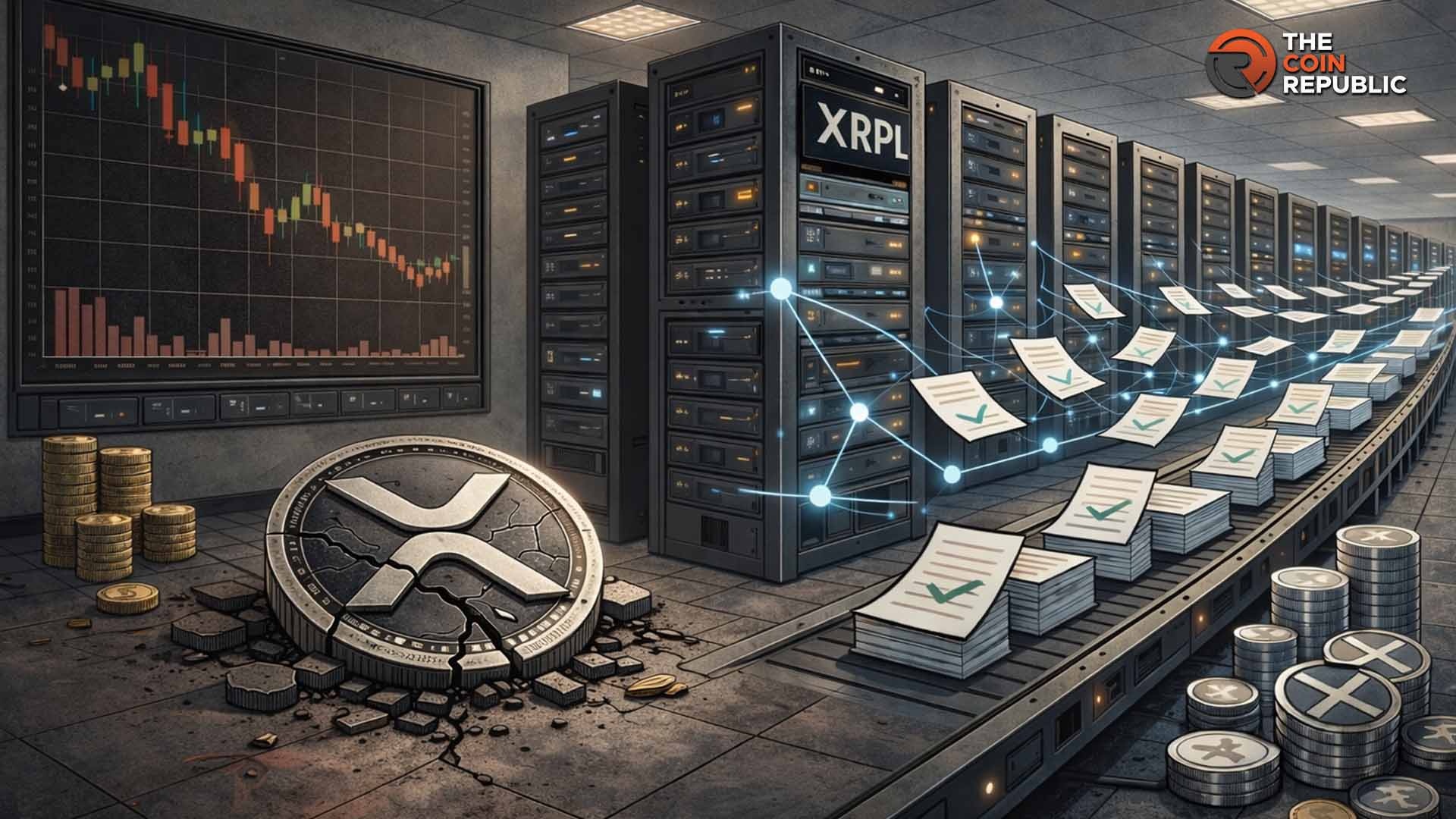
Despite a significant threefold increase in daily transactions on the XRP Ledger (XRPL) to 3 million, indicating strong adoption and utility for payments, liquidity, and tokenized assets, the XRP price is currently experiencing a downtrend, suggesting a decoupling of network activity from immediate price appreciation. The surge in XRPL activity highlights underlying network strength and adoption by both retail and institutional players, which market pundits view positively, yet this fundamental growth is not translating into price momentum amidst broader market downturns. While analysts remain bullish on XRP's long-term prospects with ambitious price targets, the current price action and declining trading volume indicate short-term investor caution or a lack of immediate catalyst to overcome prevailing market sentiment.

Crypto majors are demonstrating significant strength, outperforming traditional markets despite escalating geopolitical tensions and a volatile macro environment. The sustained inflow streak into Bitcoin ETFs, coupled with positive ETH ETF performance, signals growing institutional demand and confidence in major digital assets. Tom Lee's substantial over-the-counter purchase of ETH from the Ethereum Foundation indicates strong conviction from a prominent figure, potentially influencing market sentiment. Stanley Druckenmiller's forward-looking view on stablecoins reshaping global payments highlights a potential long-term growth narrative for the stablecoin sector.

President Javier Milei is under federal investigation for alleged involvement in a cryptocurrency 'rug pull' involving the $LIBRA token, with evidence suggesting a $5 million payment scheme tied to his promotion. Forensic evidence and recovered documents directly contradict President Milei's defense, indicating the $LIBRA token promotion was a pre-arranged deal rather than a spontaneous endorsement. The investigation has escalated to include Milei's sister, Karina Milei, with her phone seized and bank records unsealed, and Interpol has been requested to issue a Red Notice for the $LIBRA creator. The scandal has significant political ramifications for President Milei, including potential impeachment proceedings, and has led to international class-action lawsuits and a criminal probe into alleged fraud and bribery.
Signal context only. Validate with price action, liquidity, and risk limits before taking a position.
Quick market read from this story
The CoinDesk 20 Index experienced a broad-based rally, with ETH and DOT leading gains, indicating positive sentiment across major altcoins within the index.
The overall market performance, as reflected by the CoinDesk 20 Index's 5.1% rise with all constituents trading higher, suggests a short-term bullish trend or a recovery phase in the broader crypto market.
While ETH and DOT showed strong performance, the laggards UNI and BCH also posted gains, implying a general market uplift rather than sector-specific strength.
Deep Dive
On March 16, 2026, Polkadot (DOT) and Ethereum (ETH) emerged as top performers, with DOT up 8.5% and ETH up 8.8%. This surge contributed to the overall rise of the CoinDesk 20 Index, which is currently trading at 2140.46, marking a 5.1% increase (+104.17) since Friday afternoon. All 20 assets within the index experienced gains.
While ETH and DOT led the market, other assets also saw positive movement. The CoinDesk 20 Index, a broad-based measure of the cryptocurrency market traded globally, reflects a general upward trend. Among the laggards, UNI saw a modest gain of 0.9%, and BCH increased by 2.5%.
This recent performance follows a trend of positive market activity. On March 13, 2026, the CoinDesk 20 Index had previously jumped 3.7%, with all its constituents climbing higher. During that period, Sui (SUI) gained 6.7% and Cardano (ADA) rose 5.8%, indicating sustained momentum in the digital asset space.
DOT
DOT
No explicit catalyst tagged.
Bitcoin's resilience during geopolitical turmoil, driven by institutional accumulation via ETFs and corporate treasuries like Strategy, signals a maturing asset class increasingly viewed as a hedge. The significant accumulation by Strategy and growing ETF holdings, now representing 6.1% of supply, indicate a structural shift in ownership favoring long-term holding and potentially reducing near-term sell pressure. While retail investors have been net sellers, the dominance of long-term holders and Bitcoin's outperformance against traditional assets suggest a growing narrative of 'digital gold' and a potential for sustained demand. For equity investors, MicroStrategy (MSTR) offers a high-beta exposure to Bitcoin's price action, currently trading at a discount to its NAV, presenting a potential arbitrage opportunity.
