
Navigating Crypto News

CoinFeather
Navigating Crypto News

Quick market read from this story
Canada is integrating crypto into its core financial system through new regulations like the Canada Stablecoin Act, signaling a shift towards formal recognition but with a primary focus on risk management.
The tightening regulatory environment, including stricter registration for crypto exchanges and upcoming reporting frameworks, is consolidating the market and favoring established players with robust compliance infrastructure.
Despite regulatory progress, a divergence remains between industry demands for clear, workable rules and policymakers' cautious stance, particularly regarding DeFi and self-custody, favoring traditional financial product mappings like Bitcoin ETFs.
The Canadian government's approach, influenced by Prime Minister Mark Carney's pragmatic but risk-averse stance, prioritizes stability and consumer protection, potentially leading to further consolidation and a slower adoption of more decentralized crypto applications.
Deep Dive
Canada has significantly integrated cryptocurrencies and blockchain technology into its financial system over the past year, adopting a pragmatic, regulation-first strategy. Key developments include the introduction of stablecoin regulations via the Canada Stablecoin Act in November, granting the Bank of Canada authority over stablecoins, and ongoing amendments to laws governing crypto asset funds, including those for cold wallets and custodians.
Under Prime Minister Mark Carney, who previously expressed skepticism about cryptocurrencies, Canada has implemented increased scrutiny and higher standards for the crypto industry. The Canadian Securities Administrators (CSA) have closed the “restricted dealer” registration category, requiring crypto trading platforms to become full investor dealers and members of the Canadian Investment Regulatory Organization (CIRO). This shift has led to consolidation, favoring established firms like WonderFi, which proactively registered its trading platform, Coinsquare, under CIRO. This move required significant investment and compliance but positions the firm to operate under Canada’s highest regulatory standards.
Policymakers are also finalizing amendments to National Instrument 81-102, impacting investment funds that include crypto assets. Additionally, Canada is preparing to implement the Crypto Assets Reporting Framework (CARF) from the OECD, though its implementation is delayed until January 1, 2027. This framework will impose annual reporting obligations on crypto service providers, potentially posing challenges for smaller or offshore entities. The Financial Transactions and Reports Analysis Centre (FINTRAC) has also been actively enforcing registration requirements, recently revoking the money services businesses (MSB) registrations of 47 crypto businesses.
While Canadian crypto standards are aligning with traditional finance, differing priorities persist between policymakers and the blockchain industry. The government's focus on stablecoins, spurred by developments in the U.S., aims to integrate crypto into the traditional financial system on regulators’ terms. The primary lens for regulators remains risk management, consumer protection, and preventing systemic risk from new digital instruments, as highlighted by the stablecoin legislation driven by concerns over geopolitical risks from U.S. frameworks like the GENIUS Act.
The industry, however, seeks clearer, more workable rules for stablecoins, custody, and asset tokenization. Concerns remain about the fragmented regulatory landscape, with multiple bodies like FINTRAC, CSA, CIRO, CRA, and provincial regulators overseeing different aspects of crypto businesses. Furthermore, industry participants note limitations on Canadians holding crypto within registered retirement savings plans (RRSPs) or tax-free savings accounts (TFSAs) in a straightforward manner.
A notable distinction persists in the Canadian government's approach, separating comfort with blockchain as infrastructure from caution regarding crypto assets themselves. Prime Minister Carney's administration shows a preference for central bank digital currencies over decentralized assets. This posture favors digital assets that align with existing regulatory frameworks, such as Bitcoin exchange-traded funds. Areas like Decentralized Finance (DeFi), self-custody, and on-chain settlement are viewed with considerably more caution and fall into a different regulatory category.
Source, catalyst, and sector overlap from the latest feed.
Professional trader Alessio Rastani suggests Bitcoin may retest levels below $60,000 before a sustainable bottom forms, indicating potential near-term downside risk. Despite bearish short-term outlook, Rastani identifies support zones between $59,000 and $46,000 as attractive for long-term accumulation opportunities. The analysis questions the likelihood of Bitcoin reaching new all-time highs in 2026, suggesting a more protracted recovery timeline than commonly anticipated.
A sustained oil price spike to $180 per barrel could trigger a 70% increase in US inflation, significantly reducing the likelihood of Federal Reserve rate cuts and pressuring Bitcoin's price towards $51,000. The potential for higher inflation and delayed rate cuts due to oil supply shocks creates a bearish macro environment for risk assets like Bitcoin, exacerbated by a recent slowdown in institutional buying from entities like Strategy. While Bitcoin has shown resilience amid geopolitical events, a severe energy shock presents a tangible risk to its price trajectory, potentially negating recent gains and signaling a shift in market sentiment.
BitFuFu's strategic pivot to cloud mining, evidenced by a 60% revenue drop in self-mining and a significant increase in cloud mining's share, signals a move towards more predictable revenue streams and capital efficiency. The company's focus on scaling cloud mining and expanding its Bitcoin treasury in 2026, despite a substantial decrease in self-mined BTC output, indicates a commitment to long-term asset accumulation through diversified revenue. BitFuFu's reported 2.7% overall revenue growth in 2025, driven by cloud mining and increased equipment sales, suggests resilience in its business model despite challenging mining conditions like difficulty increases and lower earnings per terahash.
Bitcoin's weekly RSI is approaching a critical level that historically signals potential bear market bottoms, suggesting a near-term inflection point for price action. While a bullish divergence on the weekly RSI is a key indicator for potential rebounds, traders are advised to remain cautious due to the recent all-time highs and the possibility of a prolonged bear market cycle. The analysis highlights that a higher low on the weekly RSI, even with price making lower lows, could indicate the bottom is near or already in, warranting increased market attention.
A long-dormant Bitcoin whale wallet holding approximately $147 million has moved a small fraction, signaling potential liquidity events or key recovery after 13 years. The minimal transfer of $56 from a Satoshi-era wallet, while not immediately indicative of a sell-off, prompts market observation for further movements that could impact Bitcoin supply dynamics. The event highlights the significant unrealized gains of early Bitcoin adopters and raises questions about whether this represents a 'diamond hands' holder finally diversifying or a recovered private key test transaction.
A significant majority of finance leaders (74%) now view stablecoins as a tool to improve cash flow and unlock working capital, indicating a strategic shift from pure payment utility to treasury management applications. Increasing regulatory clarity, exemplified by the OCC's move towards recognizing stablecoins and proposed federal oversight, is reducing institutional uncertainty and accelerating adoption. The growing institutional embrace of stablecoins for treasury and liquidity management, coupled with regulatory progress and ecosystem development, suggests a maturing market where stablecoins are becoming core financial infrastructure.
The SEC and CFTC's acknowledgment of XRP as a non-security digital commodity, following a shift in regulatory stance, provides a significant positive catalyst for the asset. Analyst Ali Martinez identifies XRP's current price action near a multi-year trendline as a potential strong buying opportunity, suggesting a bullish outlook based on technical support. Despite a recent price surge and subsequent pullback, the regulatory clarity for XRP could encourage renewed investor interest and potentially drive further price appreciation in the short to medium term.
Institutional adoption of digital assets is no longer a speculative trend but a competitive necessity, with a significant majority of finance leaders viewing it as crucial for market positioning. Stablecoins are evolving beyond payment rails to become key treasury tools for cash management and T+0 settlement, indicating a maturing use case with substantial market cap growth. The surge in interest for asset tokenization, coupled with increasing regulatory clarity from frameworks like MiCA and the US GENIUS Act, signals a shift from discussion to implementation for real-world asset integration. The data suggests a narrowing window for financial institutions to establish competitive advantages in digital assets, as adoption accelerates and regulatory environments become more defined.
Institutional demand for Ethereum is accelerating with the launch of BlackRock's staked ETF and consistent inflows, positioning ETH as an income-generating asset and signaling a potential structural shift beyond retail speculation. Significant accumulation by entities like Bitmine is tightening ETH's liquid supply, mirroring Bitcoin's corporate accumulation phase and amplifying the impact of future demand increases. Despite strong on-chain activity and institutional interest, regulatory uncertainty, particularly regarding the CLARITY Act and potential commodity classification, remains a key catalyst that could unlock further price appreciation. The combination of increasing institutional adoption, supply reduction through staking and accumulation, and the potential for regulatory clarity suggests a fundamental strengthening of Ethereum's market position, despite current price action lagging behind underlying developments.
Kalshi's successful $1 billion funding round at a $22 billion valuation, doubling its previous valuation, signals strong investor confidence in the prediction market despite regulatory headwinds. The significant increase in trading volume, exceeding $10 billion in February, indicates robust user adoption and market growth for Kalshi, potentially setting a precedent for other prediction market platforms. Despite strong investor interest and growth, Kalshi faces ongoing regulatory challenges with state-level actions and legal battles, creating a complex operating environment that traders should monitor. The platform's ability to attract substantial funding and grow user activity while navigating regulatory scrutiny suggests a resilient business model, though future expansion may be state-dependent.
Ledger's significant multi-million dollar expansion into New York City, including hiring a new CFO from Circle, signals a strategic focus on capturing institutional demand for secure digital asset infrastructure. The establishment of a New York hub positions Ledger to directly engage with traditional finance players, potentially accelerating the adoption of its enterprise solutions like Multisig and Tradelink for digital asset governance and trading. By emphasizing its evolution into an 'AI-accelerated security company' and highlighting its role in securing stablecoins and hardware devices, Ledger aims to solidify its foundational infrastructure position for broader institutional digital asset integration.
Evernorth's strategic focus on XRP Ledger for tokenization, lending, and settlement signals a potential expansion of XRP's utility beyond payments, aiming to unlock significant liquidity in traditional finance. The firm's emphasis on XRP's regulatory clarity, referencing SEC and CFTC guidance, suggests a growing institutional comfort level with the asset for complex financial operations, potentially driving adoption. Evernorth's plan to actively deploy XRP within its institutional treasury for lending and protocol integration indicates a shift towards utilizing the asset as a functional component of financial infrastructure rather than just a transactional token.
Ripple's recent nine million RLUSD token burn, following larger burns in March, indicates active supply management and real-world redemptions rather than speculative activity. While the burns are a sign of healthy stablecoin operations, they have slowed the net growth of RLUSD supply, causing its race to the two billion supply target to stall. The consistent token burning by Ripple for its RLUSD stablecoin demonstrates a commitment to maintaining 1:1 backing and regulatory compliance, which is positive for institutional adoption.
Coinbase's significant positive netflow of 26 billion SHIB suggests increased accumulation by U.S. users, potentially signaling growing demand and supporting spot trading activity. The influx of SHIB to Coinbase, coupled with a 3.9% price surge and an 11% trading volume increase, indicates positive short-term momentum for the memecoin. While Coinbase shows accumulation, other exchanges like Upbit and OKX exhibit outflows, highlighting mixed exchange dynamics that warrant monitoring.
Institutional demand for Bitcoin is outstripping miner supply by a factor of six, creating a significant supply shock that historically correlates with substantial price appreciation. The current imbalance, driven by ETF inflows and corporate accumulation, suggests a strong price floor around $70,000-$74,000, with potential for new all-time highs exceeding $127,000 by year-end. The post-halving reduction in mining rewards has exacerbated the scarcity, indicating that sustained institutional buying pressure could lead to an acute shortage of liquid Bitcoin on exchanges.
Live Feed
Loading the broader stream in the same flow as the homepage feed.
Bitcoin's historical performance on Eid demonstrates a strong long-term upward trend despite significant volatility and drawdowns over 16 years. While the long-term trend is bullish, current price action suggests a potential correction phase, with analysts identifying resistance levels and potential downside targets. Future price movements may be influenced by Federal Reserve monetary policy and the progress of US crypto legislation, such as the CLARITY Act. Corporate treasury strategies, exemplified by MicroStrategy's consistent BTC accumulation, highlight a persistent institutional belief in Bitcoin's long-term value.
The XRP Community Night event in Paris during Paris Blockchain Week on April 15th provides a networking opportunity for the XRP ecosystem, potentially fostering collaboration and development. Recent regulatory clarity from the SEC, stating that XRP is not a security, combined with positive survey data on digital asset adoption by finance leaders, could support broader market sentiment for XRP. The ongoing tradition of XRP Community Nights, highlighted by past events featuring notable figures, reinforces community engagement and brand visibility for Ripple and XRP.
XRP's derivatives market is showing signs of caution with a 5% drop in open interest, indicating traders are closing positions as the recent price rally stalls. The decline in XRP open interest, coupled with a 0.75% price decrease and reduced trading volume, suggests a potential short-term bearish sentiment as traders reduce leverage risks. Despite current weak momentum, some market watchers remain optimistic about XRP resuming its rally and targeting the $2 mark, though the current derivatives data points to a pause.
XRP is exhibiting multi-year accumulation patterns with significant whale interest, suggesting a potential setup for a substantial upward price movement if current support levels hold. Rising trading volumes on major exchanges coupled with whale accumulation at $1.40 indicate growing conviction, potentially signaling an early-stage accumulation phase rather than distribution. Analysts project significant upside targets for XRP, ranging from $3 to over $10, contingent on the asset successfully breaking out from its current consolidation range and maintaining upward momentum. While short-term volatility and dips below the established range are possible, they may serve to reset positions and build momentum for a subsequent upward trend.
A significant surge in the Shiba Inu burn rate, exceeding 370%, indicates a deliberate effort to reduce supply, which could support price appreciation if demand remains consistent. SHIB has broken a key resistance level, aligning with technical indicators of accumulation and potentially signaling a bullish continuation, though trading volume suggests cautious market participation. The interplay between increased token burns and price action breaking resistance presents a near-term bullish narrative for SHIB, but traders should monitor for potential pullbacks if the breakout fails to hold.
Dogecoin futures netflow experienced a significant 3,030% drop, indicating a sharp reduction in trading activity and a potential shift towards defensive positioning by traders. Despite Elon Musk's recent AI-generated video referencing Dogecoin, the asset has seen a decline, with futures open interest and derivatives volume also falling, suggesting a lack of immediate bullish momentum. The current market sentiment for Dogecoin appears cautious, with a notable decrease in futures netflow and open interest, implying that traders are reducing exposure or waiting for clearer signals before committing capital.
Mortgage rates have edged back above 6.2% for 30-year fixed loans, driven by persistent inflation and rising Treasury yields, indicating continued pressure on borrowing costs. Elevated mortgage rates are likely to sustain affordability challenges in the housing market, potentially dampening buyer demand despite hopes for a spring rebound. While rates remain elevated, forecasts suggest they may hover around 6% through 2026, implying a stable but high-rate environment rather than a sharp increase.
BlackRock's transfer of $140 million in BTC and ETH to Coinbase Prime, linked to its spot ETFs, suggests potential selling pressure or liquidity preparation amidst recent ETF outflows. The move coincides with Bitcoin ETFs experiencing outflows for two consecutive days, indicating a cautious institutional stance that could pressure short-term price action for BTC and ETH. While the transfers are to a custody platform, the timing and context of ETF outflows fuel speculation about BlackRock's immediate trading strategy for its significant crypto holdings.

XRP Ledger's daily payment transactions exceeding 1.5 million signals increasing real-world utility and institutional adoption, potentially supporting long-term valuation despite short-term price pressures. The integration of AI agents for native XRP and RLUSD transactions on XRPL represents a structural evolution towards automated economic activity, positioning the ledger as a platform for machine-to-machine settlements. While on-chain metrics show robust growth, the divergence between network activity and XRP's price action suggests that market conditions and technical factors are currently overshadowing fundamental improvements.
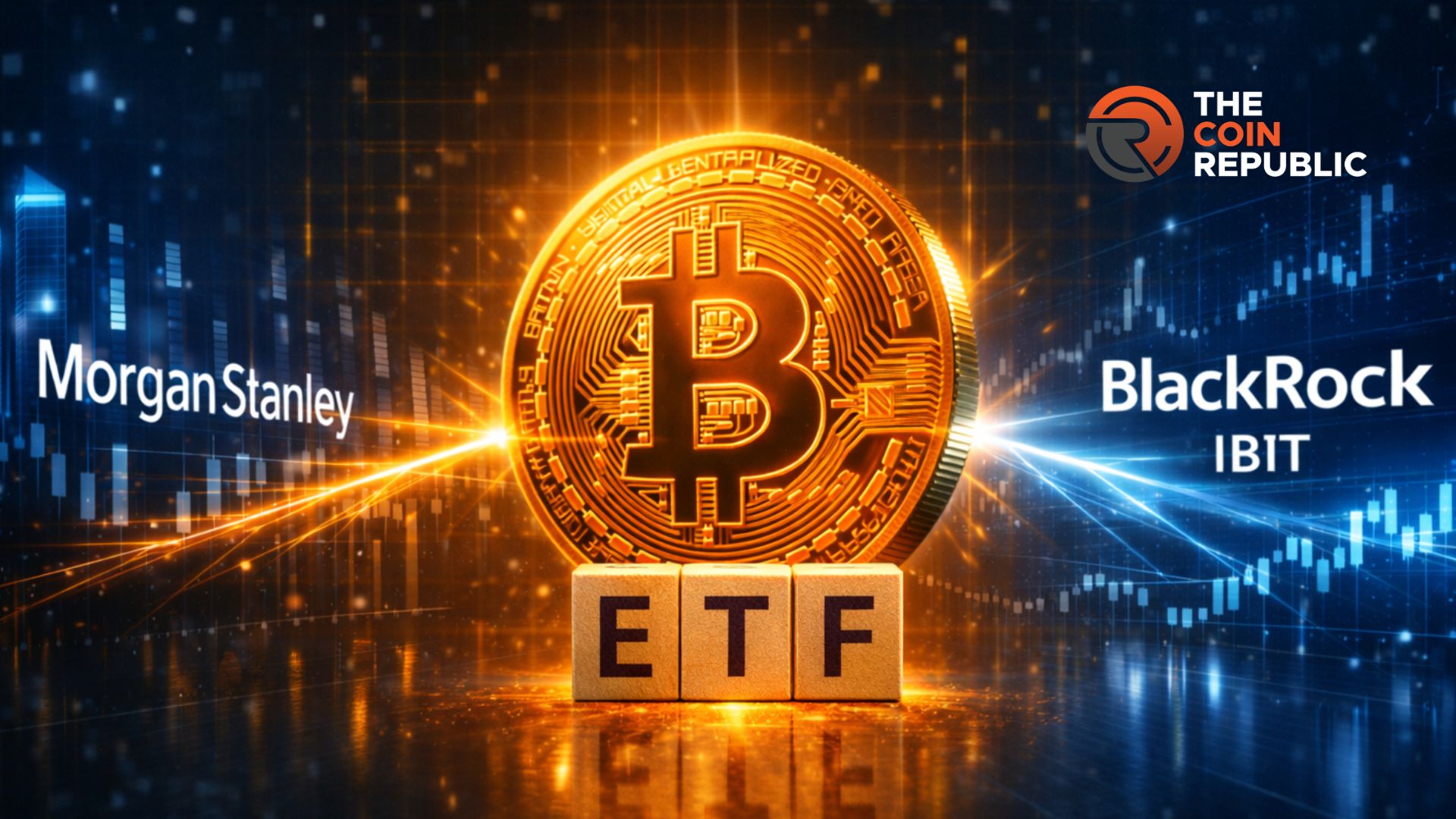
Morgan Stanley's direct issuance of a Bitcoin ETF (MSBT) signifies a major shift in institutional involvement, moving beyond mere recommendations to active product management and fee capture. The competitive landscape for Bitcoin ETFs intensifies with Morgan Stanley's entry, employing a $5 billion fee waiver strategy mirroring BlackRock's successful tactics to capture market share. The entry of a major US bank like Morgan Stanley as a direct ETF issuer, alongside the existing $100 billion AUM market, suggests a maturing and increasingly competitive environment for digital asset investment products.
The survey indicates a significant shift in institutional perception, with 72% of finance leaders now viewing digital assets as essential rather than optional, suggesting growing mainstream acceptance and potential for increased capital allocation. The strong preference for stablecoins as treasury tools (74%) and the high priority placed on custody (89%) highlight key areas where traditional finance seeks robust, secure, and integrated solutions from crypto providers. The demand for one-stop-shop infrastructure providers (71%) and the increasing interest in tokenizing assets signal a maturing market that requires comprehensive platforms capable of handling diverse financial needs, potentially benefiting established players like Ripple. The emphasis on security and certifications (97%) underscores the critical importance of trust and compliance for institutional adoption, indicating that projects prioritizing these aspects will likely gain favor.

Dogecoin is exhibiting a bullish technical setup with expanding Bollinger Bands on the four-hour chart, suggesting potential for a sustained uptrend despite a significant drop in trading volume. The decline in trading volume to $898.7 million indicates low conviction from market participants, which could limit the upside potential of any price breakout. While the price is testing upper Bollinger Bands and showing higher highs and lows, the lack of strong volume suggests that sellers are merely stepping back rather than aggressive buying occurring, making confirmation crucial. Traders should monitor for a confirmed break above $0.092, potentially accelerating towards $0.10 if buy-side volume increases, but the current low volume environment warrants caution.
Signal context only. Validate with price action, liquidity, and risk limits before taking a position.
