
Navigating Crypto News

CoinFeather
Navigating Crypto News

Quick market read from this story
Continued inflows into crypto investment products, totaling $1.06 billion last week, demonstrate sustained investor interest and resilience despite geopolitical tensions.
Bitcoin ETPs saw significant inflows of $793 million, reinforcing its narrative as a potential safe-haven asset amidst global instability.
The launch of new staking ETFs in the US has positively impacted Ethereum ETP flows, bringing them closer to a neutral position after recent outflows.
Despite recent positive weekly flows, US spot Bitcoin ETFs still hold a net outflow of approximately $493 million year-to-date, indicating a potential for further price discovery as this figure trends towards zero.
Deep Dive
Crypto investment products experienced significant momentum last week, attracting $1.06 billion in inflows, demonstrating resilience against geopolitical stress and bolstering the narrative of Bitcoin as a safe-haven asset. This marks three consecutive weeks of positive flows, totaling $2.7 billion, and brings year-to-date net inflows to approximately $1.2 billion.
Bitcoin ETPs led the inflows with $793 million, pushing their year-to-date gains to $933 million. While Ether (ETH) funds saw $315.3 million in inflows last week, they remain in the red for the year with approximately $23 million in outflows. The recent positive momentum for ETH funds is partly attributed to the launch of new staking ETF listings in the US, bringing their year-to-date flows close to a neutral position.
XRP funds experienced outflows totaling $76 million for the second consecutive week, while Solana (SOL) saw inflows of $9.1 million. Short-Bitcoin products also recorded inflows of $8.1 million, indicating a somewhat polarized market sentiment.
US spot Bitcoin ETFs contributed significantly to the overall inflows, recording their first five-day inflow streak of 2026 and attracting $767.3 million last week. Despite these recent positive flows, which total $2.1 billion over three weeks, the ETFs still hold approximately $493 million in net outflows year-to-date. The coming week will be crucial in determining if these ETFs can overcome their year-to-date losses, which were exacerbated by substantial outflows in January and February before a partial recovery in March.
Source, catalyst, and sector overlap from the latest feed.
South Korean regulators have imposed a significant $24.5 million fine and a six-month partial business suspension on Bithumb for widespread AML violations, signaling an intensified regulatory environment for major exchanges in the region. The penalties, including a ban on processing external crypto transfers for new customers, highlight the strict enforcement of AML/KYC rules and could impact Bithumb's new user acquisition and operational capacity in the short term. This action against Bithumb, following similar penalties against Upbit and Korbit, underscores a broader regulatory crackdown on South Korean exchanges, potentially increasing compliance costs and operational risks across the sector.
Metaplanet's successful $255 million private placement, augmented by innovative warrant structures, signals strong institutional confidence and provides significant capital for its aggressive Bitcoin accumulation strategy. The introduction of mNAV-tied warrants by Metaplanet, mirroring MicroStrategy's playbook, aims to align capital raises with shareholder value, potentially setting a new standard for corporate Bitcoin treasuries. With a stated goal of 210,000 BTC, Metaplanet's enhanced funding capabilities position it as a key player in the corporate Bitcoin treasury space, with potential implications for BTC demand. The company's ability to raise capital at a premium, even with warrants, suggests a favorable market perception and a strategic advantage in executing its long-term Bitcoin acquisition plan.
Institutions require predictable settlement, consistent pricing, and clear risk boundaries, which current fragmented crypto liquidity fails to provide, hindering large-scale capital deployment. The core issue for institutional adoption is not regulatory or UX hurdles, but structural market problems like liquidity fragmentation, which must be solved for reliable, repeatable, and scalable operations. Crypto's next phase of growth hinges on demonstrating operational consistency and reliability under stress, rather than just technological innovation, to build trust with traditional finance. The increasing use of stablecoins as payment rails and their integration into institutional balance sheets signals a fundamental shift, making crypto's infrastructure readiness the key question for coexistence with traditional finance.
Strategy significantly increased its Bitcoin holdings by acquiring 22,337 BTC for $1.57 billion, reinforcing its position as the largest public holder and signaling continued conviction in Bitcoin as a treasury asset. The substantial Bitcoin purchase was funded by record sales of Strategy's STRC preferred stock, indicating a strategic use of equity financing to accumulate digital assets. This aggressive accumulation by a major corporate entity suggests a bullish outlook on Bitcoin's long-term value, potentially influencing market sentiment and demand.
Traditional finance giants Hana Financial and Standard Chartered are deepening their engagement with digital assets, signaling growing institutional acceptance and potential for increased adoption. This partnership, following Hana's recent collaboration with Circle and Crypto.com, indicates a strategic push into stablecoin payments and broader digital asset services, potentially driving demand for related infrastructure. The collaboration between two major financial institutions in the digital asset space, particularly in Asia, suggests a trend towards integrating blockchain technology into mainstream financial operations, which could impact traditional payment and investment sectors.
Crypto majors are demonstrating significant strength, outperforming traditional markets despite escalating geopolitical tensions and a volatile macro environment. The sustained inflow streak into Bitcoin ETFs, coupled with positive ETH ETF performance, signals growing institutional demand and confidence in major digital assets. Tom Lee's substantial over-the-counter purchase of ETH from the Ethereum Foundation indicates strong conviction from a prominent figure, potentially influencing market sentiment. Stanley Druckenmiller's forward-looking view on stablecoins reshaping global payments highlights a potential long-term growth narrative for the stablecoin sector.
Bernstein's analysis suggests that sustained ETF inflows and corporate treasury accumulation are fundamentally altering Bitcoin's ownership structure, shifting it towards a more resilient long-term holder base. The increasing proportion of Bitcoin supply held by long-term holders and ETFs may reduce the impact of short-term sell pressure, potentially leading to a more stable market during periods of geopolitical stress. Despite geopolitical tensions, Bitcoin's outperformance relative to gold and major equity indexes highlights its perceived role as a portable, digital asset with no counterparty risk, reinforcing its appeal to institutional capital.
Bitcoin's recent price action shows bulls reclaiming key technical levels like the 200-week EMA and 50-day SMA, but significant seller resistance remains around $75,000, suggesting a potential short-term consolidation or pullback. Despite the short-term price recovery, the lingering 'death cross' on the weekly chart and ongoing macro uncertainties (Fed rates, inflation, geopolitical tensions) maintain a cautious outlook, with potential downside targets near $58,900 if support fails. Onchain data indicates increasing bullish signals, including reduced exchange inflows and consistent ETF demand, alongside a significant USDT mint, suggesting growing liquidity and potentially easing selling pressure. The comparative weakness of gold as a safe-haven asset, despite geopolitical tensions, coupled with bullish RSI divergence on the BTC/XAU pair, hints at a potential capital rotation from gold into Bitcoin.
Goldman Sachs and other institutions have filed significant exposure to Solana ETFs, indicating sustained institutional conviction despite recent price declines. The article highlights a presale for a project named Pepeto, contrasting it with institutional investment in Solana ETFs and suggesting presale entry offers a unique opportunity before a potential listing. While institutional capital flows into Solana products, the focus shifts to a presale community for Pepeto, which is presented as a more advantageous entry point due to its early pricing.
Bitcoin's recent price surge above $73,000 is primarily driven by macroeconomic factors like weak U.S. growth data and geopolitical tensions, positioning it as a scarce asset amidst increasing global uncertainty. While spot Bitcoin ETF inflows suggest institutional demand, on-chain metrics indicate weakening short-term demand, signaling a potential divergence in market sentiment and a fragile rally. The persistent high correlation between Bitcoin and the Nasdaq 100 suggests that broader equity market sentiment, influenced by factors like rising oil prices, continues to significantly impact Bitcoin's price action, challenging its narrative as a pure macro hedge. Despite holding the $70,000 support level, the negative short-term holder realized price momentum and reactive ETF flows raise questions about the sustainability of current price levels, suggesting a cautious outlook for immediate upside.
Bitmine's significant ETH accumulation, totaling nearly 4.6 million tokens, signals strong conviction in Ethereum's long-term value despite current unrealized losses. The company's continued ETH purchases and substantial cash reserves of $1.2 billion indicate a robust financial position to capitalize on market opportunities. Tom Lee's commentary suggests a narrative where crypto, particularly Ethereum, is viewed as a growth asset outperforming traditional markets amid geopolitical uncertainty and inflation concerns. Bitmine's active ETH staking strategy generates substantial annualized revenue, enhancing its treasury's yield and potentially signaling a sustainable accumulation model.
Ethereum's breakout above $2,780, confirmed by the SuperTrend indicator flipping to buy, signals the potential start of an altcoin season, suggesting broader market upside. Increased institutional accumulation of ETH, evidenced by ETF inflows and exchange withdrawals, combined with a bullish technical setup, indicates strong underlying demand and potential for new all-time highs. The technical indicators and analyst commentary suggest a shift in Ethereum's trend, potentially leading to significant price appreciation for ETH and other altcoins in the near term. With Ethereum reclaiming key support levels and showing sustained buying pressure, traders should monitor for continued momentum as altcoins are expected to follow its lead.
Operation Atlantic represents a coordinated international effort to combat crypto approval-phishing scams, a significant threat that cost victims billions in 2025. The initiative highlights the increasing sophistication of crypto fraud, leveraging social engineering and AI, and underscores the challenges of recovering funds once compromised. This law enforcement action is unlikely to directly impact token prices but signals a growing focus on mitigating risks within the crypto ecosystem, potentially benefiting user confidence long-term. Past operations like Project Atlas and Operation Spincaster demonstrate the scale of these scams and the potential for international collaboration to disrupt illicit activities.
Live Feed
Loading the broader stream in the same flow as the homepage feed.

President Javier Milei is under federal investigation for alleged involvement in a cryptocurrency 'rug pull' involving the $LIBRA token, with evidence suggesting a $5 million payment scheme tied to his promotion. Forensic evidence and recovered documents directly contradict President Milei's defense, indicating the $LIBRA token promotion was a pre-arranged deal rather than a spontaneous endorsement. The investigation has escalated to include Milei's sister, Karina Milei, with her phone seized and bank records unsealed, and Interpol has been requested to issue a Red Notice for the $LIBRA creator. The scandal has significant political ramifications for President Milei, including potential impeachment proceedings, and has led to international class-action lawsuits and a criminal probe into alleged fraud and bribery.
Metaplanet's successful $255M capital raise, primarily for Bitcoin acquisition, signals continued aggressive treasury strategy and confidence in BTC's long-term value as a cash-like asset. The equity and warrant issuance, while dilutive, aims to bolster Metaplanet's significant Bitcoin holdings (35,102 BTC) and positions it as a major corporate BTC accumulator, potentially influencing market demand. Investors appear to support Metaplanet's strategy of funding BTC accumulation through equity rather than selling assets during downturns, as evidenced by the stock's 6% rise post-announcement. Metaplanet's proactive capital raising to avoid potential BTC liquidation during market corrections sets a precedent for other corporate treasury strategies, though execution and Bitcoin's price path remain key factors for stock performance.
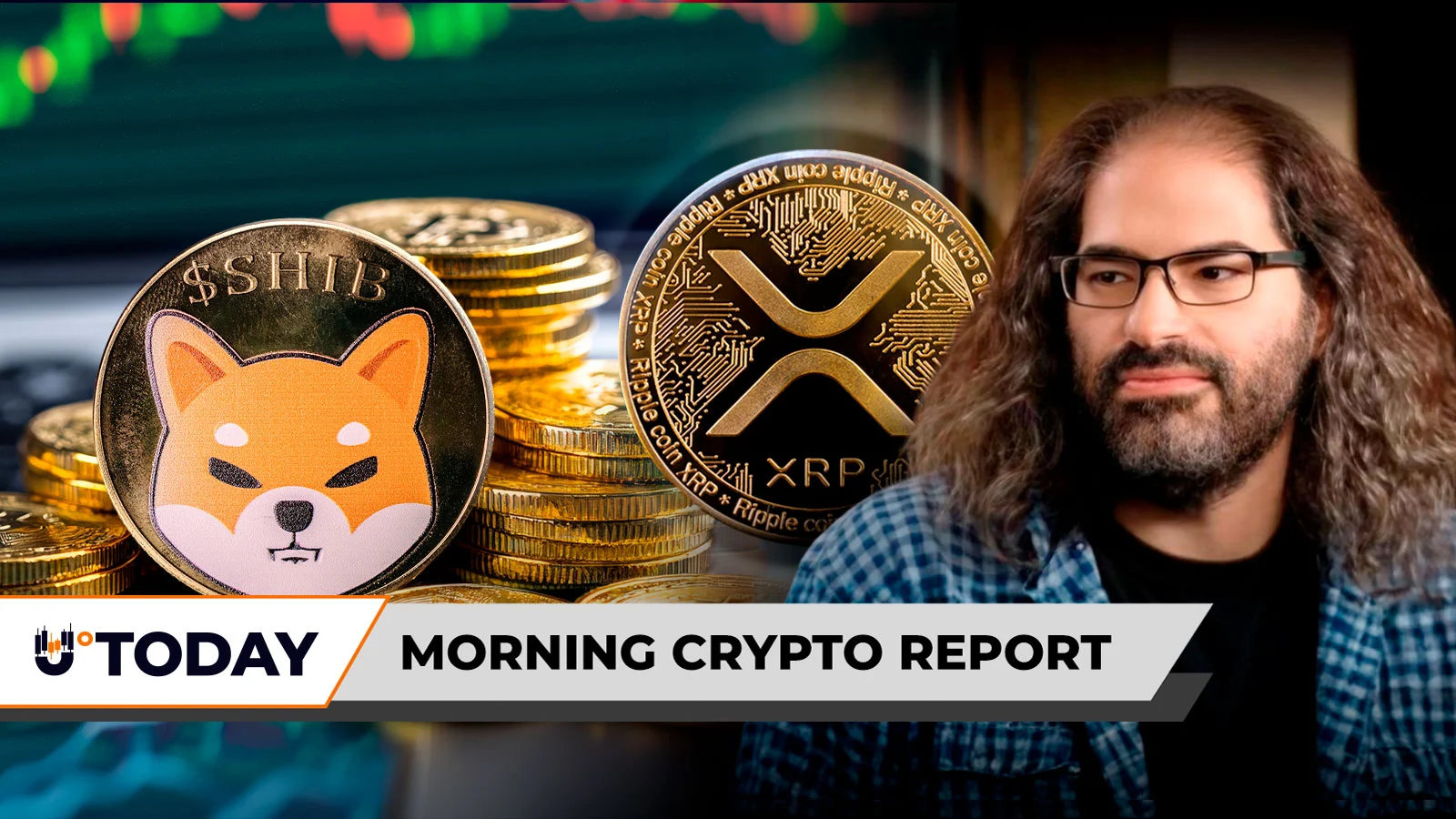
Ripple CTO Emeritus David Schwartz downplayed the likelihood of a catastrophic 93% XRP price drop, citing historical volatility but deeming such a scenario improbable. Shiba Inu (SHIB) is showing potential for a 37-40% upside move, targeting key resistance levels at the weekly Bollinger Band and 200-day moving average. Bitcoin analysts have shifted to a 'Strong Buy' sentiment as BTC approaches $74,000, with upcoming Fed rate decisions and ETF inflows being key market drivers. The market is closely watching Jerome Powell's rhetoric on March 19th for signals on potential Fed rate policy, which could either fuel further Bitcoin rallies or trigger a correction.

The total altcoin market cap has surpassed $1 trillion, indicating a potential shift in market dynamics as altcoins begin to outperform Bitcoin. Analyst Michael van de Poppe suggests altcoins could see a 20-40% rally if Bitcoin dominance falls below 55%, signaling a potential rotation of capital into smaller cap assets. Memecoins like PEPE are experiencing significant surges (20%), driven by high retail trading activity, which often precedes broader altcoin season movements.

Bitcoin's NUPL metric suggests the current rally may be a bull trap, as whale distribution indicates large holders are offloading positions into retail buying pressure. Declining stablecoin liquidity on exchanges, evidenced by low USDT reserves and deposit addresses, could make the market more fragile and susceptible to outsized moves from moderate selling. The absence of a confirmed capitulation phase, as shown by the NUPL remaining above zero, implies that a significant portion of investors still hold profitable positions, increasing the likelihood of future selling pressure. The combination of whale distribution, reduced liquidity, and an unconfirmed capitulation phase suggests that the current bullish sentiment might be masking underlying weakness, potentially leading to a price reversal.
BlackRock's launch of the Staked Ethereum Trust ETF (ETHB) introduces a novel income-generating mechanism for crypto ETFs by distributing monthly staking rewards, potentially attracting traditional finance investors seeking yield comparable to equities. The ETHB ETF's strategy to stake 70-95% of its ETH holdings and distribute rewards, estimated at 2.5-3% annually, positions it as a competitive income-generating product against traditional assets like the S&P 500 dividend yield. This development signals a potential shift in the crypto ETF market, moving beyond pure price exposure to a yield-focused competition, driven by increasing client demand for integrated crypto and staking products. The introduction of staking rewards in regulated ETFs like ETHB blurs the lines between traditional finance and crypto infrastructure, suggesting that yield generation may become a standard feature in future crypto investment funds.

Bitcoin's recent surge to $74K is driven by a confluence of factors including exhausted selling pressure, long-term holder conviction, and institutional inflows, suggesting underlying strength beyond immediate geopolitical events. Options market dynamics, specifically a large concentration of negative gamma near $75,000, indicate potential for amplified upside moves as market makers may be forced to buy Bitcoin to hedge their positions. While geopolitical tensions contribute to Bitcoin's appeal as a sovereign, globally liquid asset, traders should remain aware of macroeconomic factors like the upcoming FOMC meeting and Fed policy, which could influence market direction. Despite Bitcoin outperforming gold amid geopolitical uncertainty, its current rally structure is noted as not entirely healthy, warranting a cautious approach despite short-term bullish signals.

Cardano's price surge of over 8% to $0.293, driven by whale accumulation and increased network activity, suggests a potential breakout from its consolidation phase. With whales adding significant ADA holdings and network metrics showing consistent usage, the underlying fundamentals support a bullish outlook for Cardano, potentially targeting a 50% rally if key resistance levels are breached. The technical setup indicates Cardano is attempting to break above the $0.30 resistance, with a successful move potentially leading to a short-term recovery towards $0.33-$0.34 and a more significant upside towards $0.40-$0.43.

MicroStrategy's substantial Bitcoin purchase of 22,337 BTC for $1.57 billion reinforces its position as the largest corporate holder, signaling continued institutional conviction in Bitcoin as a long-term store of value. The acquisition, at an average price of $70,194, occurred while Bitcoin traded near $73,500, suggesting the market may have already priced in such large-scale corporate buying activity. Strategy's ongoing accumulation strategy, despite criticism regarding volatility, highlights a persistent narrative of institutional demand driving Bitcoin's price dynamics and potentially tightening supply.

Michael Saylor's Strategy has significantly increased its Bitcoin holdings by acquiring an additional 22,337 BTC, reinforcing its conviction in Bitcoin as a primary treasury asset. The substantial purchase of approximately $1.57 billion in Bitcoin by Strategy, at an average price near current market levels, signals continued institutional demand and confidence in Bitcoin's long-term value proposition. With total holdings now at 761,068 BTC, Strategy's consistent accumulation strategy, despite market fluctuations, suggests a potential for sustained buying pressure on Bitcoin, especially if market sentiment remains positive.

European banks are shifting from blocking crypto transactions to offering Bitcoin and Ethereum directly in retail apps, signaling a significant shift in institutional adoption driven by regulatory clarity (MiCA) and competitive pressures. The development of a MiCA-compliant, euro-backed stablecoin by a consortium of 12 banks, targeting a 2026 launch, aims to challenge the dollar's dominance in stablecoin markets and reclaim control over payment flows. Banks are actively moving to own the infrastructure beneath crypto, driven by the realization that failing to adopt stablecoins risks exclusion from the digital money layer and associated fee pools. While some banks are live with crypto services, a significant portion are still in announcement or pilot phases, indicating a gradual but clear trend towards integration rather than immediate widespread adoption.
Strategy's significant Bitcoin acquisition of 22,337 BTC for $1.57 billion, funded by selling its own stock, signals continued institutional conviction in Bitcoin as a treasury asset. The substantial capital deployment by Strategy, averaging $70,194 per BTC, suggests a belief in future price appreciation, potentially influencing market sentiment and demand. Strategy's increased holdings to 761,068 BTC at an average cost of $75,696 per coin highlights its long-term strategy and positions it as a major holder, impacting market dynamics.
Signal context only. Validate with price action, liquidity, and risk limits before taking a position.
