
Navigating Crypto News

CoinFeather
Navigating Crypto News

Quick market read from this story
The Federal Reserve's hawkish stance and lack of clarity on inflation, coupled with geopolitical oil price spikes, are driving capital away from risk assets like Bitcoin and into stablecoins.
Bitcoin's declining dominance and the rotation into USDT and USDC suggest a shift towards perceived safety, indicating a risk-off sentiment in the broader crypto market.
The market structure shows selective capital allocation, with institutional inflows supporting core assets rather than a broad risk-on phase, implying continued choppiness for altcoins.
Traditional markets are also exhibiting risk aversion, with falling S&P 500 futures and a rising Dollar Index, reinforcing the bearish sentiment for speculative assets like cryptocurrencies.
Deep Dive
In the past 24 hours, a notable shift in capital has occurred within the cryptocurrency market, with investors moving funds away from Bitcoin (BTC) and other major altcoins into stablecoins, primarily tokenized versions of the U.S. dollar. This trend emerges as the U.S. Federal Reserve maintained interest rates unchanged and provided no clear guidance on inflation or economic activity, particularly in light of recent geopolitical events impacting oil prices.
Bitcoin experienced a dip below $70,000 on March 19, 2026, extending its decline from earlier in the week. Major cryptocurrencies like Ether (ETH), Solana (SOL), and XRP (XRP) followed suit. Bitcoin's market dominance also decreased to 58.7% from 59.4% over three days, indicating capital outflows even from the largest cryptocurrency. Traditionally, Bitcoin's dominance would rise during market downturns as investors rotate from altcoins into BTC. However, this time, the rotation is towards stablecoins.
The market share of leading dollar-pegged tokens, USDT and USDC, has increased, with USDT's share rising to 7.76% from 7% and USDC's to 3.35% from 3%. This behavior suggests investors are seeking safety in dollar equivalents due to the Federal Reserve's lack of clarity and the volatile energy market, exacerbated by disruptions in the Strait of Hormuz. These disruptions are leading to unpredictable energy import costs globally, potentially fueling inflation.
According to Nansen, the market remains constructive at the top but fragile underneath, heavily influenced by liquidity and positioning rather than broad investor conviction. Nicolai Søndergaard, a research analyst at Nansen, noted that capital remains selective. He added that central banks are no longer a direct upside catalyst for all of crypto, institutional inflows are supporting the core market, prediction markets are gaining attention but not depth, and altcoins lack the breadth typically seen in a risk-on phase.
In traditional markets, the Dollar Index showed signs of extending its recovery, and S&P 500 futures fell, reflecting growing risk aversion. The article also highlights upcoming events and data releases, including U.S. Initial Jobless Claims, the Philadelphia Fed Manufacturing Index, New Home Sales, and Fed Balance Sheet data. Earnings reports from Gemini Space Station (GEMI) and token events such as a governance vote for Cratos DAO are also noted.
Market data indicates a downturn across major cryptocurrencies, with BTC down 0.94% and ETH down 0.3% in the 24 hours leading up to the report. Traditional markets also saw declines, with major indices like the Nikkei 225, Hang Seng, FTSE 100, and S&P 500 closing lower. Bitcoin's technical analysis suggests prices have declined after probing the upper end of a channel, with a move below the lower end signaling a potential resumption of the downtrend.
Several crypto-related equities, including Coinbase (COIN), MARA Holdings (MARA), and Riot Platforms (RIOT), closed lower. Spot Bitcoin ETFs experienced daily net outflows of -$129.6 million, with cumulative net flows at $56.38 billion. Spot Ether ETFs also saw net outflows of -$55.5 million, with cumulative net flows of $11.94 billion.
Source, catalyst, and sector overlap from the latest feed.
The CoinDesk 20 Index experienced a 1.6% decline, indicating a broad market downturn driven by underperforming assets like NEAR and HBAR. NEAR Protocol's 3.3% drop and Hedera's 2.9% decline highlight specific project weaknesses within the broader market index. With only two out of twenty assets showing gains, the performance update suggests a prevailing bearish sentiment across the tracked digital assets.
Opera's proposed acquisition of 160 million CELO tokens signifies a strategic shift towards becoming a key stakeholder in the Celo payments network, potentially increasing demand and ecosystem engagement. The move, which represents a substantial portion of Celo's circulating and maximum supply, could be interpreted as a strong vote of confidence in Celo's long-term viability and its MiniPay application's growth, especially given CELO's current low valuation. While the proposal aims to solidify Opera's commitment, the governance cap on voting power suggests a balanced approach to integration, mitigating concerns about concentrated control while still rewarding a significant investment.
Evernorth Holdings disclosed a significant $233.7 million digital asset impairment, highlighting the substantial unrealized losses on its XRP holdings acquired at higher prices. The company's proactive treasury management strategy, including DeFi activities and options strategies, suggests an attempt to generate yield and offset losses on its large XRP position. The disclosure of 473.1 million XRP holdings, partly contributed by Ripple, provides transparency into a major XRP treasury and its potential market impact.
OpNet's mainnet launch enables native DeFi on Bitcoin Layer 1, potentially unlocking significant yield opportunities for BTC holders without leaving the network. The protocol's approach of embedding smart contract data into standard Bitcoin transactions bypasses the need for wrapped BTC or bridges, mitigating counterparty risks and custody issues. By leveraging Bitcoin's inherent 'slowness' and higher fees during congestion, OpNet aims to foster stickier liquidity and more durable DeFi cycles, contrasting with faster, more volatile chains. The introduction of the OP-20 standard and upcoming stablecoin integration signal a move towards a more comprehensive Bitcoin-native DeFi ecosystem, potentially attracting new capital and use cases.
Proposed regulatory changes in the U.S. targeting stablecoin yields could impact Coinbase's revenue streams, but analysts suggest the exchange can adapt through 'rewards' loopholes, mitigating existential threats. While the CLARITY Act aims to restrict direct interest payments on stablecoins, the language may permit alternative incentive structures like rebates or loyalty programs, allowing firms to retain user engagement and revenue. Coinbase's stablecoin revenue, which grew significantly in 2025, is a key growth area, but its overall business model is diversified, suggesting that regulatory shifts on yield, while impactful, are unlikely to be catastrophic. The ongoing debate highlights the tension between regulatory oversight and maintaining the competitiveness of U.S. stablecoins globally, with potential workarounds indicating a dynamic adaptation within the crypto industry.
Ripple's CTO Emeritus David Schwartz hinted at a potential euro stablecoin launch, signaled by his social media post of the 'Eurion constellation,' which could expand Ripple's presence in the EU following its EMI license acquisition. Despite hawkish Fed signals, top Binance traders are accumulating Shiba Inu (SHIB), with whale sentiment showing a strong Long/Short ratio, suggesting a bullish outlook near the $0.00000570 support level. Analyst Benjamin Cowen warns that Bitcoin may underperform gold by up to 30%, indicating a potential shift in risk appetite away from BTC towards traditional safe-haven assets in the near term. The crypto market is transitioning from retail-driven euphoria to institutional accumulation post-FOMC, with analysts anticipating the second half of 2026 for the next major bull cycle, contingent on macro stability.
Kraken-backed SPAC KRAKacquisition Corp. is actively seeking a crypto-related acquisition target valued up to $10 billion, signaling significant potential capital deployment into the sector. The SPAC's focus on stablecoins, DeFi, and tokenization indicates a strategic interest in foundational crypto infrastructure and emerging financial technologies. With $345 million raised from its IPO, the SPAC's acquisition could provide a substantial liquidity event and public market access for a target company. This development aligns with Kraken's own potential IPO plans, suggesting a broader strategic move by the exchange to expand its influence and offerings in the digital asset space.
The ECB is moving from policy design to implementation planning for a digital euro, focusing on practical integration with existing payment infrastructure like ATMs and terminals. The initiation of workstreams for ATM and terminal integration, alongside certification frameworks, signals concrete progress towards a potential 2027 pilot, indicating a medium-term development timeline. While the ECB is actively developing the digital euro, a final decision on its issuance remains contingent on legislative approval, suggesting ongoing regulatory uncertainty.
Live Feed
Loading the broader stream in the same flow as the homepage feed.
Find out what analysts expect for PulseChain in 2026, with realistic price forecasts, token supply insights, and long-term market outlook.
Bitcoin's recent pullback below $70,000 is directly linked to stronger-than-expected US inflation data, signaling that persistent price pressures may delay anticipated Federal Reserve rate cuts. The shift in market expectations away from near-term monetary easing removes a key bullish driver for risk assets like Bitcoin, increasing sensitivity to macroeconomic signals. Profit-taking by short-term holders, evidenced by significant BTC realized profits near $75,000, combined with macro headwinds, is contributing to downside pressure on Bitcoin. Bitcoin's ability to hold above the 200-week EMA near $68,350 is now a critical technical support level, with a failure to maintain this could accelerate further price declines.
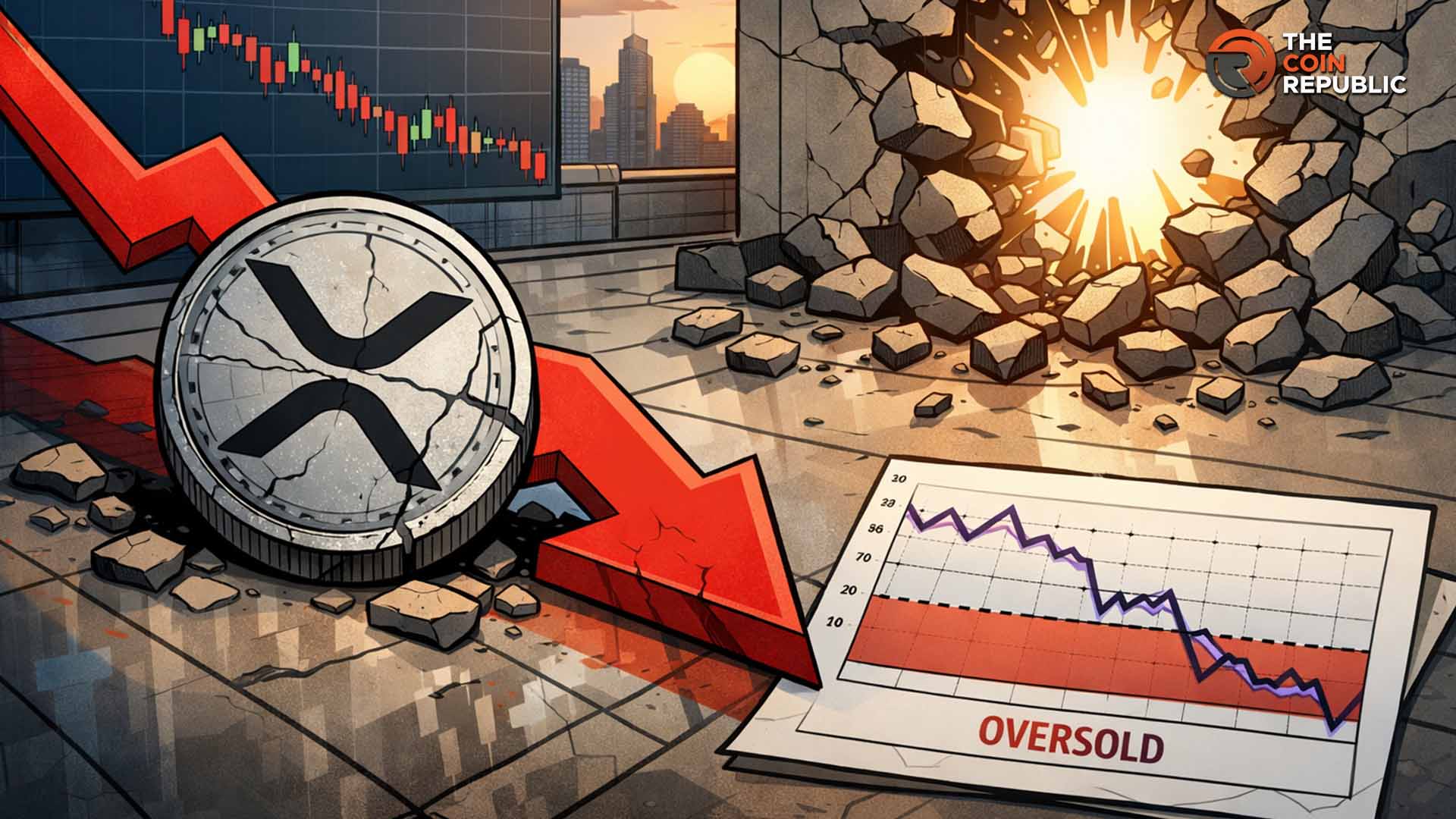
XRP's RSI hitting 2022 bear market lows suggests extreme oversold conditions, historically a precursor to potential reversals, warranting trader attention for momentum shifts. Despite zero daily XRP ETF inflows, the substantial cumulative $1.21 billion indicates sustained institutional interest, with current flat flows likely reflecting market observation rather than disinterest. The surge in XRP Ledger transactions to nearly 3 million daily, coupled with Evernorth's $1 billion XRP treasury plan, signals increasing network utility and growing institutional adoption within the XRP ecosystem. The confluence of technical oversold signals and fundamental on-chain activity growth, alongside institutional treasury plans, presents a potentially bullish setup for XRP if broader market sentiment turns positive.
Grayscale's Head of Research indicates that regulated products like ETFs are opening doors for institutional allocation into XRP, signaling a maturing market beyond Bitcoin and Ethereum. Growing client demand for XRP from financial advisors, as reported by Grayscale, suggests increasing institutional interest in diversifying portfolios beyond top-tier cryptocurrencies. The development of XRP ETFs and increased advisor interest implies a potential for broader adoption and price discovery as institutional capital flows into the asset.

OP_NET has launched a “SlowFi” DeFi stack that runs smart contracts directly in standard Bitcoin transactions with BTC as the only gas asset, avoiding bridges and wrapped BTC.

Beyond immediate losses, attacks often lead to prolonged downtime, liquidity shocks and confidence erosion, as interconnected DeFi systems amplify the impact across markets.

Apex Group’s Tokeny and Polygon Labs are launching T-REX Ledger, a Polygon-based blockchain that aims to centralize compliance for ERC-3643 security tokens.

Cryptocurrency exchange Crypto.com is laying off around 180 employees as it shifts focus to AI-driven operations.
Canada's FINTRAC has significantly increased its enforcement actions by revoking 47 crypto-related firm registrations in 2026, signaling a heightened regulatory environment. The intensified crackdown, driven by concerns over money laundering and fraud, suggests increased compliance pressure on crypto exchanges, payment services, and ATMs operating within or serving Canada. This regulatory tightening by Canadian authorities indicates a broader trend of global regulators increasing scrutiny on virtual asset platforms to align with traditional financial compliance standards.

Shiba Inu continues to see growing demand, signaled by its negative exchange netflow, which stands at over -141 billion SHIB within 24 hours.
ICICI Bank's redemption of $800 million in debt under its GMTN program, including $16 million in interest, represents a significant financial maneuver that could impact its balance sheet and liquidity metrics. The market reaction, a 2.6% dip in ICICI Bank's share price, suggests investor concern over the substantial cash outflow, despite the bank's overall positive performance over the last five days. This debt redemption event, while primarily affecting traditional finance, highlights the financial health and debt management strategies of major banking institutions, which can indirectly influence investor confidence in broader financial markets.
XRP death cross is confirmed on hourly chart as bears triggers a correction from $1.50.

Crypto.com's decision to cut 12% of its workforce signals a strategic pivot towards AI integration, potentially impacting operational efficiency and future development focus. The layoffs at Crypto.com, mirroring trends in the broader tech and crypto sectors, highlight a significant industry-wide shift prioritizing AI capabilities over traditional roles. While the direct impact on Crypto.com's token is not specified, the company's aggressive AI push and associated restructuring could influence its long-term market positioning and investor sentiment.
Pi Network's Mainnet upgrade to Protocol 20 lays the groundwork for smart contract functionality, signaling a move towards building decentralized applications and DeFi platforms. Despite short-term price fluctuations, the analyst suggests focusing on Pi Network's underlying infrastructure development, indicating that current market price may not reflect the project's long-term utility building. The broader market context highlights a shift towards blockchain integration with traditional finance and other technologies like AI, suggesting that projects with real-world utility and user adoption will drive long-term value.
HDFC Bank's stock experienced a 4% decline following the resignation of its chairman due to ethical concerns, signaling potential governance issues that could impact investor confidence. The appointment of an interim chairman for a three-month period introduces a period of uncertainty for HDFC Bank's leadership, which may lead to continued stock volatility until a permanent successor is named. While the article focuses on a traditional banking entity, the underlying theme of ethical governance and leadership changes can serve as a cautionary tale for the crypto space, where transparency and trust are paramount.

Bitcoin's price action is preserving a new local trading range between 2021 highs and 2025 lows, indicating resilience despite macro headwinds. The Federal Reserve's hawkish stance and projected single rate cut in 2026 are pressuring risk assets, including Bitcoin and gold, suggesting a cautious market environment. Traders are watching for a weekly close above $75,000 for Bitcoin to confirm upward momentum, with potential buying interest noted in the low $60,000s if a deeper correction occurs. Gold's significant drop below $4,700 per ounce, leading a broader macro asset sell-off, highlights a flight to perceived safety or a deleveraging event impacting correlated markets.
Signal context only. Validate with price action, liquidity, and risk limits before taking a position.
