
Navigating Crypto News

CoinFeather
Navigating Crypto News

Quick market read from this story
Bitcoin's price is consolidating near $71K, supported by returning ETF inflows and reduced miner selling pressure, indicating a potential floor formation.
While BTC shows constructive price action, the article heavily promotes a presale for 'Pepeto,' positioning it as a high-return opportunity compared to direct BTC investment.
The narrative suggests that early presale participants in projects like Pepeto, which aims to offer zero-fee swaps and instant bridging, stand to capture significant gains upon listing.
Deep Dive
The cryptocurrency market is showing constructive signs as US spot Bitcoin ETFs logged $54 million in net inflows on March 12, marking the fourth consecutive day of positive flows. This follows a period of outflows, indicating renewed investor interest. On-chain data reveals significant accumulation occurring between $68,000 and $70,000, with miners also reducing their sell pressure as post-halving economics begin to influence their behavior. Bitcoin is currently trading near $71,000.
While the Bitcoin price action is turning positive, with potential for a test of the $74,500 resistance level, traders are being advised that the strongest returns often come from early presale entries rather than buying at peak prices. The article highlights Pepeto, a new presale project, as a potential opportunity for significant gains, drawing parallels to the success of exchange tokens at listing.
Pepeto aims to solve common issues in the crypto space, offering zero-fee swaps across chains, instant asset bridging between networks, and a risk scorer to identify potential scams. The platform generates volume through user interactions, which is expected to drive token value post-listing. The presale has already raised $7.98 million, with early investors potentially earning 199% APY, translating to approximately $4,145 monthly yield before listing. The project is backed by a co-founder of Pepe and a former Binance expert, with contracts audited by SolidProof.
In contrast to Bitcoin's recovery, XRP is trading around $1.40 despite a surge in daily XRPL payments to 2.7 million and AMM pools reaching 27,000. However, the token price remains down 23% year-to-date, suggesting its growth is currently dependent on broader market sentiment shifts rather than solely on fundamental network activity.
The article emphasizes that while Bitcoin's recovery is building momentum, the most substantial returns in crypto cycles are often found in presale opportunities like Pepeto, where early entry can lead to significant multipliers upon listing. It encourages readers to consider early participation to capitalize on potential growth.
Source, catalyst, and sector overlap from the latest feed.
An executive from EverNorth Asia presented a strong institutional case for XRP, highlighting its potential to disrupt the $150 trillion cross-border payments market plagued by high fees. Increasing regulatory clarity across major jurisdictions like the US (SEC decision), Europe (MiCA), and Asia is reducing institutional barriers to XRP adoption. Significant institutional capital, including a $150 million XRP ETF holding by Goldman Sachs and $1 billion in ETF inflows since late 2025, underscores growing financial sector interest. Despite positive developments, the executive believes XRP adoption is still in its early stages, suggesting substantial future growth potential.
The post Pi Network News Today: Second Migration Phase Goes Live, Bringing More Pi to Mainnet appeared first on Coinpedia Fintech News Pi Network has officially opened its second migration phase, allowing Pioneers who have already moved their first Pi balance to Mainnet to bring additional tokens on-chain. The announcement, which was first made on Pi Day on March 14, is now rolling out gradually across the network and represents one of the most anticipated milestones the …
The upcoming FOMC meeting introduces significant uncertainty for crypto markets, as Fed Chair Powell's commentary on inflation and future monetary policy could dictate liquidity conditions and risk asset appetite. Bitcoin faces a critical resistance zone around $75,000-$76,000; a sustained break above this level could signal a trend reversal, while failure may lead to a retest of lower support levels. Ethereum and XRP are closely tracking Bitcoin's price action, with their immediate upside potential contingent on BTC's ability to overcome key resistance levels, highlighting a correlated market dynamic. Traders are closely monitoring the FOMC for signals on interest rates, as crypto's sensitivity to liquidity means any indication of prolonged higher rates could pressure prices, while dovish signals might support rallies.
Ripple's CTO acknowledges that a significant price drop for XRP from a hypothetical $4 to $0.20-$0.25 is possible, drawing parallels to its historical volatility and underscoring the inherent unpredictability of crypto asset pricing. The candid admission from Ripple's CTO that neither he nor the company anticipated XRP's current valuation suggests a lack of pre-meditated price manipulation, potentially easing some market concerns about the token's fundamental value proposition. Schwartz's personal anecdote of selling ETH at $1.05 due to perceived price ceilings highlights the difficulty even informed insiders face in predicting market tops, reinforcing the idea that extreme price movements are often unforeseen. The commentary from Ripple's CTO, while not a direct price prediction, serves as a cautionary note on extreme price swings, implying that traders should remain aware of potential downside risks even during periods of optimism.
Bitcoin Everlight is launching a new reward infrastructure focused on transaction fee generation and BTC distribution, aiming to attract experienced investors seeking sustainable yield beyond speculative tokens. The platform's presale offers tiered participation (Azure, Violet, Radiant Shards) with fixed APY during the presale phase, transitioning to a BTC distribution model based on network volume and fee rates post-mainnet launch. Independent audits by Spywolf and Solidproof, along with KYC verification, aim to build investor confidence in the project's security and team legitimacy, differentiating it from less transparent ventures.
Renewed aggressive inflows into spot Bitcoin ETFs, coupled with significant corporate treasury additions by entities like Strategy and Metaplanet, signal a strong resurgence in institutional demand driving Bitcoin towards $75,000. The current price surge appears to be increasingly influenced by derivatives positioning, with traders increasing leverage on the long side, suggesting potential for increased volatility as spot demand remains comparatively weaker. While Bitcoin's market structure has improved, the sustained push above $70,000 is being driven by a combination of institutional buying and derivative market activity, indicating a complex interplay of capital flows. The return of institutional confidence, evidenced by consistent ETF inflows and substantial corporate BTC purchases, suggests a potential shift in market sentiment and a growing appetite for Bitcoin as a store of value or growth asset.
BitMine's substantial ETH acquisition, totaling 4.6 million ETH and representing 3.81% of circulating supply, signals strong institutional conviction in Ethereum as a macro hedge asset. The company's strategy of staking 66% of its ETH holdings to generate yield transforms its treasury into an active income-generating operation, potentially influencing market dynamics through consistent demand. Chairman Tom Lee's framing of crypto accumulation as a hedge against global instability, particularly geopolitical risks and rising energy prices, suggests a narrative driving institutional capital into digital assets like ETH. The direct purchase of 5,000 ETH from the Ethereum Foundation indicates a strategic relationship and a mechanism for channeling institutional funds towards ecosystem development without immediate exchange sell pressure.
Bitcoin's recent surge above $74,000 demonstrates resilience, but its correlation with tech stocks suggests continued volatility is likely. Increased institutional interest, evidenced by Metaplanet's capital raise and MicroStrategy's BTC purchases, provides a bullish undertone, though broader market risks persist. While the price action is positive, the article emphasizes caution due to macroeconomic pressures and the need to monitor both on-chain metrics and traditional market trends.
Metaplanet secured up to $531 million in funding, signaling strong institutional confidence in its long-term Bitcoin accumulation strategy despite current unrealized losses. The capital raise will accelerate Metaplanet's ambitious targets of holding 100,000 BTC by end-2026 and 210,000 BTC by 2027, potentially impacting Bitcoin's circulating supply. The firm's strategy hinges on a potential regulatory shift in Japan recognizing Bitcoin as a financial asset, which could unlock further institutional adoption. Despite significant paper losses on its current holdings, Metaplanet is doubling down on Bitcoin as a store of value, reflecting a broader trend of corporate treasury diversification.
T. Rowe Price's amended SEC filing indicates a significant expansion of potential holdings for its active crypto ETF, including meme coins like DOGE and SHIB, signaling a broader acceptance of diverse digital assets by traditional asset managers. The active management strategy and potential for staking participation suggest the ETF aims to generate alpha beyond simple asset holding, potentially driving demand for underlying assets through yield generation and dynamic rebalancing. The inclusion of a wide range of altcoins alongside Bitcoin and Ethereum in the ETF's potential holdings could lead to increased institutional interest and capital flows into these less established digital assets.
Ethereum's ETH is outperforming Bitcoin, signaling a potential rotation from BTC into altcoins driven by renewed ETF demand and corporate treasury buying. Strong inflows into US spot Ether ETFs and BlackRock's new staking ETF suggest increasing institutional interest and demand for ETH-related products. Bitmine's significant ETH accumulation, alongside other treasury strategies, provides a fundamental demand-side catalyst that could support price appreciation. The ETH/BTC pair breaking above a key resistance level indicates a potential shift in market sentiment favoring Ethereum over Bitcoin, suggesting broader risk appetite in the crypto market.
Significant Bitcoin outflows from Binance, totaling nearly 2,000 BTC, indicate a strong accumulation trend by large holders prioritizing self-custody. This reduction in exchange liquidity tightens Bitcoin's available supply, historically a bullish signal that can amplify price movements when demand increases. The whale accumulation coincides with Bitcoin reclaiming the $74,000 level, suggesting increased investor confidence and potential for further upside momentum.
Live Feed
Loading the broader stream in the same flow as the homepage feed.

A new report reveals that OpenAI's own team warned the company against its adult mode plans—but the AI giant is still moving forward.
XRP exhibits a significant 9:1 bid-to-ask ratio on Coinbase, indicating a strong bullish imbalance and a potential liquidity vacuum to the upside. This order book depth suggests a low 'path of least resistance' for upward price movement, implying that less capital is required to drive XRP higher compared to lower. The current market structure, characterized by a deep buy wall and thin ask-side, suggests that any sell-off could be aggressively absorbed, potentially leading to rapid price appreciation if broader market momentum continues. While consolidation may persist, the order book dynamics point to a mathematically higher probability of a move towards $2.25, contingent on sustained market momentum and the absence of significant overhead supply.
Solana sees $9.1M inflows as SOL builds higher lows near $92, hinting at a potential breakout toward $96–$100.

MicroStrategy must acquire approximately 6,158 BTC weekly to meet its 1 million BTC target by the end of 2026, requiring an estimated $22.2 billion investment at current price projections. Michael Saylor's recent cryptic social media post suggests an imminent new Bitcoin purchase, reinforcing MicroStrategy's aggressive accumulation strategy and its significant influence on the BTC market. Despite short-term volatility, MicroStrategy's continued large-scale Bitcoin accumulation and the positive performance of its MSTR stock indicate sustained institutional confidence in Bitcoin as a treasury asset.
The SEC's decision to drop its case against BitClout founder Nader Al-Naji, following the DOJ's earlier dismissal, removes a significant legal overhang for the project and its past investors. This development, alongside other recent dismissals of SEC cases against crypto entities, may signal a shift in regulatory enforcement priorities, potentially creating a more favorable environment for certain digital asset projects. While the BitClout platform itself is defunct, the resolution of these legal actions could be interpreted positively by the broader market, reducing perceived regulatory risk for similar past or future ventures.

The Sei Development Foundation joined in the round to support expansion of an SEC-regulated alternative trading system and settlement platform for blockchain-based securities.
Veteran trader Peter Brandt's analysis suggests Ethereum is forming a local bottom near historical support, indicating a potential for a near-term recovery rally if key resistance levels are breached. The ETH price is currently testing resistance around $2,300, with a decisive move above this level potentially signaling a continuation towards $2,400 and $2,600, while failure could lead to a retest of lower support zones. Increased open interest in Ethereum futures, up 19.15% to $33.37 billion, alongside corporate accumulation of ETH by entities like BitMine, suggests growing market interest and potential underlying demand. Despite short-term bullish signals, Ethereum's long-term monthly chart indicates it remains within a broad consolidation phase, suggesting that a confirmed macro breakout is still pending.
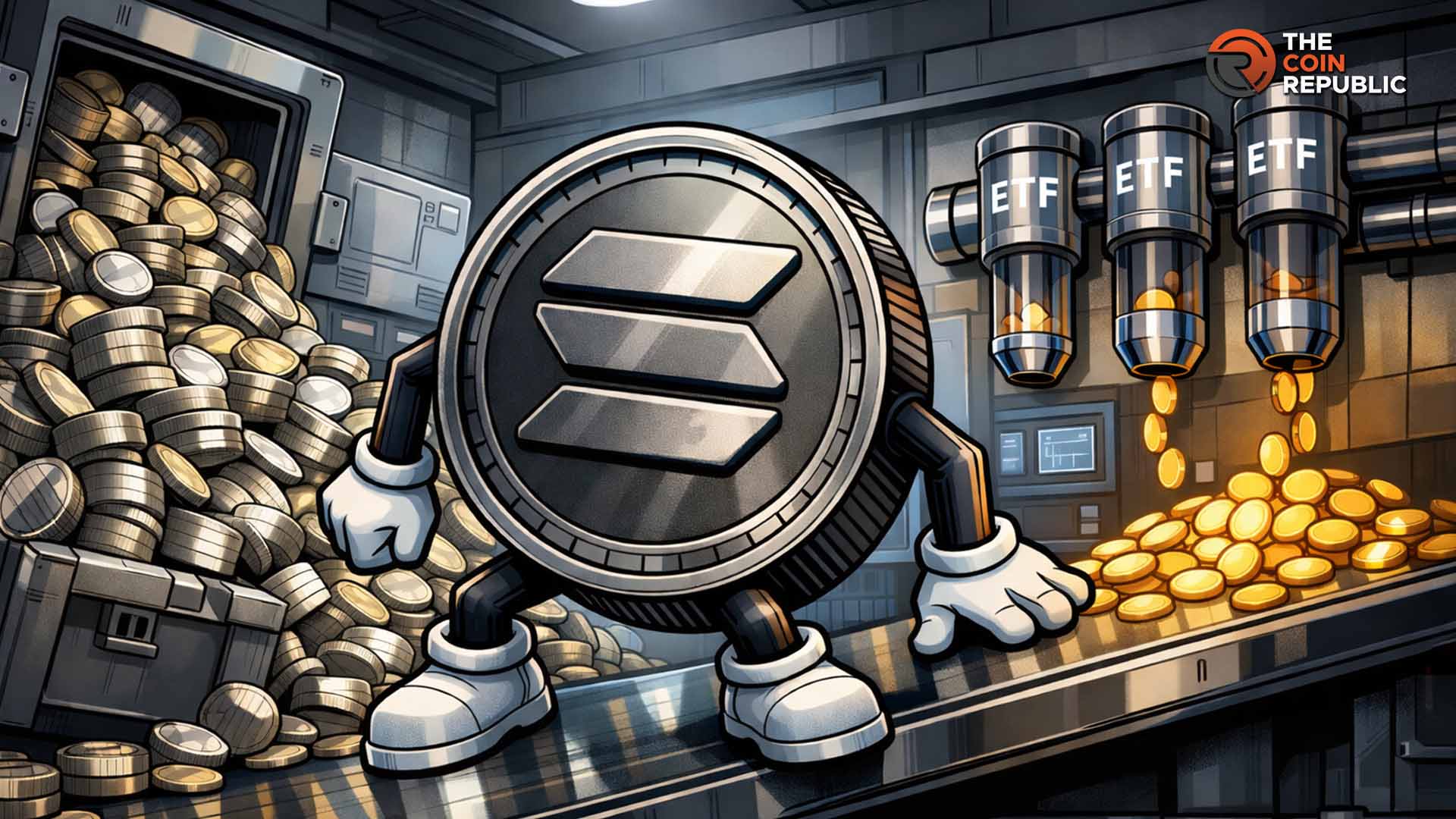
Solana's price is showing a hidden bearish divergence on the RSI, suggesting that recent upward momentum may be fading despite price gains. Rising exchange balances and a decrease in long-term holder positions indicate increasing selling pressure, potentially overriding positive ETF inflows. The technical and on-chain data collectively point to a potential 15% price drop for SOL to $77 if key support levels fail.

The CLARITY Act faces a critical political deadline in late April/early May, with its potential passage directly impacting how stablecoins function, specifically regarding yield generation, which could divert significant capital from traditional banking deposits. Banks are lobbying aggressively to prevent stablecoin issuers from offering interest-like rewards, fearing deposit migration that could total $500 billion by 2028, while crypto firms argue such features are necessary for competition and broader adoption. Failure of the CLARITY Act to pass could lead to increased reliance on regulatory rulemaking (e.g., by the OCC) and a more uncertain future for crypto market structure, potentially delaying broader adoption and making the sector more vulnerable to political shifts. The debate over stablecoin yield is a central point of contention, highlighting a fundamental disagreement on whether these digital assets should primarily serve as payment instruments or evolve into more competitive financial products, with significant implications for both TradFi and crypto.
XRP's surge past $1.50 and $90 billion market cap signals a significant return of buying momentum after a consolidation period, potentially indicating a shift towards further gains. The renewed investor confidence and increased trading volumes suggest that recent price dips presented an attractive entry point, highlighting market resilience and potential for a medium-term recovery. While the price action is positive, traders should maintain disciplined risk management due to inherent cryptocurrency market volatility and the need to monitor liquidity and macroeconomic trends.

World Liberty Financial is introducing a tiered access system for investors who lock up significant amounts of WLFI tokens, potentially creating demand for the token to gain 'guaranteed access' to the team. The new governance framework requires a minimum 180-day token lock-up for participation, which could reduce the circulating supply of WLFI and influence its price dynamics. The development occurs amidst regulatory scrutiny of the Trump family's crypto ventures, suggesting a strategic move to solidify investor engagement despite external pressures. The introduction of 'super nodes' requiring $5.3 million in staked WLFI tokens aims to filter and prioritize long-term ecosystem participants, potentially impacting the project's decentralization narrative.
Signal context only. Validate with price action, liquidity, and risk limits before taking a position.
