
Navigating Crypto News

CoinFeather
Navigating Crypto News
Source, catalyst, and sector overlap from the latest feed.
XRP's active addresses have fallen to a weekly low, indicating a potential decrease in network demand and fading momentum that could pressure its price. Despite the decline in network activity, XRP's price is showing resilience, trading flat and attempting to recover from intraday lows, suggesting that the market may be looking past the current on-chain metrics. While XRP's network activity is currently weak, its price action is beginning to align with broader market trends as other major cryptocurrencies like ETH and SOL show upward momentum, hinting at a potential short-term recovery for XRP.
Live Feed
Loading the broader stream in the same flow as the homepage feed.
Coinbase's expansion of regulated crypto futures trading to 26 European countries signifies a strategic move to capture a previously underserved market, potentially increasing derivatives volume and revenue for the exchange. The launch offers European traders a compliant alternative to offshore platforms, potentially drawing capital into regulated venues and increasing demand for underlying assets like BTC and SOL through futures contracts. By offering both perpetual-style and dated futures with leverage, Coinbase is positioning itself as a comprehensive trading venue, aiming to attract sophisticated traders and broaden its appeal beyond spot markets.
China's expanded restrictions on BHP's iron ore shipments signal a strategic move to assert greater control over commodity pricing, potentially impacting global supply chains and commodity markets. The escalating pricing dispute between China and BHP, a major global mining entity, has led to a significant drop in BHP's share price, highlighting the market's sensitivity to geopolitical trade tensions and resource control. This development underscores China's increasing leverage as a dominant consumer, suggesting a shift in power dynamics with major resource suppliers and potentially influencing future trade negotiations.

South Korean regulators are signaling increased enforcement on AML/KYC failures, potentially impacting exchange operations and user access. Bithumb faces a potential six-month partial suspension, which could restrict new user withdrawals and affect its market position in South Korea. The regulatory action against Bithumb follows similar penalties for other exchanges like Upbit and Korbit, indicating a broader trend of stricter oversight in the region. While the suspension is at a pre-notification stage and may be adjusted, the warning to the CEO suggests a serious regulatory stance that could deter new user onboarding.

The United Nations Development Programme's report highlights blockchain's potential to modernize public systems, signaling growing institutional interest in distributed ledger technology for transparency and efficiency. UNDP's pragmatic approach emphasizes responsible adoption with robust oversight, suggesting that successful blockchain integration in public infrastructure hinges on strong governance and security measures. The report's focus on platform-agnostic solutions and interoperability indicates a trend towards open digital infrastructure, potentially benefiting projects prioritizing decentralization and avoiding vendor lock-in.
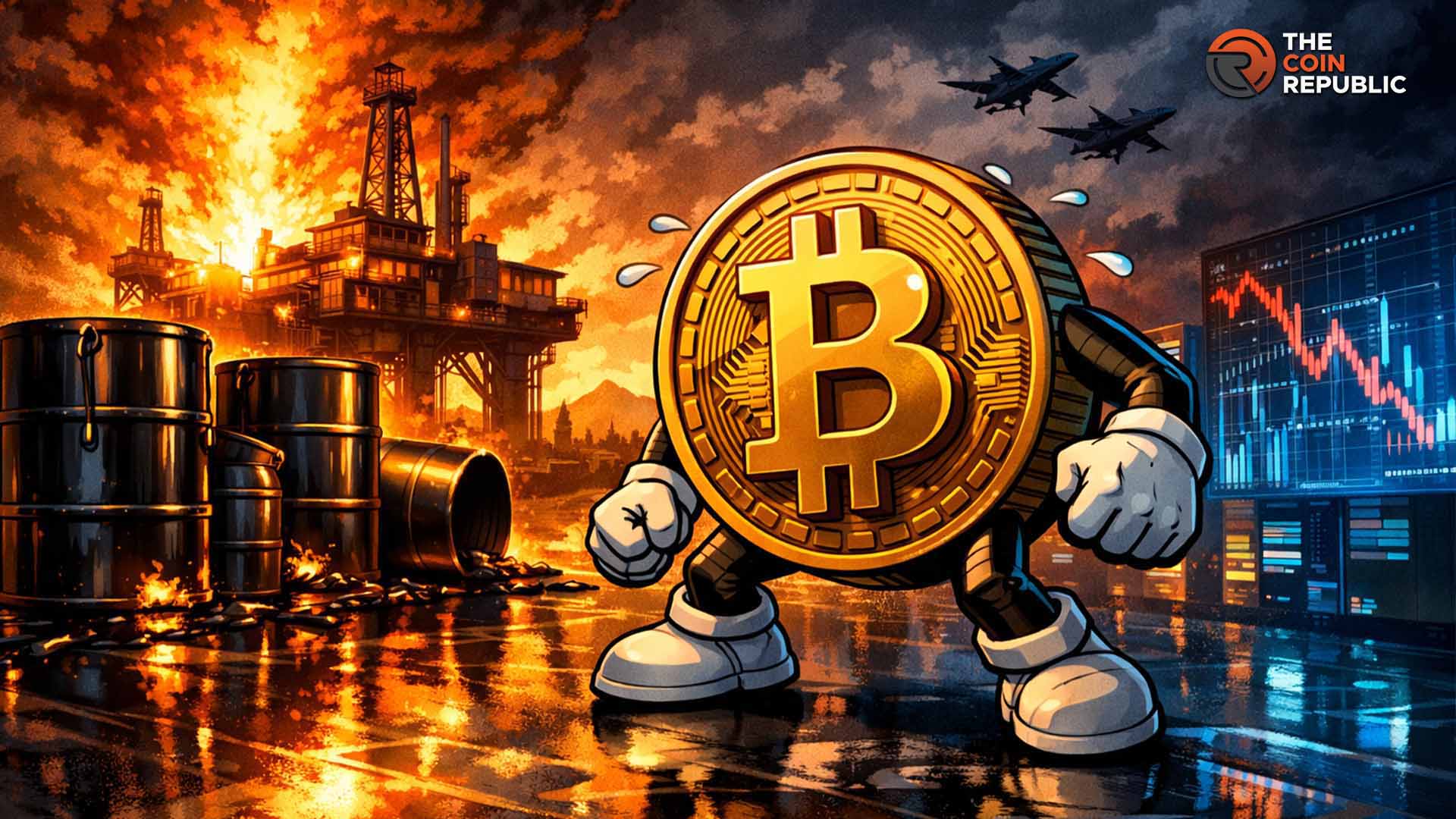
Bitcoin's price recovery indicates a trader preference for risk assets when immediate macro-driven panic subsides, suggesting demand remains present at lower levels. The potential G7 coordinated oil reserve release acted as a de-escalation signal, easing fears of inflation and tightening financial conditions, which directly supported Bitcoin's rebound. Near-term Bitcoin price action will likely remain sensitive to geopolitical headlines and energy market movements, with a sustained rally contingent on further de-escalation or official intervention. Traders are closely monitoring liquidity, crude oil prices, and geopolitical developments, implying a tactical rather than a fundamentally driven recovery for Bitcoin at this juncture.
The metaverse sector continues to evolve, with projects like Decentraland and The Sandbox focusing on virtual worlds while others like Enjin and Render provide underlying infrastructure. As VR technology and Web3 development advance, metaverse cryptocurrencies are positioned to play a significant role in the future internet economy, driven by digital ownership and decentralized economies. The article highlights key metaverse coins for 2026, including MANA, SAND, AXS, ENJ, ILV, APE, and RENDER, detailing their features, pros, and cons, which can inform investment strategies.
A Nvidia-backed startup plans to test Bitcoin mining in orbit, leveraging the cost-efficiency of ASICs over GPUs for space-based computing to potentially reshape mining economics. The initiative highlights a broader trend of exploring space-based data centers for AI and high-performance computing, with Bitcoin mining as a potential early specialized workload. While technically ambitious, orbital mining faces significant legal and technical hurdles, including satellite jurisdiction under the Outer Space Treaty and communication latency issues, suggesting a long development path.
Nasdaq's partnership with Kraken's parent company, Payward, to develop tokenized equities signals a significant move towards integrating traditional finance with blockchain technology. The initiative, set to launch in 2027, aims to modernize corporate actions and shareholder engagement, potentially increasing efficiency and accessibility for tokenized stock trading. This development, alongside similar efforts from the NYSE, indicates a growing trend of established financial institutions exploring tokenization, which could impact market structure and liquidity for equities.

The Bitcoin network reaching 20 million coins mined reinforces its core value proposition of scarcity, a key differentiator against fiat currencies, potentially appealing to investors seeking inflation hedges. Despite the symbolic milestone, market analysts suggest the event is already priced in, with short-term price action likely to remain dominated by liquidity and macroeconomic factors rather than this specific supply event. The long-term implication of Bitcoin's finite supply, coupled with predictable issuance policy, is seen as a powerful combination that markets may eventually reward, emphasizing trust in the protocol.
Despite a surge in whale accumulation, Ethereum is facing significant resistance at key trading levels, suggesting potential short-term consolidation or a pullback before any sustained upward movement. The divergence between increasing long-term holder accumulation and current price action indicates strong conviction from large investors, even as short-term technicals point to overhead supply. Traders should monitor the identified resistance band for a decisive breakout, while also considering the potential for a retest of lower support levels if selling pressure persists.

The CoinDesk 20 Index is showing minimal movement, trading up 0.1%, indicating a lack of strong directional conviction across the top 20 crypto assets. Avalanche (AVAX) and Internet Computer (ICP) are outperforming the broader index, suggesting potential short-term strength in these specific Layer 1 protocols. With only nine out of twenty assets trading higher, the overall market breadth is weak, implying that gains are concentrated rather than widespread.

Tech investor Imran Khan, formerly of Snap and Credit Suisse, explicitly separates crypto from his AI investment thesis, viewing them as distinct asset classes with different drivers. Despite the separation, Khan's firm Proem Asset Management holds indirect exposure to crypto via equities like Coinbase and Robinhood, and a spot Bitcoin ETF (IBIT), indicating a broader tech sector interest beyond pure AI productivity. The commentary highlights a divergence in market perception, with some investors seeing AI and crypto convergence while key figures like Khan emphasize their fundamental differences in investment rationale. The discussion on AI's potential impact on jobs and the economy, and historical parallels to past technological revolutions, provides context for Khan's cautious but not entirely dismissive stance on emerging technologies.

Bitmine's aggressive accumulation of 61,000 ETH in one week, bringing its total to nearly 4% of supply, positions it as a significant whale and potential market mover for ETH. The company's stated goal of reaching 5% ETH supply and launching its own validator network signals a long-term strategic commitment to Ethereum's staking ecosystem, potentially influencing staking yield dynamics. Despite bullish sentiment from some investors, short sellers highlight risks associated with declining staking yields post-upgrade and Bitmine's premium valuation, suggesting potential downside pressure. The market is presented with a dichotomy: Bitmine as a high-liquidity institutional proxy for ETH versus the risks of company-specific performance and potential overextension on a depreciating asset.
Signal context only. Validate with price action, liquidity, and risk limits before taking a position.
Quick market read from this story
Strategy has significantly expanded its Bitcoin holdings by acquiring an additional 17,994 BTC for approximately $1.28 billion, financed through its at-the-market offering program.
The company's total Bitcoin reserves now exceed 738,000 BTC, representing a substantial treasury allocation and a continued bullish conviction in Bitcoin as a store of value.
This large-scale accumulation by a prominent corporate entity signals sustained institutional demand and may provide a supportive backdrop for Bitcoin's price action.
Deep Dive
MicroStrategy has significantly expanded its Bitcoin holdings, acquiring an additional $1.28 billion worth of the cryptocurrency. This latest acquisition follows a tease from executive chairman Michael Saylor on Thursday and underscores the company's ongoing commitment to its Bitcoin strategy.
Between March 2 and March 8, the corporate intelligence and software firm purchased 17,994 Bitcoin (BTC) at an average price of $70,946 per BTC. This substantial addition brings MicroStrategy's total Bitcoin reserves to an impressive 738,731 BTC.
The company has invested a total of $56.04 billion to accumulate this reserve, with an current average purchase price of $75,862 per coin.
The recent Bitcoin purchases were financed through MicroStrategy's at-the-market (ATM) offering program. During the same period, the company successfully raised approximately $1.276 billion in net proceeds from the sale of its common and preferred stock.
MicroStrategy retains significant capacity for future fundraising, with over $6.7 billion available under its common stock program and tens of billions more across its various preferred stock tiers.
Significant outflows of 275 billion SHIB from exchanges suggest holders are moving assets to private wallets, potentially reducing immediate sell pressure. Despite exchange outflows, SHIB remains in a multi-month downtrend with lower highs and lows, indicating that the broader market structure has not yet shifted in favor of buyers. While on-chain data shows active circulation and a slight increase in network activity, the price action is likely to remain volatile and influenced by macroeconomic factors and Bitcoin's performance.
