
Navigating Crypto News

CoinFeather
Navigating Crypto News

Source, catalyst, and sector overlap from the latest feed.
Polymarket bettors assign a 57% probability to Ethereum losing its second-largest market cap position by year-end, a significant increase from 14% in January, indicating growing market concern over ETH's relative valuation. The potential 'flippening' is driven by Tether's (USDT) substantial growth, suggesting a market shift prioritizing stablecoin liquidity and stability over smart contract platform utility in a persistent bear market. While Ethereum has historically held its second position, past instances of being overtaken by XRP highlight its vulnerability to market volatility and competing narratives, making this USDT threat a key development to monitor.
Live Feed
Loading the broader stream in the same flow as the homepage feed.

The era of broad altcoin rallies appears to be over, with market dynamics shifting towards shorter, more volatile rotations driven by limited capital and institutional focus on large-cap assets and RWAs. Increased token supply and ETF liquidity absorption are diluting capital for altcoins, suggesting a future where only fundamentally strong or narrative-driven projects will see significant price appreciation. Traders should anticipate a market environment characterized by rapid sector-specific shifts rather than widespread altcoin performance, requiring a more tactical approach to asset selection. The significant capital outflow from altcoins and continued inflows into Bitcoin ETFs highlight a structural rotation favoring established assets and potentially tokenized real-world assets.
Dogecoin's active addresses have surged 176% to 114K, indicating a significant increase in network participation and potential for renewed bullish sentiment. The price is testing a key ascending support trendline near $0.095, with a successful hold potentially leading to a breakout towards the $0.10-$0.11 range. Elevated network activity combined with price action near a critical support level suggests growing trader interest and a potential for near-term volatility.

Render's decentralized GPU network is positioned at the intersection of blockchain and AI, with potential price targets suggesting significant upside by 2026 and 2030, contingent on sustained growth in AI computing and Web3 infrastructure adoption. The current market consolidation around $1.79-$1.83 presents a stabilization phase for RNDR, with key support at $1.60-$1.70 and resistance at $2.20, indicating a potential range-building period before a directional move. Long-term price predictions for RNDR range from $18 by 2026 to $90 by 2030, driven by increasing demand for scalable GPU infrastructure for AI, gaming, and digital production, assuming broader crypto market cycles are favorable.

Quant's QNT token is currently consolidating, with price predictions suggesting a potential rise to $280 by the end of 2026 and $1000 by 2030, contingent on sustained enterprise adoption and market recovery. The article highlights Quant's focus on enterprise-grade blockchain interoperability via Overledger, positioning it as an infrastructure play distinct from speculative retail narratives. Traders should monitor QNT's ability to hold support around $64-$66 and break key resistance at $75-$78 in the near term, with a move above $200 seen as a confirmation of broader upside potential for 2026. Long-term projections for QNT range significantly, with potential highs of $2300 by 2040 and $3000 by 2050, underscoring the asset's potential if it maintains relevance in enterprise blockchain solutions.

Bitcoin's initial sell-off during the U.S.-Iran conflict has been followed by a pattern of higher lows, suggesting a strengthening resilience and potential safe-haven narrative re-emergence. Despite geopolitical tensions, Bitcoin has outperformed traditional assets like the S&P 500 and equities, indicating a shift in investor perception towards its role as a shock absorber in volatile markets. The observed compression between rising support levels and a persistent ceiling around $74,000 suggests an impending price resolution, with traders closely watching for a breakout or a breakdown. Bitcoin's current market behavior positions it as a unique 24/7 liquidity pool that rapidly absorbs geopolitical shocks, differentiating it from traditional risk-on or risk-off assets.

The project's credibility is significantly boosted by the co-founder's prior success with Pepe, which reached an $11 billion market cap, suggesting a strong potential for future value creation. The involvement of a former Binance executive in advising the exchange launch provides a strong signal of operational competence and potential for a successful listing, a key catalyst for price discovery. Despite being a meme coin, Pepeto's focus on utility and a proven team differentiates it from many speculative projects, potentially attracting capital seeking more grounded investments. The upcoming exchange listing is positioned as a primary driver for price appreciation, with significant gains anticipated between the presale entry point and the post-listing valuation.

The US CLARITY Act faces a significantly reduced chance of passing in 2026 if not approved by committee before the end of April, indicating a critical window for regulatory progress. Potential hurdles beyond stablecoin rewards, including DeFi, developer protections, and regulatory authority, suggest that even if the current debate is resolved, further obstacles could delay or derail the bill's passage. The diminishing timeline and potential for further legislative roadblocks imply a prolonged period of regulatory uncertainty for the crypto market, which could impact investment and development.

Tether's reported $10 billion profit in 2025, backed by $122 billion in U.S. Treasuries, signals strong financial health and operational capacity. The launch of the USAT stablecoin and increased U.S. market focus, alongside enhanced lobbying efforts, indicates Tether's strategic pivot towards regulatory compliance and U.S. investor engagement. Tether's diversification into AI, energy, and media, coupled with its significant treasury holdings, positions it as a hybrid tech and investment firm, potentially influencing broader market dynamics beyond stablecoins.

Chainlink's social engagement surge of 499% coincides with successful institutional pilots, signaling growing enterprise adoption of its oracle and CCIP infrastructure. The price breakout above $9.17 for LINK, supported by increased volume and positive market sentiment, suggests a potential continuation of the upward trend if key support levels are maintained. Increased reserve growth funded by off-chain revenue and on-chain usage indicates direct network monetization, strengthening the fundamental demand for LINK. The integration of Chainlink's CCIP in cross-border settlement pilots by major institutions like Visa and ANZ highlights its critical role in tokenizing real-world assets and facilitating digital currency transfers.

The recent 38% weekly gain in PI crypto is primarily driven by its upcoming listing on Kraken, a significant exchange, which could unlock greater liquidity and market access. Despite the bullish momentum, the article notes that PI crypto is deeply overbought, suggesting a potential for short-term profit-taking and a 'buy-the-rumor, sell-the-news' scenario post-listing. The Kraken listing represents a critical milestone for Pi Network, potentially paving the way for listings on other major exchanges and increasing mainstream adoption.

Revised Basel III rules in 2026 could significantly reduce the capital burden for banks holding Bitcoin, potentially unlocking substantial liquidity. The current 1,250% risk weight for Bitcoin under Basel III makes institutional adoption prohibitively expensive, acting as a de facto barrier to entry. A favorable change in Bitcoin's risk weighting by regulators could signal increased acceptance of digital assets within traditional finance, driving institutional capital inflows. The proposed US implementation of Basel III rules with a public comment period presents a near-term catalyst for potential regulatory shifts impacting Bitcoin's institutional accessibility.
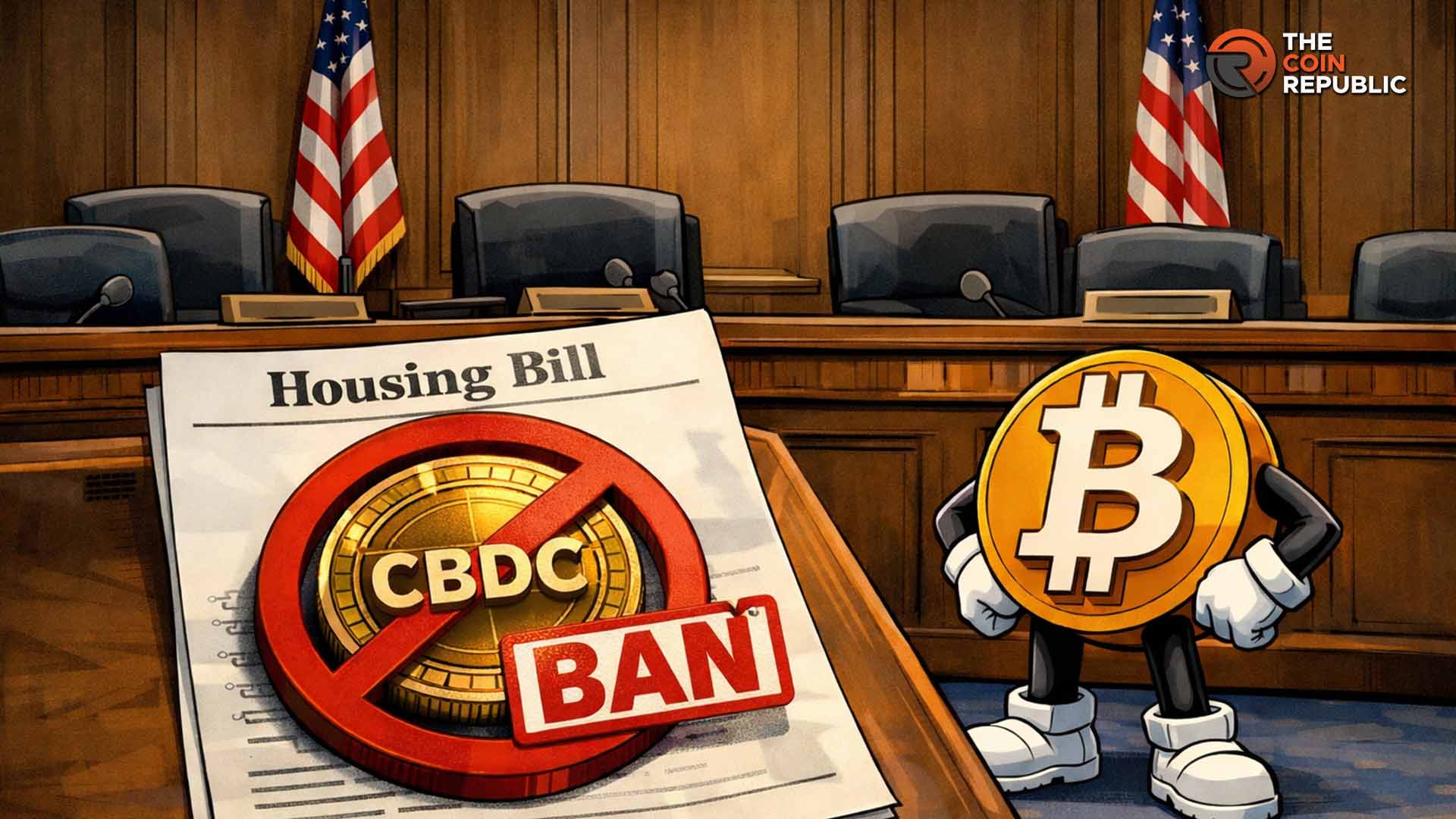
The US Senate's passage of a housing bill that includes a CBDC ban until 2031 signals a significant regulatory stance against central bank digital currencies, potentially favoring private stablecoin innovation. While the bill faces political hurdles in the House and potential presidential veto, its overwhelming Senate support indicates a growing bipartisan concern over government overreach in digital finance and a preference for decentralized solutions. The immediate 4% price surge in Bitcoin following the news suggests that market participants view a US CBDC ban as a bullish development, potentially reducing perceived competition and increasing demand for existing cryptocurrencies.

Bitcoin's recent underperformance relative to gold, with a 5-year return of ~73% versus gold's ~164%, challenges its 'digital gold' narrative and suggests it may be behaving more like a risk asset than a safe haven in many macro scenarios. While Bitcoin showed some safe-haven characteristics during the Iran conflict by moving independently of equities, its broader correlation with tech stocks during tariff shocks indicates a nuanced and context-dependent role as a safe asset. A fractal analysis comparing Bitcoin's current price structure to gold in 1974 suggests a potential parabolic move to $226K if key support at $62K holds, but a breakdown below this level could signal further downside before any significant recovery. The market sentiment, reflected in Polymarket probabilities, favors gold over Bitcoin as the best-performing asset in 2026, underscoring current caution and the need for Bitcoin to prove its resilience against persistent macro headwinds like inflation and geopolitical instability.
Signal context only. Validate with price action, liquidity, and risk limits before taking a position.
Quick market read from this story
The significant reduction of Bitcoin supply on exchanges to an eight-year low suggests a strong conviction among holders to secure assets long-term, potentially reducing immediate sell pressure.
With fewer Bitcoin available on exchanges, even moderate increases in demand could lead to amplified price volatility due to thinner order books.
The trend of moving assets to cold storage, reinforced by past exchange failures and increased institutional adoption via ETFs, indicates a structural shift in Bitcoin's market dynamics.
Deep Dive
The amount of Bitcoin held on cryptocurrency exchanges has fallen to its lowest point since late 2017, according to recent on-chain data. This metric, which tracks the percentage of Bitcoin's total circulating supply in known exchange wallets, has been on a consistent downtrend since peaking in early 2020, indicating a long-term trend of investors moving assets offline.
Several factors are contributing to this significant reduction in exchange holdings. The approval of spot Bitcoin ETFs in 2024 has led to substantial inflows, with large amounts of Bitcoin being acquired and secured in institutional-grade custody solutions. Furthermore, the collapses of exchanges like FTX and Celsius have reinforced the principle of "not your keys, not your coins," prompting both retail investors and whales to increasingly move their holdings to personal cold storage hardware wallets.
A low percentage of supply on exchanges signifies "thin" order books, meaning fewer sellers are available to meet demand. In such a low-liquidity environment, even moderate buying pressure can trigger substantial price volatility. This scenario suggests that a sudden surge in demand could lead to significant upside price movements due to the limited availability of Bitcoin on exchange platforms.
As of the latest data, Bitcoin is trading around $71,476, according to CoinGecko. Despite recent price action, the leading cryptocurrency remains approximately 43.3% below its all-time high, highlighting the ongoing market dynamics influenced by supply constraints and demand factors.
A significant 1,549% surge in SHIB futures netflows suggests increased margin inflows, potentially signaling a shift in trader sentiment and positioning. Despite a recent price dip and broader market sell-off, the positive netflow in SHIB futures, coupled with on-chain indicators flipping positive, could set the stage for a short squeeze if buying pressure returns. The current neutral RSI at 50 indicates potential for sideways trading, but a break above the $0.00000627 resistance level, aligning with the 50-day moving average, is crucial for sustained upward momentum.
