
200+ crypto news providers in one place.

CoinFeather
200+ crypto news providers in one place.
Source, catalyst, and sector overlap from the latest feed.
During a geopolitical crisis involving the US and Iran, Bitcoin saw a sharp decline to $63,000 while gold surged to $5,400. The event challenged Bitcoin's "digital gold" narrative, as investors favored traditional gold and tokenized gold over BTC during the peak fear. This demonstrated a clear risk-off sentiment, with crypto behaving more like equities than a safe-haven asset.
Live Feed
Loading the broader stream in the same flow as the homepage feed.
The article highlights seven small-cap ETFs poised for growth in 2026, citing potential tailwinds from outperforming earnings projections and a favorable macro environment with lower interest rates. It details ETFs tracking broad indices like the Russell 2000 (IWM) and S&P SmallCap 600 (IJR), as well as those with growth (VBK, ISCG, RZG) or value (VBR) tilts, and a quality-growth blend (QSML). These are presented as strategic additions for investors seeking higher long-term growth potential alongside traditional large-cap holdings.

South Africa has officially implemented the Crypto-Asset Reporting Framework (CARF), enhancing global tax transparency for digital assets. This framework mandates crypto exchanges and financial firms to report user holdings and cross-border transactions to tax authorities, aiming to curb tax evasion. The move aligns with international efforts and impacts South African investors by increasing visibility of their crypto activities and potential capital gains tax liabilities.

US crypto investment products experienced five consecutive weeks of outflows totaling $4 billion, driven by regulatory uncertainty and a desire for liquidity. Meanwhile, Europe and Canada collectively saw inflows, indicating a regional divergence in risk appetite. This shift in marginal buying, particularly during lower volume periods, could influence price action and rally formation.
Bitcoin is trading significantly undervalued relative to gold, with a Z-deviation metric suggesting a potential setup for a major rally. Gold's recent surge to $5,400 has widened the valuation gap, echoing historical patterns that preceded substantial Bitcoin price increases. Analysts are divided on whether this indicates a long-term opportunity or a continuation of bear market trends.
Gold prices surged past $5,400, reaching a four-week high, driven by escalating geopolitical tensions following US and Israeli strikes on Iran and subsequent retaliation. This safe-haven demand is amplified by concerns over oil supply disruptions and potential inflation. Traders are closely watching the $5,400 resistance level for a potential push towards the all-time high of $5,600.

Bitcoin navigated initial geopolitical tensions related to Iran without significant volatility, though bearish price predictions persist, with some analysts targeting $45,000. Conversely, a notable increase in US spot Bitcoin ETF inflows suggests renewed institutional interest, potentially signaling a turnaround despite broader market uncertainty and inflation concerns.
ONGC shares saw a significant surge following US-Israel strikes on Iran, which heightened fears of oil supply disruptions. The conflict has pushed crude prices higher, impacting India's import bill and creating volatility across oil-sensitive sectors. Analysts note potential support for upstream energy and defense stocks.
Shiba Inu (SHIB) shows potential for a short-term relief rally, indicated by three oversold indicators: RSI in the lower range, failure to aggressively extend downward, and consolidation suggesting a possible accumulation phase. Traders should anticipate a potential 15-20% move towards nearby resistance, though a full trend reversal remains unlikely without broader market support.

BXB Market is reviewed as a beginner-friendly CFD brokerage operating under the MISA regulator in the Comoros. It offers a $1 minimum deposit, TradingView-powered WebTrader, and a variety of payment methods, catering to novice and intermediate traders. However, it is noted to have mid-tier regulation and lacks detailed public information on fees and withdrawal policies.

A prominent crypto whale, known as Machi Big Brother, has reportedly lost approximately $74 million by repeatedly taking leveraged long positions on Ethereum since September. Despite multiple liquidations, the trader has continued to re-enter positions, even utilizing treasury funds for margin. This event highlights the high-risk nature of leveraged trading and the significant losses that can be incurred.
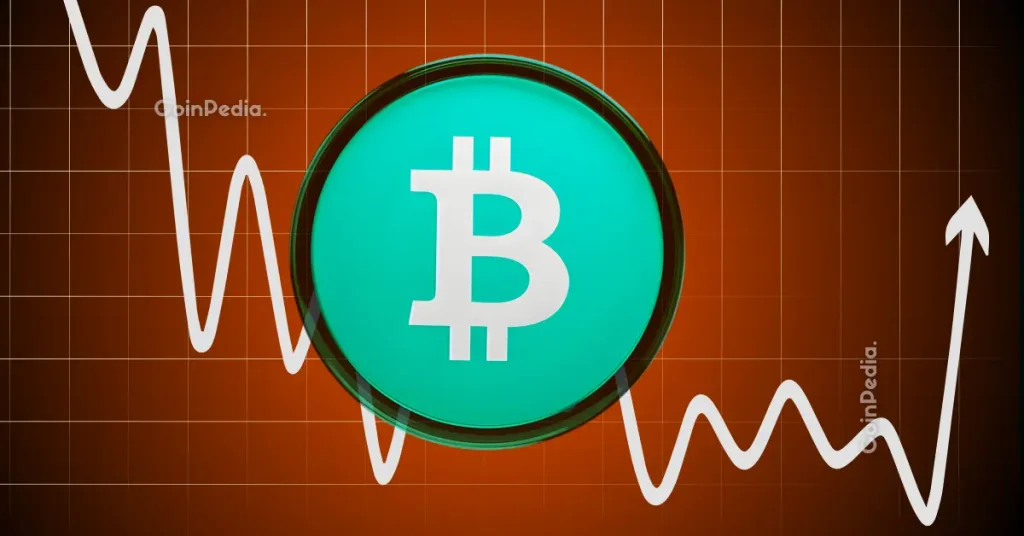
Bitcoin is consolidating between $62,000 and $71,500, showing signs of potential accumulation with higher lows forming. Traders are watching for a decisive breakout above $71,500 to confirm an upward move towards $74,000-$78,000, or a breakdown below $62,000 indicating further downside to $60,000.
X (formerly Twitter) has updated its Paid Partnerships policy, requiring stricter disclosure for sponsored content and imposing regional limits on financial promotions, including cryptocurrency. Creators in the EU, UK, and Australia can no longer promote crypto services via the platform's Paid Partnership tool. This change, while not a ban on crypto content, aims to increase transparency and aligns with broader regulatory scrutiny.

Hong Kong and Shanghai authorities are collaborating to develop a cross-border blockchain platform for cargo data and electronic bills of lading. This initiative aims to reduce friction in trade finance, streamline global supply chains, and reinforce Hong Kong's position as a financial bridge to China. The project leverages blockchain for operational efficiency and data security in real-world trade.

A consortium of 12 European banks, including ING and UniCredit, is reportedly in talks with crypto exchanges and liquidity firms for its planned euro-pegged stablecoin. The stablecoin is slated for launch in the second half of 2026, aiming to provide a regulated alternative to USD-denominated stablecoins for cross-border payments. Reserves will be 1:1 backed by bank deposits and high-quality sovereign bonds.
Signal context only. Validate with price action, liquidity, and risk limits before taking a position.
No explicit catalyst tagged.
Ethereum's price remains stagnant at $1,950 despite a significant imbalance in staking, with 36,000 times more ETH entering staking than exiting. This lack of upward price movement, even after a $6.8 billion supply lockup, suggests market indecision. Potential reasons include anticipation of lower prices, institutional selling offsetting retail staking, or whale hesitation.
