
Navigating Crypto News

CoinFeather
Navigating Crypto News
Source, catalyst, and sector overlap from the latest feed.
Continued inflows into crypto investment products, totaling $1.06 billion last week, demonstrate sustained investor interest and resilience despite geopolitical tensions. Bitcoin ETPs saw significant inflows of $793 million, reinforcing its narrative as a potential safe-haven asset amidst global instability. The launch of new staking ETFs in the US has positively impacted Ethereum ETP flows, bringing them closer to a neutral position after recent outflows. Despite recent positive weekly flows, US spot Bitcoin ETFs still hold a net outflow of approximately $493 million year-to-date, indicating a potential for further price discovery as this figure trends towards zero.
Live Feed
Loading the broader stream in the same flow as the homepage feed.

South Korean regulators have imposed a significant $24.6 million fine and a six-month partial suspension on Bithumb for AML violations, signaling a tightening regulatory environment for major exchanges in the region. The partial suspension, which affects new user registrations, could impact Bithumb's growth trajectory and market share, while existing users remain unaffected. This regulatory action, following similar penalties for other large exchanges like Upbit, underscores the increased scrutiny on KYC and transaction monitoring compliance within the South Korean crypto market. Traders should monitor Bithumb's operational capacity and user sentiment following this penalty, as it may influence trading volumes and liquidity on the platform.

Memecoins are outperforming major cryptocurrencies like Bitcoin and Ether, indicating a shift in market strategy towards higher-risk, higher-reward assets. The 'barbell strategy' of holding stable assets like Bitcoin alongside speculative memecoins is gaining traction, contrasting with previous bull markets that favored DeFi and gaming. The proliferation of new altcoins is diluting demand, potentially hindering a broad-based altcoin season and favoring a bifurcated market approach. While Bitcoin shows strength, the dominance of memecoins suggests a speculative fervor driven by factors beyond institutional adoption, potentially increasing short-term volatility.
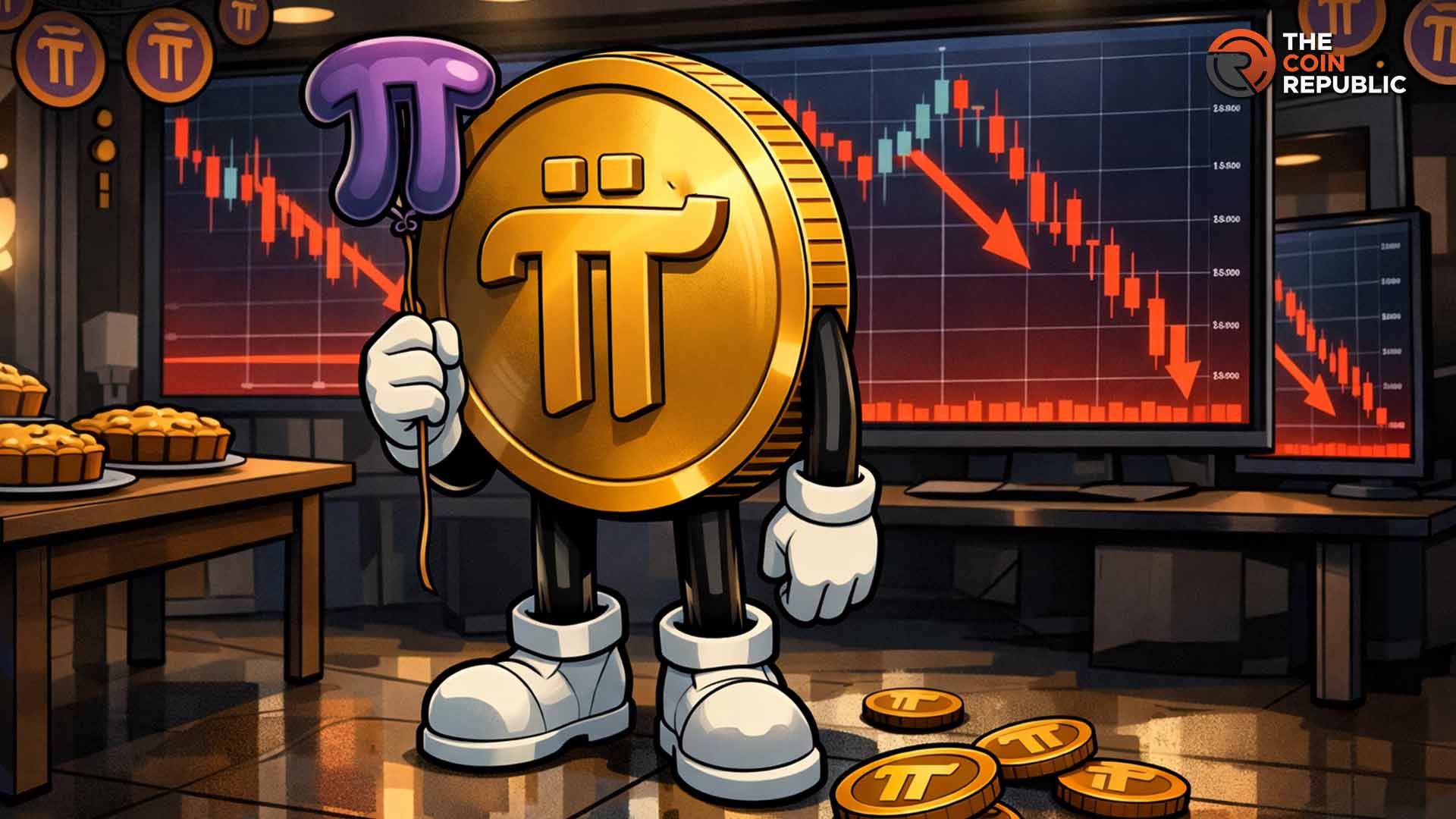
Pi Network coin experienced a significant 30% price drop on Pi Day, erasing recent gains despite a network upgrade, indicating a potential 'sell-the-news' event. Increased trading volume suggests investors are liquidating holdings to lock in profits following the network's v20.2 upgrade and Pi Day hype. The price decline, despite a major upgrade and community event, highlights a disconnect between network development and immediate market sentiment, suggesting caution for short-term traders. While the monthly gains remain positive, the sharp weekly and daily losses point to profit-taking behavior and potential downward pressure on Pi Coin in the immediate trading horizon.
Deloitte's private ownership structure, characterized by partner equity and a global network of LLPs, makes a near-term IPO highly improbable despite significant market interest. While no direct investment in Deloitte is possible due to its private status, investors seeking exposure to the professional services sector can consider publicly traded consulting and IT advisory firms. Speculation around potential Deloitte IPO scenarios, such as spinning off consulting or technology units, remains theoretical and faces significant structural and regulatory hurdles. The firm's estimated potential market capitalization exceeding $200 billion highlights its substantial market presence, even without public trading.
IDBI Bank shares dropped sharply after reports the Indian government may scrap the planned majority stake sale following bids below the reserve price.

ARK Invest's report quantifies ~35% of Bitcoin supply as theoretically vulnerable to quantum attacks, shifting the discussion from abstract risk to concrete exposure. While the threat is long-term (mid-2030s earliest), the proposed BIP-360 upgrade highlights Bitcoin's slow governance process, suggesting a potential lag in addressing quantum risks compared to other blockchains. Developer Matt Corallo argues that capital rotation into AI, not quantum fear, is the primary driver of recent Bitcoin price weakness, suggesting market participants may be misattributing macro trends. The debate over quantum risk is splitting into three camps: those who believe it will ultimately strengthen Bitcoin, skeptics who see potential capital rotation to Ethereum, and those who view it as a broader civilizational threat.

Metaplanet's innovative capital raise structure, utilizing warrants exercisable only above 1.01x mNAV, ensures new share issuances are accretive to Bitcoin per share, mitigating dilution risks common in corporate treasury strategies. The successful $255 million raise, with potential to reach $531 million, signals continued institutional demand for Bitcoin accumulation via publicly traded entities, despite Metaplanet's current unrealized losses on its holdings. This 'first-of-its-kind' mNAV clause represents a significant structural innovation for Bitcoin treasury companies, potentially setting a new benchmark for how such entities manage capital and shareholder value.

Bitcoin's potential breakout above $74,000 could propel it towards $80,000, signaling continued bullish momentum if resistance is overcome. The surge in altcoins, particularly memecoins like PEPE and BONK, indicates a heightened risk appetite within the market, though overbought RSI suggests a potential short-term pullback. Increased open interest in ETH and ADA futures points to strong investor conviction in smart contract platforms, driving demand for leveraged bullish positions. Despite the overall market optimism, the persistent premium on Bitcoin and Ether puts suggests ongoing demand for downside protection, hinting at cautious sentiment among some traders.

Significant outflows of 45 billion SHIB from exchanges suggest a shift towards holding, potentially reducing immediate sell pressure and signaling increased investor confidence. Despite recent outflows, substantial exchange reserves of 80.8 trillion SHIB indicate that the overall supply available for trading remains high, limiting the immediate bullish impact of the current trend. Shiba Inu is attempting to break short-term resistance at the 26-day EMA, with a successful breach potentially leading to a test of the 50-day EMA, a key indicator for a broader trend reversal.

Charles Hoskinson's call for a revote on Liqwid's NIGHT token distribution highlights a governance dispute potentially impacting trust in the DeFi protocol. The controversy involves approximately $1 million in NIGHT tokens, with concerns that project insiders may have unfairly influenced the initial DAO vote. Hoskinson's proposal to simplify the vote and recuse insiders aims to restore community confidence and ensure fair asset allocation. Liqwid's acknowledgment of the concerns and promise of swift next steps suggests a potential resolution that could stabilize the situation.

Upcoming token unlocks totaling over $438 million introduce potential selling pressure across multiple altcoins, requiring traders to monitor project-specific supply dynamics. Significant whale accumulation of ETH at an average price of $2,248 suggests underlying bullish conviction despite the broader supply expansion from unlocks. The confluence of substantial token unlocks and large-scale asset accumulation indicates active capital rotation within the crypto market, presenting both risks and opportunities.
Signal context only. Validate with price action, liquidity, and risk limits before taking a position.
Quick market read from this story
Bitcoin's reclaim of the 50-day SMA at $71,120, coupled with a six-week high of $74,400, signals a strong bullish momentum shift, potentially indicating a continuation of the rally towards $80K as suggested by analysts.
The simultaneous rise in Bitcoin's open interest and price, mirroring patterns before previous volatility spikes, suggests that new capital is entering the market, potentially fueling further upward price action.
The strong performance of BTC and ETH, outperforming traditional safe-haven assets like gold amidst geopolitical uncertainty, highlights a growing risk appetite in the crypto market and reinforces the bullish narrative for major cryptocurrencies.
Bitcoin closing eight consecutive green daily candles for the first time since December 2020, a period that preceded a 145% rally, suggests a significant bullish trend is re-establishing itself with potential for substantial near-term gains.
Deep Dive
Bitcoin (BTC) experienced a significant surge during early Asian trading hours on Monday, reaching a six-week high of $74,400. This price action has liquidated approximately $300 million in short positions across the crypto market. The cryptocurrency's recovery has seen it reclaim the crucial 50-day simple moving average (SMA) at $71,120, a level not breached in 55 days.
The broader cryptocurrency market also saw gains, with Ether (ETH) trading at $2,250, up 7% in 24 hours. XRP gained nearly 5% to trade above $1.48, and Solana (SOL) posted a 6% increase. This collective rise pushed the global crypto market capitalization up by 4% to $2.49 trillion.
Analyst Bull Theory noted Bitcoin's rapid $1,800 jump in just 30 minutes, highlighting the performance of risk assets compared to safe-haven assets like gold and silver amidst geopolitical tensions.
Bitcoin futures open interest (OI) continued to climb, with Coinglass reporting a 6% jump to $49.2 billion in the past 24 hours. Coinglass observed that this pattern of rising OI alongside price increases has preceded previous volatility spikes, suggesting that
Bernstein's analysis suggests that sustained ETF inflows and corporate treasury accumulation are fundamentally altering Bitcoin's ownership structure, shifting it towards a more resilient long-term holder base. The increasing proportion of Bitcoin supply held by long-term holders and ETFs may reduce the impact of short-term sell pressure, potentially leading to a more stable market during periods of geopolitical stress. Despite geopolitical tensions, Bitcoin's outperformance relative to gold and major equity indexes highlights its perceived role as a portable, digital asset with no counterparty risk, reinforcing its appeal to institutional capital.
