
Navigating Crypto News

CoinFeather
Navigating Crypto News
Source, catalyst, and sector overlap from the latest feed.
XRP has formed a technical 'golden cross' on its hourly chart, a pattern historically associated with bullish price momentum, coinciding with a stable US inflation report. Despite the bullish technical signal, the sticky CPI data suggests the Federal Reserve may delay interest rate cuts, potentially tempering broader market enthusiasm and impacting XRP's short-term upside. Ripple's ongoing acquisition of regulatory licenses, including a recent Australian Financial Services License, strengthens its global compliance standing and supports its long-term infrastructure development narrative.
Live Feed
Loading the broader stream in the same flow as the homepage feed.

Bloomberg strategist Mike McGlone reiterates a bearish $10,000 Bitcoin call, citing macroeconomic headwinds and a lack of uncorrelated hedging properties. Industry analysts largely dismiss McGlone's $10,000 target, suggesting such a drastic drop would require an extreme global liquidity crisis or geopolitical event, not just a market correction. While acknowledging potential for further downside, analysts like Mati Greenspan and Jonatan Randin suggest Bitcoin may have already seen its bear market bottom or could find accumulation zones between $30,000-$40,000. The debate highlights differing interpretations of Bitcoin's role in a risk-off environment, with McGlone seeing it as a speculative asset tied to traditional markets, while others maintain its potential for uncorrelated performance.

Bitcoin's repeated failure to break $72,000 resistance, coupled with rising supply in loss and declining apparent demand, signals a psychologically challenging phase characterized by elevated uncertainty and potential for further downside. On-chain data suggests Bitcoin is in a bear market consolidation phase, with long-term holders realizing losses and supply in loss approaching levels seen in previous deep corrective phases, indicating increased market stress. The inability to sustain demand above $72,000 suggests cautious market participants are unwilling to accumulate aggressively, potentially leading to a retest of lower support levels around $66,000 if resistance holds.
Ripple Labs executed a significant burn of 25 million RLUSD stablecoins, a move intended to reduce circulating supply and potentially curb inflationary pressures, which could be interpreted as a bullish signal for XRP's price. The substantial RLUSD burn, coupled with Ripple's ongoing global licensing strategy and expansion into markets like Australia, suggests a concerted effort to strengthen its ecosystem and drive demand for its products and services. Market analysts are linking the RLUSD burn and positive technical indicators to a potential XRP price rally, with some predicting a significant upward trend if current corrective phases conclude and a bullish wave begins.
Nvidia's $2 billion investment in Nebius signals a strategic expansion into AI cloud infrastructure, reinforcing its dominance in the AI hardware and services ecosystem. The partnership aims to accelerate the development of specialized cloud platforms for AI workloads, addressing the growing demand for high-performance computing in the AI era. Nvidia's aggressive investment strategy across AI infrastructure companies, including Nebius, OpenAI, and Anthropic, positions it to influence multiple layers of the AI stack. Nvidia's stock is currently testing key technical levels within an ascending triangle pattern, with potential for a breakout driven by ongoing AI sector developments and strategic investments.

Ripple's acquisition of BC Payments Australia strengthens its regulatory standing by securing a financial services license, enhancing its cross-border payment infrastructure in the APAC region. The move positions Ripple to operate more directly within Australia's regulated financial system, signaling a strategic shift towards becoming a licensed infrastructure provider rather than solely a cryptocurrency firm. With over 75 regulatory licenses globally, this acquisition underscores Ripple's commitment to navigating and expanding within regulated markets, a trend increasingly vital for blockchain and payment companies.
Shiba Inu price steadies as Shytoshi Kusama’s X silence and “UI bug fixes” bio update spark speculation amid crypto liquidations and market shifts.

The FDIC's clarification that stablecoins will not receive deposit insurance under the GENIUS Act, even through pass-through mechanisms, removes a potential layer of perceived safety for stablecoin users. This regulatory stance by the FDIC aims to differentiate stablecoins from traditional bank deposits, potentially impacting investor perception and demand for stablecoins seeking parity with insured assets. The FDIC's consideration of tokenized deposits as eligible for insurance suggests a path for integrating traditional banking with blockchain technology while maintaining regulatory oversight. The explicit exclusion of stablecoins from FDIC insurance, despite mandates for full reserves, highlights a structural difference that could influence their adoption and competitive positioning against bank deposits.
Ripple's RLUSD stablecoin is gaining mainstream traction, highlighted by Fox Business, positioning it as a key bridge between traditional finance and digital assets. The integration of RLUSD on the XRP Ledger, including its recent listing on Binance, signifies growing utility and compliance-driven adoption, potentially boosting XRP Ledger's overall activity and market presence. RLUSD's rise into the Top 50 stablecoins and its $1.5B market cap suggest a successful strategy in merging fiat stability with blockchain efficiency, attracting institutional interest for faster, cheaper settlements. The broader adoption of RLUSD could transform the XRP Ledger into a significant player in global payments, potentially increasing XRP trading volumes and network utility as traditional finance increasingly engages with digital assets.

The article posits that AI agents, optimizing for reliability and predictable monetary rules, may become the primary drivers for the adoption of denationalized money, potentially bypassing human biases and political entanglements. Stablecoins are framed as a "trojan horse" that digitizes national currencies rather than denationalizing money, potentially leading to tighter control rather than true financial sovereignty. The core argument suggests that the future adoption of "good money" as defined by Hayek might be an engineering outcome driven by machine necessity rather than a philosophical or political movement. The analysis highlights that AI agents will prioritize machine-readable metadata, instant finality, composability, low overhead, and censorship resistance, characteristics that align with decentralized monetary systems like Bitcoin.
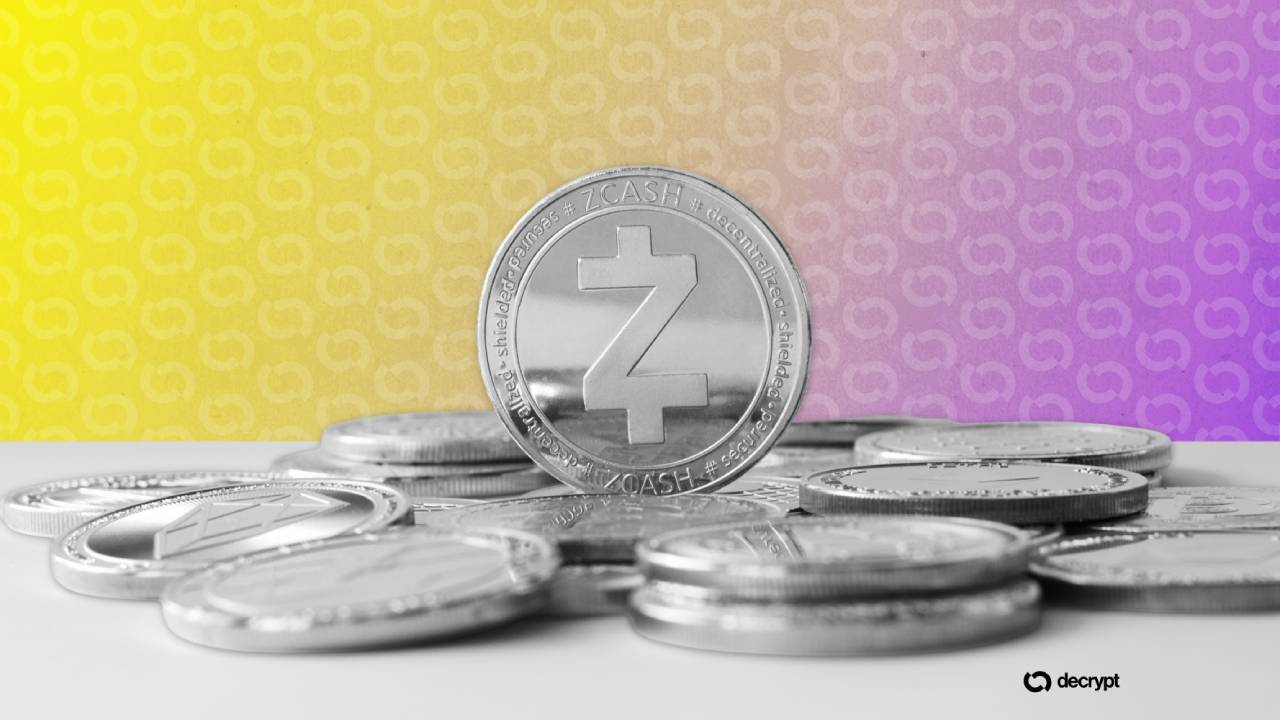
Foundry Digital's expansion into Zcash mining signifies a strategic diversification beyond Bitcoin, targeting institutional adoption by offering a compliant and U.S.-based mining pool. The move suggests a growing recognition of Zcash as an 'institutional-grade asset' and its potential role in advancing financial privacy, potentially attracting more capital and hashrate to the network. While Zcash price has seen significant gains, Foundry's decision is not solely profit-driven, indicating a focus on market gaps and long-term strategic positioning rather than immediate trading opportunities.

Bitcoin faces resistance near $70,000, but ETF inflows suggest underlying demand, potentially driving a rally to $74,508 if key resistance is broken. Several major altcoins are showing signs of strength, indicating potential for upward price movement if they can overcome their immediate overhead resistance levels. Analyst sentiment is divided, with some predicting a potential sell-off due to geopolitical risks and others focusing on technical indicators suggesting a bullish continuation if key levels are breached. The article provides technical analysis for multiple top cryptocurrencies, highlighting key support and resistance levels that traders should monitor for potential short-term trading opportunities.

MicroStrategy's STRC preferred stock issuance is generating significant capital, enabling rapid Bitcoin accumulation that could soon surpass BlackRock's ETF holdings. The increasing demand for STRC, driven by its attractive yield and use of proceeds for BTC acquisition, suggests a potential shift in institutional capital allocation towards Bitcoin-correlated assets. While STRC offers a novel way to gain Bitcoin exposure, investors must weigh the potential for significant capital appreciation against the inherent risks of preferred stock and dividend variability. STRC's growing influence highlights a potential new avenue for capital to enter the Bitcoin market, drawing parallels to the traditional fixed-income market and suggesting substantial future buying power.

Revolut's acquisition of a full UK banking license signifies a major regulatory milestone, enabling it to offer FSCS-protected deposits and expand into traditional banking services like lending. This regulatory approval positions Revolut to compete more directly with established banks and other challenger banks, potentially attracting a broader customer base seeking deposit security. The transition to a fully licensed bank enhances Revolut's credibility and operational framework, which could influence its future product development and integration strategies within the broader fintech ecosystem.
Signal context only. Validate with price action, liquidity, and risk limits before taking a position.
Quick market read from this story
Despite a significant Bitcoin price drawdown, US spot Bitcoin ETFs are showing resilience with substantial inflows, indicating sustained institutional interest that could support price recovery.
The collective holdings of US Bitcoin ETFs now exceed 1.28 million BTC, solidifying their position as the largest single holder and highlighting their growing influence on market dynamics.
While past outflows occurred, recent strong daily net inflows, particularly into BlackRock's IBIT, suggest a potential shift in market sentiment and a growing demand for regulated Bitcoin exposure.
Deep Dive
Despite a significant 50% drawdown in Bitcoin's price, the exchange-traded funds (ETFs) tracking the cryptocurrency are demonstrating notable resilience. Capital inflows are nearing a point where year-to-date flows could turn positive. These ETFs collectively hold 1.28 million Bitcoin, establishing them as the largest single holder globally, according to Bloomberg Senior ETF Analyst Eric Balchunas.
The Bitcoin ETFs have experienced a streak of outflows but have seen buyers refuse to capitulate. Recent data from SoSoValue indicates a robust daily total net inflow of $250.92 million, bringing the cumulative lifetime net inflow to $55.79 billion. This influx has pushed the total net assets held across all U.S. Bitcoin ETFs to $90.02 billion, representing over 6% of Bitcoin's total global market capitalization. Daily trading volume across these instruments reached $3.60 billion.
The ETFs faced a challenging period in late January and early February, with a net outflow of $817.87 million on January 29 and a subsequent loss of $544.94 million on February 4. However, the trend reversed significantly in late February and early March. A substantial inflow of $461.77 million on March 4 helped to offset earlier losses.
While the performance of Bitcoin ETFs remains volatile, BlackRock's iShares Bitcoin Trust (IBIT) continues to lead the sector. On March 10 alone, IBIT recorded fresh inflows totaling $185.76 million, underscoring its dominant position among the available ETF products.
Nassim Taleb's endorsement of X Money, contrasting it with Bitcoin, signals a potential shift in perception towards private, fiat-linked digital currencies over decentralized alternatives for everyday transactions. The upcoming launch of X Money, backed by Elon Musk's extensive user base and regulatory approvals, presents a significant challenge to Bitcoin's narrative as a primary medium of exchange, focusing instead on utility and stability. Taleb's critique of Bitcoin's volatility and perceived fragility, juxtaposed with X Money's potential integration with banking infrastructure and fiat, suggests a growing divide in the digital currency space between speculative assets and functional payment systems.
