
Navigating Crypto News

CoinFeather
Navigating Crypto News

Quick market read from this story
A significant $2.2 billion USDT inflow into Binance signals substantial pre-buy positioning by large market participants, potentially indicating increased buying pressure for Bitcoin.
Despite the large stablecoin inflow, Bitcoin's current price action shows a slight decline, creating a divergence that traders should monitor for potential shifts in market sentiment.
The scale of this single-day deposit, the largest since November 2025, suggests a high level of confidence from whales and institutions, potentially aiming to absorb selling pressure and sustain upward momentum.
Deep Dive
Binance experienced a significant influx of $2.2 billion in USDT today, marking the largest single-day stablecoin deposit since November 2025. This substantial inflow suggests a pre-buy positioning by buyers, indicating fresh capital ready to be deployed into the market rather than an exit of assets.
The massive stablecoin deposit occurred as Bitcoin is trading around $72,458, down 1.85% on the day. Despite the slight price dip, the scale of the USDT inflow points towards potential bullish continuation. CryptoQuant data highlighted that this influx coincided with Bitcoin breaking new price levels, suggesting that whales or institutions may be actively funding the rally to prevent sharp corrections.
The last time Binance saw a stablecoin deposit of this magnitude was in November 2025, which followed months of lower liquidity on the exchange. CryptoQuant outlined three key implications from the current data: the liquidity is sufficient to absorb selling pressure, the size reflects confidence from major market players, and the timing with Bitcoin's price breakout suggests a potential for further upward movement.
The market is currently observing the price action in relation to the significant on-chain signal. The substantial capital now available on Binance raises the question of whether buyers will act decisively before sellers, potentially influencing the next market move. The inflow represents a strong signal of underlying buying interest despite current minor price fluctuations.
Source, catalyst, and sector overlap from the latest feed.
Akash Network's upcoming Burn-Mint Equilibrium activation introduces a deflationary mechanism, potentially driving demand and reducing AKT supply, which traders may front-run. River's price action is influenced by a significant token unlock event, historically leading to increased volatility and speculative positioning ahead of the unlock date. MemeCore's recent price surge is attributed purely to community hype and social engagement, lacking fundamental catalysts and thus carrying higher risk. A common factor across AKT, RIVER, and MemeCore is a recent spike in trading volume and short squeezes, indicating leveraged traders are being caught, accelerating price moves.
Bitcoin's current market structure entering the FOMC meeting is distinct from historical patterns, with spot demand driving the recent rally and derivatives traders exhibiting caution through negative funding rates. The historical tendency for Bitcoin to decline post-FOMC meetings, driven by leveraged longs, may be mitigated this time due to the current defensive positioning in derivatives markets. The upcoming FOMC Dot Plot and Jerome Powell's commentary will be crucial, with potential outcomes ranging from short-term BTC pressure (hawkish) to a crypto relief rally (dovish). Traders should monitor post-announcement spot and derivatives behavior; a hold in range with continued negative funding could signal short covering and upward pressure, while a macro-driven breakdown might see less severe liquidations than in prior events.
Enjin Coin (ENJ) experienced a significant price surge of over 25% accompanied by a 2500% increase in trading volume, indicating strong market participation and a potential shift from its recent downtrend. The rally is attributed to a broader rotation into gaming and NFT tokens, suggesting that ENJ's price action is currently influenced by sector-wide sentiment rather than project-specific catalysts. While the price is testing resistance near $0.03, the RSI entering overbought territory suggests the current upward momentum may be stretched, warranting caution for short-term traders. A sustained hold above $0.025 could lead to further upside towards $0.033-$0.038, but failure to maintain current levels may result in a pullback to the $0.022 or $0.018 support zones.
Ripple's new partnership with i-Payout and analyst interpretations suggest a strategic expansion beyond simple payments, positioning XRP as a core bridge asset for broader financial infrastructure and institutional adoption. The integration of XRP into enterprise banking, potential institutional alignments, and its role in tokenized asset settlement indicate a move towards full financial utility, increasing its demand as a transactional asset. The narrative highlights XRP's evolving role from a payment rail to a foundational layer for cross-border settlements and RWA tokenization, suggesting increased utility and potential for sustained demand.
Kaspa's 20% price surge, driven by anticipation of a May 5th hard fork introducing vProgs and Covenants, signals strong speculative interest and a potential shift towards a more functional smart-contract layer. Increased derivatives activity, with Open Interest rising to $13.64 million and funding rates climbing, indicates aggressive bullish positioning and short-term momentum, though it also heightens the risk of a rapid unwind if hype fades. The Kaspa price is attempting to break out of a falling wedge pattern, with key resistance at the 200-day EMA ($0.050) and subsequent levels at $0.062 and $0.074, suggesting a potential trend reversal if these levels are sustained.
SBI VC Trade's launch of a retail USDC lending service in Japan signifies growing institutional adoption of stablecoins for yield generation. The product offers retail investors an alternative to traditional USD deposits, though it carries direct counterparty risk and limited liquidity during the lending term. This development aligns with Japan's broader stablecoin rollout and SBI's strategic expansion into stablecoin services, including partnerships with Circle and plans for a JPY stablecoin.
Circle's policy chief advocates for the UK to adopt a hybrid regulatory approach, merging the EU's MiCA clarity with US stablecoin legislation to foster innovation and prevent offshore activity. The absence of a clear UK regulatory framework for stablecoins risks pushing activity offshore and diminishing London's role as a financial hub, according to Circle's Dante Disparte. Circle proposes four core principles for UK stablecoin regulation: 1-to-1 reserve backing, high-quality liquid reserves, enforceable redemptions, and strong transparency. Mastercard's representative suggests stablecoins currently lack a compelling value proposition to displace existing payment methods, though they offer benefits for cross-border transactions.
The Bank of Korea's expansion of digital won trials to include two new banks and testing of deposit tokens for subsidies and P2P transfers signals a significant step towards potential CBDC implementation, which could impact traditional payment systems and stablecoin adoption. The focus on reducing transaction fees for businesses through digital currency use cases highlights a key driver for CBDC development, potentially creating a more efficient payment infrastructure if successful. The ongoing delays in South Korea's Digital Asset Basic Act, particularly concerning stablecoin issuance, create a complex regulatory backdrop for these CBDC trials, suggesting potential future conflicts or synergies between central bank digital currencies and private stablecoins.
Canadian regulators are significantly increasing enforcement actions against crypto businesses for AML compliance failures, signaling a heightened risk environment for firms operating in the country. The revocation of 23 crypto firm registrations by FINTRAC indicates a proactive stance by Canadian authorities to combat money laundering and fraud, potentially impacting liquidity and operational continuity for affected entities. This aggressive regulatory approach, marked by a "significantly increased pace of action," suggests that other jurisdictions may follow suit, increasing compliance burdens and operational scrutiny for global crypto service providers.
Tempo's mainnet launch signifies a significant step towards enabling fast, low-cost stablecoin payments, potentially impacting traditional payment rails. The introduction of the Machine Payments Protocol positions Tempo as a key player in the emerging agentic finance landscape, allowing AI agents to autonomously execute transactions. The development aligns with broader industry trends of major payment firms like Mastercard and Stripe integrating blockchain and stablecoin infrastructure, suggesting a growing institutional embrace of these technologies. Tempo's focus on cross-border payments and mass payouts addresses existing inefficiencies, presenting a direct challenge to established remittance services.
Live Feed
Loading the broader stream in the same flow as the homepage feed.

Higher-than-expected inflation data and rising oil prices are pressuring Bitcoin and Ethereum, signaling potential headwinds for risk assets if interest rates remain elevated. Geopolitical tensions and energy price shocks are creating a complex macro environment, potentially forcing the Fed to maintain a hawkish stance, which is generally bearish for crypto. Despite recent price drops, the market has shown resilience in the past few weeks, but sustained high energy costs and inflation could challenge this trend.
Bitcoin Everlight introduces a new 'shard validation' method as an alternative to traditional ASIC mining, aiming to democratize network participation and reward generation. The platform facilitates Bitcoin scaling through a lightweight layer, processing transactions faster and cheaper before anchoring them to the main chain, potentially improving BTC's utility for payments. Participants acquire a native utility token (BTCL) to activate 'shards,' which validate transactions and earn rewards paid in BTC, offering a direct link to Bitcoin's value appreciation. With a limited five-day window for Phase 1 at a discounted price, the project is creating urgency for early adopters to secure lower entry costs before a price increase.
XRP whales accumulating 200 million tokens amid regulatory clarity from the SEC classifying it as a commodity signals strong conviction from large holders. The SEC's classification of XRP as a commodity, aligning it with Bitcoin and Ethereum, is a significant regulatory development that could foster broader adoption and exchange listings. Technical analysis suggests XRP is forming an ascending triangle pattern with key resistance at $1.65-$1.70, indicating potential for an upward breakout if sustained. While technicals point to a potential breakout above $1.65, traders should monitor Bitcoin's stability and broader market liquidity as influencing factors for XRP's price action.

Rising energy prices due to geopolitical tensions are directly impacting Bitcoin miners, potentially leading to capitulation and further price pressure. A significant drop in Bitcoin's hash rate and an upcoming large difficulty adjustment suggest a challenging period for miners, which historically correlates with Bitcoin price declines. Publicly traded miners are diversifying into AI and selling Bitcoin to cover operational costs, creating a potential headwind for BTC price action. The confluence of geopolitical instability, rising energy costs, and a cooling macro environment presents a bearish short-term outlook for Bitcoin.

Ripple CTO Emeritus David Schwartz shares early XRP memory from 2013.
Higher-than-expected US PPI data suggests persistent inflation, potentially delaying Fed rate cuts and pressuring risk assets like Bitcoin. The Federal Reserve faces a difficult balancing act between elevated inflation and a cooling labor market, creating uncertainty for monetary policy direction. Bitcoin's price action shows pressure from both macroeconomic concerns and cautious technical signals, suggesting a period of consolidation rather than immediate recovery. Traders should monitor upcoming macro data and key price levels for Bitcoin as inflation data has shifted expectations, but the full market impact is still unfolding.

The crypto industry's significant spending in the Illinois primary, aimed at supporting pro-crypto candidates, failed to yield desired electoral outcomes, indicating potential headwinds for industry lobbying efforts. Ties to the crypto industry became a liability for candidates in the Illinois primary, suggesting that negative public perception or political framing can outweigh financial backing. The crypto lobby's strategy of bipartisan engagement may be challenged by its association with specific political factions, potentially impacting its effectiveness in future elections. Despite favorable polls on crypto itself, a significant portion of Illinois voters expressed support for restrictions, highlighting a disconnect between general sentiment and policy preferences.
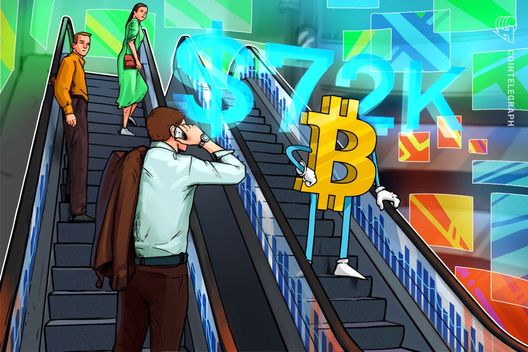
Higher-than-expected US PPI inflation data suggests a persistent inflationary environment, potentially delaying anticipated Fed rate cuts and creating a less supportive macro backdrop for Bitcoin. The market is bracing for the FOMC meeting outcome, with traders adopting a risk-off stance due to inflation concerns and uncertainty surrounding future Fed policy, which could pressure BTC price in the short term. Despite some analysts maintaining a bullish outlook for Bitcoin's long-term trajectory, the immediate trading sentiment is cautious, with technical indicators suggesting potential downside risk if key support levels fail.
PEPE price is experiencing sustained bearish pressure, failing to break above key resistance zones and showing signs of weakening momentum. Short-term downside risk persists for PEPE, with potential targets identified at $0.00000354 and $0.00000340 if selling pressure continues. A strong bullish reversal for PEPE would require a reclaim of $0.00000340 after a dip below $0.00000331, invalidating the current bearish bias.

The CoinDesk 20 Index experienced a broad decline of 3.1%, with all constituent assets trading lower, indicating a general bearish sentiment across major cryptocurrencies. Uniswap (UNI) and Aave (AAVE) were notable laggards, falling 4.9% and 4.4% respectively, suggesting potential weakness in the DeFi sector or specific project-related pressures. The consistent underperformance of all 20 index components points to a lack of positive catalysts and a prevailing risk-off environment in the crypto market.
Cardano's DeFi ecosystem growth, driven by USDCx stablecoin adoption and cross-chain inflows, signals increasing network utility and potential for sustained liquidity. Upcoming protocol upgrades, including the Midnight privacy sidechain and the 'van Rossem' hard fork, alongside increasing institutional interest via ETF filings, position Cardano for potential future capital cycles. While recent TVL surges and new stablecoin mints are positive, Cardano's price momentum hinges on successful adoption and execution of its enhanced infrastructure, with execution risks and regulatory clarity remaining key factors. The launch of USDCx and CME Cardano futures, coupled with ETF filings, suggests a maturing institutional landscape for ADA, potentially converting speculative interest into durable capital flows.

The push by 21 crypto organizations for US colleges to integrate DeFi into curricula signals a growing demand for skilled professionals in traditional finance roles. Increased academic focus on DeFi could accelerate mainstream adoption and talent acquisition, potentially benefiting the broader crypto ecosystem by bridging the gap between theoretical knowledge and practical application. The demand for DeFi expertise from major Wall Street firms like BlackRock and Goldman Sachs indicates a structural shift in the financial industry, moving beyond niche tech roles to broader business and legal functions.

Institutional investors overwhelmingly anticipate crypto price increases over the next 12 months, signaling a potential shift in market sentiment and future capital flows. The preference for regulated products like ETPs highlights a maturing institutional approach, suggesting a demand for compliant and accessible investment vehicles. Growing institutional interest in stablecoins and tokenized RWAs indicates a broadening of crypto's utility beyond speculative assets, potentially driving adoption in traditional finance. Despite market volatility, institutions are prioritizing risk management over reduced exposure, implying a strategic, long-term engagement with digital assets.

Institutional investors are increasing crypto allocations, signaling sustained interest despite risk concerns, with a growing preference for regulated vehicles like spot ETFs. The survey indicates a maturing market where institutions prioritize risk management, governance, and operational resilience over short-term trading. Regulatory clarity is a dual-edged sword, acting as both a key driver for increased investment and a primary concern due to ongoing uncertainty. Growing interest in stablecoins and tokenization suggests a shift towards viewing these as practical infrastructure for settlement and cash management, rather than purely speculative assets.
Binance's decision to delist eight cryptocurrencies, including A2Z, FORTH, HOOK, IDEX, LRC, NTRN, RDNT, and SXP, will significantly reduce liquidity for these assets. The delisting is a direct consequence of Binance's standard quarterly reviews, indicating potential issues with trading volume, security, or regulatory compliance for the affected tokens. Affected token prices have already shown sharp declines, with IDEX down 33.44% and SXP down 24.13%, highlighting the immediate negative market reaction to reduced exchange support. Traders holding these delisted assets must act quickly to withdraw funds before April 1, 2026, to avoid forced settlements and potential further price depreciation.
Signal context only. Validate with price action, liquidity, and risk limits before taking a position.
