
Navigating Crypto News

CoinFeather
Navigating Crypto News

Quick market read from this story
The recent oil scare near the Strait of Hormuz demonstrated Bitcoin's immediate reaction as a risk-off asset, with traders selling during the acute phase of inflation fears.
Despite initial outflows, U.S. spot Bitcoin ETFs saw inflows rebound as oil prices cooled and de-escalation signals emerged, indicating a swift recovery tied to broader risk appetite.
The ETF structure has amplified the speed and clarity of macro transmissions, making Bitcoin's price action more directly observable in response to geopolitical and inflation-driven events.
Bitcoin's sensitivity to inflation and interest rate dynamics, similar to high-beta equities, was highlighted by a significant market cap drop during the oil shock, underscoring its current role as a macro-sensitive asset.
Deep Dive
In the initial phase of an oil-driven inflation scare, Bitcoin acted as a liquidity-sensitive macro asset rather than a safe haven, experiencing a significant price drop. Attacks near the Strait of Hormuz, a critical global oil and LNG chokepoint, fueled fears of wider shipping disruption and pushed oil prices higher. This surge revived inflation concerns and hardened market expectations that central banks may have less room to ease monetary policy.
The impact on Bitcoin was evident in both price action and fund flows. U.S. spot Bitcoin ETFs recorded substantial net outflows on March 5 and 6, totaling over $576 million. As oil prices cooled and discussions around reserve releases gained traction, flows reversed, with inflows of over $414 million on March 9 and 10. Bitcoin's market capitalization fell by approximately $131 billion between March 5 and March 9, before rebounding as broader risk appetite returned.
Despite the U.S. having low direct crude imports through the Strait of Hormuz, the global financial exposure remains significant. The Strait handles approximately 20 million barrels of oil per day and nearly 20% of global LNG trade. Surges in oil prices, even without immediate physical shortages in the U.S., increase the energy risk premium, revive inflation concerns, and influence market expectations for interest rate cuts. U.S. five-year breakeven inflation expectations rose during the peak of the oil shock.
The advent of U.S. spot Bitcoin ETFs has made the transmission of macro shocks to crypto markets more measurable in real-time. The rapid outflows and subsequent inflows observed during the oil scare provided a clearer signal of market sentiment compared to previous exchange-based narratives. This structure highlighted Bitcoin's sensitivity to inflation and interest rate dynamics, similar to high-beta equities.
The market's next phase hinges on several factors, including the continuation of attacks on shipping, insurer responses, potential emergency oil stock releases, and sustained oil price levels. The upcoming Federal Open Market Committee (FOMC) meeting on March 17-18 will be a key checkpoint to gauge policymakers' views on the energy shock's impact on the easing path. While EIA forecasts suggest lower oil prices later in the year, risks remain, with analysts warning of potential production shut-ins if the Hormuz disruption is prolonged. The market faces a base case of continued tension, a bullish scenario with oil retreating, and a bearish scenario with renewed attacks and higher prices, alongside a tail risk of extended closure.
Source, catalyst, and sector overlap from the latest feed.
Kalshi's expansion into Brazil via XP International positions prediction markets as a 'new asset class' focused on macro events, aiming to leverage existing brokerage infrastructure and client base. The launch occurs amidst Brazil's significant efforts to combat gambling addiction, creating a regulatory and reputational tension between Kalshi's 'derivative' framing and the country's public health concerns. While initially focused on macro variables like inflation and interest rates, the upcoming election and World Cup in Brazil present potential future contract expansion, increasing regulatory scrutiny and market risk. Economic analysis of similar platforms suggests retail participants in prediction markets often face significant losses, raising questions about the long-term sustainability and user economics of Kalshi's offering in Brazil.
The emergence of agentic commerce protocols like Google's Universal Commerce Protocol and Coinbase's x402 highlights a critical gap in verifying task completion, which could be a significant opportunity for crypto-native escrow solutions like ERC-8183. While established payment providers like Mastercard and Visa are focusing on authorization and audit trails, the lack of a standardized verification layer for AI agent work presents a potential competitive advantage for blockchain-based conditional payment systems. The "evaluator" role in agentic commerce, as highlighted by ERC-8183, represents a potential power center and trust bottleneck, suggesting that whoever controls this verification layer could capture significant value in future decentralized marketplaces. The ongoing race between Big Tech's authorization standards and crypto's programmable escrow solutions for agentic commerce will likely determine which infrastructure prevails, with adoption thresholds and economic activity being key determinants.
Despite a general policy thaw towards crypto, the US government maintains a hardline stance on privacy tools linked to national security risks, indicating that projects in this niche face continued legal scrutiny and potential repricing. Prosecutors are pushing to retry Tornado Cash founder Roman Storm on money laundering and sanctions violation charges, signaling that the market may be underpricing the specific legal risks associated with privacy-enhancing infrastructure, even as other crypto sectors see regulatory easing. The Treasury's acknowledgment of lawful mixer use is juxtaposed with its call for stronger tools to freeze suspicious assets, highlighting a bifurcated regulatory approach where privacy is permissible unless tied to illicit activities like North Korean-linked laundering, creating sector-specific legal uncertainty. Investors should differentiate between broad 'pro-crypto' policy shifts and sector-specific regulatory outcomes, as assets linked to privacy protocols or those with potential ties to illicit flows may continue to carry a legal risk premium not reflected in current market valuations.
Strategy's increased reliance on STRC preferred stock for Bitcoin accumulation, offering an 11.50% yield, signals a shift in its funding strategy as MSTR's premium to NAV compresses. The substantial volume and yield of STRC, outperforming traditional financial instruments like JPMorgan's preferred stock, indicate strong demand from income-focused investors for leveraged Bitcoin exposure. While STRC provides continuous funding, the significant annual dividend cost of approximately $442 million presents a potential financial strain if Bitcoin prices decline or financing conditions tighten. MSTR's relative outperformance against Bitcoin year-to-date suggests that traders are currently absorbing the increased financing costs and risks associated with Strategy's aggressive accumulation model.
Bitcoin's recovery above $70,000 is directly linked to the easing of geopolitical tensions in the Middle East, which has led to a significant drop in crude oil prices and reduced near-term inflation fears. The market is closely watching upcoming US CPI data to determine if Bitcoin's recovery is sustainable, as a continued disinflationary trend would support Fed rate cut expectations and risk assets. A renewed surge in oil prices above $100 could reignite inflation concerns, potentially leading to a retest of Bitcoin's $60,000 support level as the Fed's policy tightens. Despite recent volatility, strong institutional inflows into spot Bitcoin ETFs and rising stablecoin liquidity suggest underlying demand that could support prices if macro conditions remain favorable.
Live Feed
Loading the broader stream in the same flow as the homepage feed.

Strive's $50 million allocation to Strategy's STRC preferred stock signals increasing institutional adoption of yield-generating Bitcoin-linked treasury instruments. The move by Strive, a significant Bitcoin holder, highlights a growing trend of companies seeking higher yields than traditional money market funds while maintaining liquidity for treasury reserves. The increasing coverage and buy ratings from traditional finance analysts on Strategy (STRC) suggest a potential validation of Bitcoin treasury strategies as a viable investment class.

Bloomberg strategist Mike McGlone reiterates a bearish $10,000 Bitcoin call, citing macroeconomic headwinds and a lack of uncorrelated hedging properties. Industry analysts largely dismiss McGlone's $10,000 target, suggesting such a drastic drop would require an extreme global liquidity crisis or geopolitical event, not just a market correction. While acknowledging potential for further downside, analysts like Mati Greenspan and Jonatan Randin suggest Bitcoin may have already seen its bear market bottom or could find accumulation zones between $30,000-$40,000. The debate highlights differing interpretations of Bitcoin's role in a risk-off environment, with McGlone seeing it as a speculative asset tied to traditional markets, while others maintain its potential for uncorrelated performance.

Bitcoin's repeated failure to break $72,000 resistance, coupled with rising supply in loss and declining apparent demand, signals a psychologically challenging phase characterized by elevated uncertainty and potential for further downside. On-chain data suggests Bitcoin is in a bear market consolidation phase, with long-term holders realizing losses and supply in loss approaching levels seen in previous deep corrective phases, indicating increased market stress. The inability to sustain demand above $72,000 suggests cautious market participants are unwilling to accumulate aggressively, potentially leading to a retest of lower support levels around $66,000 if resistance holds.
Ripple Labs executed a significant burn of 25 million RLUSD stablecoins, a move intended to reduce circulating supply and potentially curb inflationary pressures, which could be interpreted as a bullish signal for XRP's price. The substantial RLUSD burn, coupled with Ripple's ongoing global licensing strategy and expansion into markets like Australia, suggests a concerted effort to strengthen its ecosystem and drive demand for its products and services. Market analysts are linking the RLUSD burn and positive technical indicators to a potential XRP price rally, with some predicting a significant upward trend if current corrective phases conclude and a bullish wave begins.

Revolut's acquisition of a full UK banking license signifies a significant regulatory milestone, enhancing its credibility and operational capacity within traditional finance. While the banking license is a positive development for Revolut's overall business, its core crypto and stock trading services will continue to operate under separate entities, limiting direct impact on those specific digital asset operations. The move positions Revolut for broader financial service integration in the UK, potentially attracting more traditional users while maintaining its crypto-friendly stance through distinct business units.
Nvidia's $2 billion investment in Nebius signals a strategic expansion into AI cloud infrastructure, reinforcing its dominance in the AI hardware and services ecosystem. The partnership aims to accelerate the development of specialized cloud platforms for AI workloads, addressing the growing demand for high-performance computing in the AI era. Nvidia's aggressive investment strategy across AI infrastructure companies, including Nebius, OpenAI, and Anthropic, positions it to influence multiple layers of the AI stack. Nvidia's stock is currently testing key technical levels within an ascending triangle pattern, with potential for a breakout driven by ongoing AI sector developments and strategic investments.

The integration of VanEck's crypto ETFs into US 401(k) plans via Basic Capital signifies a growing acceptance of digital assets within traditional retirement vehicles, potentially increasing demand from a new investor demographic. This development is underpinned by a recent US Department of Labor policy shift that no longer discourages crypto investments in 401(k)s, creating a more favorable regulatory environment for crypto adoption in retirement savings. The availability of Bitcoin and Ether ETFs, alongside broader digital asset-focused funds like VanEck's 'Onchain Economy' ETF, suggests a maturing crypto investment landscape catering to institutional and retail retirement savers.

Ripple's acquisition of BC Payments Australia strengthens its regulatory standing by securing a financial services license, enhancing its cross-border payment infrastructure in the APAC region. The move positions Ripple to operate more directly within Australia's regulated financial system, signaling a strategic shift towards becoming a licensed infrastructure provider rather than solely a cryptocurrency firm. With over 75 regulatory licenses globally, this acquisition underscores Ripple's commitment to navigating and expanding within regulated markets, a trend increasingly vital for blockchain and payment companies.
Shiba Inu price steadies as Shytoshi Kusama’s X silence and “UI bug fixes” bio update spark speculation amid crypto liquidations and market shifts.
Goldman Sachs' significant $154 million XRP ETF holdings indicate institutional interest, yet XRP's price has stalled below $1.50, suggesting current market dynamics are not solely driven by this institutional inflow. While institutional investors hold a notable portion of XRP ETFs, the majority of assets are controlled by non-reporting entities, implying retail demand and sentiment may be more influential on short-term price action. Despite substantial institutional accumulation via ETFs, XRP's inability to break key resistance levels highlights broader market headwinds, such as geopolitical tensions, which are currently overshadowing project-specific developments.

Thailand's implementation of the 'Speed Bump' system introduces a 24-hour delay on transactions over 50,000 THB, aiming to curb crypto-related money laundering by providing more time for suspicious activity detection. The crackdown involves freezing over 10,000 mule accounts and integrating databases with regulatory bodies, increasing compliance costs for digital asset firms but enhancing overall financial crime prevention. This regulatory action signals a proactive stance by Thai authorities against illicit financial flows within the crypto ecosystem, potentially impacting transaction speeds and user verification processes for Thai crypto users.

The FDIC's clarification that stablecoins will not receive deposit insurance under the GENIUS Act, even through pass-through mechanisms, removes a potential layer of perceived safety for stablecoin users. This regulatory stance by the FDIC aims to differentiate stablecoins from traditional bank deposits, potentially impacting investor perception and demand for stablecoins seeking parity with insured assets. The FDIC's consideration of tokenized deposits as eligible for insurance suggests a path for integrating traditional banking with blockchain technology while maintaining regulatory oversight. The explicit exclusion of stablecoins from FDIC insurance, despite mandates for full reserves, highlights a structural difference that could influence their adoption and competitive positioning against bank deposits.
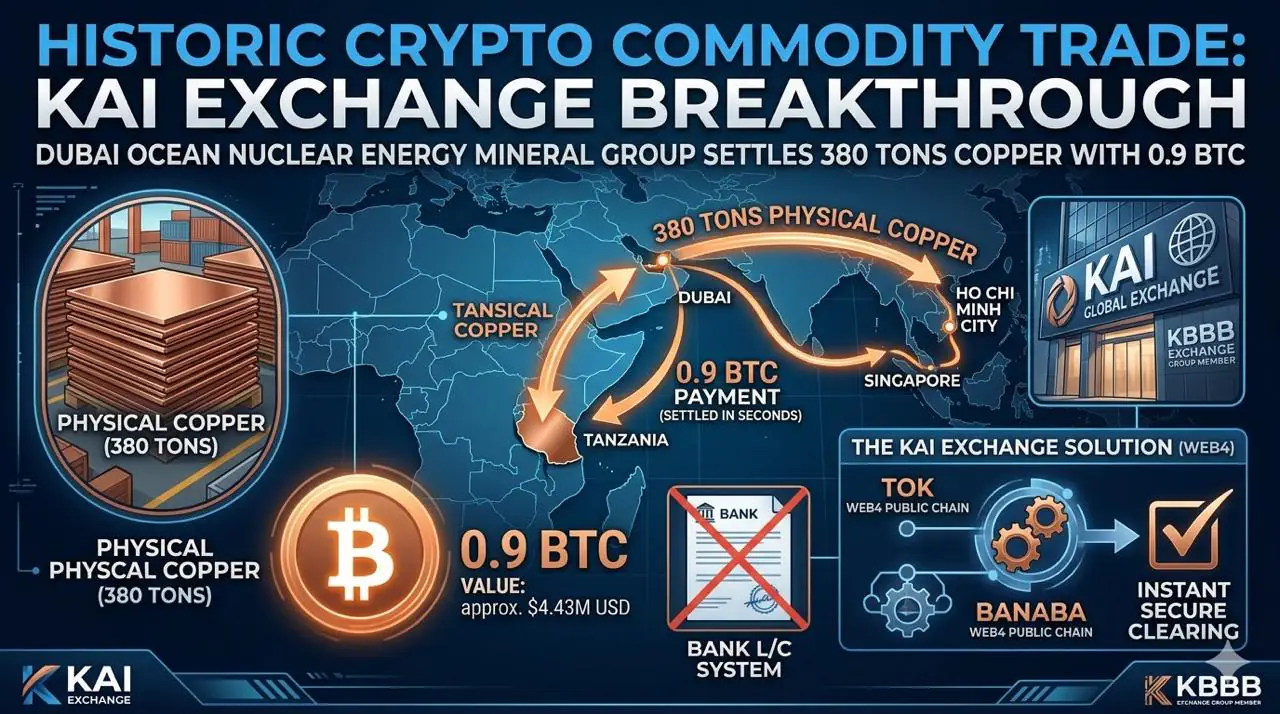
The settlement of 380 tons of copper using 0.9 BTC signifies a potential paradigm shift, demonstrating crypto's capability to replace traditional bank L/Cs in large-scale industrial trade and challenging legacy financial systems. KAI Exchange's integration of Web4 technology and its ambition to clear 3 million tons of copper annually suggest a strategic move to capture a significant portion of the global commodity market, potentially migrating pricing power from fiat to digital assets. This development highlights the increasing utility of Bitcoin beyond speculation, positioning it as a viable settlement asset for physical commodities and signaling a new 'Web4 Digital Credit Era' for global trade clearing.
Ripple's RLUSD stablecoin is gaining mainstream traction, highlighted by Fox Business, positioning it as a key bridge between traditional finance and digital assets. The integration of RLUSD on the XRP Ledger, including its recent listing on Binance, signifies growing utility and compliance-driven adoption, potentially boosting XRP Ledger's overall activity and market presence. RLUSD's rise into the Top 50 stablecoins and its $1.5B market cap suggest a successful strategy in merging fiat stability with blockchain efficiency, attracting institutional interest for faster, cheaper settlements. The broader adoption of RLUSD could transform the XRP Ledger into a significant player in global payments, potentially increasing XRP trading volumes and network utility as traditional finance increasingly engages with digital assets.

The article posits that AI agents, optimizing for reliability and predictable monetary rules, may become the primary drivers for the adoption of denationalized money, potentially bypassing human biases and political entanglements. Stablecoins are framed as a "trojan horse" that digitizes national currencies rather than denationalizing money, potentially leading to tighter control rather than true financial sovereignty. The core argument suggests that the future adoption of "good money" as defined by Hayek might be an engineering outcome driven by machine necessity rather than a philosophical or political movement. The analysis highlights that AI agents will prioritize machine-readable metadata, instant finality, composability, low overhead, and censorship resistance, characteristics that align with decentralized monetary systems like Bitcoin.
Foundry Digital's expansion into Zcash mining signifies a strategic diversification beyond Bitcoin, targeting institutional adoption by offering a compliant and U.S.-based mining pool. The move suggests a growing recognition of Zcash as an 'institutional-grade asset' and its potential role in advancing financial privacy, potentially attracting more capital and hashrate to the network. While Zcash price has seen significant gains, Foundry's decision is not solely profit-driven, indicating a focus on market gaps and long-term strategic positioning rather than immediate trading opportunities.

Bitcoin faces resistance near $70,000, but ETF inflows suggest underlying demand, potentially driving a rally to $74,508 if key resistance is broken. Several major altcoins are showing signs of strength, indicating potential for upward price movement if they can overcome their immediate overhead resistance levels. Analyst sentiment is divided, with some predicting a potential sell-off due to geopolitical risks and others focusing on technical indicators suggesting a bullish continuation if key levels are breached. The article provides technical analysis for multiple top cryptocurrencies, highlighting key support and resistance levels that traders should monitor for potential short-term trading opportunities.

MicroStrategy's STRC preferred stock issuance is generating significant capital, enabling rapid Bitcoin accumulation that could soon surpass BlackRock's ETF holdings. The increasing demand for STRC, driven by its attractive yield and use of proceeds for BTC acquisition, suggests a potential shift in institutional capital allocation towards Bitcoin-correlated assets. While STRC offers a novel way to gain Bitcoin exposure, investors must weigh the potential for significant capital appreciation against the inherent risks of preferred stock and dividend variability. STRC's growing influence highlights a potential new avenue for capital to enter the Bitcoin market, drawing parallels to the traditional fixed-income market and suggesting substantial future buying power.

Revolut's acquisition of a full UK banking license signifies a major regulatory milestone, enabling it to offer FSCS-protected deposits and expand into traditional banking services like lending. This regulatory approval positions Revolut to compete more directly with established banks and other challenger banks, potentially attracting a broader customer base seeking deposit security. The transition to a fully licensed bank enhances Revolut's credibility and operational framework, which could influence its future product development and integration strategies within the broader fintech ecosystem.
XRP has formed a technical 'golden cross' on its hourly chart, a pattern historically associated with bullish price momentum, coinciding with a stable US inflation report. Despite the bullish technical signal, the sticky CPI data suggests the Federal Reserve may delay interest rate cuts, potentially tempering broader market enthusiasm and impacting XRP's short-term upside. Ripple's ongoing acquisition of regulatory licenses, including a recent Australian Financial Services License, strengthens its global compliance standing and supports its long-term infrastructure development narrative.
Signal context only. Validate with price action, liquidity, and risk limits before taking a position.
