
Navigating Crypto News

CoinFeather
Navigating Crypto News
Quick market read from this story
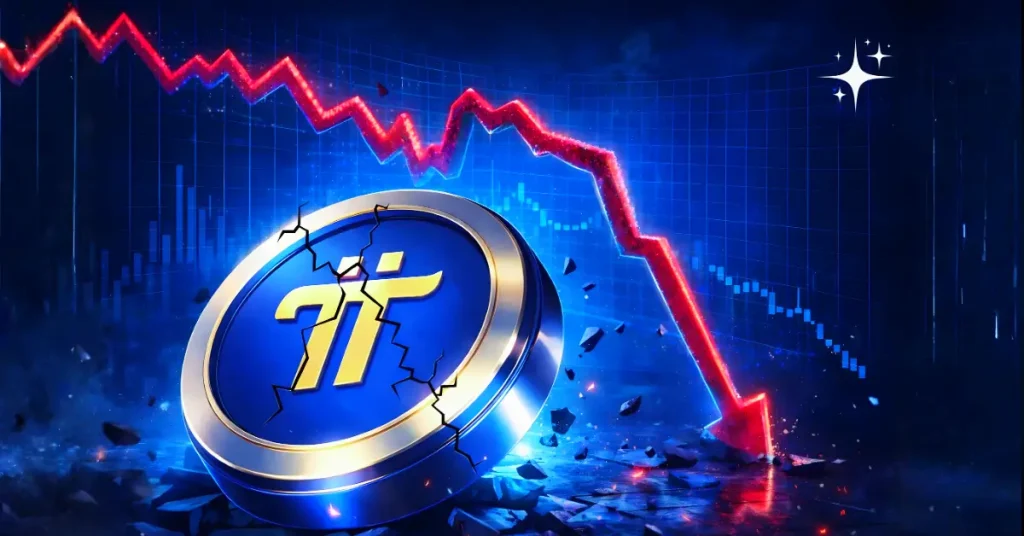
The PI coin experienced a significant 26% price drop on Pi Day, driven by a typical 'sell-the-news' reaction following its listing on Kraken.
Upcoming token unlocks totaling 33 million PI tokens are poised to increase circulating supply, potentially exerting further downward pressure on the price in the short term.
Despite a planned network upgrade (v20.2), its delayed confirmation and the broader crypto market downturn are contributing to PI's current bearish trend.
Deep Dive
The Pi Network's native token, PI, has experienced a sharp decline, falling approximately 26% in 24 hours leading up to and on Pi Day (March 14). This downturn follows a typical 'sell-the-news' reaction after its listing on the Kraken exchange and is compounded by upcoming token unlocks and broader market struggles.
The PI token saw a surge of over 30% leading up to its listing on Kraken, reaching close to $0.30. However, upon the commencement of trading on March 13, early investors took profits, leading to a rapid price pullback. This pattern is common in the cryptocurrency market following significant anticipated events.
Further pressure on PI's price stems from upcoming token unlocks. According to Pi scan, approximately 17 million PI tokens are scheduled to unlock on March 17, with another 16 million set to unlock on March 20. These unlocks will increase the circulating supply, currently at 9.66 billion tokens, potentially leading to short-term price depreciation if holders decide to sell.
The Pi Network has been undergoing technical upgrades, with recent updates including v19.6 on February 21 and v19.9 on March 4. A more significant update, v20.2, initially planned for March 14, was moved to March 12. While the team has not officially confirmed its completion, community members speculate the migration may have already occurred. The v20.2 update aims to enhance network security, speed, and reliability.
The decline in PI's price is also influenced by the general downturn in the cryptocurrency market. Bitcoin has fallen below $71,000, reflecting increased geopolitical tensions. Currently, PI is trading around $0.2042, which is approximately 86% below its all-time high. Analysts suggest PI is consolidating within a liquidity zone between $0.18 and $0.20. A sustained price above this range could lead to stabilization, while a drop below might see the token target $0.15.
Source, catalyst, and sector overlap from the latest feed.
Declining exchange balances to an 8-year low suggest reduced immediate selling pressure, a structural shift that historically precedes significant price appreciation. While on-chain indicators like NUPL have not yet confirmed a capitulation bottom, the tightening supply combined with historical cycle patterns indicates a potential setup for future expansion. Traders should monitor the interplay between decreasing exchange liquidity and the NUPL indicator, as this divergence may signal an opportune moment for accumulating positions before a potential cycle upturn.
MicroStrategy's aggressive Bitcoin accumulation strategy, fueled by its STRC preferred stock, positions it to potentially hold more BTC than Satoshi Nakamoto by March 2027. The increasing concentration of Bitcoin holdings within a single publicly traded entity like MicroStrategy raises questions about Bitcoin's core tenets of decentralization and scarcity. While not a direct catalyst for immediate price action, MicroStrategy's sustained buying pressure represents a significant, ongoing demand driver for Bitcoin. The market will need to grapple with the implications of a single entity controlling over 5% of Bitcoin's total supply, impacting its perceived decentralization.
DEXE price is exhibiting strong upward momentum driven by a rotation into DAO governance tokens, suggesting a broader market search for high-beta altcoins during major cryptocurrency consolidation. The breakout from a prolonged descending wedge pattern, coupled with a limited tradable supply and increasing RSI, indicates a potential for further price appreciation if key resistance levels are breached. The current rally in DEXE is supported by both sector-specific narratives and technical indicators, positioning it as a potential beneficiary of continued investor interest in decentralized infrastructure and community-driven protocols.
Bitcoin's current 159-day correction is significantly shorter than historical cycles, suggesting a potential shift in market dynamics driven by recent structural changes. The introduction of spot Bitcoin ETFs has disrupted traditional halving-cycle predictability, potentially accelerating new all-time highs by pulling in institutional capital earlier. A proposed change to Basel III capital rules could significantly reduce regulatory hurdles for banks holding Bitcoin, acting as a major catalyst for institutional adoption and liquidity. While the halving remains a long-term factor for miner sell pressure, the immediate market drivers appear to be ETF inflows and potential regulatory shifts impacting institutional access.
The TD Sequential indicator flashing a buy signal on Cardano's higher-timeframe chart, historically preceding significant rallies like the past 307% surge, suggests potential for a substantial upward price movement if confirmed. Whale redistribution of 130 million ADA tokens, coupled with tightening price action and a bullish technical signal, indicates a possible accumulation phase before a breakout, supported by resilient on-chain network activity. Cardano price is consolidating near long-term support and approaching a breakout zone, with a confirmed move above the descending resistance trendline potentially targeting $0.33-$0.34 and subsequently the $0.45 region.
RippleX Head of Engineering has issued an urgent alert for XRP Ledger validators and node operators to update to version 3.1.2, addressing a rare node outage bug that can prevent transaction processing and consensus participation. The update is critical for maintaining network stability and preventing amendment blocking, ensuring that servers can continue to validate ledgers and process transactions without interruption. This proactive patching and emphasis on GPG key trust highlight Ripple's ongoing commitment to enhancing XRPL's security and operational resilience, which is crucial for its adoption and stability.
Cardano founder Charles Hoskinson is advocating for a strategic rebalancing of ecosystem funding, shifting focus from pure infrastructure development towards adoption, visibility, and real-world usage to drive network growth. The introduction of Cardano's Programmable Tokens standard (CIP-0113) aims to enable compliant, institutional-grade assets like regulated stablecoins and tokenized securities, potentially attracting traditional finance players and boosting adoption. Despite recent price dips, analysts suggest ADA could be at an inflection point, drawing parallels to its 2020-2021 rally, contingent on favorable macro conditions and the successful execution of the new funding and tokenization strategies.
Solana's record-breaking $650 billion in stablecoin transactions in February 2026 signals a significant shift from speculative activity to institutional-grade financial infrastructure, potentially attracting further institutional capital. The increasing dominance of USDC over USDT in transaction volume highlights a growing institutional preference for compliance-focused stablecoins, which could benefit Solana as regulatory clarity emerges. Upcoming upgrades like Firedancer and Alpenglow, coupled with a favorable regulatory outlook and the growth of RWA and DeFi, position Solana for sustained utility and potential price appreciation, with analysts setting price targets up to $320.
IoTeX is strategically positioning itself within the burgeoning DePIN and AI sectors, aiming to bridge real-world devices with blockchain networks through a trusted data infrastructure. The project's success hinges on increased device adoption and continued DePIN momentum, with potential price targets suggesting significant upside if these trends materialize. Technical analysis indicates a long-term downtrend, but a breakout above $0.015 could signal a trend reversal, making the $0.0048 support level critical for near-term price action. IoTeX's 'Anti-Roadmap' for 2026 emphasizes flexibility in adapting to the fast-paced AI and DePIN markets, alongside a governance proposal to deprecate CIOTX, signaling a focus on core network development.
Pepeto's imminent Binance listing, coupled with its unique exchange features like zero fees and cross-chain bridging, positions it as a potentially disruptive force, attracting significant early investor interest based on its presale performance and experienced team. The XRP price prediction targeting $5-$10 suggests a bullish outlook for the large-cap asset, driven by expanding adoption and potential institutional acceleration, indicating a broader market cycle is forming where both large caps and promising new projects like Pepeto offer distinct opportunities. Pepeto's strategy of layering meme-driven community excitement with functional exchange tools, backed by a $7 billion market cap co-founder and a former Binance executive, creates a strong narrative for potential rapid growth and trading volume upon listing.
Solana is consolidating below key resistance around $95, with improving short-term momentum indicated by EMA crossovers and a rising RSI. The price action suggests a potential breakout is nearing, but failure to overcome the $88.57-$91 resistance zone could lead to a downside continuation towards $84.40. Traders should monitor the $95 level as a critical indicator for a confirmed bullish trend reversal, while a break below $84.40 would signal a bearish continuation.
Millions in short liquidations triggered a rapid price surge for Bitcoin towards $72,000, indicating strong short-term buying pressure. Increased inflows into Bitcoin ETFs and a positive global sentiment, despite falling US stocks and oil prices, suggest a growing risk appetite for digital assets. The divergence between crypto's upward movement and traditional markets' decline highlights a potential decoupling, driven by specific crypto market dynamics like ETF demand and derivatives activity. While the immediate catalyst was short liquidations, sustained ETF inflows and institutional interest provide a foundation for potential continued upside, though volatility remains a factor.
Veteran trader Peter Brandt is highlighting a familiar chart pattern on Bitcoin, suggesting potential for significant price movement in either direction. The pattern, previously associated with a drop to $60,000, is now re-emerging, prompting speculation about its future implications for BTC's price trajectory. Despite recent volatility and a retreat from highs, Bitcoin's price action remains within a broad range, with ETF inflows indicating sustained institutional interest.
US regulators are proposing a significant rollback of capital and liquidity requirements for large banks, potentially freeing up over $175 billion in capital. This policy shift, moving away from stricter post-2008 rules, prioritizes bank efficiency and credit provision over maximum safety, increasing systemic flexibility but also potential vulnerability. The relaxed rules contrast with harsher treatment for crypto assets like Bitcoin, highlighting a regulatory preference for traditional financial risks over digital asset integration. The move signals a pragmatic approach to financial stability, assuming easier access to the Fed's discount window will be crucial during future stress events.
The mining industry faces a significant shift as many publicly traded miners are expected to pivot to AI and high-performance computing by 2027-2028, potentially impacting Bitcoin's hash rate and network security dynamics. Despite the 20 million BTC milestone and the remaining 1 million coins taking over a century to mine, the direct impact on Bitcoin's price may be limited due to miners holding a small percentage of circulating supply. The upcoming 2028 halving, combined with the profitability of AI workloads, creates economic pressure for Bitcoin miners, driving a strategic diversification away from pure mining operations. The analogy to gold mining suggests that as block rewards diminish, the focus will shift to operational efficiency, energy sourcing, and vertical integration for miner survival, rather than immediate price impact.
Live Feed
Loading the broader stream in the same flow as the homepage feed.
USDC has surpassed USDT in adjusted transaction volume for the first time since 2019, indicating a potential shift in stablecoin utility towards settlement and payments rather than just value storage. While transaction volume is a key indicator of real-world usage, USDT still maintains a significant lead in market capitalization, suggesting that the long-term dominance battle between the two stablecoins is far from over. The ongoing regulatory uncertainty in the US for stablecoins could influence future market dynamics, potentially favoring US-regulated entities like Circle (USDC) if favorable legislation is enacted.

Brazilian industry groups representing over 850 companies are challenging a proposed financial transaction tax on stablecoins, arguing it is illegal and would stifle innovation. The core of the dispute lies in whether stablecoins, which are not considered fiat currency, can be subjected to the IOF tax, potentially impacting Brazil's significant stablecoin market. This regulatory pushback highlights a critical juncture for Brazil's rapidly growing crypto ecosystem, which sees 90% of its $6-8 billion monthly volume driven by stablecoins. The industry's stance suggests that any attempt to tax stablecoins via decree or administrative rule would face legal challenges, emphasizing the need for legislative action.
The Federal Court's decision to deny Custodia Bank's rehearing request confirms the Federal Reserve's discretion in granting master accounts, reinforcing regulatory control over crypto-focused financial institutions' access to traditional payment systems. This ruling signifies a setback for crypto banks seeking direct integration with central bank infrastructure, potentially increasing operational costs and reliance on intermediary banks for settlements. The outcome highlights ongoing regulatory challenges for digital asset firms in the U.S., suggesting a cautious approach from regulators regarding direct access to core financial infrastructure.

MicroStrategy's aggressive Bitcoin accumulation strategy, requiring over $500 million weekly, signals strong conviction in BTC's long-term value despite market volatility. The company's continued purchases, even during a bear market, suggest a potential floor for Bitcoin demand driven by institutional adoption. Reaching 1 million BTC by 2026 would represent a significant portion of total Bitcoin supply, potentially impacting market dynamics and scarcity.

Stablecoins are positioned as the essential programmable money rails for the emerging field of agentic finance, enabling autonomous AI agents to conduct micro-transactions at scale. The programmability and composability of stablecoins are key features that traditional payment systems cannot easily replicate for AI-driven commerce, suggesting a significant potential growth area for stablecoin adoption. While some AI developers remain skeptical of crypto, the unique requirements of agentic finance, such as high-frequency, fractional-cent payments, favor stablecoins over existing infrastructure. The development of standardized protocols for AI agent payments, akin to SSL for web security, is crucial for bootstrapping agentic marketplaces and realizing the full potential of programmable money.
xAI is undergoing a significant restructuring with multiple co-founders departing, signaling internal challenges and a pivot in strategy ahead of a potential SpaceX IPO. The restructuring and leadership changes at xAI, coupled with SpaceX's potential $1.5T-$1.75T IPO, suggest a strategic realignment to optimize for public market readiness and investor confidence. While the news focuses on xAI's internal changes and SpaceX's IPO prospects, the direct impact on specific crypto assets is minimal, as xAI is not a publicly traded cryptocurrency.
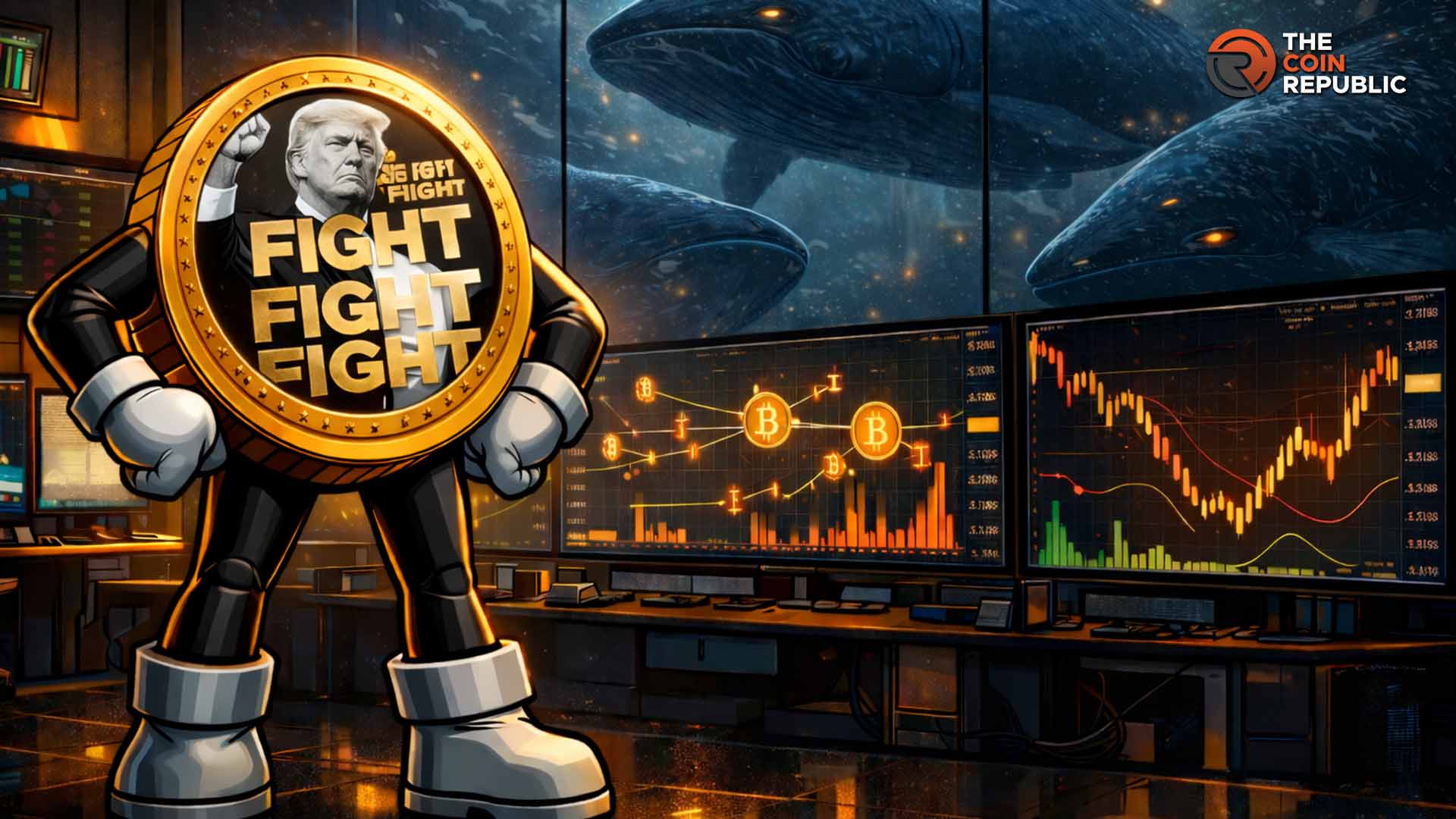
Significant whale activity involving TRUMP tokens, with over $15 million withdrawn from Binance, suggests potential shifts in large holder sentiment or strategic repositioning. The large token movements from a major exchange like Binance, particularly by newly created wallets, could indicate preparations for off-exchange accumulation or a move to less regulated platforms. While the TRUMP token withdrawals coincide with public commentary from Donald Trump, the direct link between his statements and whale actions remains speculative, highlighting the speculative nature of political meme coins. The substantial outflow of TRUMP tokens from Binance warrants monitoring for subsequent price action, as such large movements can precede significant market events for meme-driven assets.

Balaji Srinivasan advocates for the development of crypto tools to aid refugees, highlighting blockchain's resilience in hostile environments and potential for borderless finance. The call emphasizes crypto's utility beyond speculation, positioning it as a critical infrastructure for individuals displaced by conflict and economic instability. The increasing market cap of USDC, nearing $80 billion, is partly attributed to capital flight from the UAE, underscoring stablecoins' role in cross-border capital movements during geopolitical stress.

Renowned investor Stanley Druckenmiller predicts stablecoins will dominate global payments within 10-15 years, citing their speed and efficiency over legacy systems. The GENIUS Act provides a clear U.S. regulatory framework for stablecoins, classifying them as neither securities nor commodities, which removes a significant institutional adoption barrier. Mastercard's extensive crypto partner program indicates a quiet rebuilding of the underlying financial infrastructure, integrating blockchain and stablecoins for settlement. While Druckenmiller remains skeptical of most cryptocurrencies, his endorsement of stablecoins, coupled with regulatory clarity and institutional build-out, signals a significant shift towards mainstream adoption.

Ripple CTO Emeritus David Schwartz suggests that while direct impacts from RWAs, bridging, and Ripple USD might be minimal, their indirect influence on XRP's price could be substantial. Despite low systematic token burns on the XRP Ledger, the discussion highlights the potential for indirect price impacts from ecosystem developments, drawing parallels to Stellar's past supply reduction. XRP is exhibiting technical consolidation with tightening Bollinger Bands, indicating a potential for a significant directional move as market liquidity returns, following a period of sideways trading.

The disappearance of short liquidations for DOGE suggests a market sentiment shift towards bullishness or a strategic exit by short sellers to avoid losses. While short liquidations were zero, DOGE has recently declined 4.61% in 24 hours, indicating broader market weakness and potential resistance at higher price levels. The formation of a golden cross and increased trading volume suggest potential for a short-term rebound, contingent on Bitcoin's performance and overcoming key resistance at $0.10.
Signal context only. Validate with price action, liquidity, and risk limits before taking a position.
