


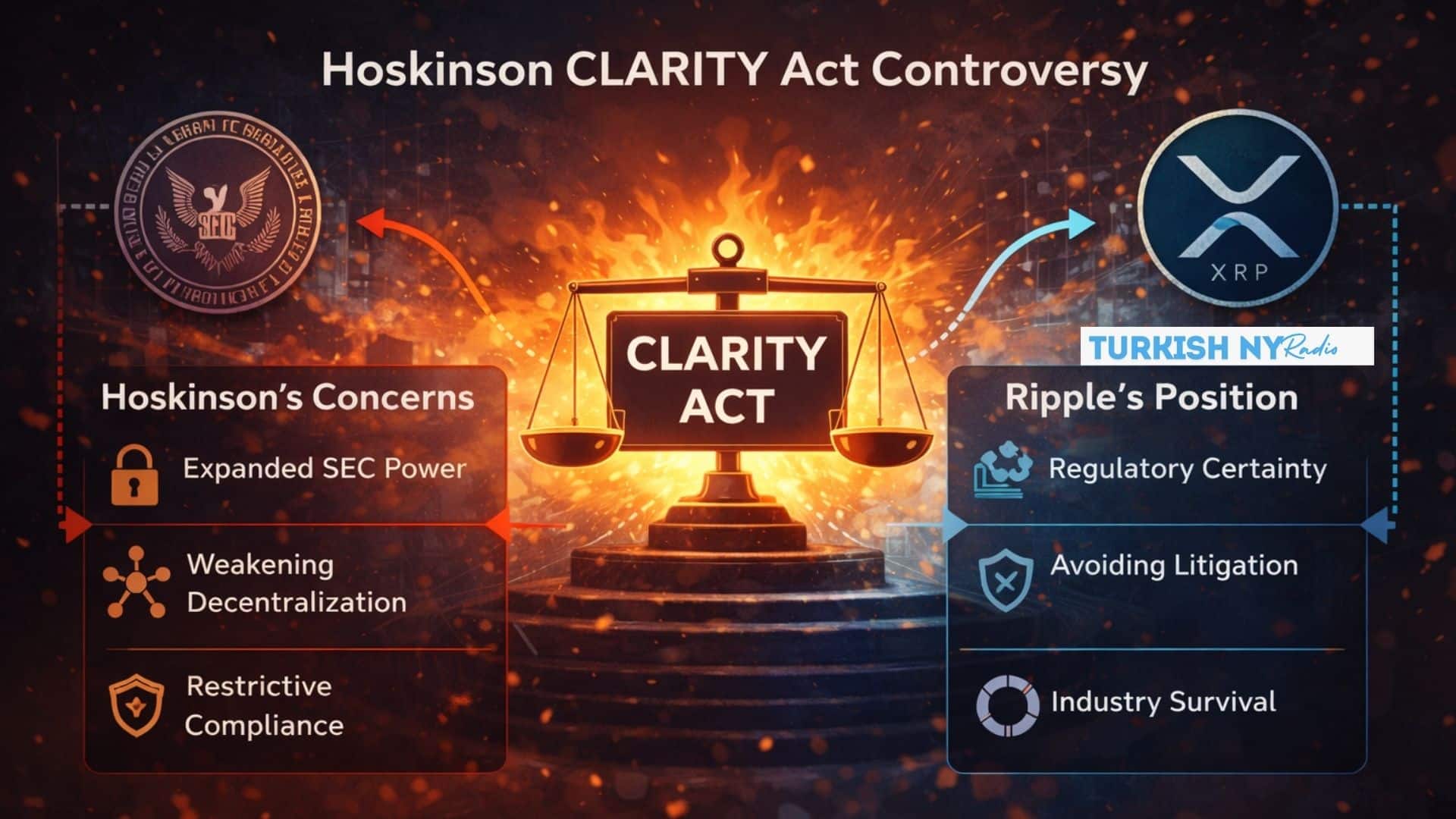
Cardano designer Charles Hoskinson has voiced strong objections to the CLARITY Act, a proposed piece of legislation concerning digital currency regulation in the United States. Hoskinson specifically targeted Ripple CEO Brad Garlinghouse for endorsing the act, asserting that it risks entrenching flawed regulatory expectations rather than rectifying them. This disagreement highlights a broader ideological schism within the U.S. crypto sector regarding the most effective approach to digital asset oversight.
Hoskinson's Objections to the CLARITY Act Center on Long-Term Impact
According to CryptoBriefing, Hoskinson's primary concern with the CLARITY Act lies in how it proposes to allocate regulatory authority. He argues that the debate surrounding the act is not merely about improving current oversight but about the enduring consequences of integrating cryptocurrencies into existing securities frameworks.
Hoskinson warned that the bill, even after numerous amendments, could default to classifying most crypto projects as securities. This would compel them to seek exemptions, rather than providing clear, upfront pathways for compliance. He expressed significant apprehension that once such a regulatory structure is codified into law, it would become exceedingly difficult to amend or revise.
"Bad laws tend to stay bad laws," Hoskinson stated, underscoring his belief that legislation enacted hastily often solidifies into permanent policy.

Ripple's Support Underscores Strategic Differences
The dispute over the CLARITY Act escalated following Garlinghouse's public endorsement of the bill as a crucial step towards achieving regulatory certainty. Ripple's stance, as reported by CryptoBriefing, suggests a belief that even partial clarity is preferable to the current environment, which is characterized by regulatory enforcement through litigation.
Hoskinson countered this argument, contending that accepting substandard regulations in pursuit of certainty could negatively impact local developers and open-source projects. He characterized the disagreement not as a personal conflict but as a fundamental philosophical divergence, emphasizing that the ease of legislative implementation should not supersede the principle of structural fairness.
Decentralization Concerns Drive Hoskinson's Position
A central tenet of Hoskinson's criticism of the CLARITY Act is his concern that the legislation could normalize custodial control and impose burdensome compliance requirements. He warned that such outcomes might disproportionately benefit large, well-capitalized entities while simultaneously discouraging broader decentralized participation in the cryptocurrency ecosystem.
Hoskinson articulated that his opposition stems from a desire to preserve the foundational principles of cryptocurrency, including permissionless access and a reduced reliance on centralized intermediaries. From his perspective, the bill risks reshaping the crypto landscape to conform to traditional financial models, failing to acknowledge its unique characteristics and potential.
Conclusion
Hoskinson's critique of the CLARITY Act serves as a clear illustration of the persistent divisions within the cryptocurrency industry as U.S. lawmakers move closer to establishing official market structure regulations. While some industry executives prioritize regulatory stability, others harbor significant concerns that any compromise could undermine decentralization and stifle innovation. As Congress continues its deliberation on the measure, these internal divisions are likely to influence how legislators weigh industry opinions and reservations.
Glossary of Key Terms
CLARITY Act: A proposed U.S. law designed to define the oversight framework for digital assets.
SEC: The United States Securities and Exchange Commission, a key regulatory body.
Market Structure: Refers to the legal and regulatory framework governing the classification and trading of assets.
Custodial Wallet: A digital wallet where a third party manages the private keys on behalf of the user, as opposed to a non-custodial wallet managed directly by the user.
Decentralization: The process of distributing control and decision-making away from a central authority.
FAQs for the CLARITY Act Debate
1. What is the core of the Hoskinson CLARITY Act argument?
The argument centers on whether the proposed CLARITY Act will genuinely improve cryptocurrency oversight or inadvertently hinder it by embedding potentially flawed regulatory structures.
2. Why does Hoskinson oppose the bill?
Hoskinson opposes the bill because he believes it contains incorrect conclusions that, once enacted, will be extremely difficult to rectify in the future.
3. Why does Ripple favor the CLARITY Act?
Ripple favors the CLARITY Act because they view it as a significant step forward in achieving much-needed regulatory clarity within the United States.
4. Could the measure favor major corporations?
Hoskinson suggests that the compliance requirements outlined in the bill could potentially disadvantage smaller projects and endeavors, thereby favoring larger entities.
5. Has the bill been finalized?
No, the CLARITY Act is still undergoing congressional assessment and debate, meaning it has not yet been finalized.