


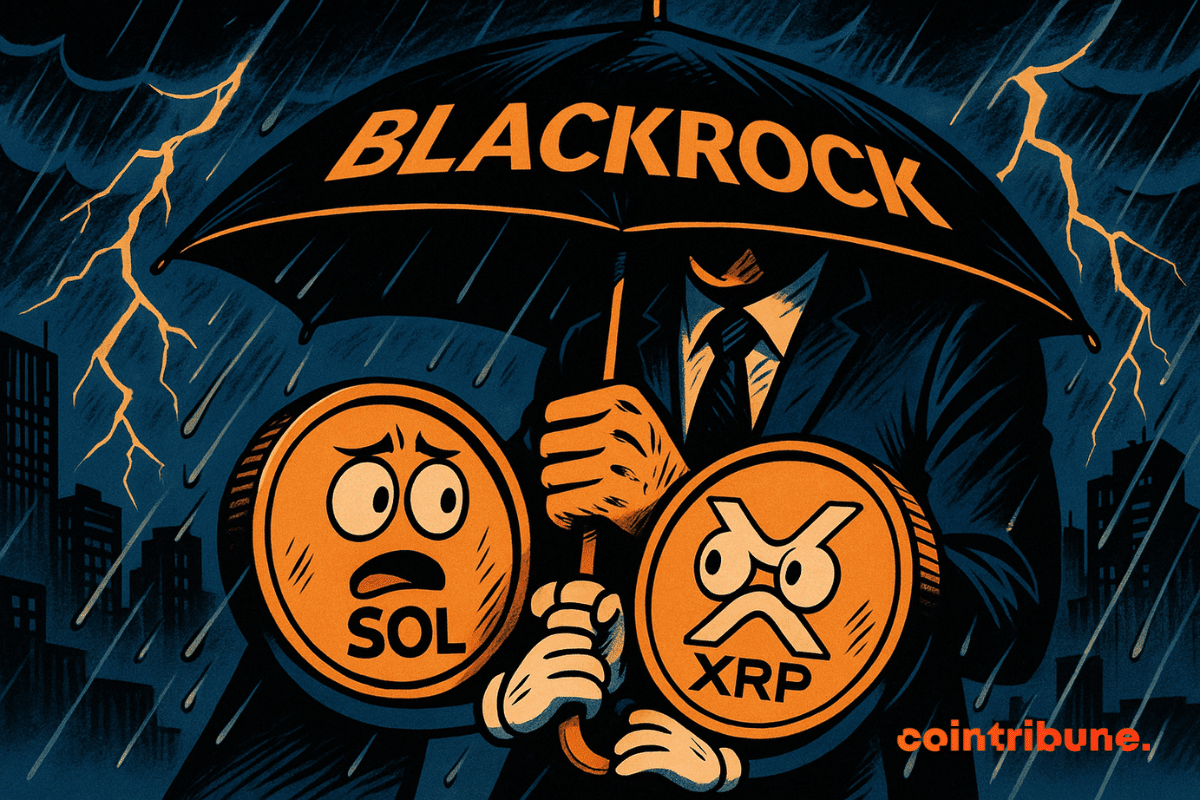
The Unrivaled Influence of BlackRock's Bitcoin ETF
The influence of a single company on the cryptocurrency market is now a stark reality, exemplified by BlackRock's pivotal role in the performance of crypto ETFs. In 2025, the investment landscape for Bitcoin ETFs is overwhelmingly dependent on BlackRock's involvement; without its participation, investment flows into these products would be negative. This raises questions about whether this financial powerhouse can dictate the future trajectory of altcoins, identifying winners and losers within the market.
The numbers clearly illustrate BlackRock's impact. The iShares Bitcoin Trust (IBIT) alone attracted $28.1 billion in 2025. Without this significant inflow, the total balance for Bitcoin ETFs would show a deficit of $1.27 billion. This suggests that IBIT is the primary force driving growth and preventing stagnation in the crypto industry's institutional adoption efforts.
This success is not merely a result of BlackRock's scale but is deeply rooted in the trust it commands. For many institutional investors, BlackRock represents a trusted gateway to Bitcoin exposure, bypassing the technical complexities of managing digital wallets or the inherent volatility of cryptocurrency exchanges. The IBIT fund adheres to regulated management practices, utilizes Coinbase as a custodian, and employs a transparent valuation methodology, positioning it as a model for institutional crypto investment vehicles.
Geoff Kendrick from Standard Chartered has acknowledged that the significant upward momentum observed in Bitcoin's price during 2025 is largely fueled by these substantial inflows into regulated products. This sentiment is echoed by Vetle Lunde of K33 Research, who stated on X, "No BlackRock, no party." This observation highlights that IBIT is not just a participant in the market; it is currently the sole pillar supporting the perception of solidity within the institutional crypto market.
Altcoin ETFs Face an Uncertain Future Without BlackRock's Endorsement
The upcoming phase of the market will involve altcoin ETFs, and notably, BlackRock has not yet announced any products in this arena. This absence creates potential opportunities for competitors but also introduces significant uncertainty. While JPMorgan anticipates a potential of $3 to $6 billion for a Solana ETF, and Bitget targets $6 billion, these figures must be considered in context.
Comparisons with Bitcoin ETFs reveal a slower adoption rate for altcoins. Bitcoin ETFs have achieved 6% adoption of Bitcoin's market cap within six months of their launch. For Ethereum ETFs, this adoption rate is half that. Without the established credibility and brand recognition of BlackRock, altcoin ETFs will face the challenge of proving their value in a market perceived as riskier. This could deter hesitant institutional investors, as alternative ETFs for assets like Solana or XRP may not offer the same perceived safety as BlackRock's Bitcoin offering.
The lack of BlackRock's direct involvement could provide a strategic opening for other significant players such as Fidelity, Ark Invest, or Bitwise to expand their market share. However, without the powerful "aura effect" associated with BlackRock, these new altcoin products may experience less initial momentum, and investor uptake might be slower.
BlackRock's Systemic Influence and the Crypto Ecosystem's Balance
BlackRock currently manages approximately 60% of the assets held within U.S. Bitcoin ETFs. This level of control signifies more than just market dominance; it represents a significant influence on the perception of stability within the regulated cryptocurrency market. This concentration of power raises concerns about what opportunities remain for other market participants.
The imbalance is further highlighted by the performance of other established players. Grayscale's Bitcoin Trust (GBTC), once a pioneer in the space, has experienced cumulative outflows totaling $24.6 billion since 2024. This indicates that even well-intentioned funds are struggling to compete with the inflows directed towards BlackRock's product.
BlackRock's absence from the altcoin ETF market could present a strategic advantage for other asset managers. Those who successfully navigate this opportunity could attract a new segment of investors who are less tied to traditional financial giants. However, building trust and establishing a strong market presence will be crucial for their success.
Key Facts Reshaping the Crypto ETF Landscape
- •$28.1 billion invested in IBIT in 2025: an unmatched record;
- •$92.66 billion in assets managed by IBIT: representing approximately 4% of the total Bitcoin supply;
- •Only one month of net outflows for IBIT since its launch (February 2025);
- •$24.62 billion in outflows for Grayscale: marking the sector's largest retreat;
- •$0 announced by BlackRock for Solana or XRP ETFs: indicating a strategic silence.
BlackRock has recently surpassed the milestone of holding over 800,000 BTC through IBIT, further solidifying its leading position in institutional Bitcoin adoption. This achievement is not merely a record but a clear signal that institutional engagement with Bitcoin today is significantly channeled through major financial institutions that understand both the traditional finance world and the cryptocurrency market.