


Key Developments in Cryptocurrency Legislation
The White House is reportedly considering retracting its support for a cryptocurrency bill. This potential shift in stance is attributed to actions taken by Coinbase, which have been described as disruptive by a source close to the Trump administration. The White House's potential withdrawal of support could significantly impact the progress of legislative efforts within the cryptocurrency market, highlighting ongoing tensions between regulatory bodies and the industry. Such developments carry substantial consequences for the future structure of the market and the frameworks that will govern it.
Coinbase's Actions and the CLARITY Act
According to a report from PANews, a source with insights into the Trump administration has revealed that the White House may withdraw its support for the cryptocurrency market bill. This decision is contingent upon Coinbase's failure to provide a satisfactory yield agreement. The situation escalated following Coinbase's unilateral withdrawal from the bill, which has reportedly caused discontent. This decision by Coinbase to oppose the CLARITY Act, an initiative spearheaded by CEO Brian Armstrong, has led to a postponement of the vote in the Senate Banking Committee. The primary reasons cited for Coinbase's opposition include concerns regarding privacy and the regulation of tokenized equities.
Brian Armstrong's decision has elicited notable reactions from within the industry. David Sacks, identified as the White House Crypto Czar, commented on X (formerly Twitter), stating, "Now is the time to set the rules of the road." Chairman Tim Scott also expressed optimism regarding potential bipartisan achievements in this area.
Market Uncertainty Surrounds Crypto Legislation
The GENIUS Act, signed into law by President Trump in January 2025, followed his rescission of a previous Biden-era policy. This historical precedent suggests a discernible shift towards regulations that are more favorable to the cryptocurrency sector.
Ethereum (ETH) is currently trading at $3,284.51, with a market capitalization of $396.42 billion, according to data from CoinMarketCap. Recent trading volumes have seen a decline of -16.44% over the past 24 hours. Despite a 0.56% decrease in the last 24 hours, Ethereum experienced a notable increase of 6.60% over a seven-day period.
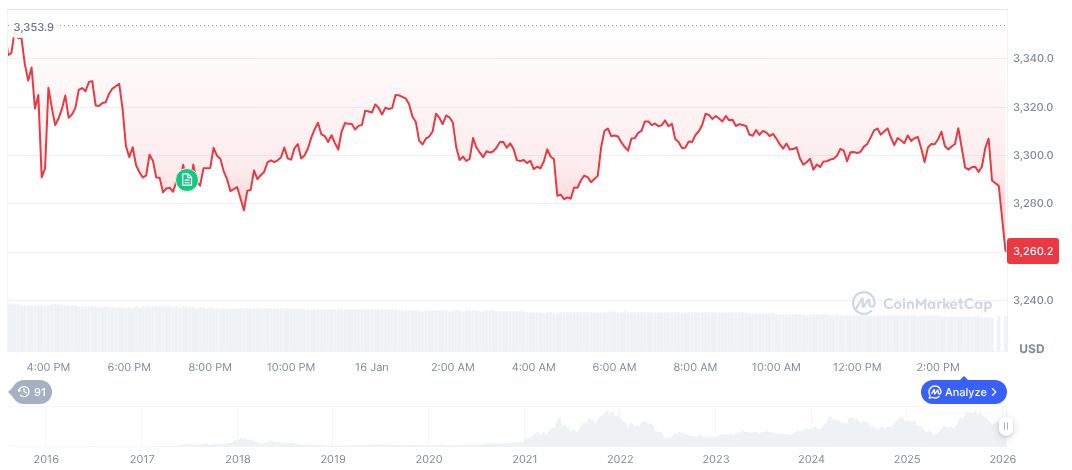
Insights from the Coincu research team indicate potential regulatory challenges arising from the White House's reconsideration of its support. This situation could affect future cryptocurrency legislation. Historical trends demonstrate the market's resilience in the face of policy changes; however, the necessity for industry consensus remains paramount for the secure progression of legislative initiatives.