


Key Developments in Crypto Regulation
The White House is reportedly reconsidering its stance on the crypto market structure bill. This potential shift in support comes after Coinbase's recent withdrawal from the bill, which was reportedly sparked by a disagreement over the bill's current draft and a new yield agreement benefiting banks.
This situation highlights the ongoing complexity and tensions within legislative processes concerning the cryptocurrency market. The potential shift in the White House's position could significantly affect regulatory stability within the cryptocurrency market, underscoring the delicate balance between government priorities and industry actions.
White House Considerations in Crypto Policy Debates
Reports indicate that the White House is contemplating revoking its support for the CLARITY Act. This reconsideration is contingent on Coinbase's willingness to negotiate a new yield agreement that would be beneficial to banks. Sources familiar with the matter described Coinbase's recent action as unexpected for both the White House and the broader industry.
Coinbase's withdrawal from the CLARITY Act signifies broader strains between centralized governance motives and decentralized platform objectives. Political reactions suggest a potential evolution in how crypto legislation might develop, with an increased focus on reconciling diverse interests within the digital asset space.
"After reviewing the Senate Banking draft text over the last 48hrs, Coinbase unfortunately can’t support the bill as written. There are too many issues, including: – A defacto ban on tokenized equities – DeFi prohibitions, giving the government unlimited access to your financial…" — Brian Armstrong, CEO and Co-Founder, Coinbase
Coinbase's Influence on Regulatory Frameworks and Market Dynamics
In 2021, Coinbase made history by becoming the first major cryptocurrency company to go public. This milestone significantly impacted the perception of the industry within regulatory circles and continues to influence ongoing discussions.
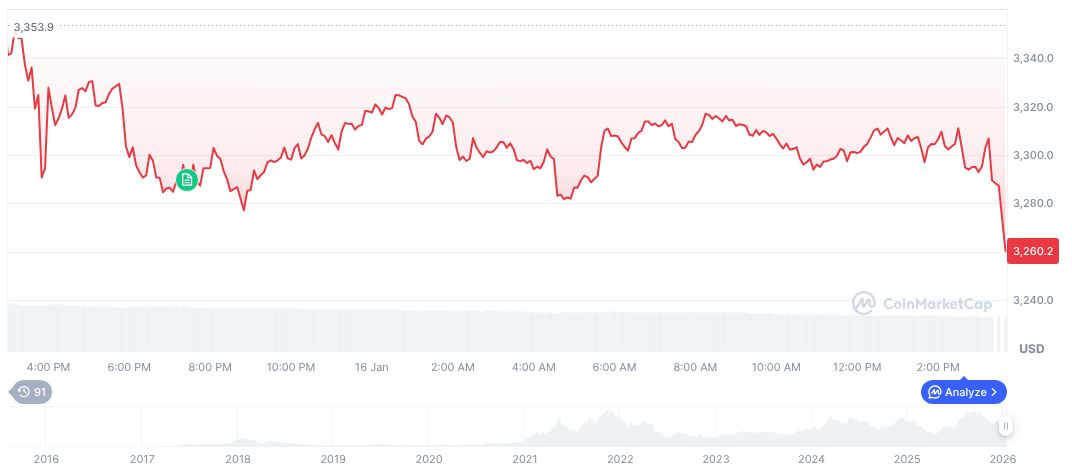
Market data for Ethereum (ETH) shows a market capitalization of $397.57 billion, despite a recent 24-hour price decrease of 0.53%. This volatility is characteristic of the broader cryptocurrency sector. Over the past 30 days, Ethereum's price experienced a notable increase of 15.7%. Current trading volume reflects a change of -21.37%, indicating shifting market dynamics.
According to the Coincu research team, the potential outcomes of this developing situation could significantly shape future regulatory frameworks and compliance standards across the cryptocurrency landscape. Predictive analyses suggest an evolution of strategies aimed at balancing innovation with necessary oversight.