



The crypto market experienced a week mirroring the volatility seen in stocks, characterized by mixed signals, fluctuating sentiment, and a notable surge in fear, leaving traders uncertain about future direction. This sentiment within crypto is not isolated; it is closely linked to the same forces impacting traditional markets, including waning confidence in the AI trade, inconsistent economic data, and an indecisive Federal Reserve regarding interest rates.
Why the Crypto Market Feels Stuck
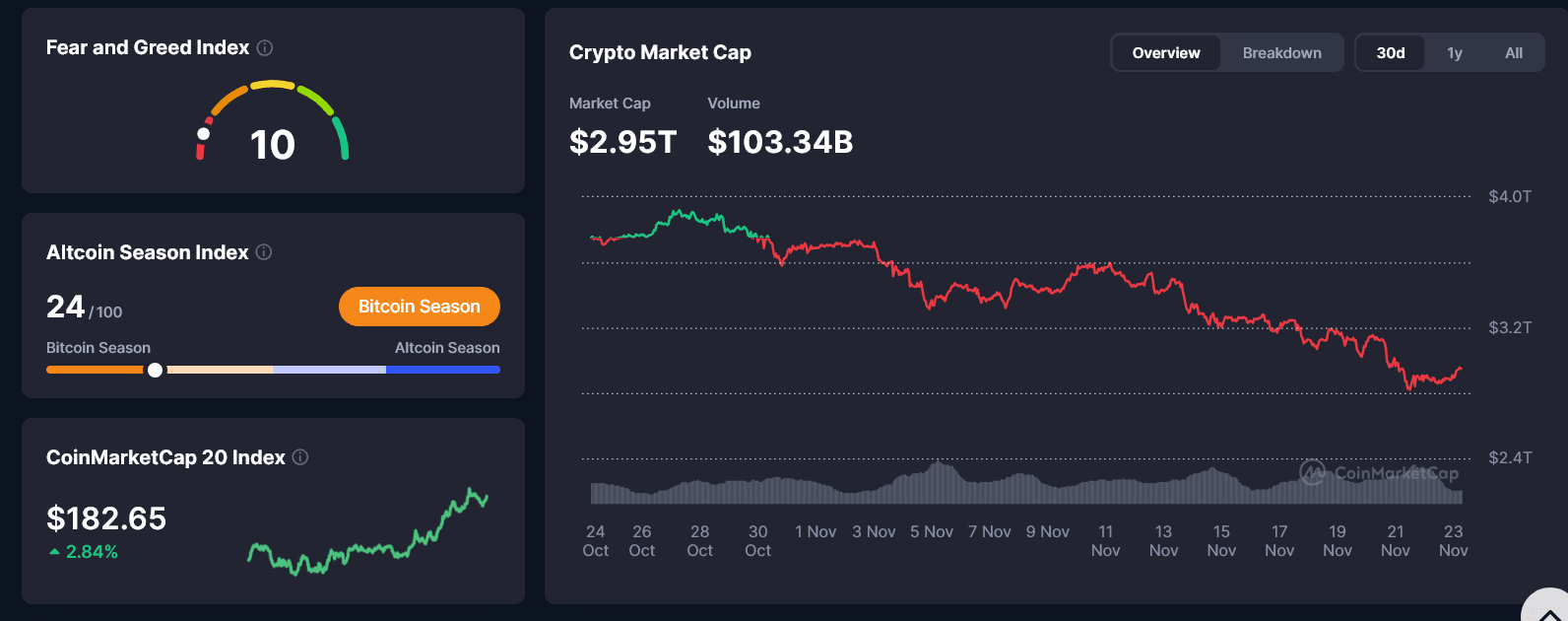
Crypto's performance is heavily reliant on conviction, liquidity, and a willingness to take risks, all of which are currently showing signs of instability. Even after a strong earnings report from Nvidia, tech stocks experienced a challenging week. The core issue was not performance, but investor belief; there is growing uncertainty about the sustainability of the AI boom's influence on the broader market. When prominent companies like Nvidia, Broadcom, Palantir, and Oracle struggle to gain traction, this doubt permeates all risk assets, including cryptocurrencies.
Concurrently, the VIX, a key indicator of Wall Street's fear, reached its highest point since April. The crypto market often reflects these increases in fear, as traders tend to divest from high-beta assets when equity market volatility escalates. Consequently, despite not experiencing the same degree of collapse, the overall mood in the crypto space has shifted towards caution.
How the Fed Suddenly Became the Dominant Story
The Federal Reserve's internal division on whether to implement interest rate cuts next month significantly complicates the outlook for crypto. Some Fed officials advocate for lower borrowing costs, citing weakening labor data, while others express concern that persistent inflation makes such a move too risky.
The recent jobs report did little to clarify the situation. While the U.S. added more jobs than anticipated, the unemployment rate climbed to a four-year high. This mixed data allows for varied interpretations, leading to market paralysis. Just a few weeks ago, futures markets largely priced in a December rate cut as a certainty. Now, these odds fluctuate significantly based on individual Fed official statements.
Crypto is directly sensitive to this kind of uncertainty because rate cuts are known to stimulate liquidity, which is a crucial driver for digital assets. Historically, a Fed rate cut often leads to increased momentum for Bitcoin and altcoins. Conversely, a hawkish stance from the Fed can dampen the rally's energy. Currently, the path forward remains unsettled.
Will AI Sentiment Spill Over Into Crypto Market?
While the volatility in AI stocks might seem unrelated to crypto, it has a direct impact. The AI boom has been a significant source of wealth creation over the past three years. A pullback from this trade naturally leads to a decrease in risk appetite across the market. Dan Ives, a prominent tech analyst, likens the current situation to a temporary panic that will eventually subside as fundamental factors reassert themselves.
If his assessment is correct and the AI cycle has further room to run, crypto could benefit indirectly. Increased confidence in the tech sector can boost liquidity, which in turn can flow into Bitcoin, Ethereum, and other high-beta altcoins. However, analysts like Ajay Rajadhyaksha at Barclays caution that the primary risk is not a bubble bursting, but rather a potential disappointment in corporate earnings. A weakening of corporate profits could undermine the entire risk complex, including crypto.
Where Crypto Market Could Go Next
The coming weeks are likely to be characterized by choppiness. In a market lacking clear signals and a dominant narrative, short-term price movements tend to become amplified, with speculative trading taking precedence over long-term conviction. Until the Federal Reserve provides definitive guidance, crypto will likely trade within this environment of uncertainty.
However, there are several positive factors to consider:
- •If rate cuts are implemented in December, crypto could experience a rapid resurgence, as liquidity typically flows into risk assets first.
- •Should tech earnings stabilize, the fear-driven selling in AI stocks may subside, leading to a return of risk-taking across markets.
- •Crypto's underlying fundamentals remain robust. Bitcoin's supply is becoming scarcer following the halving event, institutional inflows are consistent, and development continues across Ethereum, Solana, and layer-2 ecosystems.
The Bottom Line
The crypto market is not experiencing a collapse, but rather a period of waiting. The broader market is grappling with skepticism surrounding the AI cycle, an indecisive Federal Reserve, and economic indicators that present conflicting signals. Until these uncertainties are resolved, expect continued volatility rather than a clear directional trend.
The next significant market movement will likely be dictated not by crypto itself, but by decisions from the Fed, the performance of corporate earnings, and the speed at which investors regain confidence. Once these factors align, the market will be better positioned to establish a firm direction.