


Overview
Stablecoins in Decentralized Finance (DeFi) have experienced significant growth, with 2025 marking a year of over 50% expansion, pushing the market capitalization above $300 billion. Daily on-chain stablecoin volume averaged around $3.5 trillion, surpassing Visa’s $1.3 trillion. Stablecoins have become a crucial settlement layer, connecting payments, trading, collateralization, and treasury operations within DeFi.
In essence, widely-used stablecoins such as Tether’s USDT and Circle’s USDC are now fundamental to decentralized finance, providing a stable, dollar-denominated currency for lending, trading, cross-chain transfers, and numerous other applications.
Stablecoins are a type of cryptocurrency pegged to a stable asset, most commonly the U.S. dollar. They maintain a constant value, making them highly suitable for DeFi use cases. By mid-2025, stablecoins accounted for over 30% of on-chain crypto transaction volume.
They offer a stable unit of exchange, free from the price fluctuations characteristic of Bitcoin, Ethereum, and other volatile tokens. Consequently, DeFi applications almost exclusively rely on stablecoins for nearly all primary functionalities.
The stablecoin market itself has grown substantially, with market capitalization surging past $300 billion, led by Tether (USDT). USDT and USDC together constitute more than 90% of the total stablecoin supply. Other stablecoins, including MakerDAO's DAI and newer tokens like PYUSD and RLUSD, are smaller but experiencing rapid growth.
In total, stablecoins settled nearly $53 trillion in transactions within a year (2024-2025). To provide context, stablecoin transaction flows now rival the transaction volumes of the world’s largest payment networks.
Stablecoins in DeFi encompass a variety of coins and projects. The largest category consists of fiat-pegged stablecoins (USDT, USDC, USDP, and many others), all pegged 1:1 to USD or other fiat reserves. Some are crypto-backed, such as DAI. The remaining are algorithmic or hybrid models, like Frax’s model or Ethena’s USDe, which are powered by smart contracts and a mix of collateral types.
Currently, fully collateralized stablecoins dominate the market. Regulators are actively pushing for transparency and the requirement of 1:1 reserves. The U.S. GENIUS Act, enacted in July 2025, mandates 100% reserve backing with liquid assets, including USD and short-term Treasuries, for dollar-pegged stablecoins. It also enforces regular audits and strict marketing regulations.
Furthermore, Europe’s MiCA regulations have established uniform standards for reserve disclosure and redemption for e-money tokens. These regulatory frameworks favor the largest and most trusted stablecoins, rendering experimental or under-collateralized models nearly obsolete.
| Stablecoin | Issuer | Type/Backing | 2026 Market Cap |
|---|---|---|---|
| USDT | Tether Ltd. | Fiat-backed (USD, T-bills) | $186 billion |
| USDC | Circle & Coinbase | Fiat-backed (USD, Treasuries) | $75 billion |
| DAI | MakerDAO | Crypto-collateralized (various crypto) | $4.4 billion |
| USDTB | BlackRock | Fiat-backed (USD Treasuries) | $3.6 billion |
| PYUSD | PayPal | Fiat-backed (USD) | $3.6 billion |
| RLUSD | Ripple | Fiat-backed (USD) | $852 million |
Table: Major DeFi Stablecoins (Latest 2026 data).
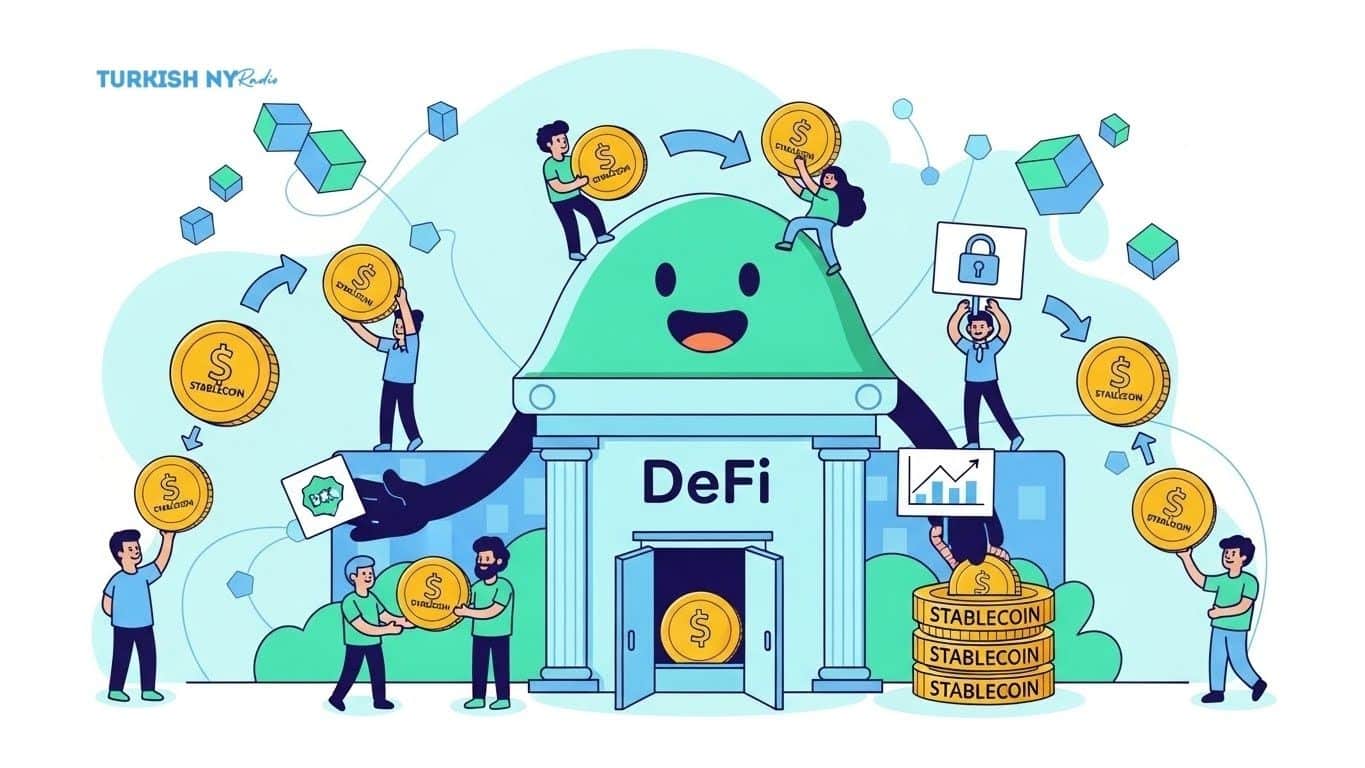
How are Stablecoins Deployed in DeFi?
Several key use-cases dominate the deployment of stablecoins in DeFi:
Lending and Borrowing: Stablecoins are the most frequently used collateral and loan currency within DeFi lending protocols. Users deposit stablecoins like USDC or USDT to borrow other assets, or they lend stablecoins to earn interest. Major platforms like Aave and Compound predominantly utilize stablecoin pools.
DEX Trading: In decentralized exchanges (DEXs) such as Uniswap and Curve, stablecoins contribute to deep liquidity and serve as major trading pairs. Traders leverage this to hedge, arbitrate, or rebalance their volatile token holdings against stablecoins.
Yield Farming: A significant portion of yield-generating strategies involves stablecoin farming. For instance, depositing DAI into a vault or contributing USDT to a stablecoin pool can yield interest-bearing tokens. These returns are often considered safer, as they are pegged to lending rates, compared to the yields offered by altcoin farming.
Payments and Remittances: Beyond crypto markets, stablecoins are increasingly being used for money transfers. Developing countries, such as Nigeria or Ukraine, utilize USD stablecoins for remittances and savings. Companies like Stripe and PayPal are also adopting USD stablecoin rails for global payouts.
Derivatives and RWA Collateral: Stablecoins serve as collateral for on-chain derivatives and tokenized real-world assets (RWAs). For example, platforms use USDC as collateral in perpetuals and futures markets. Emerging trends also involve backing tokenized bonds or even stocks with stablecoins.
Overall, stablecoins have transitioned from being a peripheral crypto product to becoming the unit of account in DeFi. Data highlights their immense scale: in 2024, stablecoins processed over $27 trillion in transactions, exceeding the combined volumes of Visa and Mastercard, and by late 2025, this figure grew to $53 trillion.
Today, nearly every DeFi action, including swaps, loans, and yield farming, invariably involves one stablecoin or another at some point in the process.
Regulation and Standards
Stablecoins have become a primary focus for regulators. It is noteworthy that under the US GENIUS Act of 2025, a federal framework for USD stablecoins was established.
This act mandates a dual licensing system (state and federal) and imposes stringent Anti-Money Laundering (AML) regulations on issuers. Similarly, the EU’s MiCA law enforces mandatory audits, requires reserves to be held in cash or T-bills, and most importantly, ensures transparent redemption procedures for both fiat-backed and e-money tokens.
Jurisdictions like Hong Kong and Japan have also implemented similar licensing regimes. These regulations are reshaping the market, ensuring that only compliant stablecoins can be used across different jurisdictions.
Furthermore, other unregulated foreign coins operating onshore are restricted under the U.S. GENIUS Act. In essence, regulators are aiming to ensure that stablecoin issuers maintain transparent and liquid reserves, presenting a level of stability that reduces user risk.
Stability and Risk
Despite their name, stablecoins can experience occasional volatility. Major stablecoins generally maintain their peg with only minor deviations most of the time. Large-scale de-pegging events have been rare and short-lived.
For instance, after TerraUSD's collapse in May 2022, USDT briefly dropped to $0.96 for two days. Similarly, USDC slipped to $0.88 in March 2023 after its issuer, Circle, had funds stuck with the then-crumbling Silicon Valley Bank.
In both instances, markets stabilized rapidly. USDT bounced back, and USDC holders were reassured by the transparency of their reserves. Currently, deviations are very low, generally within ±0.5%. This resilience has been hard-earned through improved collateral practices. Leading stablecoins now hold high-quality assets, such as cash, Treasuries, and repos, in audited reserves.
However, users should remain aware of the inherent risks. Stablecoins rely on issuer honesty, the quality of reserves, and market liquidity. A loss of confidence or certain regulatory actions could trigger runs or peg slippage.
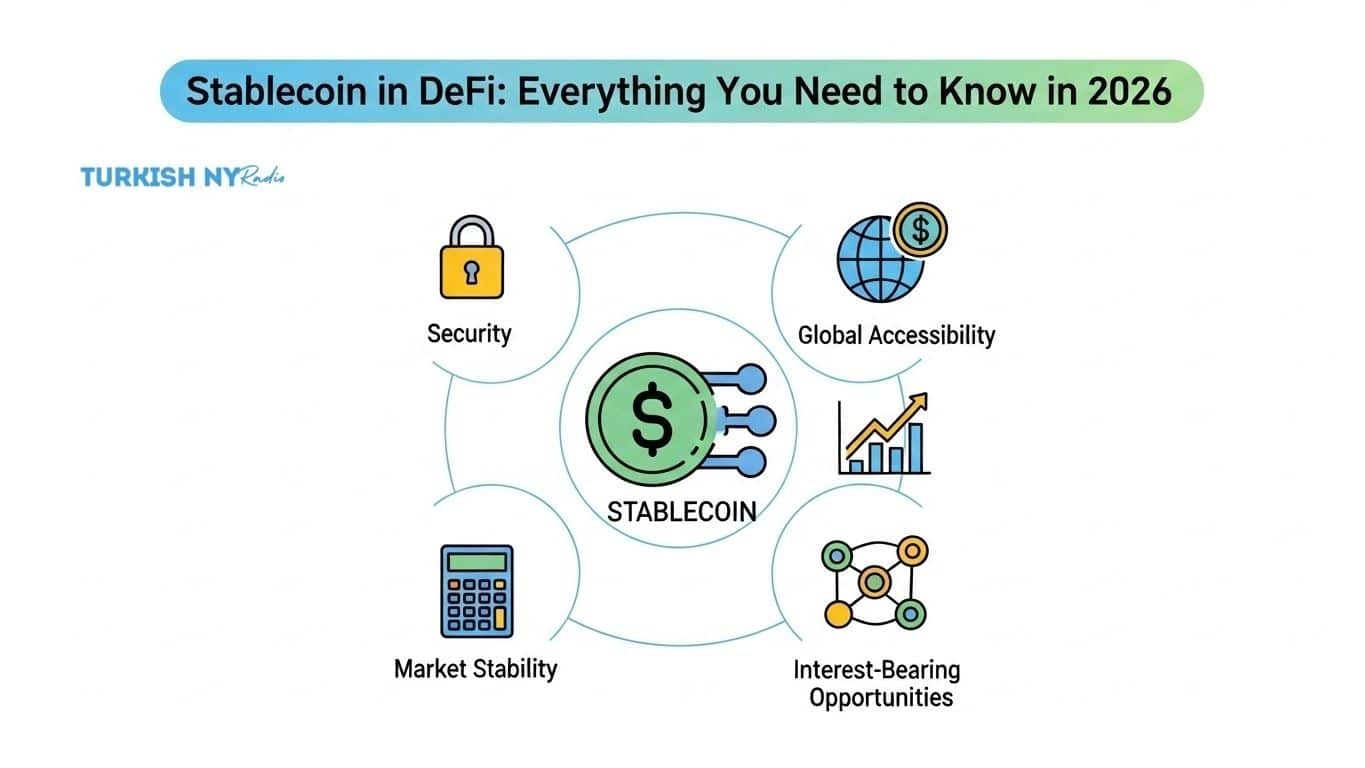
Major Developments (2024-25)
In the past few years, several patterns have come to define stablecoins within DeFi. Notably, institutional-grade stablecoins were introduced. PayPal USD (PYUSD), Ripple’s RLUSD, and BlackRock’s USDTB, among others, reached billion-dollar market caps by 2025.
These stablecoins are fully collateralized and palatable to traditional finance institutions. As a result, traditional players are increasingly involved. For example, Visa launched USDC settlements in the U.S., and Stripe added cryptocurrency payout options.
Smart contract technology continues to evolve. Circle’s USDC introduced native cross-chain transfers (CCTP), which, according to the company, makes it chain-agnostic and prevents liquidity fragmentation.
Meanwhile, new blockchains specifically designed for stablecoins have been developed, such as the Plasma chain with native stablecoin support. DeFi itself has matured, with lending becoming more institutionalized, yield markets more organized, and RWA tokenization (including Treasuries) expanding.
Conclusion: What to Expect of Stablecoins in the Future
Stablecoins are poised to remain a foundational element of blockchain finance. Macroeconomic factors, such as high interest rates, and regulatory clarity provided by frameworks like the US GENIUS Act and EU MiCA, are driving adoption. High U.S. interest rates have incentivized stablecoins like Tether to become significant Treasury investors, as they maintain dollar-like value while offering interest income.
Inflationary pressures abroad continue to fuel demand in emerging markets. Technically, stablecoins are becoming more seamless through cross-chain bridges and unified liquidity solutions like LayerZero and CCTP.
Concurrently, the progress of Central Bank Digital Currencies (CBDCs), such as digital dollars and e-euros, is likely to coexist and evolve alongside DeFi stablecoins rather than replace them.
Overall, the industry anticipates further expansion in stablecoin usage. Bloomberg Intelligence projects that transaction volume in this segment could reach $56 trillion by 2030.
For DeFi end-users, institutions, and regulators alike, stablecoins are central to decentralized finance, and their role is expected to continue growing through 2026 and beyond.
Glossary
Stablecoin: A cryptocurrency designed to maintain a stable value, typically pegged to a fiat currency like the USD or a physical asset. Examples include USDT, USDC, and DAI.
DeFi (Decentralized Finance): Financial applications built on a blockchain, commonly Ethereum and other smart-contract platforms, which operate without traditional intermediaries.
Fiat-collateralized Stablecoin: A stablecoin backed 1:1 by fiat currency reserves or equivalent assets.
Crypto collateralized Stablecoin: A stablecoin backed by other crypto assets held as collateral. MakerDAO’s DAI, for instance, is backed by cryptocurrencies like ETH locked in smart contracts.
Algorithmic Stablecoin: A stablecoin that relies on smart contracts and algorithms to manage its supply, rather than direct collateral. These coins aim to automate peg maintenance through mint/burn mechanisms and generally carry higher risk.
Peg: The target value a stablecoin is intended to maintain. A "$1 peg" signifies a coin meant to trade at or near one U.S. dollar. A departure from this target is referred to as a de-pegging.
Reserve Audit: An examination of the assets held by a stablecoin issuer to verify that they possess sufficient backing for the coins currently in circulation.
Frequently Asked Questions About Stablecoins in DeFi
What is a stablecoin and why is it useful in DeFi?
A stablecoin is a type of cryptocurrency designed to maintain a consistent price, often pegged 1:1 to a fiat currency like the USD. Stablecoins provide a way to use digital currency within DeFi without the extreme volatility associated with currencies like Bitcoin.
What are the most used stablecoins in DeFi?
The leading stablecoins in DeFi usage are Tether (USDT) and USD Coin (USDC), which together represent the vast majority of the stablecoin supply. DAI, a crypto-collateralized stablecoin built on MakerDAO, is another popular option in DeFi. Newer stablecoins, including PayPal USD (PYUSD) and BlackRock’s USDTB, have emerged but are currently smaller in market share.
Are stablecoins in DeFi safe?
No investment is entirely risk-free. Top stablecoins, such as USDT and USDC, have demonstrated reliability by maintaining their peg to $1 with only minimal fluctuations. However, risks include the management of reserves (ensuring the issuer truly holds $1 per coin) and potential regulatory changes. Stringent audits and new regulations have significantly improved their stability.
How do regulators impact stablecoins in DeFi?
Regulation plays a significant role in the stablecoin ecosystem. Laws like the U.S. GENIUS Act require stablecoin issuers to hold 100% reserves in liquid assets and obtain licenses. The E.U.’s MiCA law imposes similar requirements for euro-pegged coins. These regulations influence which stablecoins can be issued and where they can be offered.
Could stablecoins break their peg in DeFi?
Yes, this can occur in rare circumstances. Stablecoins are not immune to market dynamics. Historical instances show that extreme market stress can lead to very brief de-peggings; for example, USDC traded at $0.88 for one day in 2023 due to a banking issue.