


Key Takeaways
- •CertiK reports that U.S. and EU regulations are fostering two distinct stablecoin liquidity zones.
- •The U.S. GENIUS Act integrates stablecoin issuers into the banking system and reinforces its dollar strategy.
- •MiCA's banking-reserve rules raise concerns regarding concentration risk and create barriers for smaller issuers.
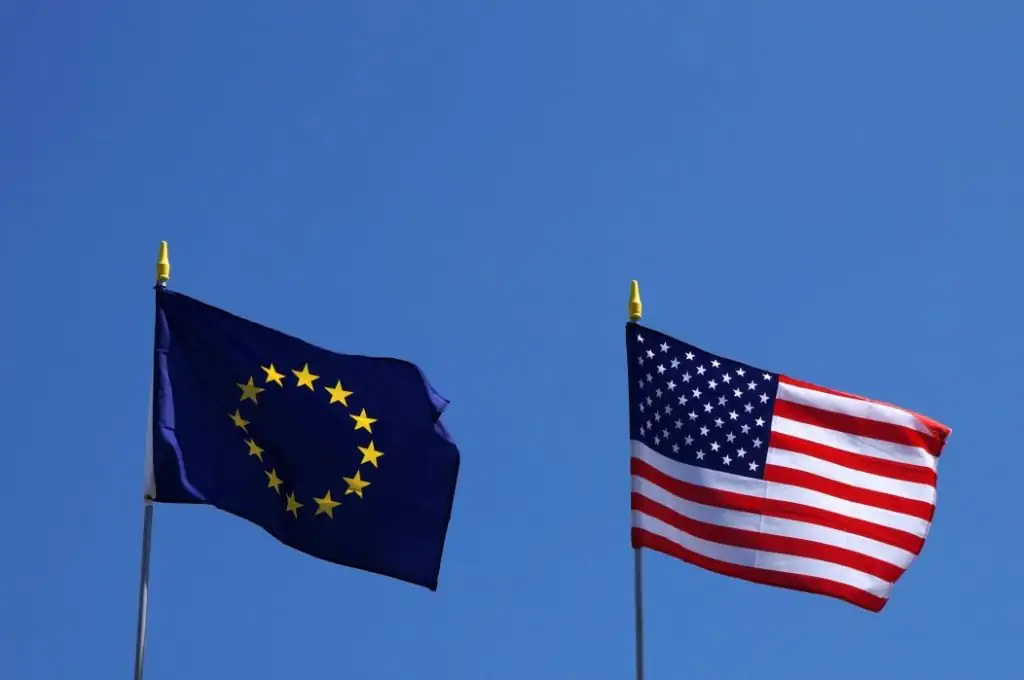
CertiK argues that 2025 marked the commencement of a structural division in the stablecoin market, leading to liquidity clustering around two incompatible regulatory systems: a U.S.-centric model and a European Union model shaped by MiCA.
A Shift Driven by Washington, Not the Market
U.S. policymakers have imposed a blueprint that redefines the role of stablecoins within the financial system, moving away from market-driven evolution. CertiK identifies the GENIUS Act as the primary catalyst for this shift. This legislation, signed into law, clearly delineates who can issue stablecoins, mandates specific reserve requirements, and prohibits certain forms of yield generation or financial engineering.
The most significant consequence of this legislation is political, positioning stablecoins as extensions of U.S. monetary power. Issuers are now operating under a regulated framework that is closely integrated with the domestic banking system, granting the U.S. substantial influence over dollar liquidity in digital markets.
This approach inherently draws liquidity inward, leading to the emergence of what CertiK describes as an American stablecoin zone. In this zone, compliance and reserve structures are aligned with U.S. financial norms, rather than pursuing international harmonization.
Europe Moves in a Different Direction — For Different Reasons
While the U.S. has incorporated stablecoins into its monetary strategy, Europe's motivations are primarily defensive. MiCA, the EU's comprehensive crypto regulation, was designed to mitigate risks, enhance supervision, and bolster consumer protection.
A notable and debated provision within MiCA requires that the majority of reserves backing a stablecoin be held in European banks. While policymakers view this as a measure to ensure stability, industry participants express concerns that it could exacerbate concentration risk within the banking sector. Tether CEO Paolo Ardoino has previously warned that mandating issuers to use fractional-reserve institutions could introduce vulnerabilities instead of resolving them.
Other critics, particularly smaller fintech companies, fear that the compliance costs and capital requirements imposed by MiCA will solidify a market dominated by a few large issuers. What the EU perceives as prudent oversight, emerging businesses view as a significant barrier to entry.
Divergent Rules Produce Divergent Markets
CertiK's report concludes that the divergence between U.S. and EU stablecoin regulations is not merely philosophical but operational. The rules governing U.S. and EU stablecoins now make mutual interchangeability challenging. Liquidity pools are solidifying along jurisdictional lines, and CertiK anticipates increased friction in cross-border flows.
This regulatory divergence could result in price discrepancies between U.S. and EU-issued stablecoins, encourage regional arbitrage strategies, and lead to settlement inefficiencies, particularly for businesses operating across both markets.
Stablecoins Become a Tool of Dollar Strategy
A particularly striking observation from CertiK's analysis is the explicit nature of U.S. intentions regarding stablecoins. U.S. Treasury Secretary Scott Bessent publicly stated earlier this year that stablecoin regulation is an integral part of a broader financial strategy aimed at reinforcing the dollar's global standing.
His remarks underscore a significant shift: stablecoins are no longer viewed solely as payment tools or technological innovations but as instruments of economic statecraft. This recognition strongly suggests a continued divergence between the U.S. and EU, as each region prioritizes its own strategic and regulatory objectives over global uniformity.